
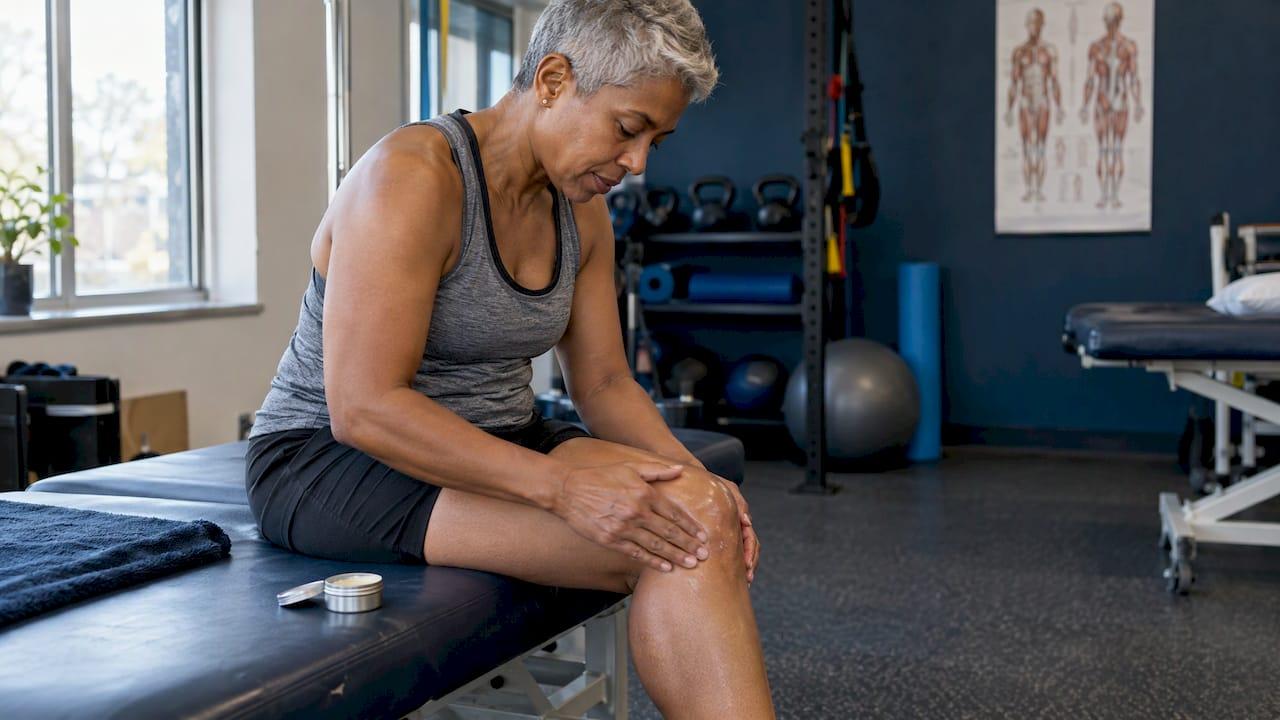
CBD may ease inflammation-related discomfort for some people, but the research is mixed and mostly early. Animal studies and small human studies point to anti-inflammatory and pain-relieving effects. Larger human trials have not confirmed them. A topical balm is the most practical way to try CBD on one sore spot. Product quality matters more than any claim on the front of the jar.
This guide covers what is known, what is not, how creams and balms fit in, how to pick a product, and when to talk to a clinician first.
TL;DR
- Animal and small human studies suggest CBD has anti-inflammatory and pain-relieving properties. Larger, high-quality human trials are still needed.
- A 2025 meta-analysis found inconsistent, often trivial effects of CBD on blood markers of inflammation. Topical use is studied separately.
- Balms act on a specific area. Many also contain menthol, arnica and similar botanicals.
- Check for a third-party Certificate of Analysis. Many CBD products are mislabeled.
- CBD can interact with common drugs. Talk to a health care provider first, especially with arthritis or other medications.
Table of Contents
- What CBD is and what it does to inflammation
- What the research says about pain from arthritis and sore muscles
- CBD cream and balm: why topicals are a practical choice
- Our perspective
- Choosing a CBD product for inflammation
- How to run a sensible trial
- CBD or ibuprofen for inflammation
- Safety and legal points
- Our balms
- FAQ
- Sources
What CBD is and what it does to inflammation
CBD (cannabidiol) is a compound from the cannabis plant. It will not get you high, but it may cause drowsiness, according to the Arthritis Foundation. The same source says animal studies and some small human studies suggest CBD has pain-relieving and anti-inflammatory properties. It also says those effects need validation in larger, high-quality human studies.
Inflammation is the body's response to injury or irritation. It shows up as heat, swelling, redness and soreness. After hard training it is part of normal muscle recovery. In conditions like arthritis it can be persistent.
The human evidence is not uniform. A December 2025 systematic review and meta-analysis pooled randomized trials of CBD and circulating inflammatory markers. Results were inconsistent and often trivial. For example, the effect on IL-6 was an SMD of −0.17 (p=0.41) and on TNF-α an SMD of −0.09 (p=0.62). Certainty ranged from very low to moderate.
The same authors say well-powered trials in selected patient groups are needed before CBD can be suggested as a systemic anti-inflammatory. They also say topical and systemic evidence should be treated separately. That second point matters here. Most people who ask about inflammation are thinking of a sore knee, shoulder, back or ankle, not a blood marker.
What the research says about pain from arthritis and sore muscles
Reports from people with arthritis are mixed. The Arthritis Foundation notes that some people report noticeable pain relief, better sleep or less anxiety, while others notice nothing.
A 2022 observational study of arthritis patients reported improvements in pain (83%), physical function (66%) and sleep quality (66%). It also reported a 44% reduction in pain after CBD use (P<0.001). The study was observational, so it cannot prove CBD caused the change.

Controlled trials are less encouraging. A 2024 review of 17 randomized trials, including a high-dose add-on trial in knee osteoarthritis, found no analgesic effect over placebo for oral CBD in painful musculoskeletal conditions. Harvard Health reports that a systematic review concluded CBD could help reduce pain and inflammation in conditions such as arthritis and fibromyalgia. It adds that the FDA does not approve CBD oil for chronic pain and more research is needed.
Taken together: the signals are real enough to keep researchers working, and not strong enough to call CBD a treatment. The Arthritis Foundation states that CBD is not a substitute for disease-modifying treatment for inflammatory arthritis. If you have a diagnosis, keep your treatment plan and bring CBD into the conversation with your provider.
For related conditions, see our guides on CBD and rheumatoid arthritis and topical CBD for osteoarthritis.
CBD cream and balm: why topicals are a practical choice
A cream or balm goes on the skin over the area that bothers you. Oils, gummies and capsules go through the whole body. Many people prefer the targeted route for a single joint or muscle group.
The science on topicals is still developing. The Arthritis Foundation says it is not clear whether topical CBD products deliver CBD below the skin. A few small trials of transdermal CBD solutions reported less hand arthritis pain, while another found no significant improvement.
A 2021 review of topical cannabinoids says these products might let cannabinoids be dosed directly to the skin while limiting systemic exposure. The authors say formulation parameters need to be established and verified. They also say safety and efficacy may need to be judged product by product until standards improve. In plain terms: the formula and the quality of the maker count.
The Arthritis Foundation also points out that topicals often include menthol, capsaicin or camphor. That makes it hard to credit any effect to CBD alone. For a person who just wants relief, a balm that combines several soothing ingredients is a reasonable design. It also explains why we describe our balms as formulas, not as plain CBD.
If you want a side-by-side look at the two routes, read topical CBD vs. oral. For joint-specific plans, see CBD balm for arthritis.
Our perspective
We make balms for people who train hard and for people who live with chronic aches. Both groups want the same thing: relief where it hurts, in a form that is easy to use.
That is why we put 1,000 mg of CBD in every ounce and pair it with botanicals such as arnica, menthol, turmeric, eucalyptus, peppermint, cinnamon, clove, ginger and cayenne pepper. The aim is a balm that feels good on application and supports recovery.
We are plain about the science. Research on CBD is still growing, and results differ from person to person. A balm is a simple, targeted way to try it on one area. Our formulas are vegan, non-GMO, paraben-free, THC-free and cruelty-free, and we rely on third-party testing.
If a balm does not work for you, our 30-day full refund policy applies.
Cindy
Choosing a CBD product for inflammation
There is no single best CBD for inflammation. There is a best-made product for the way you plan to use it. These checks apply to any form.
Read the Certificate of Analysis
Healthline advises looking for a third-party Certificate of Analysis (COA). Confirm that the CBD and THC amounts on the COA match the label. For full- or broad-spectrum products, check the cannabinoid profile. Look for heavy-metal and pesticide results marked as a pass.
Know why labels matter
Healthline also reports on a study of 84 CBD products sold online. Only about 31 percent were accurately labeled. About 43 percent had more CBD than stated and about 26 percent had less. Mayo Clinic cites the same study and notes THC was found in 18 of the products.
This is why we publish our products as THC-free and test through third parties. Ask any brand you consider for the same paperwork.
Match the form to the problem
| Goal | Form people often choose | What to know |
|---|---|---|
| Sore muscles after training | Balm or cream | Applied to the area. Often includes cooling or warming botanicals. |
| One stiff joint | Balm or cream | Apply as directed and track how it feels over several weeks. |
| Whole-body concerns | Oral products | Systemic route. Interaction checks matter more. |
Check the ingredient list
The Arthritis Foundation says the greatest safety concern is a CBD product containing other ingredients not identified on the label. Pick products that list every ingredient and amount.
How to run a sensible trial
The Arthritis Foundation suggests a symptom and dose diary, and making sure the product is helping before you continue long term. A simple approach:
- Pick one area. Choose the joint or muscle that bothers you most.
- Record a baseline. Rate pain and stiffness from 0 to 10 for a few days before you start.
- Use the product as the label directs. Keep the amount and timing the same each day.
- Log the result. Note pain, stiffness, and activity level daily.
- Review after 2 to 4 weeks. Compare with your baseline. Keep going if it helps.
For plans with more detail, see our 4 week topical trial checklist for seniors and the shoulder arthritis trial.
Dosing for oral CBD
There are no established clinical dosing guidelines. For adults the Arthritis Foundation suggests starting with 5 to 10 milligrams of sublingual CBD twice a day. If relief is inadequate after three or four days, increase by that amount. Go up in small steps over several weeks. It notes CBD can get costly above 100 milligrams a day.
Topical products are measured differently. Follow the directions on the jar.
CBD or ibuprofen for inflammation
They are different tools. Ibuprofen is an over-the-counter anti-inflammatory medicine. CBD is not an FDA-approved treatment for inflammation or pain. Your pharmacist or doctor can say which suits your health history.
The two are not interchangeable in one respect. The Arthritis Foundation warns that CBD may interact with over-the-counter drugs including ibuprofen, naproxen and acetaminophen. It lists other interacting drugs: corticosteroids, tofacitinib, celecoxib, tramadol, certain antidepressants, gabapentin, pregabalin and warfarin. Anyone taking these should speak to a provider before adding CBD in any form.
The 2021 topical review adds that CBD metabolism through cytochrome P450 might cause drug interactions. It suggests the transdermal route may reduce these effects because drug levels build up more slowly. That is a reason to talk with your clinician, not to skip the conversation.
Safety and legal points
The CDC lists possible CBD side effects: liver damage, interference with other drugs, drowsiness, diarrhea or appetite changes, and mood changes such as irritability. It does not recommend CBD during pregnancy. It also notes that products labeled hemp or CBD may contain THC, pesticides, heavy metals, bacteria or fungi. The FDA strongly advises against CBD use during pregnancy or breastfeeding, per Mayo Clinic.
A 2024 clinical practice guideline notes that CBD can raise liver enzymes. This is typically dose-related and more common at very high doses, around 800 mg a day. It advises periodic liver enzyme monitoring for people who use CBD regularly. The guideline also says the strongest evidence for reducing chronic pain symptoms is for THC formulations, not CBD.
On regulation, the FDA has approved one CBD product, the prescription drug Epidiolex, for certain seizure conditions. It says that adding CBD to food or marketing it as a dietary supplement is currently illegal in the U.S. Topical products are sold under different rules, which is another reason to buy from a brand that documents its testing.
See a doctor first if you are pregnant or nursing, take prescription medicines, have liver problems, or have swelling, heat and redness in a joint that has not been diagnosed. Those signs call for an exam, not only a balm.

Our balms
Our two balms are made for sore muscles and achy joints. Seriously Soothing Pain Balm and RIKKI TIKKI Recovery each contain 1,000 mg of CBD per ounce with natural botanicals. Prices range from $26.95 to $39.95. Every order is covered by our 30-day full refund policy.
See the Seriously Soothing Pain Balm for everyday aches and joints. See RIKKI TIKKI Recovery for post-workout muscles.
Browse both on the Mongoose CBD homepage.
Curious about the botanicals? Read about arnica in CBD balms. For lifestyle steps that pair with a balm, see our natural arthritis pain relief plan.
FAQ
Does CBD cream reduce inflammation?
Research has not settled this. The Arthritis Foundation says it is unclear whether topical CBD reaches below the skin. A few small trials reported less hand arthritis pain, and another found no improvement. Many creams also contain menthol or similar ingredients that may add to the effect.
How much CBD should I use for inflammation?
There is no established clinical dose. For oral CBD, the Arthritis Foundation suggests 5 to 10 milligrams under the tongue twice a day, with small increases after three or four days if needed. For a balm, follow the label and keep notes on how you feel.
Is CBD or ibuprofen better for inflammation?
They are different, and neither is the right answer for everyone. CBD is not FDA-approved for inflammation. CBD may also interact with ibuprofen and other medicines. Ask your pharmacist or doctor before combining them.
What should I look for in a CBD product?
Look for a third-party Certificate of Analysis that matches the label for CBD and THC. Check for passing heavy-metal and pesticide results. Choose a product with a full ingredient list.
Sources
- CBD for Arthritis Pain, Arthritis Foundation
- The Pleiotropic Influence of Cannabidiol, systematic review and meta-analysis (PMC)
- Cannabidiol as a treatment for arthritis and joint pain (PMC)
- The use of cannabidiol as an analgesic component (PMC)
- Can CBD oil help manage pain? Harvard Health
- Safety and Sourcing of Topical Cannabinoids (PMC)
- CBD Terminology and Labeling, Healthline
- CBD: Safe and effective? Mayo Clinic
- About CBD, CDC
- Clinical Practice Guidelines for Cannabis (PMC)
- FDA consumer update on cannabis and CBD products