
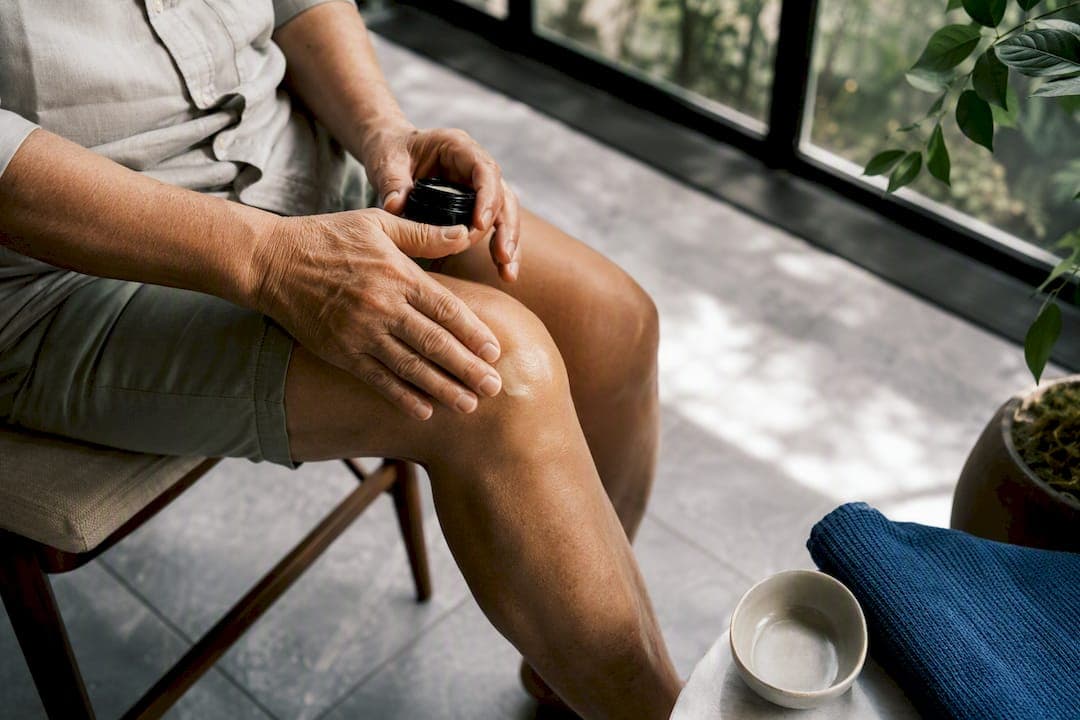
Current evidence does not support CBD as a proven, routine treatment for osteoarthritis. Large randomized trials of oral CBD have found no benefit over placebo, and the FDA has not approved CBD for arthritis pain of any kind. Small trials of topical CBD, however, show localized, modest benefit for joint pain, which is why it's reasonable to try cautiously as an adjunct, alongside a conversation with your clinician, not instead of one.
TL;DR:
- Topical CBD shows modest, localized pain relief in small trials for hand osteoarthritis, making it a reasonable starting point for symptom management.
- Oral CBD at doses around 600 mg daily has repeatedly failed to outperform placebo in clinical trials and carries safety concerns, especially liver enzyme elevations.
- Choosing a high-quality CBD product requires verifying independent lab analysis, batch-specific COAs, and clear dosing information, avoiding products with vague claims.
- Expect CBD to modestly reduce pain and improve function as an adjunct, not replace, standard treatments like NSAIDs and physical therapy.
- A structured trial with consistent application over two to six weeks, tracking pain and functionality, maximizes the chances of accurately assessing CBD’s benefit.
Table of Contents
- What Is CBD and How Might It Help Joint Pain?
- What Do Clinical Trials Actually Show for Osteoarthritis?
- Safety, Side Effects, and Drug Interactions to Check First
- How to Trial CBD for Osteoarthritis Safely
- How to Choose a Quality CBD Product
- What to Realistically Expect From a CBD Trial
- How Mongoosecbd Approaches Topical Formulation
- What Osteoarthritis Patients Say About Trying CBD
- Author Perspective: A Shared Decision, Not a Solo Experiment
- Try a Topical Balm Built for Localized Joint Pain
- Sources
- FAQ
What Is CBD and How Might It Help Joint Pain?
Cannabidiol, or CBD, is one of more than a hundred compounds found in the hemp plant. Unlike THC, it doesn't produce a high. Every legitimate CBD product sold for pain relief in the United States should contain no more than trace amounts of THC, which is what keeps it non-intoxicating and legal to sell over the counter.
The proposed mechanisms for how CBD might ease osteoarthritis pain are still being worked out in labs, not settled in textbooks. Researchers believe CBD interacts with the body's endocannabinoid system, a network of receptors involved in regulating pain signaling and inflammation. It also appears to act on TRPV-1 receptors, the same pain-sensing channels targeted by capsaicin in hot peppers, and on serotonin receptors like 5-HT1A, which may explain reports of reduced anxiety around chronic pain. None of these pathways are unique to osteoarthritis. That's part of why CBD gets tried for everything from muscle soreness to neuropathy, with wildly different results depending on the condition and the dose.
Where CBD actually reaches your body matters just as much as what it does once it gets there. The main delivery forms differ enough in speed, strength, and risk that picking the wrong one for your situation can waste both money and patience.
- Topical (balms, creams, gels): Applied directly to the skin over a joint. Acts locally, largely skips the bloodstream, and carries the lowest risk of systemic side effects or drug interactions. Best suited for a single sore knee, thumb, or hip.
- Oral capsules or edibles: Swallowed and processed through the liver before reaching circulation. Slower onset, less predictable absorption, and the form most associated with the liver enzyme changes seen in clinical trials.
- Sublingual oils and tinctures: Held under the tongue for absorption into small blood vessels. Faster onset than capsules, more precise dosing than edibles, but still systemic, meaning it can interact with other medications.
- Inhaled (vapes): Fastest onset of all forms, but the least studied for chronic joint pain and carries respiratory risks unrelated to CBD itself.
For osteoarthritis specifically, where the pain usually sits in one or two joints rather than throughout the body, the case for starting topical is stronger than the marketing usually admits.
What Do Clinical Trials Actually Show for Osteoarthritis?
The clinical picture splits sharply by delivery method, and that split is the single most important thing to understand before spending money on any CBD product for joint pain.
Topical CBD has the more encouraging, if still limited, data. Small randomized controlled trials testing topical formulations on hand and thumb-base osteoarthritis have reported reduced pain scores on the VAS scale and improved function on the DASH index compared with placebo gels. These trials were small and short, but they're notable because localized application seems to do something measurable without the systemic side effects seen elsewhere. Preclinical work backs this up: topical formulations appear to reduce peripheral sensitization and local inflammatory markers in animal and small human studies, supporting a plausible, targeted mechanism rather than a placebo effect alone.
Oral CBD tells a different story entirely.
What the numbers say: A randomized trial testing 600 mg of oral CBD daily, added to acetaminophen for knee osteoarthritis, found no additional pain relief compared with placebo, and the CBD group experienced more adverse effects, including elevated liver enzymes. That's a high dose. Many over-the-counter tinctures contain a fraction of it, but it establishes that even at meaningful strength, oral CBD hasn't cleared the bar oral NSAIDs or acetaminophen already clear.
Broader trial data reinforces the pattern. Across periods ranging from 8 to 60 days, studies of oral CBD around 600 mg daily found comparable pain scores between CBD and placebo groups, with more safety signals showing up in the CBD arms rather than fewer.
Systematic reviews pulling these trials together land on a consistent, cautious conclusion:
- Cannabinoids as a broader category can produce modest, condition-specific pain relief in certain chronic pain conditions.
- CBD-only products specifically show inconsistent or low-certainty evidence for improving pain or function in osteoarthritis when compared with placebo.
- Effect sizes across the available trials are small, and study quality varies enough that reviewers stop short of calling any of it definitive.
- Heterogeneous products, inconsistent dosing, and regulatory gaps between studies make it genuinely hard to generalize findings from one trial to another product on a shelf.
The honest summary: topical CBD has a coherent, if modest, signal worth testing for localized joint pain. Oral CBD, especially at higher doses, has repeatedly failed to beat placebo in osteoarthritis trials while adding safety concerns. If you're choosing between the two for a knee or hand, the evidence points one direction.
Safety, Side Effects, and Drug Interactions to Check First
CBD is generally well tolerated in the doses used in most consumer products, but "generally well tolerated" isn't the same as risk-free, especially if you're managing osteoarthritis alongside other medications.
The most commonly reported side effects across clinical reviews include fatigue, diarrhea, changes in appetite, and dry mouth. Most are mild and resolve with a lower dose or discontinuation. The side effect that deserves real attention is liver enzyme elevation, which several oral CBD trials have flagged at higher doses. If you're taking oral or sublingual CBD regularly, particularly above 20 to 30 mg per day, it's worth asking your doctor about a baseline liver panel and a follow-up test after a few weeks, especially if you already have liver disease, drink alcohol regularly, or take other medications processed by the liver.
That liver connection ties directly into CBD's interaction profile. CBD is metabolized by the same CYP450 liver enzymes that process a long list of common drugs, which means it can raise or lower blood levels of other medications you're taking for osteoarthritis or related conditions. Worth reviewing with a clinician before starting:
- NSAIDs like ibuprofen or naproxen, which already carry their own liver and kidney considerations.
- Acetaminophen, since combined liver metabolism load is exactly what the Pramhas trial was testing.
- Certain antidepressants, particularly SSRIs, which share metabolic pathways with CBD.
- Immunomodulating drugs, sometimes prescribed for inflammatory joint conditions that overlap with osteoarthritis symptoms.
- Blood thinners, where CBD's enzyme effects can shift levels in either direction.
Pregnant or breastfeeding individuals should avoid CBD altogether, since safety data in these populations is essentially absent. If your job involves driving or operating machinery, test any new CBD product on a day off first. Fatigue and mild dizziness are uncommon but not rare, and you don't want to discover a sensitivity behind the wheel.
Pro Tip: Keep a simple running list of every supplement and medication you take, including over-the-counter painkillers, and bring it to the appointment where you bring up CBD. Interaction risk is invisible until someone actually checks the list against it.
How to Trial CBD for Osteoarthritis Safely
A structured trial beats a random purchase, both for your wallet and for getting an honest read on whether CBD is doing anything at all.
- Choose your form based on where the pain lives. For a single joint, a topical balm applied directly over the site makes more sense than a systemic product, given what the trial data above shows about topical's more favorable risk profile.
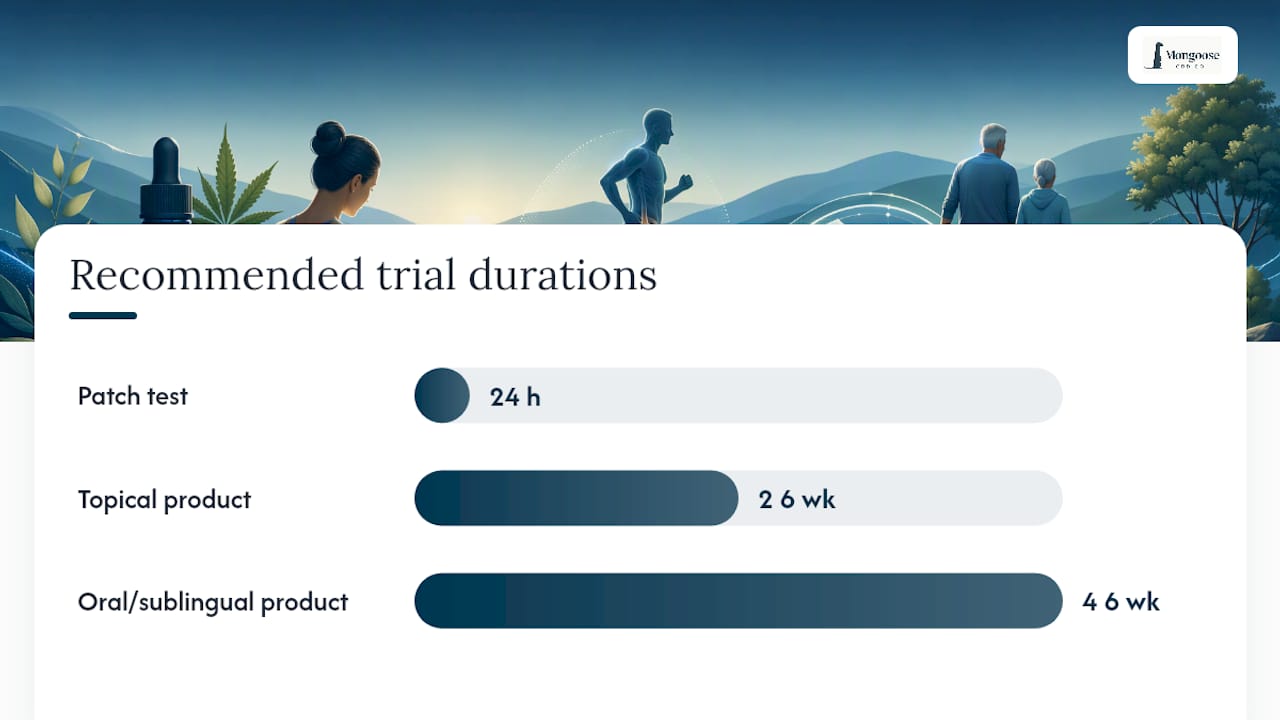
- Patch-test first. Apply a small amount to unaffected skin and wait 24 hours before treating the joint itself, watching for redness or irritation.
- Start low if going oral or sublingual. Patient-facing guidance from organizations like the Arthritis Foundation and Harvard Health suggests starting around 5 to 10 mg twice daily for sublingual products, increasing gradually only if needed and tolerated.
- Apply topicals consistently, not sporadically. Two to three applications daily to the affected joint tends to match how the small hand-OA trials dosed their gels.
- Set a trial window. Give a topical product two to three weeks and an oral product four to six weeks before judging whether it's working, since gradual dose increases eat into the early weeks.
- Track something measurable. Rate pain on a simple 0 to 10 scale each morning, and note one functional task, like climbing a flight of stairs or opening a jar, that you can watch improve or stay flat.
- Review at the end of the window. If pain scores haven't moved and function hasn't changed, that's your answer. Stop and redirect the budget toward something with stronger evidence, like physical therapy.
Pro Tip: Write your baseline numbers down before you apply the first dose. Memory is a terrible measuring instrument for slow, gradual pain changes, and most people who "feel like it's helping" can't actually recall what week one felt like.
Watch for stopping signals throughout: new rash or irritation at a topical application site, unusual fatigue, digestive upset that doesn't settle after a few days, or any sign you'd associate with liver strain, like yellowing skin or eyes. Any of those warrants stopping and calling your doctor, not pushing through.
How to Choose a Quality CBD Product
The CBD market has a mislabeling problem serious enough that choosing blind is a genuine gamble, not just a quality-of-life issue.
Every legitimate product should ship with a Certificate of Analysis, or COA, from an independent third-party lab. This document shows the actual CBD content per unit (verify it matches the label), confirms THC percentage stays under the legal threshold, and screens for contaminants like heavy metals, pesticides, and residual solvents. If a brand can't produce a current COA for the specific batch you're buying, that's a reason to walk away, not a minor gap to overlook.
A few practical checks make the difference between an informed purchase and a guess:
- Match the batch number on the COA to the batch number on your product packaging. Generic "our products are tested" claims without batch-specific documents are close to meaningless.
- Look at co-ingredients. Many pain balms combine CBD with menthol, capsaicin, arnica, or turmeric, and any perceived relief could come from those ingredients as much as the CBD itself. That's not necessarily bad, but it matters for understanding what's actually working.
- Confirm the manufacturer follows Good Manufacturing Practice standards, a baseline quality signal for consistency between batches.
- Check the return policy. A company confident in its formulation should offer a real refund window, not just a "satisfaction guarantee" with no teeth.
- Avoid products with vague dosing ("apply as needed") instead of a clear milligram count per application or per milliliter.
What to Realistically Expect From a CBD Trial
Set your expectations by the trial data, not the marketing copy. Across the studies reviewed above, average pain reduction tends to be modest, often less than a full point on a 10-point scale for oral products, with topical formulations showing somewhat more encouraging, though still limited, results for localized joint pain.
That means CBD, if it works for you at all, is far more likely to shave the edge off pain than eliminate it. Think adjunct, not replacement. It sits alongside physical therapy, weight management, and standard analgesics, not in place of them. Osteoarthritis is a structural, progressive joint condition, and nothing about CBD's evidence base suggests it slows cartilage loss or changes disease progression the way exercise-based interventions and, in some cases, prescribed disease-specific therapies can.
The most useful yardstick isn't a pain score anyway. It's function. Can you walk for ten more minutes than you could before? Climb a flight of stairs with less hesitation? Kneel down to tie a shoe without wincing? Pick two or three of these functional markers before you start, and let them, not vague impressions of "feeling better," decide whether the trial was worth continuing.
How Mongoosecbd Approaches Topical Formulation
Given how the evidence favors localized application for joint pain, these products are built around that use case, with balms combining CBD and ingredients commonly used in topical pain relief such as arnica, menthol, turmeric, eucalyptus, peppermint, and warming spices including ginger and cayenne pepper. These formulations are designed for muscle soreness, inflammation, and arthritis-related joint discomfort, to be applied directly where it hurts.
The formulations are designed to avoid systemic exposure and liver-metabolism questions tied to oral products, as explained in detail in this CBD for inflammation: evidence, how to try it, what to buy guide. Because trying any new topical means confirming it actually agrees with your skin and your joint before committing to a full trial window, these products are offered with a refund policy allowing room to test without financial risk. For a longer walkthrough of what a two-week topical trial looks like in practice, the applied trial protocols on the Mongoosecbd blog cover daily application timing and what to track.
What Osteoarthritis Patients Say About Trying CBD
Patient experiences with CBD for osteoarthritis tend to cluster around two honest, unglamorous themes: modest relief for some, and no noticeable change for others. That mirrors the trial data closely, which is itself a useful check against any product claiming dramatic results.
People who report benefit from topical CBD balms most often describe it in functional terms rather than a total pain-free result. A stiff knee that loosens up enough to kneel in the garden. A thumb joint that stops aching by the end of a workday. These are the kinds of small, specific wins that line up with what the hand-osteoarthritis trials measured, improved function scores alongside modest pain reduction, rather than the sweeping transformations sometimes implied in product marketing.
Others report no discernible difference after a full trial period, particularly with oral products, which again tracks with the larger randomized trials showing no benefit over placebo. The honest takeaway from patient reports isn't that CBD is a miracle or a myth. It's that response is genuinely individual, dose-dependent, and closely tied to whether the joint pain is localized enough for a topical approach to reach it.
Author Perspective: A Shared Decision, Not a Solo Experiment
The most overlooked step in CBD trials isn't dosing. It's documentation. Bring your baseline pain scores and functional goals to your next appointment and let your clinician weigh in before you start, especially if you're on other medications. Set a clear stopping rule in advance: if nothing measurable improves within your trial window, or if you notice new side effects, stop and report back. That structure turns a hopeful guess into useful clinical information, for you and for your doctor.
— Cindy
Try a Topical Balm Built for Localized Joint Pain
If the evidence above has you leaning toward a topical trial rather than an oral one, Mongoosecbd's balms are built exactly for that scenario: a single sore joint, applied relief, and no need to run it through your liver first.
The Seriously Soothing Pain Balm in Cinnamon & Clove pairs 1,000 mg of CBD per ounce with warming ginger and cayenne, suited to stiff, aching joints that respond well to heat. For muscle and joint discomfort together, especially if osteoarthritis pain sits alongside general soreness from staying active, the Rikki Tikki Recovery balm offers a fast-acting alternative. Both are THC-free, vegan, and formulated without parabens.
Patch-test on unaffected skin first, then follow the two to three week trial window and tracking approach outlined earlier in this article. If it doesn't work for your joint, Mongoosecbd's 30-day refund policy means you're not out the cost of finding out. Order directly through the Mongoosecbd product page to start your trial this week.
Sources
- Does CBD help with arthritis pain? - Harvard Health Publishing
- Clinical trials and evidence review including Pramhas 2023 - PMC
This article is general information, not a substitute for advice from a qualified doctor. Consult a qualified healthcare professional about your own circumstances before acting on anything here.
FAQ
Is CBD effective for osteoarthritis?
Topical CBD has shown modest, localized benefit in small trials for hand osteoarthritis, while oral CBD has not outperformed placebo in larger randomized trials. Neither is FDA-approved for osteoarthritis treatment.
What is the strongest natural anti-inflammatory for arthritis?
No single natural compound has strong, consistent trial evidence as the "strongest" anti-inflammatory for arthritis. Topical CBD combined with ingredients like turmeric and arnica shows a coherent, though modest, signal for localized joint inflammation.
How long does it take for CBD to help joint pain?
Give a topical CBD product two to three weeks of consistent daily application before judging results, and four to six weeks for oral or sublingual forms since dosing needs to increase gradually.
What is the most effective pain reliever for osteoarthritis?
Standard care, including NSAIDs, acetaminophen, and physical therapy, has stronger and more consistent trial evidence than CBD for osteoarthritis. CBD, particularly topical formulations, is best used as an adjunct alongside these approaches, not a replacement for them.