
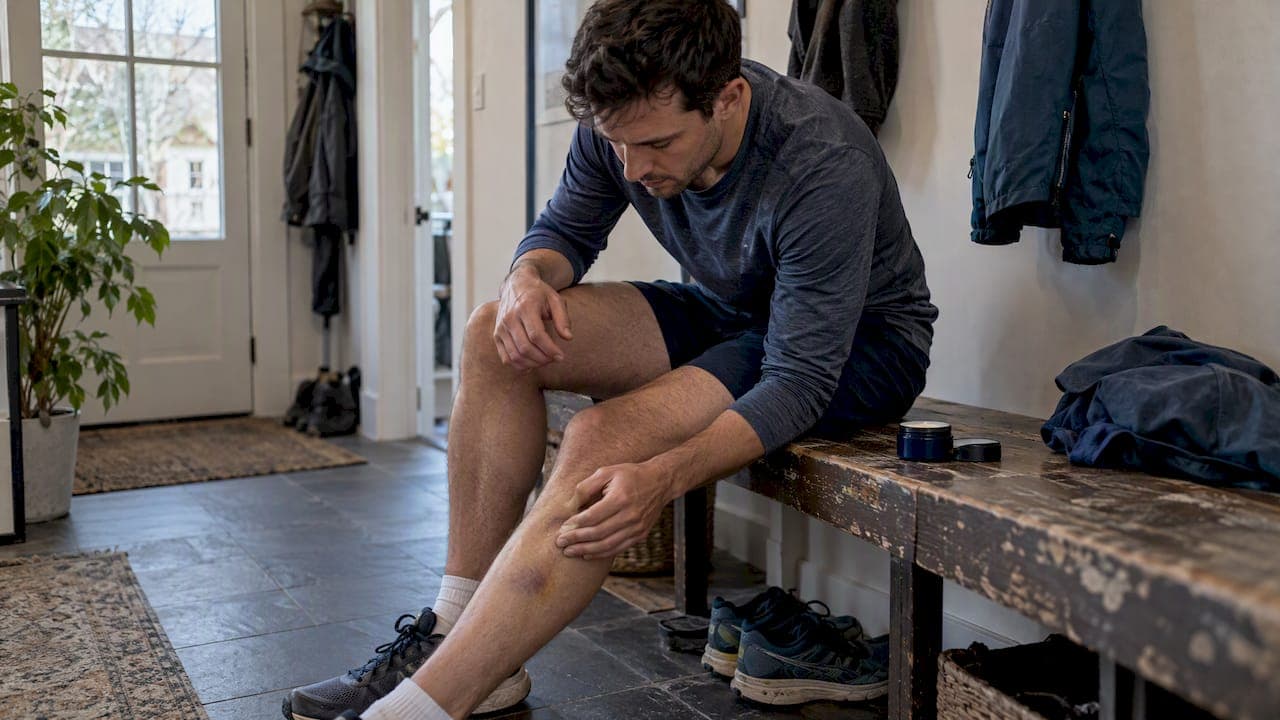
Arnica-infused CBD balms can provide targeted, topical relief for exercise-related muscle soreness, minor swelling, bruising and localized skin irritation when used as directed. Evidence for each ingredient is promising but mixed, with topical use showing the clearest signals for localized symptoms rather than systemic pain. Balms like those from Mongoose CBD Co. fit this picture: targeted formulas meant for direct application rather than general pain management.
TL;DR:
- Arnica gel has matched topical NSAIDs in some hand osteoarthritis trials, but researchers debate clinical significance, and combined arnica CBD products lack standardized trials.
- Apply a small amount two to four times daily as directed, patch test for 24 hours, and stop if redness, itching, or a rash appears.
- Keep arnica away from the mouth, eyes, and broken skin; people taking medication should consult a clinician before regular use over large areas.
- Cooling may begin within minutes, but acute soreness takes days to assess, while chronic joint pain may need two to six weeks.
Table of Contents
- Top benefits of arnica-infused CBD balms
- How arnica and CBD work together in a topical balm
- What the clinical evidence and reviews say
- How to use arnica CBD balm for best results
- Safety, side effects, and interactions to watch for
- Ingredients and formulation features to look for
- Brand perspective: Mongoose CBD Co.'s approach to arnica-CBD balms
- Specific benefits for arthritis, muscle soreness, and flare-ups
- What real users report about effectiveness
- Duration of effects and when to expect relief
- Arnica CBD balm versus other pain relief options
- Our take on where arnica CBD balms actually fit
- Try Mongoose CBD Co.'s arnica CBD balms
- FAQ
- Sources
Top benefits of arnica-infused CBD balms
Arnica and CBD each bring a distinct action to a topical formula, and together they address a narrow but useful set of problems. We see the clearest benefits in these areas:
- Surface soothing: Menthol, arnica and CBD combine to create immediate cooling or warming sensations that ease discomfort on contact.
- Reduced local swelling and bruising: Topical arnica has a long record of use for bruising and minor swelling, with some trial data behind it.
- Post-exercise soreness relief: Athletes commonly apply these balms after training to calm sore muscles and support recovery.
- Temporary joint ache relief: Some research points to arnica gel having similar effects to topical NSAIDs for specific joint complaints, such as hand osteoarthritis.
The strongest support exists for bruising and localized joint pain, particularly hand osteoarthritis, according to a summary from Memorial Sloan Kettering. Expectations should stay modest for systemic or widespread chronic pain, since a topical balm acts where it's applied and isn't designed to address pain throughout the body. Think of these products as tools for a sore shoulder or a bruised shin, not a substitute for treating pain that spans multiple joints or systems.
How arnica and CBD work together in a topical balm
Arnica's topical effects come from compounds that act on inflammatory pathways in skin and underlying tissue, which is part of why it's been used for bruising and swelling for generations. Clinical summaries from Cleveland Clinic describe it as generally safe for topical use and potentially helpful for muscle and joint discomfort when applied properly.
CBD's proposed local mechanisms involve interaction with TRPV-1 receptors and modulation of inflammatory signaling, according to a systematic review of CBD in pain treatment. Because these receptors sit in skin and peripheral tissue, applying CBD directly to a sore area targets local signaling rather than requiring it to travel through the bloodstream.
Formulation matters as much as the active ingredients. Carrier oils help both arnica and CBD penetrate skin, while menthol and other volatile oils add a sensory cooling effect that can make a balm feel effective even as the active compounds work more slowly underneath. A well-built formula accounts for all of this, which is why ingredient lists deserve attention, a point we'll return to shortly.
What the clinical evidence and reviews say
The research picture for both ingredients is encouraging without being definitive. For arnica, a 2007 trial and later review found arnica gel comparable to topical NSAIDs for certain osteoarthritis and inflammation outcomes, though Memorial Sloan Kettering notes that the clinical significance of these findings is still debated.
CBD shows analgesic and anti-inflammatory activity in both preclinical and some clinical research, though human trial results remain mixed and inconsistent across formulations, according to a systematic review on CBD in pain treatment. The National Center for Complementary and Integrative Health echoes this: cannabinoid products show short-term benefits in some studies, but side effects and evidence gaps remain, especially for long-term use.
Taken together, the honest conclusion is that arnica-CBD balms work best as plausible adjuncts rather than guaranteed fixes. Standardized trials on combined arnica-CBD topicals specifically are still scarce, so individual results will vary more than marketing copy tends to suggest.
How to use arnica CBD balm for best results
Getting a fair trial of any topical balm depends on consistent, correct application. Follow these steps:
- Wash and dry the affected area before application.
- Apply a pea-sized amount and rub it gently into the skin until absorbed.
- Repeat two to four times daily, following the specific product's directions.
- Patch-test on a small area of skin first and wait 24 hours before full use.
- Stop immediately if redness, itching or a rash develops.
For acute bruising or fresh soreness, a few days of consistent use is usually enough to judge whether a balm helps. Chronic issues, like ongoing joint discomfort, deserve a longer trial window of two to six weeks before deciding it isn't working. Our guide to applying arnica topically walks through the same steps with more detail on timing.
Pro Tip: Apply balm right after a shower, when skin is clean and slightly warm, for better absorption.
If pain worsens or doesn't improve after a reasonable trial, that's a signal to check in with a clinician rather than switch products repeatedly.
Safety, side effects, and interactions to watch for
Topical arnica and CBD are generally well tolerated, but they aren't risk-free. The most common issue is contact dermatitis, a localized skin reaction that shows up as redness, itching or a rash, which is why a patch test matters before regular use, according to dermatology research on topical arnica.
Arnica is toxic if swallowed, so it should never be used near the mouth, eyes or broken skin, and should be kept away from children and pets. CBD applied topically generally has low systemic absorption, but using large amounts over broad areas or on compromised skin could change that, so anyone taking other medications should check with a clinician before regular use, particularly if a large body area is involved.
Ingredients and formulation features to look for
Reading a label carefully matters more than chasing a specific milligram count. A few things worth checking:
- CBD form and total content per container, used as a reference point rather than a guarantee of effect.
- Third-party lab reports or certificates of analysis (COAs), which confirm what's actually in the jar.
- Arnica presentation, whether gel or salve, alongside supportive actives like menthol for cooling or carrier oils that aid skin absorption.
- A transparent, specific ingredient list rather than vague claims about potency or strength.
Our breakdown of ingredients that actually matter in CBD balm covers carrier oils and penetration enhancers in more depth for anyone comparing formulas side by side.
Brand perspective: Mongoose CBD Co.'s approach to arnica-CBD balms
Our balms are built around the same priorities outlined above: targeted formulas for muscle soreness, inflammation and arthritis pain, designed for athletes and people managing chronic discomfort. We back every batch with third-party testing, so customers can verify what's in the jar rather than taking a label at face value. A refund guarantee gives anyone trying a balm for the first time room to judge results without financial risk. Our formulas combine CBD with arnica and supporting botanicals, the same formulation features worth checking for in any balm on the shelf.
Specific benefits for arthritis, muscle soreness, and flare-ups
Different conditions call for different expectations. For arthritis, particularly in the hands, topical arnica has shown effects comparable to NSAID gels in some trials, making it a reasonable option for localized joint stiffness and ache, per Memorial Sloan Kettering's summary. For general muscle soreness after exercise, the combination of cooling menthol, anti-inflammatory arnica and CBD's local action on pain signaling addresses the kind of surface-level tightness and ache that shows up a day or two after a hard workout.
Chronic pain flare-ups present a tougher case. A balm applied to a flaring joint or muscle group can calm localized symptoms during a bad stretch, but it won't address the underlying condition driving the flare. People managing arthritis or chronic musculoskeletal pain often find topical products most useful as part of a broader routine, alongside movement, rest and any treatment a clinician has recommended, rather than as a standalone fix. Our article on CBD balm for arthritis goes deeper into what realistic relief looks like for joint-specific conditions.
The common thread across all three scenarios: localized, mild-to-moderate discomfort responds best. Severe, systemic or rapidly worsening pain needs medical evaluation rather than a balm alone.

What real users report about effectiveness
Reports from people using arnica-CBD balms tend to cluster around a few consistent themes: a noticeable cooling or warming sensation within minutes, calmer-feeling muscles after a workout, and reduced visible bruising over a few days compared to not treating a bruise at all. Athletes in particular describe reaching for a balm as part of a post-training routine, applying it to sore calves, shoulders or knees the same way they'd use a foam roller or ice pack.
People managing arthritis-related hand pain often describe modest, incremental improvement rather than dramatic relief, which lines up with the clinical picture: arnica performing similarly to topical NSAIDs in some studies rather than outperforming standard treatment. That kind of steady, moderate benefit is a realistic outcome to expect, and it's worth comparing against how a person felt before starting, over a few weeks, rather than judging after a single application.
Individual experience will vary based on the severity of the issue, how consistently the balm is applied and which specific formulation is used. None of this replaces a controlled clinical trial, but it does match the pattern described in the research: topical relief that's real but localized, rather than a cure for the underlying condition.
Duration of effects and when to expect relief
Topical sensations like cooling or warming typically show up within minutes of application, driven largely by menthol and other volatile oils in the formula. The deeper anti-inflammatory and pain-modulating effects from arnica and CBD tend to build more gradually, often becoming more noticeable after several consistent applications rather than a single use.
For acute issues like a fresh bruise or a sore muscle after a hard workout, a few days of twice-daily application is usually enough to judge whether a product is helping. For chronic conditions such as ongoing joint pain, a longer trial of two to six weeks gives a more honest read on whether a balm is making a meaningful difference, since inflammation tied to chronic conditions tends to respond more slowly than acute swelling.
Relief from any single application is temporary, lasting a few hours in most cases, which is why consistent reapplication throughout the day matters more than one heavy dose. If there's no change at all after a full trial period, it's a sign to reassess rather than continue indefinitely.
Arnica CBD balm versus other pain relief options
Topical arnica-CBD balms occupy a specific niche among natural pain relief options: localized, non-oral, and generally low-risk for short-term use. Compared to oral NSAIDs, topical arnica has shown comparable results for certain joint outcomes in some trials, without the gastrointestinal risks associated with oral anti-inflammatory medication, according to Memorial Sloan Kettering. That makes a topical option appealing for people who want to avoid or reduce oral medication for mild, localized symptoms.
Compared to ice or heat therapy, a balm offers convenience and can be used alongside either, rather than instead of them. Compared to oral CBD products, topical application concentrates the compound where it's needed rather than requiring it to circulate through the whole body, which may explain why topical use shows some of the clearer local benefits in current research, per the systematic review on CBD. Readers interested in a deeper look at CBD's role specifically in athletic recovery can review an independent analysis of CBD research covering a broad set of studies on the topic.
No single option works for everyone, and a topical balm isn't a replacement for prescribed treatment when a clinician has recommended one. It's best understood as one tool among several, suited to localized, mild-to-moderate symptoms rather than severe or systemic pain.

Our take on where arnica CBD balms actually fit
The evidence here doesn't support dramatic claims, and that's actually the point. Topical arnica has decades of use and some solid trial data for bruising and joint pain; CBD's local mechanisms are plausible and supported by preclinical work, though human trials on topical formulations specifically are still thin. The honest read is that these balms work as a localized tool, not a cure, and the conventional marketing around CBD often overpromises exactly where the evidence is weakest, meaning broad claims about systemic or chronic pain relief.
What we think gets overlooked is formulation transparency. Two balms can list the same milligram count and perform completely differently depending on carrier oils, arnica concentration and manufacturing quality. Readers should prioritize checking lab reports and ingredient lists over chasing the highest advertised potency. Start with realistic expectations: relief for a sore muscle or a bruise is well within reach, relief from a chronic systemic condition is not something a balm alone should be expected to deliver.
— Cindy
Try Mongoose CBD Co.'s arnica CBD balms
If targeted, topical relief sounds like what you need, our Seriously Soothing Pain Balm and RIKKI TIKKI Recovery are built for exactly this.
Every order comes with a 30-day refund guarantee, so trying a new balm carries no financial risk. Browse the full lineup, including the original formula and a free sample option for anyone who wants to test it first.
FAQ
Does CBD balm work for joint pain?
Topical CBD may help ease localized joint discomfort by acting on local pain-signaling pathways, though human trial results remain mixed across different formulations, per a systematic review on CBD. It works best as an adjunct for mild-to-moderate joint pain rather than a replacement for prescribed arthritis treatment.
How long does it take to feel relief from arnica CBD balm?
Cooling or warming sensations typically appear within minutes, while deeper anti-inflammatory effects build over several consistent applications. Acute issues like bruising often respond within days, while chronic joint pain may need two to six weeks of regular use to judge benefit.
Is arnica CBD balm safe to use daily?
Topical arnica and CBD are generally considered safe for regular use on intact skin, according to Cleveland Clinic, though a patch test is recommended before starting. Arnica should never be ingested or applied to broken skin or near the eyes.
Can arnica CBD balm help with bruising?
Yes, topical arnica has a long history of use for bruising and minor swelling, with some trial evidence suggesting it performs comparably to topical NSAIDs for certain inflammation outcomes. Applying it soon after bruising occurs and continuing for several days tends to produce the most noticeable results.
What should I check on a CBD balm label before buying?
Look for a clear CBD content listing, a third-party lab report or certificate of analysis, and a specific ingredient list rather than vague potency claims. Supporting actives like arnica, menthol and carrier oils that aid skin absorption are also worth checking for.
Sources
- Arnica — Memorial Sloan Kettering Cancer Center (MSKCC)
- Systematic review on CBD in pain treatment — PMC
- Chronic pain and complementary health approaches — NCCIH
- Arnica: What it is and how to use it — Cleveland Clinic