
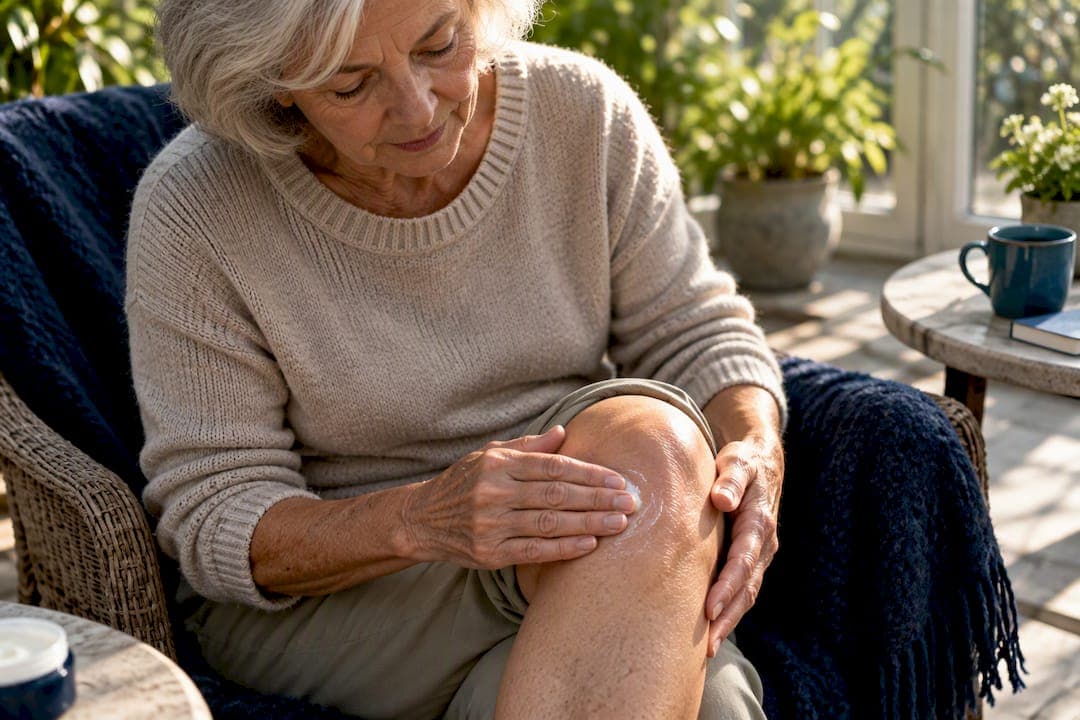
Short answer: CBD can be a reasonable, secondary option for some seniors with localized chronic pain, used cautiously and usually as a topical trial rather than a first-line replacement for prescribed therapies. The evidence base is mixed, so a clinician conversation before starting matters more than the product choice itself. Topical formats generally carry less risk than oral or inhaled CBD because they limit how much reaches the bloodstream.
TL;DR:
- Topical CBD products are safer for seniors as they limit systemic absorption and reduce drug interaction risks compared to oral or inhaled forms.
- Evidence on CBD's effectiveness in older adults is mixed, with some surveys reporting pain relief and others showing no clear benefits over placebo.
- Seniors considering CBD should have a clinician review their medications, start with low doses, and monitor for side effects like drowsiness or liver enzyme changes.
- Only products with third-party testing and clear labeling should be used to avoid contamination and inaccurate dosing.
- A structured four-week trial with consistent application and diary notes can help determine if CBD provides noticeable pain relief.
Table of Contents
- What the evidence says about CBD for arthritis, neuropathy, and chronic pain in older adults
- Safety, side effects, and drug interactions seniors must know
- Which forms work best for senior pain: topical balms vs oral vs inhaled
- A safe 4-week trial plan seniors can follow
- How to choose a quality CBD product for seniors
- Topical CBD balms as a practical option for seniors
- Try a topical CBD balm with a risk-free trial
- Sources
- FAQ
What the evidence says about CBD for arthritis, neuropathy, and chronic pain in older adults
Research on CBD for chronic pain in older adults does not point in one direction. A review of CBD use in older adults found mixed results on both safety and effectiveness, and it recommended that any trial happen under clinician guidance with attention to product quality and liver monitoring. Some randomized controlled trials of topical CBD for osteoarthritis have found no clear advantage over placebo, which tempers expectations for anyone hoping for a guaranteed fix.
Patient surveys tell a different, more optimistic story. A survey of arthritis patients reported an average 44% reduction in pain scores, and many respondents said they reduced or stopped other medications after starting CBD. The authors were careful to note that survey data cannot prove cause and effect the way a controlled trial can, and they called for more rigorous studies.
Registry data adds another layer. A retrospective analysis comparing CBD-dominant and THC-based treatments in older patients found that CBD-dominant preparations were generally better tolerated over 24 weeks, with fewer adverse reactions than THC-heavy alternatives. That finding is exploratory and has not been confirmed in a randomized trial, so it should be read as a signal worth watching rather than settled fact.
Three points worth holding onto:
- Controlled trials and real-world surveys often disagree, and both types of evidence have limits.
- CBD-dominant products tend to be tolerated better than THC-dominant ones in older cohorts.
- No study has shown CBD to be a reliable cure for arthritis or neuropathy pain.
A patient survey found a notable average pain reduction after CBD use, according to research on patient-perceived effects, though the authors caution that self-reported results are not the same as trial-confirmed efficacy.
Safety, side effects, and drug interactions seniors must know
CBD is generally considered low-risk compared with many prescription pain medications, but it is not free of concerns for older adults. Common side effects include drowsiness, dizziness, dry mouth, and gastrointestinal upset. Less commonly, systemic CBD use has been linked to elevated liver enzymes, which is why monitoring matters for anyone taking it in oral or capsule form.
The bigger concern for seniors is drug interaction risk. CBD inhibits CYP450 liver enzymes, the same pathway that metabolizes many common prescriptions. The Arthritis Foundation's guidance on CBD warns specifically about this interaction and recommends talking with a healthcare provider before starting CBD, particularly for anyone on blood thinners, certain antidepressants, or other prescription pain medications.
A few medication categories deserve extra caution:
- Blood thinners like warfarin, where CBD can alter how the drug is processed.
- Certain antidepressants and anti-seizure medications that share the same liver enzyme pathway.
- Other pain medications, including some opioids, where combined sedative effects can raise fall risk.
Older adults also process drugs differently than younger people due to changes in liver function and body composition, a point geriatric nursing guidance raises directly when discussing CBD and aging. Anyone considering systemic CBD should ask about baseline liver testing first, watch for unusual drowsiness that could increase fall risk, and tell every provider, not just one, that CBD is part of the routine.
Pro Tip: Bring the exact CBD product label to every medical appointment so your clinician or pharmacist can check it against your current prescriptions.
Which forms work best for senior pain: topical balms vs oral vs inhaled
Format matters as much as dose when it comes to managing risk. Topical balms applied directly to a sore knee or joint stay mostly local, with minimal absorption into the bloodstream, which lowers both interaction risk and the odds of drowsiness or dizziness. This makes topicals a sensible starting point for localized arthritis or neuropathy pain, a point echoed in independent guidance on CBD benefits for aging adults.
Oral and sublingual forms, including tinctures and capsules, reach the bloodstream and therefore carry more interaction risk through the CYP450 pathway discussed above. They may suit widespread pain that a balm cannot reach, but they need more caution and clinician input.
Inhaled or vaped CBD acts fastest but comes with its own respiratory concerns, and it is generally not recommended for older adults given the added risks to lung health.
- Topical: lowest systemic exposure, simplest dosing, best fit for a single sore joint.
- Oral or sublingual: more systemic reach, useful for broader pain, higher interaction risk.
- Inhaled: fastest onset, but respiratory concerns make it a poor fit for seniors.
For more detail on how these formats compare, see this breakdown of topical versus oral CBD.
A safe 4-week trial plan seniors can follow
A structured trial makes it easier to tell whether CBD is actually helping, rather than guessing. The PMC review on CBD use in older adults outlines the same start-low, go-slow approach clinicians recommend for this age group.
- Before starting, list every current medication and supplement, then review it with a clinician or pharmacist, including a request for baseline liver tests if systemic use is planned.
- For topical products, apply a small amount to the affected area twice daily for the first week.
- For sublingual products, start at 5 to 10 milligrams twice daily rather than jumping to a higher dose.
- Keep a daily diary noting pain scores, sleep quality, and any side effects like dizziness or stomach upset.
- Review the diary at the two-week mark, adjust dose only slightly if needed, and reassess again at four weeks.
- Stop and call a clinician if side effects are serious, if new medications are added, or if daily function gets worse instead of better.
If four weeks bring no noticeable improvement, it is reasonable to conclude CBD is not working for that particular pain and to revisit other options with a clinician. For practical application tips, this guide to using CBD balm covers technique and timing.
Pro Tip: Apply topical CBD at the same times each day, like morning and bedtime, so it is easier to spot patterns in the symptom diary.

How to choose a quality CBD product for seniors
The CBD market is not tightly regulated, so label accuracy varies widely between brands. The PMC review points to inconsistent labeling and contamination risk as real concerns, which makes a few checks worth doing before buying anything.
- Look for a current third-party certificate of analysis (COA) showing cannabinoid potency and testing for pesticides, heavy metals, and residual solvents.
- Confirm THC content is at or below 0.3% and that dosing per application or serving is clearly stated.
- Avoid products with vague claims like "cures pain" or "clinically proven" without any study attached.
- Favor brands with clear customer support and a return policy, since that signals confidence in the product.
- Skip unusually cheap products with no lab documentation at all.
Topical CBD balms as a practical option for seniors
Topical formats deserve the attention they get in senior pain management because they keep the risk profile simple: apply locally, absorb minimally, and avoid most of the drug interaction concerns tied to oral use. That is the reasoning behind favoring a topical-first trial for localized joint or nerve pain before considering systemic options.
Certain companies specialize in topical balms formulated for pain relief and muscle recovery, built around the principle of targeted, localized application rather than whole-body exposure.
— Cindy
Try a topical CBD balm with a risk-free trial
If a topical trial makes sense for your joint pain, some companies offer balms formulated with CBD alongside arnica, menthol, and other natural ingredients aimed at soreness and inflammation.
- Some balms target muscle soreness, inflammation, and arthritis-related joint pain.
- Others are designed for muscle recovery, which may be useful for managing pain tied to activity or physical therapy.
- Certain sellers provide a refund policy for purchases, lowering the risk of trying something new.
Talk with your clinician before adding any CBD product to your routine, especially if you take prescription medication. When you are ready to start a topical trial, visit the Seriously Soothing Pain Balm and RIKKI TIKKI Recovery product page to get started.
Sources
- Cannabidiol (CBD) Use by Older Adults for Acute and Chronic Pain - PMC
- CBD for Arthritis Pain | Arthritis Foundation
This article is general information, not a substitute for advice from a qualified doctor. Consult a qualified healthcare professional about your own circumstances before acting on anything here.
FAQ
Does CBD help chronic pain in seniors?
Evidence is mixed: some patient surveys report meaningful pain reduction, while certain controlled trials find no benefit over placebo. A review of CBD in older adults recommends a cautious, clinician-guided trial rather than treating CBD as a proven cure.
What are the potential side effects of taking CBD?
Common side effects include drowsiness, dizziness, dry mouth, and stomach upset, with rare cases of elevated liver enzymes in systemic use. CBD also inhibits CYP450 liver enzymes, which can affect how other medications are processed, according to the Arthritis Foundation.
What is the best CBD for seniors?
The safest starting point for most seniors with localized joint or muscle pain is a topical product, since it limits systemic absorption and interaction risk. Mongoose CBD Co.'s Seriously Soothing Pain Balm is formulated specifically for arthritis-related pain and muscle soreness, alongside its RIKKI TIKKI Recovery balm for recovery-focused use.
Can an 80 year old take CBD?
Age alone is not a barrier to trying CBD, but older adults process drugs differently and often take multiple medications, which raises interaction risk. Older adults should talk with a clinician or pharmacist first, start with a low-dose topical trial, and monitor closely for side effects.