
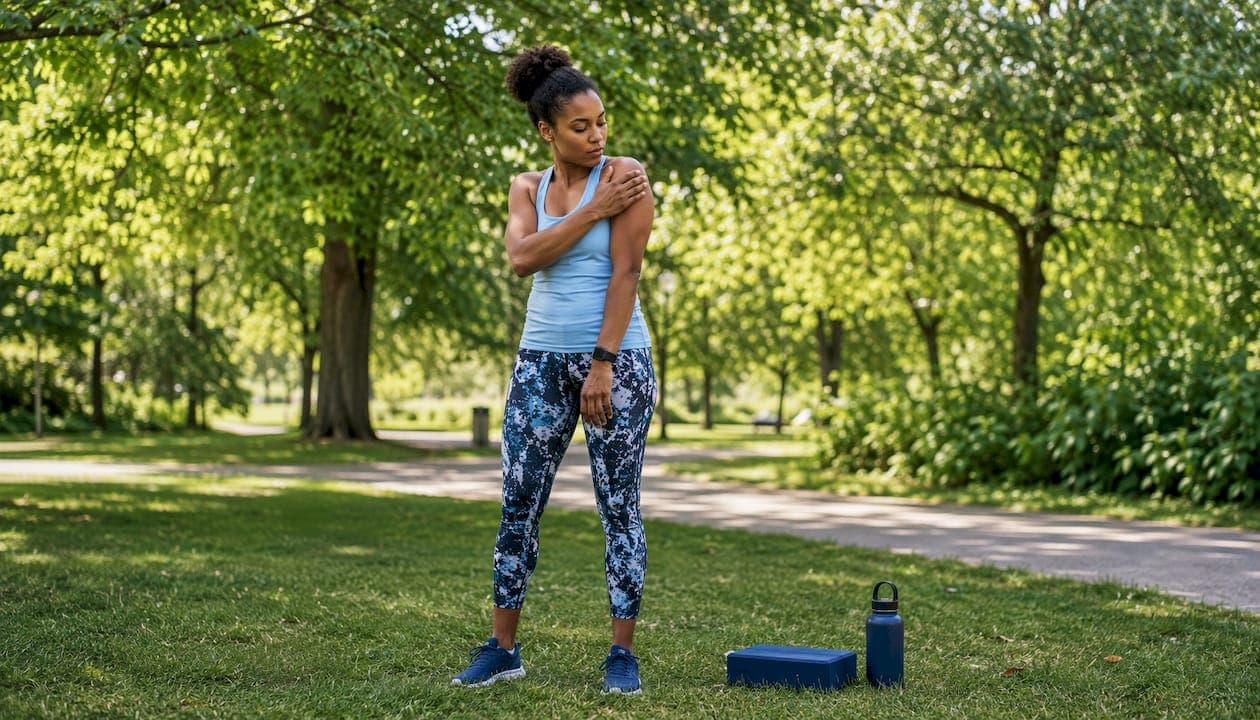
CBD may help some athletes with perceived soreness and functional recovery, but the overall evidence is modest and inconsistent. That is the honest verdict from the current body of human randomized controlled trials. Most studies show subjective benefits at best, while objective markers like peak torque, creatine kinase, and strength recovery often remain unchanged compared to placebo.
Here is what that means practically:
- ~23% of athletes surveyed reported using cannabis or cannabinoids in the previous year, reflecting real demand, not fringe interest.
- Human RCTs show the clearest signals for perceived soreness and functional interference, not for objective muscle repair.
- The World Anti-Doping Agency (WADA) removed CBD from its prohibited list, but THC and other cannabinoids remain banned. Broad-spectrum products carry real doping risk.
- The FDA and NIH have flagged mild side effects and drug interaction concerns with systemic CBD use.
- Recreational athletes trialing THC-free isolate topicals face the lowest risk. Elite competitors under anti-doping rules should consult team medical staff before using any cannabinoid product.
Mongoose CBD Co.'s topical balms sit squarely in the safest, most practical category for athletes: THC-free, high-concentration topicals formulated with botanicals that support perceived relief. Whether that translates to faster objective recovery is a harder question, and the research is not there yet.
Table of Contents
- What do human studies actually show about CBD for muscle recovery?
- How could CBD affect recovery? The physiology, simply explained
- Topical vs. oral CBD: which route makes sense for sore muscles?
- Safety, side effects, doping risk, and U.S. legality for athletes
- How to use CBD for recovery: dosing, timing, and a practical trial protocol
- What the research still cannot tell us, and what that means for you
- How does CBD compare to NSAIDs, ice baths, and physical therapy?
- Mongoosecbd recovery balms: formulated for athletes who want a safer option
- Key Takeaways
- A conservative approach to trialing CBD that actually makes sense
- Primary sources and further reading
What do human studies actually show about CBD for muscle recovery?
The short answer: signals exist, but they are modest and often limited to subjective outcomes.
| Study | Population | Formulation / Route | Dose | Main Outcomes |
|---|---|---|---|---|
| CBD+CBG beverage powder RCT | N=40, trained adults | CBD 35 mg + CBG 50 mg + BCAAs + Mg, oral | Repeated dose | Reduced functional interference at 72 h; no effect on objective markers |
| Topical CBD ointment RCT | — | Topical ointment, applied post-DOMS | Not specified | No significant difference in circumference, MVIC, or VAS soreness |
| Topical CBD gel pilot | Trained adults | Topical gel, crossover | Not specified | Null for concentric torque, plasma myoglobin, DOMS; moderate effect sizes for isometric torque at some time points |
| Oral CBD oil crossover | Advanced athletes | CBD oil vs CBD-solu, oral | Repeated dose | Myoglobin reduced in advanced athletes with CBD oil; inconsistent across other markers |
| CBD oil, post-ECC dose | 13 untrained men | Oral CBD oil | single doses at POST, 24 h, 48 h | No effect on soreness, arm circumference, joint angle, or peak torque |
The pattern across these trials is telling. Functional interference scores and average soreness showed the clearest signals in the multi-ingredient beverage powder study, but that formulation combined CBD with CBG, BCAAs, and magnesium, making it impossible to isolate CBD's contribution. The topical RCTs consistently failed to move objective measures: no meaningful changes in maximal voluntary isometric contraction, circumference, or VAS soreness scores in the ointment trial.
A few important caveats about this body of evidence:
- Sample sizes are small across the board (13–40 participants), limiting statistical power.
- Doses vary enormously: single-dose studies have tested roughly 16 mg up to 300 mg, and repeated-dose studies used lower amounts in multi-ingredient blends.
- Training status matters. The oral crossover study found myoglobin reductions specifically in "advanced" athletes using CBD oil, but not consistently across all markers or preparations.
- Most trials are pilot designs, not powered confirmatory studies.
Narrative reviews summarizing this literature reach the same conclusion: preclinical mechanisms are plausible, but translating them into consistent human recovery benefits has not happened yet. The evidence is in early stages, and marketing claims frequently outrun what the trials actually support.
How could CBD affect recovery? The physiology, simply explained
CBD does not work the way ibuprofen does. It does not block a single enzyme or receptor with high specificity. Instead, it interacts with several systems simultaneously, which is both why it is interesting and why predicting its effects is complicated.
The endocannabinoid system (ECS) regulates pain signaling, inflammation, and tissue repair throughout the body. CBD's relevant molecular targets include:
- TRPV1 (transient receptor potential vanilloid 1): a pain and heat receptor that CBD desensitizes, potentially reducing the intensity of pain signals after muscle damage.
- 5-HT1A (serotonin receptor): CBD's partial agonism here may contribute to its analgesic and anxiolytic effects, relevant to perceived soreness.
- Cytokine modulation: preclinical work suggests CBD can reduce pro-inflammatory cytokines like TNF-alpha and IL-6, which are elevated after intense exercise.
- CB1 and CB2 receptors: CBD has low direct affinity for these receptors but modulates them indirectly, influencing both central pain perception and peripheral immune responses.
Early preclinical work also points to CBD's potential role in satellite cell differentiation, the process by which muscle stem cells activate and contribute to repair after damage. That is genuinely interesting, but it remains preclinical. No human trial has demonstrated that CBD accelerates satellite cell activity or measurably speeds structural muscle repair.
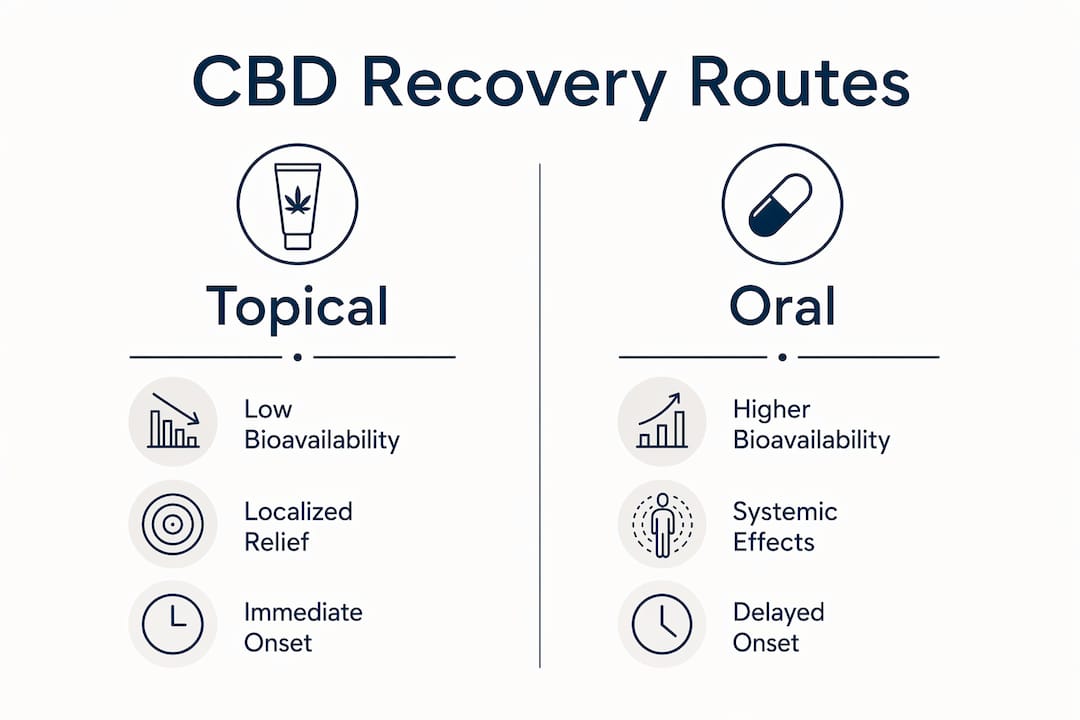
The bioavailability problem is real and often underappreciated. Oral CBD has notoriously variable absorption, and different oral preparations produce materially different blood and tissue exposures. CBD oil versus a solubilized CBD preparation can yield different biomarker responses in the same athletes. Topical CBD faces a different barrier: skin penetration limits how much reaches deeper muscle tissue, which is why topical RCTs consistently show null results for objective muscle recovery markers even at high concentrations.
Pro Tip: Apply a topical CBD balm immediately after training while skin is warm and blood flow is elevated. Warm skin has greater permeability, and pairing application with light massage may improve local absorption, even if systemic levels remain low.
Research on athlete cannabinoid use shows roughly 23% of athletes have used cannabinoids in the past year, suggesting widespread experimentation. The gap between that adoption rate and the current evidence base is significant.
Topical vs. oral CBD: which route makes sense for sore muscles?
The route you choose shapes what CBD can realistically do. A topical balm and an oral tincture are not interchangeable, even at the same milligram dose.
| Route | Bioavailability | Onset | Evidence Strength | Best Use Case |
|---|---|---|---|---|
| Topical balm/gel | Low systemic; local tissue only | minutes (sensory) | Weak (null RCTs) | Localized perceived relief, sensory comfort |
| Oral oil/tincture | 6% (variable) | 30–90 min | Mixed (some subjective signals) | Systemic anti-inflammatory intent, sleep support |
| Capsules | Similar to oral oil | 60 min | Limited data | Convenience, consistent dosing |
| Transdermal patch | Moderate systemic | 1–4 h | Very limited data | Sustained low-level systemic delivery |
| Beverage powder (with co-ingredients) | Moderate (formulation-dependent) | 30–60 min | Modest (one positive RCT, multi-ingredient) | Post-workout systemic recovery blend |
Topicals are the right choice when you want localized comfort without systemic exposure. That matters for athletes who want to minimize any risk of detectable cannabinoids in urine. The sensory botanicals in a well-formulated balm, things like menthol, arnica, eucalyptus, and cayenne, likely drive much of the perceived relief through heating and cooling signals rather than deep tissue CBD penetration. That is not a flaw; it is a feature. Perceived soreness reduction has real value for training adherence and comfort.
Oral or sublingual CBD is the route to consider if you are targeting systemic inflammation, sleep quality, or centralized pain perception. The evidence is still mixed, but the mechanism is more plausible for systemic effects than topical application. The trade-off is higher doping risk if you use broad-spectrum or full-spectrum products.
A few practical points for athletes choosing a formulation:
- THC-free isolate products carry the lowest doping risk for both topical and oral routes.
- Multi-ingredient oral formulations (CBD combined with CBG, BCAAs, or magnesium) showed the most promising functional results in trials, though isolating CBD's role is impossible.
- High-concentration topicals (1,000 mg/oz) have been tested in RCTs and still failed to produce consistent objective recovery benefits, so concentration alone is not a reliable efficacy predictor.
- Onset for sensory relief from topicals is faster than for systemic oral effects, making topicals more practical immediately post-training.
Safety, side effects, doping risk, and U.S. legality for athletes
CBD's safety profile in short-term human trials is generally favorable. The side effects reported are mild: GI upset, loose stools, dry mouth, and occasional fatigue. No serious safety signals have emerged in short-duration studies at doses used in recovery research. That said, long-term safety data in athletes is essentially absent.
The drug interaction concern is more clinically significant than most athletes realize. CBD inhibits the CYP450 enzyme system, specifically CYP3A4 and CYP2C9, which metabolizes a wide range of medications. If you take anticoagulants like warfarin, certain antidepressants, or antiepileptics, CBD can alter their blood levels in ways that are clinically meaningful. Talk to a physician before adding systemic CBD to any medication regimen.
Doping risk is the most underappreciated hazard for competitive athletes. WADA removed CBD from its prohibited list, but THC and all other natural and synthetic cannabinoids remain prohibited in-competition. Broad-spectrum CBD products can produce detectable urinary concentrations of prohibited cannabinoids even with daily use of supplements labeled as "broad-spectrum." A positive test carries the same consequences regardless of intent. The only defensible choice for tested athletes is a verified THC-free isolate with a batch-specific certificate of analysis (COA).
In the United States, hemp-derived CBD products containing less than 0.3% THC are federally legal under the 2018 Farm Bill. State laws vary, and product quality is not federally regulated in the way pharmaceuticals are. The FDA has not approved any CBD product for muscle recovery, and mislabeling is a documented problem in the consumer market.
Athlete safety checklist:
- Confirm the product uses CBD isolate, not broad-spectrum or full-spectrum extract.
- Request a batch-specific COA from an accredited third-party laboratory.
- Verify the COA tests for THC, heavy metals, pesticides, and microbial contaminants.
- Disclose CBD use to your team physician or sports medicine provider, especially if you take other medications.
- Stop use of any non-isolate product well before competition if you are subject to anti-doping testing.
- Never rely on a product label alone. Mislabeling in the CBD market is well-documented.
This article is general information, not medical or legal advice. Confirm current WADA rules and any applicable state regulations with the relevant governing body or a qualified professional.
How to use CBD for recovery: dosing, timing, and a practical trial protocol
The honest starting point: there is no established optimal dose for muscle recovery. Trials have used single doses ranging from roughly 16 mg to 300 mg orally, and repeated-dose studies have used lower CBD amounts combined with other ingredients. That range reflects how early the science is, not a well-characterized dose-response curve.
Practical dosing ranges from the trial literature:
- Oral single-dose studies: approximately 16 mg to 300 mg, with variable results across that range.
- Repeated oral dosing: lower CBD amounts (around 35 mg in the multi-ingredient beverage powder trial) combined with CBG, BCAAs, and magnesium showed functional benefits.
- Topical: concentration matters less than you might expect. High-concentration formulations (1,000 mg/oz) still produced null results for objective markers in RCTs.
Timing:
- For topicals, apply immediately post-exercise while skin is warm. Reapply 6–8 hours later if soreness persists.
- For oral formulations, post-exercise dosing aligns with most trial protocols. Some athletes use a second dose before sleep to support recovery during rest.
- Expect DOMS-related signals to appear within 24–72 hours. That is the window where trials have detected the most meaningful differences, and it is the window to pay attention to during a personal trial.
Product selection checklist for athletes:
- THC-free isolate labeling, confirmed by COA.
- Batch-specific third-party lab testing (not just brand-level testing).
- Clear mg per serving or mg per ounce concentration listed on the label.
- Ingredient transparency: full list of co-ingredients, especially for multi-ingredient formulations.
- No proprietary blends that obscure individual ingredient doses.
- Manufacturer contact information and batch traceability.
Sample recovery routine integrating CBD:
CBD works best as an adjunct, not a replacement for the recovery methods with the strongest evidence base. Sleep, protein intake, active recovery, and contrast therapy all have more robust human data than CBD. A practical integration looks like this: prioritize 7–9 hours of sleep and 1.6–2.2 g/kg of protein daily, use active recovery or contrast baths on heavy training days, and add a topical CBD balm post-session for perceived comfort. If you are trialing oral CBD, add it after the topical protocol is established so you can attribute any changes accurately.
7–14 day trial protocol:
- Choose a single THC-free isolate product (topical or oral, not both simultaneously).
- Record baseline soreness, sleep quality, and training performance in a log before starting.
- Apply or dose consistently at the same time each day, post-exercise.
- Log soreness (0–10 scale), functional interference, and sleep quality daily.
- At day 7, compare log entries to baseline. Look for changes in perceived soreness and daily function, not just acute pain.
- If no signal by day 14, the product may not be effective for you at that dose and route.
- Do not change training load, sleep, or nutrition during the trial period. Confounds make the data useless.
What the research still cannot tell us, and what that means for you
The current evidence base has real structural problems. Every trial reviewed here is either a pilot study, a small crossover, or a repeated-dose study with fewer than 50 participants. None are adequately powered to detect modest effect sizes with confidence. Heterogeneous products, doses, and populations make meta-analytic pooling unreliable. And most trials measure DOMS in recreationally active or untrained participants, not the advanced athletes who are most likely to be reading this.
The biggest open questions:
- What is the optimal dose for a trained athlete, and does it differ by sport or training volume?
- How much of the benefit in positive trials comes from CBD versus co-ingredients like CBG, BCAAs, or magnesium?
- Does training status fundamentally change the response? The oral crossover data suggests it might.
- What are the long-term safety implications of daily CBD use in athletes over months or years?
- Can topical formulations be optimized for deeper tissue penetration, or is systemic delivery inherently necessary for objective recovery benefits?
The practical recommendation by athlete level: Recreational athletes can reasonably trial a THC-free CBD isolate topical as a low-risk adjunct for perceived soreness, with realistic expectations of subjective comfort rather than accelerated objective recovery. Advanced athletes should approach oral CBD with more caution, given variable bioavailability and the limited evidence of benefit beyond subjective measures. Elite athletes competing under anti-doping rules should consult team medical staff, use only certified THC-free isolates with batch COAs, and treat any cannabinoid product as a calculated risk until the evidence base matures.
How does CBD compare to NSAIDs, ice baths, and physical therapy?
Putting CBD in context against established recovery interventions is useful, because the comparison reveals both where CBD might fit and where it clearly does not compete.
NSAIDs (ibuprofen, naproxen): These have a well-characterized mechanism, blocking COX-1 and COX-2 enzymes to reduce prostaglandin synthesis and inflammation. They reliably reduce perceived soreness and have decades of human trial data. The trade-offs are real: GI irritation, potential blunting of training adaptations with chronic use, and cardiovascular risk with long-term use. CBD does not carry those specific risks, but it also does not have NSAIDs' proven efficacy for acute pain reduction. For athletes who want to avoid NSAIDs' adaptation-blunting effect, CBD is a lower-risk alternative, though a less proven one.
Ice baths and cold water immersion: The evidence here is genuinely mixed in a different way. Cold water immersion reduces perceived soreness and may accelerate return to training, but it also appears to blunt hypertrophic adaptations when used chronically after strength training. CBD topicals with cooling botanicals like menthol and eucalyptus produce a similar sensory experience without the systemic temperature drop. That is not the same physiologically, but for athletes who want the comfort signal without the adaptation trade-off, a cooling topical is worth considering.
Physical therapy and active recovery: These have the strongest evidence base of any recovery intervention. Structured movement, soft tissue work, and progressive loading accelerate functional recovery in ways no supplement has matched. CBD is not a substitute for any of this. The most defensible position is that CBD, particularly a well-formulated topical, can make the perceived discomfort of recovery more manageable, which may support adherence to active recovery protocols.
The honest comparison: CBD sits below NSAIDs and physical therapy in terms of proven efficacy, roughly alongside other sensory-relief interventions like topical menthol or arnica. Its advantage over NSAIDs is a more favorable short-term side effect profile. Its advantage over ice baths is no adaptation trade-off. Its ceiling, based on current evidence, is perceived comfort, not accelerated structural repair.
Mongoosecbd recovery balms: formulated for athletes who want a safer option
If you have read this far, you know what to look for: THC-free isolate, third-party batch testing, a clear COA, and botanicals that support perceived relief while you do the real recovery work. Mongoosecbd's topical balms are built around exactly that framework.
The Miracle Muscle Balm delivers a high CBD concentration per ounce alongside arnica, menthol, turmeric, eucalyptus, peppermint, and ginger. That ingredient stack is not decorative. Menthol activates TRPM8 cold receptors for immediate sensory relief; arnica has a long history of use for bruising and soreness; turmeric and ginger contribute anti-inflammatory botanicals. The formulation is vegan, non-GMO, paraben-free, cruelty-free, and THC-free.
The Seriously Soothing Pain Balm comes in multiple variants including Eucalyptus Mint for a cooling effect and Cinnamon & Clove for warming sensation, giving athletes a choice based on the type of sensory relief they prefer post-training. The Rikki Tikki Recovery is formulated specifically for muscle recovery with a similar botanical profile.
Apply a generous amount to the affected muscle group immediately after training, massage in for 60–90 seconds to support absorption, and reapply as needed. Layering with compression after application can extend the sensory effect. These are adjuncts to sleep, protein, and active recovery, not replacements. Mongoosecbd backs every purchase with a refund policy, which makes a personal trial genuinely low-risk.
Not sure which balm fits your training? Start with the Miracle Pain Balm or grab a free sample to test before committing to a full-size tin.
Key Takeaways
CBD for muscle recovery shows modest evidence for perceived soreness relief but has not consistently improved objective recovery markers like peak torque or creatine kinase in human RCTs.
| Point | Details |
|---|---|
| Evidence is modest and subjective | Human trials show signals for perceived soreness and functional interference, not objective strength or biomarker recovery. |
| Doping risk is real | Broad-spectrum products can trigger positive tests; use only THC-free isolates with a batch-specific COA if you compete. |
| Topicals work through sensory botanicals | High-concentration topicals still showed null results for objective markers; perceived relief comes largely from menthol, arnica, and similar ingredients. |
| Run a structured 7–14 day trial | Log soreness and function daily; keep training load, sleep, and nutrition constant so you can actually attribute any change. |
| Mongoosecbd for athlete-safe topicals | The Miracle Muscle Balm and Seriously Soothing Pain Balm are THC-free formulations with botanical co-ingredients and a refund policy. |
A conservative approach to trialing CBD that actually makes sense
Most of the advice athletes get about CBD falls into one of two camps: breathless enthusiasm from supplement brands, or dismissive skepticism from coaches who have not read the trials. Neither is useful.
The evidence is genuinely mixed, and that is okay. Mixed evidence does not mean "useless." It means the effect is probably real but modest, variable across individuals, and dependent on factors we do not fully understand yet, including training status, dose, formulation, and what you are measuring. Perceived soreness is a legitimate outcome. If a topical balm makes the 48-hour post-leg-day window more manageable, that has real value for training adherence and quality of life.
My recommendation for any athlete considering CBD: start with a topical THC-free isolate, keep a training log during the trial, and do not change anything else. If you are on medications, talk to your doctor first. If you compete under WADA or USADA rules, get a batch COA before you open the tin, not after. And treat CBD as one tool in a recovery stack that still needs to include sleep, protein, and structured movement at its foundation.
Elite athletes should be more cautious, not because CBD is dangerous, but because the doping risk from mislabeled or contaminated products is real and the consequences of a positive test are severe. The science will catch up. Until it does, certified THC-free isolates and conservative dosing are the only defensible approach for anyone whose livelihood depends on a clean test.
Primary sources and further reading
The trials and reviews below form the evidence base for this article. Each is peer-reviewed and publicly accessible.
| Source | What it covers |
|---|---|
| CBD+CBG beverage powder RCT (PMC10653658) | Repeated-dose pilot RCT; functional interference and soreness signals at 72 h; multi-ingredient formulation |
| Topical CBD ointment RCT (PMC10824304) | Double-blind RCT; null results for MVIC, circumference, and VAS soreness after DOMS protocol |
| Oral CBD crossover study (PMC10997358) | Short-term chronic oral CBD; mixed biomarker results; training-status-dependent myoglobin response |
| Narrative review on CBD and sports recovery (PMC11397692) | Summarizes preclinical mechanisms and human trial heterogeneity; cautions on marketing claims |
| Topical CBD gel pilot (Journal of Cannabis Research) | Null for most objective markers; moderate isometric torque effect sizes; doping risk discussion |
| CBD oil, post-ECC dose (PubMed 33481484) | 13 untrained men; no effect on soreness, joint angle, or peak torque |
| Skeletal muscle effects review | Broader review of CBD effects on skeletal muscle physiology |
| Narrative review, sports recovery | Earlier narrative review covering anti-inflammatory and analgesic mechanisms relevant to athletes |
For WADA guidance on cannabinoids, consult the current Prohibited List at wada-ama.org directly, as the list is updated annually and the in-competition versus out-of-competition distinction for cannabinoids has changed in recent years.