
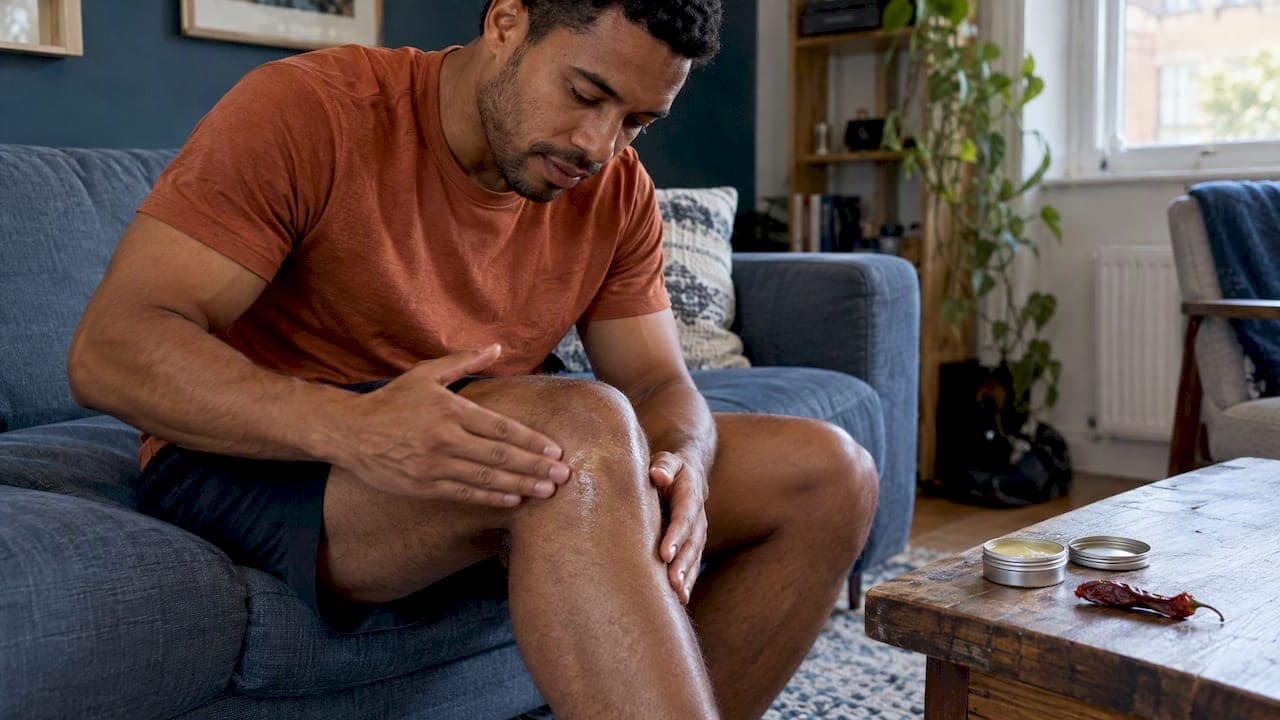
Cayenne muscle balm works through capsaicin, the compound that makes peppers hot. Applied to the skin, capsaicin acts on pain-signaling nerve endings. With repeated use it can reduce pain in some joint and muscle conditions. It does not work in one application. It burns at first. The best evidence is for osteoarthritis pain, not for post-workout soreness.
This guide covers the benefits, the limits, the side effects and how to choose a balm.
TL;DR
- Cayenne balms rely on capsaicin. It reduces substance P, a pain-signaling chemical, in local nerve endings.
- A meta-analysis of 8 randomized trials found topical capsaicin reduced osteoarthritis pain more than placebo.
- Results build over weeks of regular use. One application is not the test.
- Burning on application is expected. Hands must be washed or gloved, because capsaicin irritates eyes.
- Cayenne is not CBD. The two are separate ingredients with separate evidence.
Table of Contents
- What cayenne does in a muscle balm
- The benefits, ranked by strength of evidence
- Cayenne versus CBD: do not mix up the evidence
- What to expect when you use it
- How to apply a cayenne balm
- Warming and cooling ingredients: do they cancel out?
- Our perspective
- How to choose a cayenne or capsaicin balm
- Where our balms fit
- Homemade cayenne salves: worth it?
- FAQ
- Sources
What cayenne does in a muscle balm
Cayenne pepper contains capsaicin. In a balm, capsaicin is the active ingredient. It is a counterirritant: it creates a warm or hot sensation on the skin that changes how the area feels.
The mechanism is local. Capsaicin depletes substance P, a neurotransmitter involved in pain signaling, in nearby nerve endings. Our own review of balms for arthritis notes this takes consistent, repeated application over several weeks. It is desensitization, not instant numbing.

The warmth is also why people like these balms. Many users say the heat feels soothing on a stiff back or knee. The sensation alone is not proof of a drug effect. We cover that distinction in our piece on warming versus cooling balms.
The benefits, ranked by strength of evidence
Not every claim about cayenne has the same support. Here is how the benefits line up.
| Claimed benefit | Evidence level | What we can say |
|---|---|---|
| Osteoarthritis pain | Moderate | Trials show reduced pain versus placebo |
| Chronic low back pain | Early | One small study of a cayenne cataplasm reported benefit |
| Nerve-related local pain | Moderate, expert consensus | Used in local treatment plans |
| Post-exercise soreness | Weak | Little direct data |
| General "detox" or circulation claims | Not supported | Avoid these claims |
Osteoarthritis and joint pain
This is the strongest case. A systematic review and meta-analysis pooled 8 randomized controlled trials with 498 patients. It found topical capsaicin reduced pain severity in osteoarthritis. The evidence is limited in quality and scope, so the result should be read as promising, not settled.
A network meta-analysis compared topical NSAIDs with topical capsaicin for osteoarthritis pain. It is a useful place to see how the two options sit side by side. Capsaicin is an option, not a replacement for medical care.
People with arthritis often ask whether a balm can stand in for oral medication. It cannot be promised. Talk to a doctor about any joint condition that is getting worse.
Chronic low back pain
A small study of a cayenne pepper cataplasm tested repeated applications in people with non-specific chronic low back pain. It reported reduced pain and improved mobility. It tested a specific cataplasm, not every balm on a shelf. Treat it as an early signal.
Localized nerve pain
An expert consensus paper from five pain specialists covers local treatments for localized neuropathic pain. Topical agents are part of that discussion. A medical overview from Acibadem Hospitals Group says the clearest medical use of cayenne is capsaicin in topical products, which may help some forms of nerve pain or joint and muscle discomfort. It also says many popular claims about cayenne for cleansing or rapid weight loss lack support.
Sore muscles after training
The direct evidence for athletes is thin. Most good data are for joints and nerves. Athletes still use warming balms because the sensation can feel good before or after a session. That is a comfort effect. We do not claim a proven recovery effect for it.
Cayenne versus CBD: do not mix up the evidence
Some balms combine cayenne with CBD. The two ingredients have different evidence, and the claims should be kept apart.
For CBD, the picture is cautious. A 2026 double-blinded pilot study with 28 participants found no significant improvement in muscle recovery, jump performance or pressure-pain threshold after a topical CBD product. A 2024 pilot study also concluded topical CBD may not reduce soreness or improve performance. Both are small. Researchers also warn against over-generalizing small trials to every topical, because skin penetration and formulation vary widely.

The FDA has not approved non-prescription CBD products for treating pain or arthritis. It has sent warning letters to companies marketing them that way. For that reason, we do not promise that our balms treat any condition. For more on the CBD side, see our review of what the evidence shows for muscle recovery.
In short: if a cayenne balm helps, capsaicin is the better-supported reason. If a balm contains CBD, the CBD should be judged on its own, separately.
What to expect when you use it
The first use is not the most comfortable. Plan for that.
The burn is expected
The burning sensation is an expected pharmacological effect, not a sign of skin damage. It typically eases with repeated use as nerve fibers desensitize. The same source lists common reactions, with burning the most frequent, followed by redness, itching and dry skin.
Burning can still be too much. Stop and wash the area if it becomes intense, blistering or spreading.
Timeline
- Day 1: warmth or tingling within minutes. This is the counterirritant effect.
- Week 1: burning usually eases with regular use.
- Weeks 2 to 4: this is when desensitization, and any pain change, is more likely to show.
These are general patterns, not guarantees. A balm is worth judging over several weeks of consistent use, not a single afternoon.
Keep it away from eyes
Capsaicin can cause severe eye or mucous membrane irritation if it transfers from your hands. Practitioners advise using gloves or an applicator. Wash hands thoroughly after use, even if you wore no glove. Do not touch your face for hours. Keep it off broken skin and away from children.
How to apply a cayenne balm
- Clean and dry the skin.
- Test a small patch first and wait for the reaction.
- Use a thin layer. More balm does not mean more relief.
- Use a glove or applicator, or wash hands right after.
- Do not cover with tight wraps or use a heating pad on top unless a clinician says so.
- Repeat as the label directs, and keep it consistent for a few weeks.
- Avoid use right before a hot shower. Heat can intensify the burn.
See also our page on balm side effects.
Warming and cooling ingredients: do they cancel out?
Many recovery balms mix warming and cooling agents. Menthol cools and distracts. Capsaicin warms. Clinical experts note that the perceived effect of these balms often comes from counterirritants rather than other ingredients. They also note that combining them can sometimes blunt the sensory benefit of each.
For buyers, this means two things. A strong tingle is not evidence the product works on tissue. And a balm built around one clear sensation may be easier to judge than one with several competing ones.
Our perspective
We make topical balms for athletes and for people with chronic pain. Our formulas combine 1,000 mg of CBD per ounce with botanicals such as arnica, menthol, turmeric, eucalyptus, peppermint, cinnamon, clove, ginger and cayenne pepper. The label on each tin lists exactly what is inside.
We hold a plain view of this topic. Cayenne has the better human evidence of the two headline ingredients, and it is for joint and nerve discomfort. The CBD evidence for muscle recovery is mixed to weak in small trials. We say that openly. Our own guide on arnica takes the same approach: it covers where the evidence is strong, bruises, and where it is not.
What we can offer is a balm that feels good, is made with care and is tested by a third party. We also back it with a full refund within 30 days. That lets you try it over the few weeks a topical needs, without risk. Judge it on your own results, and see a doctor for pain that persists.
— Cindy
How to choose a cayenne or capsaicin balm
Use these criteria.
- Know the active ingredient. Capsaicin or cayenne should be named on the label. "Heat blend" is vague.
- Look for third-party lab results. Experts advise brands that publish independent certificates of analysis for each batch. This is how you verify claimed CBD content and check for contaminants such as THC or heavy metals. The FDA notes that many products may contain inaccurate CBD levels because processing is not controlled industry-wide.
- Check for allergens. Cinnamon, clove and other botanicals can irritate sensitive skin.
- Be wary of cure language. A seller that promises to treat arthritis is making a claim the FDA has acted on.
- Look at the return policy. A balm takes weeks to judge. A refund window helps.
- Consider drug testing. Athletes who are tested should read our note on CBD sports massage and drug test safety.
Who should be careful
See a healthcare provider before using any CBD product. CBD can interact with common medications and affect liver function. Check with a clinician as well if you are pregnant, take blood thinners, have a skin condition at the application site, or have pain that is sudden, severe or follows an injury. Do not use capsaicin on open wounds.
Where our balms fit
Our balms suit people who want a topical for daily use on sore muscles and stiff joints. They are vegan, non-GMO, paraben-free, THC-free and cruelty-free. Prices run from $26.95 to $39.95 depending on the product.
- Seriously Soothing Pain Balm, Original: the base formula.
- Seriously Soothing Pain Balm, Cinnamon & Clove: a warming-scented option.
- RIKKI TIKKI Recovery: made for training and recovery.
Not sure which one? Start with the free sample. You can also see the full range on the Mongoose CBD Co. homepage. Every purchase is covered by the 30-day full refund.
For athletes, our write-ups on weightlifters using topical CBD over a 2 to 3 week trial and on CBD for swelling give more context.
Homemade cayenne salves: worth it?
Many top search results are recipes for cayenne salve made with infused oil and beeswax. They are popular for a reason: the ingredients are cheap and the process is simple.
The weak point is dose. Home salves vary in capsaicin strength from batch to batch, and there is no lab test. Too strong, and the burn is harsh. Too weak, and nothing happens. They also carry the same eye and skin risks as a store-bought balm, with less guidance. If you make one, keep it off the face and mark the jar. A tested product gives a more predictable result.
FAQ
What is cayenne salve used for?
People use it for achy joints, stiff muscles, back pain and some nerve-related discomfort. The evidence is best for osteoarthritis pain. It is not a treatment for injuries or serious conditions, and it is not a substitute for a doctor's care.
How long does a cayenne balm take to work?
The warming sensation starts within minutes. Any pain change from capsaicin usually needs regular use over several weeks, because the effect comes from gradual nerve desensitization. If nothing changes after a few weeks, or the pain worsens, stop and talk to a clinician.
Is the burning sensation normal?
Yes, burning is the most common reaction and tends to ease with repeated use. It should not be severe. Wash the area with cool water and stop using the balm if it blisters, swells or becomes very painful. Never touch your eyes after applying it.
Does cayenne balm work better than CBD balm?
They are different. Capsaicin has human trial data for osteoarthritis pain. Topical CBD has small pilot studies that did not show improved muscle recovery. A balm can contain both, but the benefit should be credited to the ingredient with evidence behind it, and you should judge the product by your own results.
Sources
- Efficacy and safety of topical capsaicin in osteoarthritis pain: systematic review and meta-analysis
- Topical NSAIDs and capsaicin in osteoarthritis: network meta-analysis
- Cayenne Pepper Cataplasm "Munari" and chronic low back pain
- Localized neuropathic pain: an expert consensus on local treatments
- Topical cannabidiol for muscle recovery after exercise-induced muscle damage, 2026
- Topical cannabidiol and muscle soreness: pilot study, 2024
- Research note on topical formulation and skin penetration
- FDA: what you need to know about products containing cannabis or cannabis-derived compounds
- Capsaicin: uses, dosage, side effects
- Counterirritant balms and perceived effect