
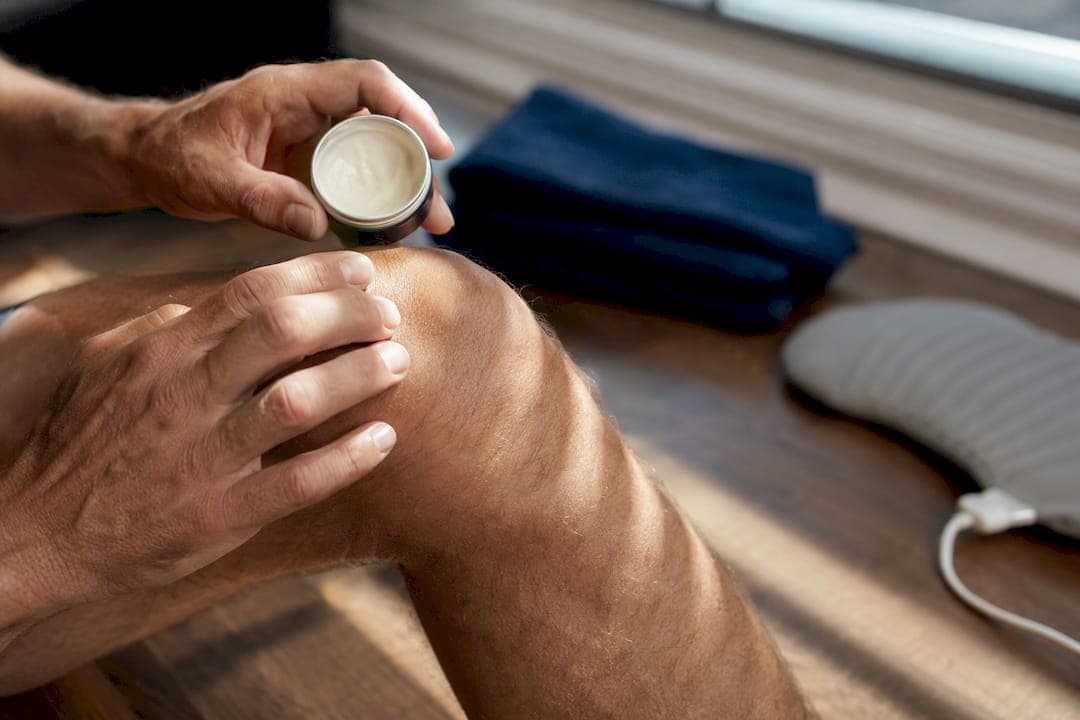
Topical CBD balms can genuinely help with localized swelling and muscle soreness, but they work best as a supportive tool, not a guaranteed anti-inflammatory fix. Most of the fast relief you feel comes from companion ingredients like menthol, arnica, or camphor working alongside CBD at the skin surface. To get real results, apply the right amount to clean skin, massage it in, and check the label for third-party testing before you buy.
TL;DR:
- Menthol and arnica in topical CBD balms provide faster, measurable relief from pain and stiffness than CBD alone, often within 30 minutes.
- Proper application, including timing around activity and thorough massage, significantly influences the effectiveness of swelling and soreness relief.
- Clinical evidence supports the real benefits of multi-ingredient formulations over CBD-only products, with a focus on sensory effects and localized microcirculation.
- Choose balms with third-party tested, high-quality ingredients and appropriate carrier bases, tailored to your preference for warming or cooling sensations.
- Use two to three applications daily, patch test beforehand, and avoid applying on broken skin or with external heat sources to prevent irritation.
Table of Contents
- How Do Topical CBD Balms Work on Swollen Areas?
- What Ingredients Actually Do the Work?
- How Should You Apply a Balm to Reduce Swelling?
- What Does the Clinical Evidence Actually Show?
- How Do You Choose the Right Balm?
- Mongoose CBD Co.'s Approach to Swelling and Recovery Balms
- Ready to Try a Targeted Recovery Balm?
- Sources
- FAQ
How Do Topical CBD Balms Work on Swollen Areas?
A balm rubbed into a swollen knee or a tight hamstring never reaches your bloodstream the way an oral capsule does. It works at the surface, interacting with receptors in the skin and underlying tissue while leaving the rest of your body largely untouched. That local focus is exactly why athletes and people managing arthritis reach for balms over pills when the problem is one specific joint or muscle group, not full-body inflammation.
Three things happen when a well-formulated balm goes on:
- Counter-irritant ingredients like menthol, camphor, or capsaicin create a cooling or warming sensation that competes with pain signals and can make swelling feel less severe almost immediately
- Massage-friendly bases (waxes, shea or cocoa butter) keep the formula in contact with skin long enough for ingredients to actually do something instead of evaporating in minutes
- Increased local microcirculation from warming or cooling agents may support the body's own tissue-repair process, according to formulation experts who study multi-ingredient topical design
The carrier base matters more than most buyers realize; for an example of thoughtful ingredient choices and product formats, check out the CBD Body Salve from Honest CBD Co. A thin, watery gel might feel refreshing but wear off in twenty minutes. A denser balm with a wax or butter base stays put during a workout or a full night's sleep.
What Ingredients Actually Do the Work?
Not every ingredient in a pain balm serves the same purpose, and knowing the difference helps you choose one that matches how you actually feel.
- Menthol delivers a fast, cooling sensation and is recognized in DailyMed's topical analgesic labeling as an active ingredient for temporary relief of minor muscle and joint aches, typically used at a 1.25% concentration and applied up to four times daily
- Arnica brings a longer track record in topical formulations; it appears alongside menthol in DailyMed-listed salve products indicated for muscle and joint aches, including arthritis and sprains
- Camphor and eucalyptus intensify the cooling effect and, according to patent and formulation literature, are combined with warming agents specifically to trigger counter-irritation while supporting local circulation
- Peppermint, cinnamon, and clove round out warming blends, often paired with CBD in recovery-focused balms for a slower, deeper heat rather than a sharp cooling snap
- Capsaicin produces a warming burn that some chronic pain sufferers prefer over cooling agents, though it demands more caution on sensitive skin
Statistic to know: a 30-patient reduction in stiffness within 30 minutes sounds abstract until you see it measured. A randomized, double-blind, placebo-controlled trial of a natural topical formula combining arnica and menthol found significant pain and stiffness reduction that fast, with benefits holding up over 14 days of twice-daily use.
Combinations aren't accidental. Brands pair cooling and warming agents deliberately to widen the sensory effect.
How Should You Apply a Balm to Reduce Swelling?
Application technique changes outcomes more than most buyers expect. A balm massaged properly into a sore knee works differently than one smeared on and left alone.
- Time it around activity. Apply after a workout, right after a shower when pores are open, or before bed so the balm has hours of uninterrupted contact time.
- Start small. A pea-sized amount covers most joints. Concentrate on the specific sore spot rather than spreading balm across a wide area.
- Massage for two to three minutes. Circular motion over the site helps boost local microcirculation and pushes the formula deeper than a quick rub.
- Repeat two to three times daily as tolerated. Consistency, not a single application, tends to produce the more reliable outcomes reported by first-time users who stick with a post-workout and before-bed routine.
- Wash your hands after applying anything with menthol or capsaicin. Touching your eyes afterward is a mistake you only make once.
Pro Tip: Patch test on a small area of skin 24 hours before your first full application, especially with warming ingredients like capsaicin or cinnamon, which can cause unexpected redness on sensitive skin.
Avoid applying to broken, cut, or already irritated skin. And skip layering a balm directly under a heating pad. Combining two heat sources on inflamed tissue can intensify irritation instead of easing it. For a deeper walkthrough of timing and dosage, Mongoosecbd's guide on how to use CBD balm for pain, sleep, and recovery covers routine-building in more detail.
What Does the Clinical Evidence Actually Show?
The evidence for topical formulas is real but narrower than marketing copy often suggests. The strongest data point comes from a randomized, double-blind, placebo-controlled trial testing a natural topical product with arnica and menthol. Patients experienced significant reductions in pain and stiffness within 30 minutes of application, and that improvement held up over 14 days of continued use compared to placebo.
That's a meaningful result, but it tested a multi-ingredient formula, not CBD in isolation. Separate research on CBD-only ointments for delayed onset muscle soreness (the deep ache you feel a day or two after a hard workout) found no significant advantage over placebo. Formulation quality is the variable that keeps showing up.
What this means for your shopping list:
- CBD alone, without complementary ingredients, has weaker standalone evidence for reducing swelling or soreness
- Menthol and arnica have documented, immediate, measurable effects on pain and stiffness
- The combination approach, CBD plus sensory-active botanicals, is where the practical benefit tends to concentrate
- Sensory relief (feeling cooler, feeling less tight) often arrives faster than any measurable reduction in actual tissue swelling
Treat topical balms as one piece of a broader recovery routine. Hydration, sleep, and gentle mobility work alongside anything you rub on, not instead of it.
How Do You Choose the Right Balm?
A crowded shelf of pain balms makes comparison shopping exhausting unless you know exactly what to check first.
- Third-party COA (Certificate of Analysis). A legitimate balm brand publishes lab results showing actual CBD content, confirming THC levels stay within legal limits, and screening for contaminants like heavy metals or pesticides.
- Strength per ounce. Look at milligrams of CBD relative to container size. Products formulated around 1,000mg per ounce sit at the higher-strength end of the market, useful for chronic or arthritic pain rather than occasional soreness.
- Full-spectrum versus broad-spectrum. Full-spectrum retains trace plant compounds that may work together; broad-spectrum strips THC entirely for buyers who want zero trace amounts.
- Cooling versus warming profile. Decide whether you want the snap of menthol and camphor or the slow heat of cinnamon, clove, and capsaicin before you buy, not after.
- Carrier base and texture. Waxier balms last longer during activity; lighter creams absorb faster but may need reapplication sooner.
- Fragrance and allergen flags. Anyone with sensitive skin should scan the ingredient list for essential oils that commonly trigger reactions.
- Refund policy. A brand confident in its formula backs it with a real return window, not just glowing product copy.
Mongoosecbd's guide to CBD balm ingredients that matter for pain relief walks through how to read a label critically instead of trusting marketing claims alone.
Mongoose CBD Co.'s Approach to Swelling and Recovery Balms
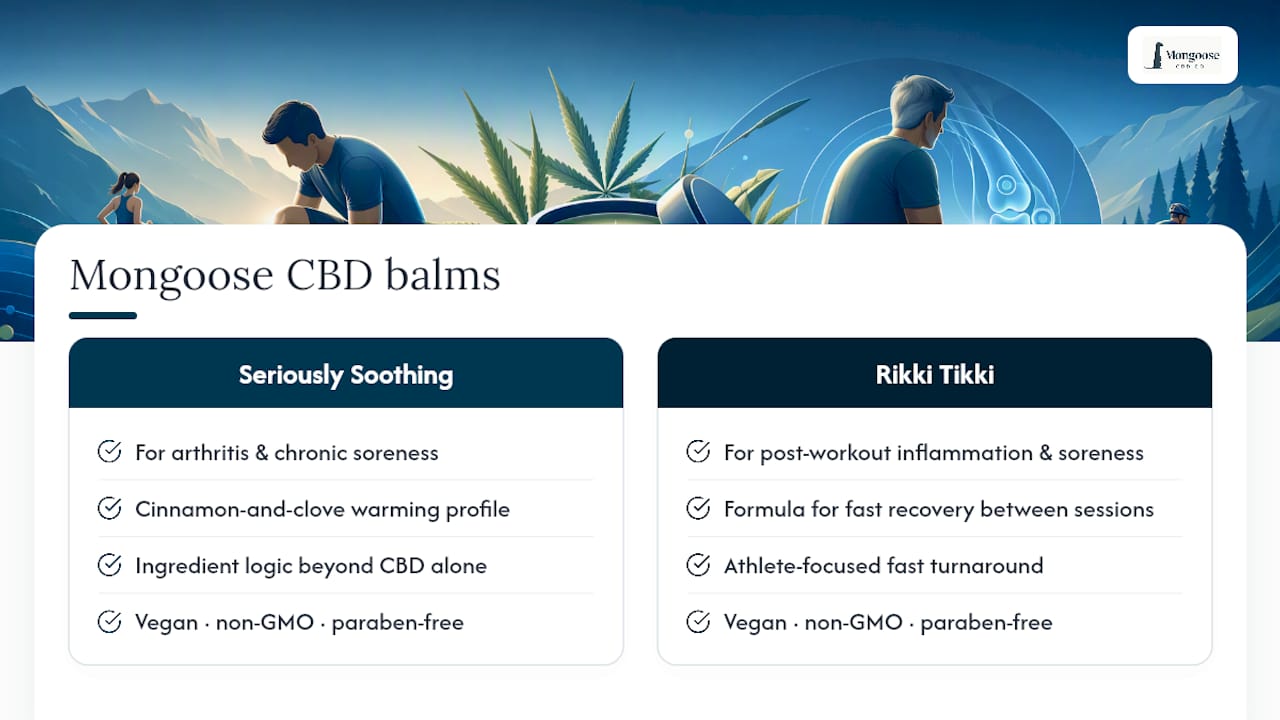
Mongoosecbd built its two flagship balms around the ingredient logic covered above rather than treating CBD as a solo act. The Seriously Soothing Pain Balm leans into a cinnamon-and-clove warming profile aimed at arthritis and chronic muscle soreness, while Rikki Tikki Recovery targets post-workout inflammation and soreness with a formula built for athletes who need a fast turnaround between sessions.
Both are vegan, non-GMO, and paraben-free. If arthritis pain is your main concern, Mongoosecbd's breakdown of what actually works for arthritis covers ingredient priorities specific to joint stiffness. Before your first application of any balm, patch test and check the current COA on the product page.
— Cindy
Ready to Try a Targeted Recovery Balm?
If you've been reaching for generic menthol rubs or an ice pack and calling it good enough, a formula built specifically around swelling and soreness offers something those options don't: an ingredient list matched to the job.
Mongoosecbd's Seriously Soothing Pain Balm fits chronic and arthritic pain with a warming cinnamon-and-clove profile, while Rikki Tikki Recovery is built for athletes cycling through training and recovery days. Match your ingredient preference, cooling for a fast snap or warming for a slower burn, check the current COA on the product page, and pick the balm that fits how your body actually responds. Compare formulas side by side or browse the full lineup at Mongoose CBD Co. to find your fit.
This article is general information, not a substitute for advice from a qualified doctor. Consult a qualified healthcare professional about your own circumstances before acting on anything here.
Sources
- Immediate and Mid-Term Effect of a Natural Topical Product in Patients with Musculoskeletal Pain: Randomized, Double-Blinded, and Placebo-Controlled Clinical Trial
- CBD UNLIMITED BALM TOPICAL ANALGESIC- menthol cream (DailyMed)
- PAIN RELIEF- arnica, menthol crystals, cinnamon, peppermint, ginger, rosemary salve (DailyMed)
FAQ
Can CBD Reduce Swelling on Its Own?
CBD alone has mixed clinical support for swelling; formulas combining CBD with menthol or arnica show stronger, faster measurable effects on pain and stiffness in controlled research.
How Long Does It Take a CBD Balm to Work on Swelling?
Sensory relief from menthol or camphor often starts within minutes, while formulas tested in clinical trials showed measurable pain and stiffness reduction within 30 minutes, with sustained benefit over 14 days of consistent use.
Is Topical CBD Balm Better Than an NSAID Cream for Swelling?
NSAID creams target inflammation through a different pharmacological pathway with stronger regulatory backing, while CBD balms rely more on counter-irritant ingredients for sensory relief; many people use both interchangeably depending on skin sensitivity and personal preference.
How Often Should You Apply a CBD Balm for Swelling?
Two to three applications daily, focused directly on the sore area with a two to three minute massage, is a common and practical frequency as long as your skin tolerates it.
Are There Side Effects From CBD Balms With Menthol or Capsaicin?
Skin irritation, redness, or a burning sensation can occur, particularly with capsaicin or high-menthol formulas, which is why a patch test before full application matters; more detail is available in Mongoosecbd's guide to CBD balm side effects.