
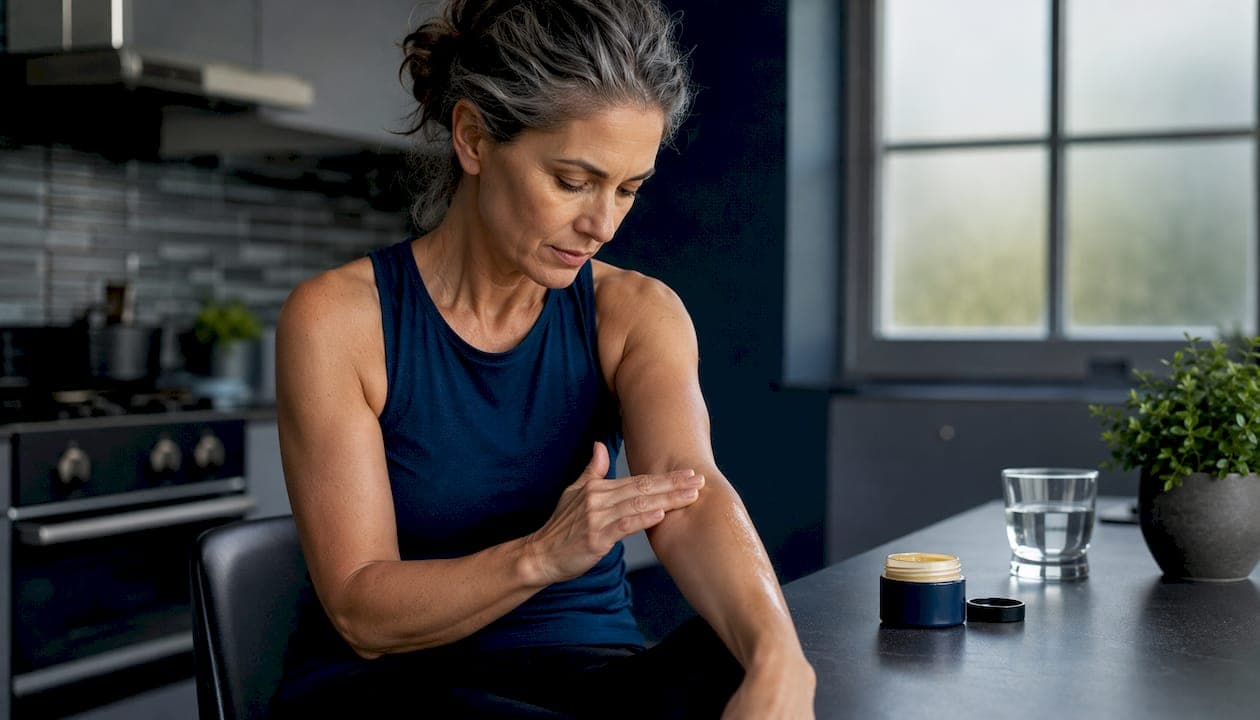
Topical capsaicin relieves localized muscle and joint pain by triggering a warming counter-irritant effect that interrupts pain signaling at the skin's nerve endings. If you have osteoarthritis, peripheral neuropathy, post-workout muscle soreness, or chronic joint pain, capsaicin balm is one of the few over-the-counter options with genuine clinical backing. Memorial Sloan Kettering identifies arthritis and neuropathic pain as the conditions with the strongest evidence. Mongoosecbd formulates its balms with capsaicin alongside CBD, arnica, menthol, and eucalyptus specifically for athletes and chronic pain sufferers who want more than a single-ingredient product.
Who benefits most:
- People with osteoarthritis or rheumatoid arthritis
- Those managing localized neuropathic pain (diabetic neuropathy, post-shingles pain)
- Athletes dealing with muscle soreness, strains, or joint inflammation
- Anyone seeking a non-oral, targeted pain relief option
Immediate safety flags: always do a patch test on a small skin area first, wash hands thoroughly after applying, and never let the balm contact eyes, nose, or mouth. Consult a clinician before use if you are pregnant, breastfeeding, or managing complex medication regimens.
"Capsaicin works by confusing pain transmitters and blocking pain messages from the skin — a mechanism that makes the initial warmth not a side effect, but the actual therapy." — URochester Medicine
Table of Contents
- How capsaicin creates a counter-irritant effect on your skin nerves
- Which conditions have the strongest evidence for capsaicin?
- How to apply a capsaicin balm safely and get the best results
- Side effects, interactions, and who should avoid capsaicin balms
- What to look for in a premium capsaicin and CBD balm
- When you should talk to a clinician before using capsaicin balm
- Key Takeaways
- A formulator's perspective on what actually matters in a capsaicin balm
- Mongoosecbd's capsaicin-formulated balms are worth a serious look
- Primary sources and further reading
How capsaicin creates a counter-irritant effect on your skin nerves
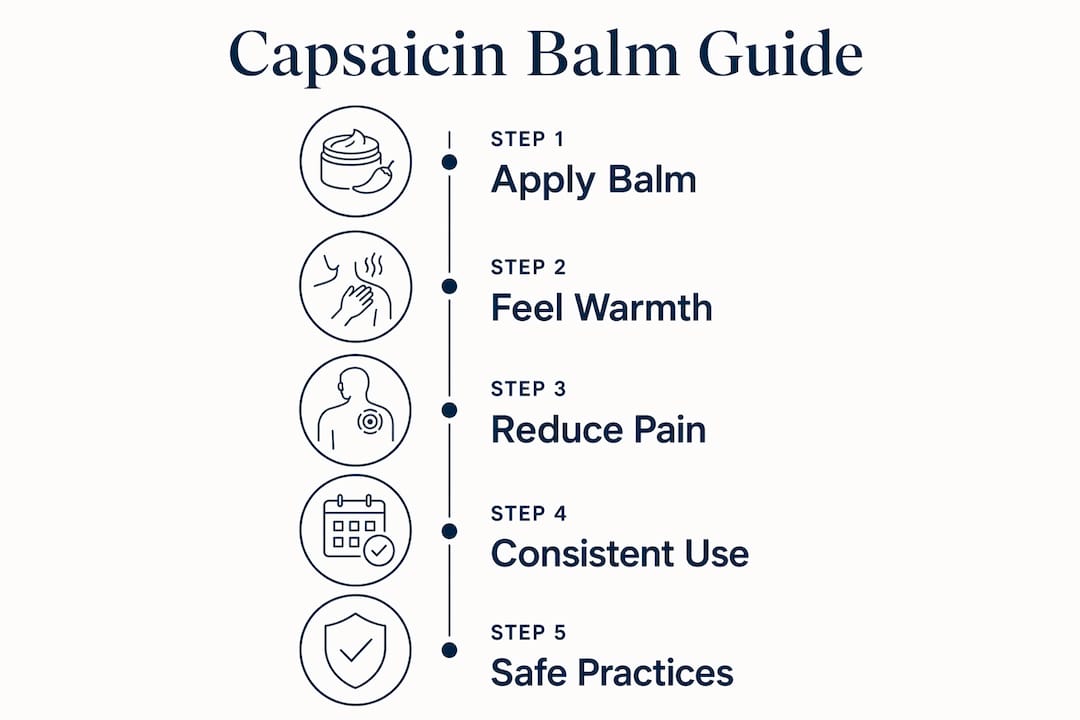
Capsaicin works as a counter-irritant: it generates a mild heat signal at the skin surface that effectively overrides stronger, deeper pain signals traveling to the brain. That warming sensation you feel within minutes of applying a capsaicin balm is not incidental. It is the mechanism.
With repeated daily use, capsaicin depletes substance P, a neuropeptide that acts as the body's primary pain messenger between peripheral nerves and the central nervous system. Less substance P means fewer pain signals get through. According to Drugs.com, this depletion process requires consistent application over several weeks before users reach peak effectiveness.
"Clinicians repeatedly stress that consistency is key — patients often stop too early expecting immediate anesthetic relief instead of cumulative benefit." — Drugs.com
The practical implication: expect warmth and some initial stinging in the first week or two. That is normal. Pain reduction tends to build gradually, not overnight.
Which conditions have the strongest evidence for capsaicin?
The clearest clinical support is for postherpetic neuralgia, osteoarthritis, and localized neuropathic pain. Memorial Sloan Kettering notes that evidence for broader uses remains limited, so it is worth being specific about what capsaicin can realistically do.
Conditions with strong to moderate evidence:
- Osteoarthritis and rheumatoid arthritis joint pain
- Postherpetic neuralgia (post-shingles nerve pain)
- Diabetic peripheral neuropathy
- Minor muscle strains, sprains, and localized back pain
Where evidence is weaker: general chronic back pain, fibromyalgia, and systemic inflammatory conditions respond inconsistently to topical capsaicin alone.
"Topical capsaicin is best supported for arthritis and neuropathic pain; evidence for broader uses is limited." — Memorial Sloan Kettering
One important distinction: a prescription 8% capsaicin patch (Qutenza) applied by a healthcare provider exists for severe neuropathic pain, while OTC creams typically contain 0.025%–0.1% capsaicin. The OTC range is appropriate for most arthritis and muscle pain applications; the prescription patch is a specialist tool for complex neuropathy.
How to apply a capsaicin balm safely and get the best results
Daily, consistent application to the affected area is required. Expect several weeks before you notice the full cumulative benefit.
- Patch test first. Apply a small amount to the inside of your wrist and wait 24 hours. If no severe reaction occurs, proceed.
- Clean and dry the skin. Apply to intact, unbroken skin only.
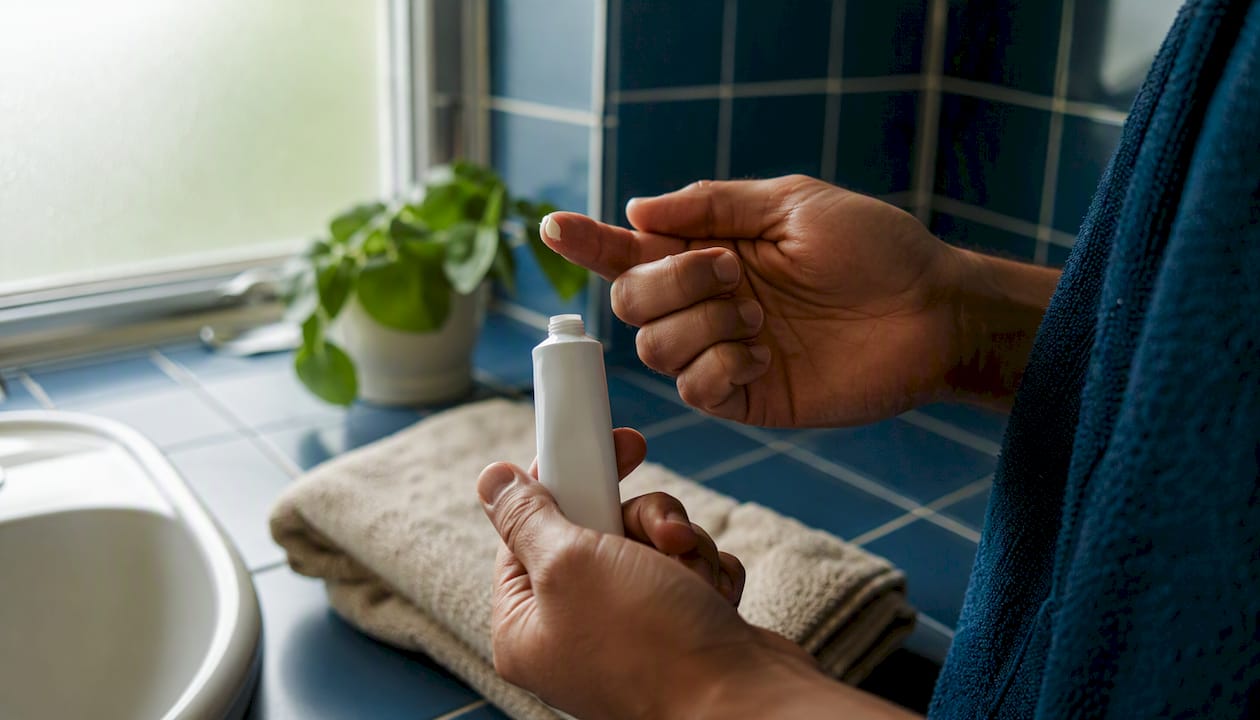
- Use a pea-sized amount. Rub in gently until absorbed. More product does not mean faster relief.
- Protect your hands. Use disposable gloves or wash hands immediately and thoroughly after application, per Cleveland Clinic guidance.
- Avoid sensitive areas. Keep away from eyes, nose, mouth, and any mucous membranes. Accidental transfer causes intense burning.
- Follow label frequency. Most OTC products recommend 3–4 applications per day. Follow your product's directions or your clinician's advice.
- Stop if severe irritation develops. Mild warmth and stinging are expected; blistering, swelling, or spreading rash are not.
Pro Tip: Avoid applying capsaicin balm immediately before or after bathing, swimming, or strenuous exercise. Heat and water exposure amplify the burning sensation significantly and increase the risk of accidental transfer to sensitive tissues.
Side effects, interactions, and who should avoid capsaicin balms
The most common effects are temporary warmth, stinging, and localized skin redness. These are expected and typically diminish with continued use. Serious systemic effects are rare with OTC topical concentrations, but mucous membrane exposure is genuinely harmful and requires immediate flushing with water.
Managing common side effects:
- Apply a cool (not cold) compress to reduce burning sensation
- Wash the area thoroughly with soap and water if irritation becomes uncomfortable
- Reduce application frequency temporarily if skin becomes overly sensitive
"Use disposable gloves when applying capsaicin, wash hands immediately after, and be aware that accidental transfer to eyes or mucous membranes causes intense burning." — Cleveland Clinic
Who should avoid or consult a clinician first:
- People with open wounds, broken skin, or active rashes at the application site
- Children under 18 (unless directed by a pediatrician)
- Pregnant or breastfeeding people
- Those with significant neuropathy requiring specialist management
- Anyone on complex oral medications affecting pain pathways or skin integrity
Capsaicin can interact with other topical actives. Combining it with strong retinoids, chemical exfoliants, or other warming agents on the same skin area increases irritation risk. If you are layering multiple topicals, space them out and consult a clinician.
What to look for in a premium capsaicin and CBD balm
Premium balms combine therapeutic capsaicin concentrations with supporting botanicals and high-quality carrier bases that improve absorption and skin feel. A single-ingredient capsaicin cream gets the job done, but a well-formulated multi-ingredient balm can address pain, inflammation, and recovery simultaneously.
Ingredient checklist for a quality formulation:
- Capsaicin at OTC concentrations (0.025%–0.1%) for targeted warming relief
- CBD at meaningful potency (Mongoosecbd uses a high concentration designed for genuine topical effect)
- Anti-inflammatory botanicals: arnica, turmeric, ginger
- Cooling counterbalances: menthol, eucalyptus, peppermint
- Quality carrier oils for skin absorption
- Clean-label claims: vegan, paraben-free, THC-free, non-GMO, cruelty-free
The Eucalyptus Mint variant from Mongoosecbd pairs capsaicin's warmth with menthol's cooling effect, a combination that addresses both the heat-based counter-irritant mechanism and the cooling relief athletes often want post-workout.
| Formulation Type | Typical Capsaicin Concentration | Primary Use |
|---|---|---|
| OTC cream or balm | 0.025%–0.1% | Arthritis, muscle pain, minor strains |
| OTC patch | 0.025% | Localized muscle aches, minor arthritis |
| Prescription patch (Qutenza) | 8% | Specialist-managed neuropathic pain |
Always check that a product lists its capsaicin concentration and CBD potency clearly. Batch testing (certificate of analysis) is the standard for reputable CBD products.
When you should talk to a clinician before using capsaicin balm
Consult a clinician if you are pregnant or breastfeeding, have open wounds, have significant neuropathy requiring specialist care, or are on complex oral medications affecting skin or pain pathways.
Beyond those baseline cases, seek medical review if you experience:
- Severe or spreading skin reaction beyond the application site
- Systemic symptoms (dizziness, difficulty breathing) after topical use
- Signs of skin infection at the application area
- No improvement after four to six weeks of consistent daily use
"High-potency capsaicin patches and complicated neuropathic pain cases should be managed under professional supervision — OTC products are not a substitute for specialist care in those situations." — Drugs.com
This article is general information, not medical advice. Confirm the right approach for your specific situation with a qualified healthcare provider.
Key Takeaways
Capsaicin balms work through a counter-irritant mechanism that depletes substance P over weeks of consistent use, making them most effective for arthritis, neuropathic pain, and muscle soreness when applied daily.
| Point | Details |
|---|---|
| Strongest evidence | Osteoarthritis, postherpetic neuralgia, and localized neuropathic pain have the best clinical support. |
| Timeline for benefit | Expect several weeks of daily application before full pain reduction builds. |
| Safety must-dos | Always patch test, use gloves or wash hands immediately, and keep balm away from mucous membranes. |
| OTC concentration range | Standard OTC balms contain 0.025%–0.1% capsaicin; the prescription 8% patch requires provider supervision. |
| Mongoosecbd option | Mongoosecbd balms combine capsaicin with 1,000 mg/oz CBD, arnica, menthol, and botanicals for athletes and chronic pain sufferers, backed by a 30-day full refund policy. |
A formulator's perspective on what actually matters in a capsaicin balm
Most capsaicin articles spend their energy explaining the mechanism and then hand you a generic "look for quality ingredients" checklist. Here is what that advice actually means in practice, and where most products fall short.
The real gap in the market is not capsaicin concentration. Most OTC balms land in the effective range. The gap is in what surrounds the capsaicin. A warming agent applied in a low-quality base with no complementary actives is a one-trick product. You get the counter-irritant effect, but nothing addressing the inflammation underneath, nothing supporting tissue recovery, and often a skin feel that discourages consistent use.
Consistent use is everything with capsaicin. If the product feels unpleasant enough that you skip applications, the substance P depletion never accumulates and you get none of the cumulative benefit. This is why formulation quality, not just capsaicin percentage, determines whether a balm actually works for you over a four-to-six-week trial.
Mongoosecbd's approach, combining capsaicin with high-potency CBD, arnica, turmeric, and cooling botanicals like eucalyptus and peppermint, addresses this directly. The Seriously Soothing Pain Balm is formulated to be tolerable and effective enough that daily use feels like a reasonable habit, not a chore. The 30-day full refund policy removes the financial risk of finding out whether it works for you.
Mongoosecbd's capsaicin-formulated balms are worth a serious look
Pain relief that actually sticks requires the right ingredients working together, not just one active at a high dose. Mongoosecbd builds its balms around that principle: capsaicin for counter-irritant warming, 1,000 mg/oz CBD for localized support, and a full botanical stack (arnica, menthol, eucalyptus, turmeric, ginger) that addresses inflammation and recovery alongside the pain signal itself. Every formula is vegan, paraben-free, THC-free, and non-GMO.
For athletes, the Rikki Tikki Recovery balm is built specifically for post-training muscle recovery. For chronic pain sufferers, the Cinnamon & Clove variant pairs warming botanicals with the capsaicin base for targeted joint and muscle relief. Not sure which fits your situation? A free sample lets you test the formulation before committing. Every purchase comes with a 30-day full refund guarantee.
Primary sources and further reading
The clinical and consumer sources below back the claims in this article. Verify any specific application guidance with the primary source or a qualified clinician for your own situation.
- StatPearls — Capsaicin (NCBI Bookshelf): primary clinical review of mechanism and evidence
- Drugs.com — Capsaicin: consumer-facing dosage, side effects, and prescription vs. OTC guidance
- Memorial Sloan Kettering — Capsaicin: integrative medicine summary of clinical utility and evidence limits
- MedlinePlus — Capsaicin Topical: NIH consumer drug information and label-following guidance
- Cleveland Clinic — Capsaicin cream, lotion, or solution: practical application and safety guidance
- URochester Medicine — Cayenne: traditional use and rubefacient mechanism background