
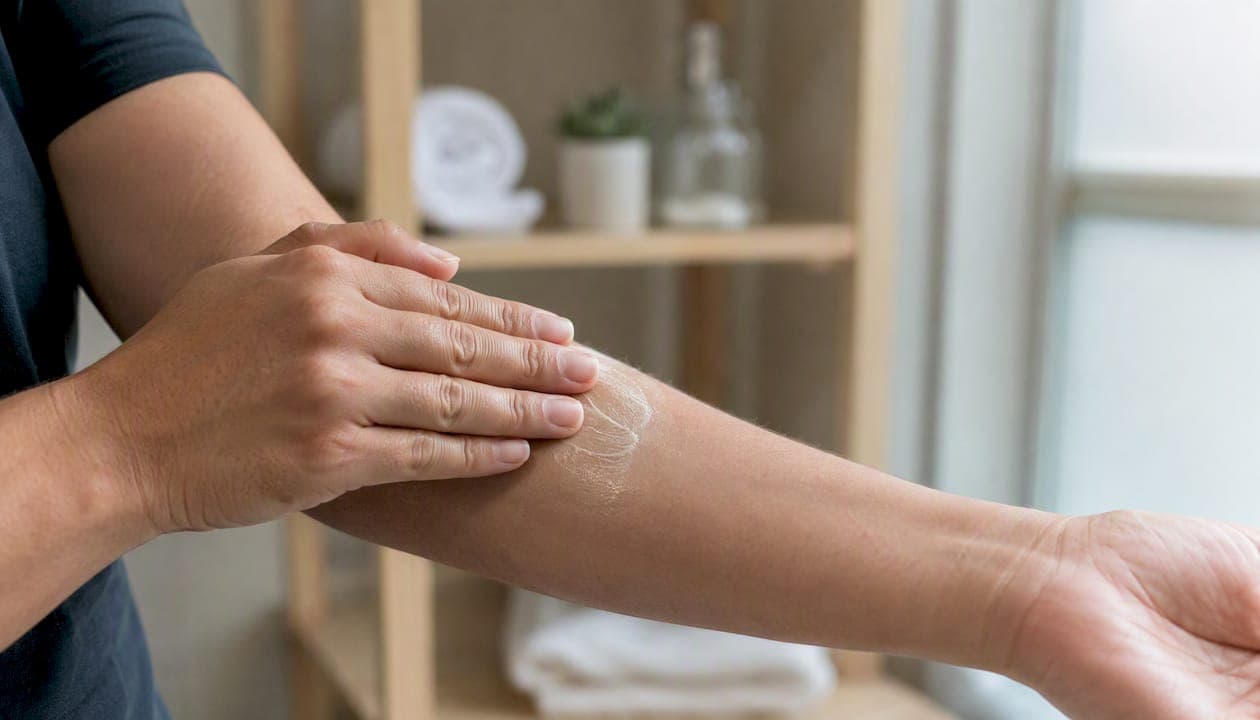
CBD balms are generally well tolerated when applied to intact skin, but they are not risk-free. The most likely side effects are local: skin dryness, irritation, redness, or rash at the application site. Systemic effects are rare with standard topical use, though certain formulations can push CBD into the bloodstream with repeated application. SAMHSA confirms that while CBD is often well tolerated, it can cause adverse effects including drowsiness, gastrointestinal distress, and liver injury, and can interact with other drugs — with the caveat that most of this evidence comes from oral or high-dose use, not topical.
A pilot study in former elite athletes found that among those who completed the trial, a substantial portion reported skin dryness and rash, both of which resolved without medical care. No one was hospitalized. That is a reasonable baseline for what most people experience: minor, manageable, and temporary.
Pro Tip: Before applying any new CBD balm broadly, do a 24-hour patch test on a small area of your inner forearm. This single step catches most contact reactions before they spread.
Key Takeaways
Topical CBD balms are generally well tolerated for most adults, but local skin reactions are common and systemic risks depend entirely on the formulation’s absorption potential.
| Point | Details |
|---|---|
| Local reactions are most likely | Skin dryness and rash are the most reported effects; both typically resolve without medical care. |
| Absorption is product-specific | Some formulations produce measurable blood CBD after 7–10 days; thick balms on intact skin absorb far less than lotions with permeation enhancers. |
| Drug interactions require caution | If you take blood thinners, antiepileptics, or other narrow-therapeutic-index drugs, consult a clinician before use. |
| COA verification is non-negotiable | Check third-party lab results for CBD potency, Delta-9 THC below 0.3%, and absence of pesticides and heavy metals. |
| Mongoosecbd products | THC-free, fully labeled, and COA-backed; patch test first, especially with cinnamon and clove formulas. |
Table of Contents
What are the common side effects of CBD balms and creams?
Most CBD balm side effects stay local. The skin is a barrier, and for most standard balm formulations, that barrier does its job. Based on available tolerability data, the most frequently reported effects are:
-
Skin dryness is among the most common effects reported by completers in the pilot study
-
Rash or redness at the application site was also reported by a notable portion of participants in the same study
-
Itching or mild irritation, particularly with first use or on sensitive skin
-
Burning sensation, most often tied to active ingredients like menthol, camphor, or essential oils rather than CBD itself
Less commonly, a small number of people in topical studies have reported mild systemic symptoms like dizziness or drowsiness. The causal link to topical CBD specifically is uncertain — these effects are far better documented with oral CBD, per Mayo Clinic’s guidance on CBD side effects including dry mouth, fatigue, and reduced appetite.
When the reaction is the other ingredients, not the CBD
Many CBD balms contain menthol, camphor, cinnamon oil, clove oil, eucalyptus, or peppermint. These are potent skin-active compounds. A cbd balm burning sensation is almost always menthol or a spice-derived oil, not CBD. Cinnamon and clove oil in particular are well-documented contact sensitizers. If you react to a multi-ingredient balm, you cannot assume CBD caused it without testing a CBD-only product separately. For a deeper look at clove oil safety and dilution, the distinction matters especially for people with sensitive skin.
How to tell irritant contact dermatitis from allergic contact dermatitis: irritant reactions appear within minutes to hours of first exposure, stay confined to the contact area, and feel like burning or stinging. Allergic reactions typically take 24–72 hours to develop, can spread beyond the contact zone, and tend to worsen with each re-exposure. If a rash keeps coming back and spreading after you reapply, stop the product and see a dermatologist.
Pro Tip: If you suspect a specific ingredient, check the full INCI list. Fragrance compounds, preservatives like parabens, and essential oils cause far more contact reactions than CBD itself in most published case reports.
Does CBD balm get into the bloodstream?
The short answer: standard topical balms are designed to stay local, but some formulations do cross into circulation. The distinction between topical and transdermal delivery is not just academic — it determines whether you face systemic side effects and whether drug interactions become a real concern.
Topical products (most balms, salves, ointments) deposit CBD in the skin layers and underlying tissue. Absorption into the bloodstream is minimal under normal use. Transdermal products are formulated specifically to drive compounds through the full skin barrier into systemic circulation, using permeation enhancers like ethanol or vitamin E, thinner vehicles like lotions, or occlusive patches.
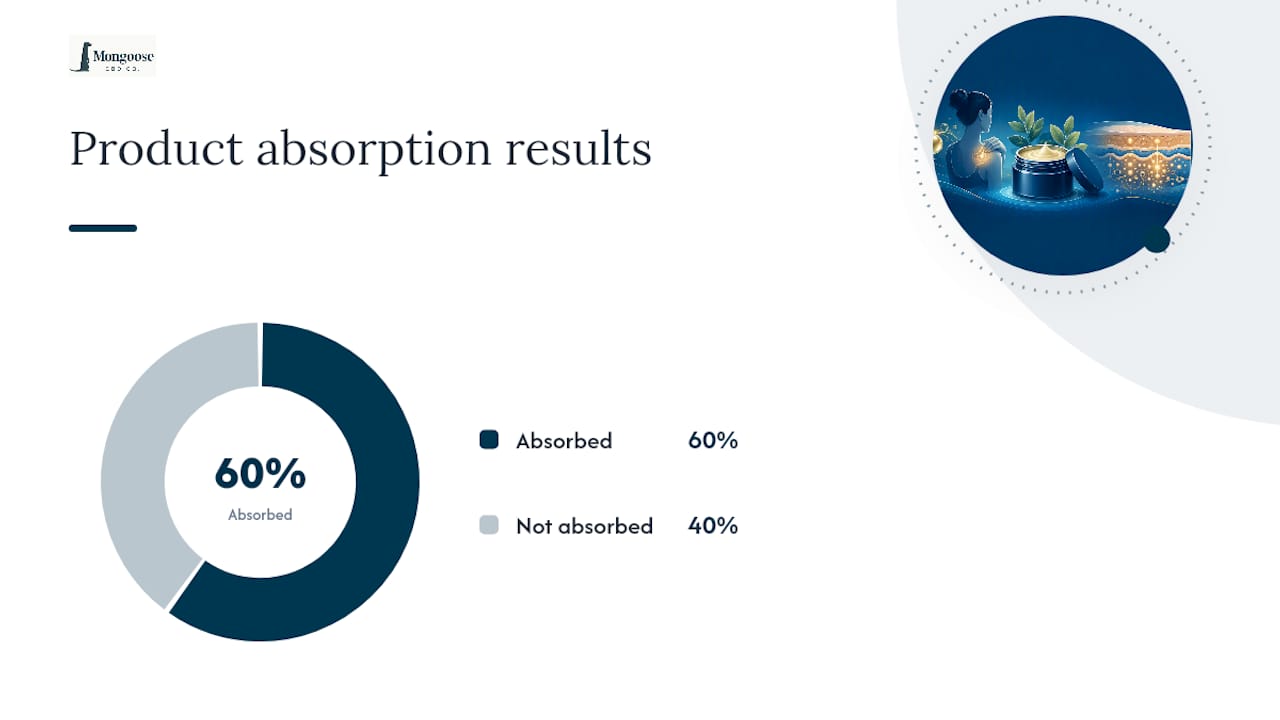
A controlled pharmacokinetic study of five commercial hemp-derived topical products found measurable blood CBD for three of the five products tested, with concentrations peaking after 7–10 days of repeated use. Urine drug tests remained negative by federal workplace cutoff standards for all participants, though a small number of oral fluid samples showed trace Δ9-THC. The key takeaway: absorption is product-specific, not category-wide.
Formulation factors that increase absorption:
-
Lotion or cream base (thinner vehicle than a wax-based balm)
-
Permeation enhancers (ethanol, certain fatty acids, vitamin E)
-
High CBD concentration per application
-
Occlusion (covering the area with a bandage or wrap after application)
-
Applying to thin-skinned areas or broken skin
-
Frequent, prolonged daily use over weeks
A separate exploratory crossover study comparing topical and oral hemp extract found no THC detected in plasma after topical administration and no unexpected adverse events — while the oral route produced elevated hepatic enzymes in one participant. That contrast reinforces why route of administration matters so much when evaluating risk.
Can CBD balm interact with your medications?
Topical CBD is less likely to cause systemic drug interactions than oral CBD, but “less likely” is not the same as “impossible.” If you use a formulation that produces measurable blood CBD — particularly with chronic, high-frequency use — the same interaction risks that apply to oral CBD become relevant.
The mechanism is the cytochrome P450 (CYP450) enzyme system, which metabolizes most prescription drugs. CBD inhibits several CYP450 enzymes, which can raise or lower blood levels of other drugs unpredictably. Harvard Health advises that CBD can alter the effects of other drugs through enzyme interactions, and recommends discussing CBD use with your clinician, especially if you take prescription medications.
Drugs with narrow therapeutic windows deserve the most caution:
-
Warfarin and other blood thinners: CBD can increase warfarin levels, raising bleeding risk
-
Antiepileptics (valproate, clobazam): documented interactions with oral CBD
-
Immunosuppressants (tacrolimus, cyclosporine): metabolized by CYP3A4, which CBD inhibits
-
Certain statins and antidepressants: CYP2D6 and CYP3A4 substrates
Liver enzyme elevation has been documented with oral CBD in clinical trials. For people with existing liver disease or those taking hepatically metabolized drugs, even partial systemic absorption from a topical product warrants monitoring. When you speak with your clinician, bring the product label: CBD concentration per ounce, full ingredient list, application frequency, and any other medications or supplements you take.
Who should avoid or use extra caution with CBD balms?
Most healthy adults can use a standard CBD balm without serious risk. Several groups, however, face higher stakes and should pause before applying.
Pregnant and breastfeeding people. The FDA recommends against CBD use during pregnancy and breastfeeding, citing potential risks to fetal and infant development. Even topical use carries uncertainty given that some formulations produce systemic absorption.
Children. Pediatric dosing for topical CBD has not been established. Accidental ingestion of a balm (children touching the product and then their mouth) is a real risk. Store all CBD products out of reach, and consult a pediatrician before any use on or near children.
People with liver disease. Liver enzyme elevation is documented with systemic CBD exposure. Anyone with hepatic impairment or on hepatically cleared drugs should consult a clinician before using any CBD product, including topicals with absorption potential.
People on blood thinners or narrow-therapeutic-index drugs. As covered above, even partial systemic absorption can shift drug levels enough to matter clinically.
Allergy-prone individuals and those with eczema or compromised skin. Broken, inflamed, or eczematous skin absorbs topical compounds far more readily than intact skin. This increases both local irritation risk and the chance of systemic absorption. Patch testing is non-negotiable for this group.
Pro Tip: If you have a known allergy to plants in the Asteraceae family (ragweed, chamomile, echinacea), check whether your CBD balm contains any related botanical extracts — cross-reactivity is possible.
How to reduce your risk when using a CBD balm
Reducing risk comes down to three things: knowing what is in the product, testing your skin’s response before full use, and paying attention to how your body responds over time.
Step 1: Patch test first
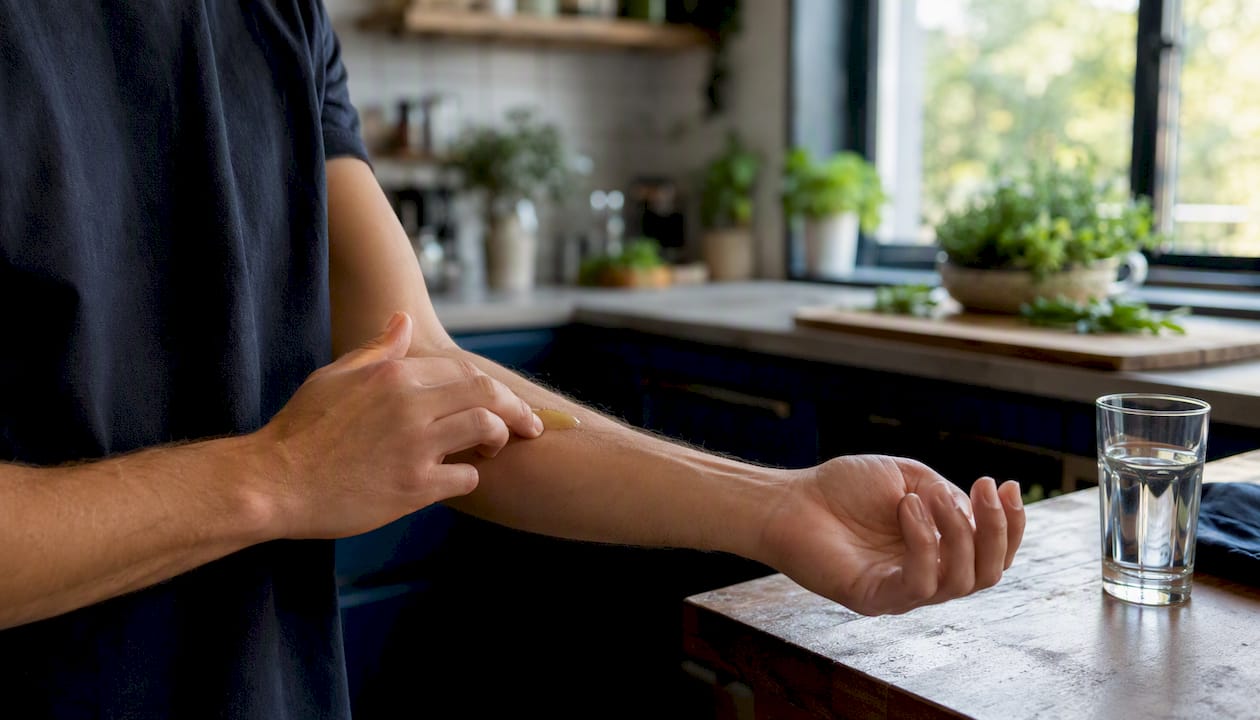
Apply a small amount to your inner forearm or behind your ear. Leave it uncovered for 24 hours. If no redness, itching, or swelling appears, proceed with normal use. If you are testing a balm with cinnamon, clove, or other potent essential oils, extend the observation to 48 hours.
Step 2: Read the Certificate of Analysis
A Certificate of Analysis (COA) from an accredited third-party lab is the single most important document a CBD product can have. Look for:
-
CBD potency: does it match the label claim?
-
Delta-9 THC: should be below 0.3% for hemp-derived products
-
Pesticides, heavy metals, and microbials: all should be below detection thresholds or within safe limits
-
Batch number: the COA should match the batch on your product
The FDA has flagged that many over-the-counter CBD products are mislabeled or contaminated. A COA is your protection against that.
Step 3: Safe use habits
-
Avoid applying to broken, open, or infected skin
-
Start with lower frequency (once daily) and assess your response before increasing
-
Do not occlude the area unless the product specifically recommends it
-
With prolonged daily use over weeks, watch for cumulative dryness or irritation that builds gradually
Pro Tip: If a balm contains potent essential oils like cinnamon or clove, consider a fragrance-free formula first if you have sensitive skin. You can always step up to a spiced formula once you know your baseline tolerance.
For readers interested in topical CBD for arthritis or chronic pain, the same COA and patch-test principles apply regardless of the condition being addressed.
When should you stop using a CBD balm and seek help?
Most reactions to CBD balms are minor and resolve when you stop using the product. A few situations require faster action.
Seek emergency care immediately if you experience:
-
Difficulty breathing or throat tightening
-
Swelling of the face, lips, or tongue
-
Rapid or irregular heartbeat
-
Sudden dizziness or loss of consciousness
These are signs of anaphylaxis. Call 911.
See a clinician promptly (within 24–48 hours) if you notice:
-
A rash that spreads beyond the application site or does not clear within a few days of stopping the product
-
Persistent dizziness, unusual fatigue, or nausea that began after starting the balm
-
Yellowing of the skin or eyes, or upper-right abdominal pain (possible liver involvement)
-
Worsening pain or function, not improvement, after several weeks of use
When you contact a clinician, bring the product name, CBD concentration, full ingredient list, how often you applied it, how long you used it, and a list of any other medications or supplements. That information cuts the diagnostic time significantly.
What does the research actually show about topical CBD safety?
Small trials show topical CBD is generally well tolerated, and some formulations produce measurable blood CBD after repeated use. That is the honest summary of where the evidence stands right now.
The pilot tolerability study in former elite athletes is one of the few direct safety studies of topical CBD. All adverse effects resolved without medical care. The study’s limitations: open-label design, small sample, short duration, and a specific population (former athletes with chronic lower extremity pain).
The five-product pharmacokinetic study is the most rigorous absorption data available. It tested a cream, lotion, patch, balm, and gel under controlled conditions. Three of the five products showed transdermal absorption; the lotion with a permeation enhancer produced the highest blood concentrations, peaking after 7–10 days. Urine drug tests remained negative by federal cutoffs across all participants.
A systematic review published in PubMed concluded that topical cannabinoid products may reduce systemic exposure compared with oral use, but safety and efficacy must be evaluated product by product because formulation parameters vary too widely for universal conclusions.
A 2024 announcement from the University of Bath summarized research raising concerns that some CBD products showed no pain benefit and possible harm in certain contexts, reinforcing that evidence on both efficacy and safety remains mixed and product-dependent.
| Study | Sample | Formulation | Main safety finding | Key limitation |
|---|---|---|---|---|
| Elite athlete pilot (PMC) | Small (completers only) | Topical CBD | Skin dryness and rash reported; all resolved | Open-label, small N, short duration |
| Five-product PK study (JAT) | Controlled | Cream, lotion, patch, balm, gel | Absorption in 3 of 5 products; urine tests negative | Short study window, controlled lab conditions |
| Exploratory crossover (MDPI) | Small | Topical vs oral hemp extract | No unexpected topical adverse events; 1 elevated hepatic enzyme (oral only) | Small N, single-dose design |
Limitations across all studies: inconsistent formulations, lack of long-term data, variable COA quality, and confounding active ingredients make it difficult to generalize from any single trial to the product sitting on your shelf.
An honest perspective on CBD balm safety
The conversation around topical CBD safety tends to split into two unhelpful camps: either “it’s just a lotion, totally safe” or “CBD is unregulated, avoid it entirely.” Neither holds up.
What the evidence actually shows is that the skin is a meaningful barrier for most standard balm formulations, and local reactions are the realistic risk for most people. The systemic concerns — drug interactions, liver effects — are real but tied to absorption, which is formulation-specific. A thick wax-based balm applied once daily to intact skin behaves very differently from a lotion with ethanol applied twice daily under an occlusive wrap.
The piece most people miss: the non-CBD ingredients in a balm often carry more irritation risk than CBD itself. Cinnamon oil, clove oil, menthol, and camphor are potent compounds with well-documented sensitization potential. If you react to a multi-ingredient product, blaming CBD without isolating the variable is bad science and bad self-care.
Mongoosec CBD’s approach of listing every active ingredient transparently and providing third-party COAs is not just a marketing point. It is the minimum standard that makes any of this safety analysis possible. You cannot evaluate a product you cannot read.
;Mongoose CBD’s balms are formulated with safety in mind
The safety steps this article covers — COA verification, full ingredient transparency, THC-free formulation — are built into every Mongoose CBD product. The Seriously Soothing Pain Balm delivers 1,000mg CBD per ounce alongside clearly labeled natural pain-relief adjuncts: arnica, menthol, turmeric, eucalyptus, and peppermint. Every ingredient is listed. Every batch is third-party tested.
For people who want a spiced formula, the cinnamon and clove balm uses the same COA-backed standard with full disclosure of the essential oils that could cause reactions in sensitive skin. That transparency is what lets you make an informed patch-test decision before committing to full use.
All Mongoose CBD products are vegan, non-GMO, paraben-free, and THC-free. If you have questions about a specific formulation relative to your medications or health conditions, the customer service team can point you to the relevant COA, and your clinician can take it from there. Browse the full range and review the ingredient lists at mongoosecbd.com before your first order.
Sources
The following primary sources underpin the safety claims in this article. Each is worth reading directly if you want the original data.
On reading a COA: look for the batch number on the product label, then match it to the corresponding lab report on the brand’s website. Confirm the testing lab is ISO 17025-accredited. The potency section tells you actual CBD content; the contaminant panels tell you what else is in the product.
This article provides general information only and is not a substitute for professional medical advice. Consult a qualified clinician or pharmacist before using CBD products if you are pregnant, breastfeeding, taking prescription medications, or managing a chronic health condition. Verify current regulatory guidance with the FDA or your healthcare provider.