
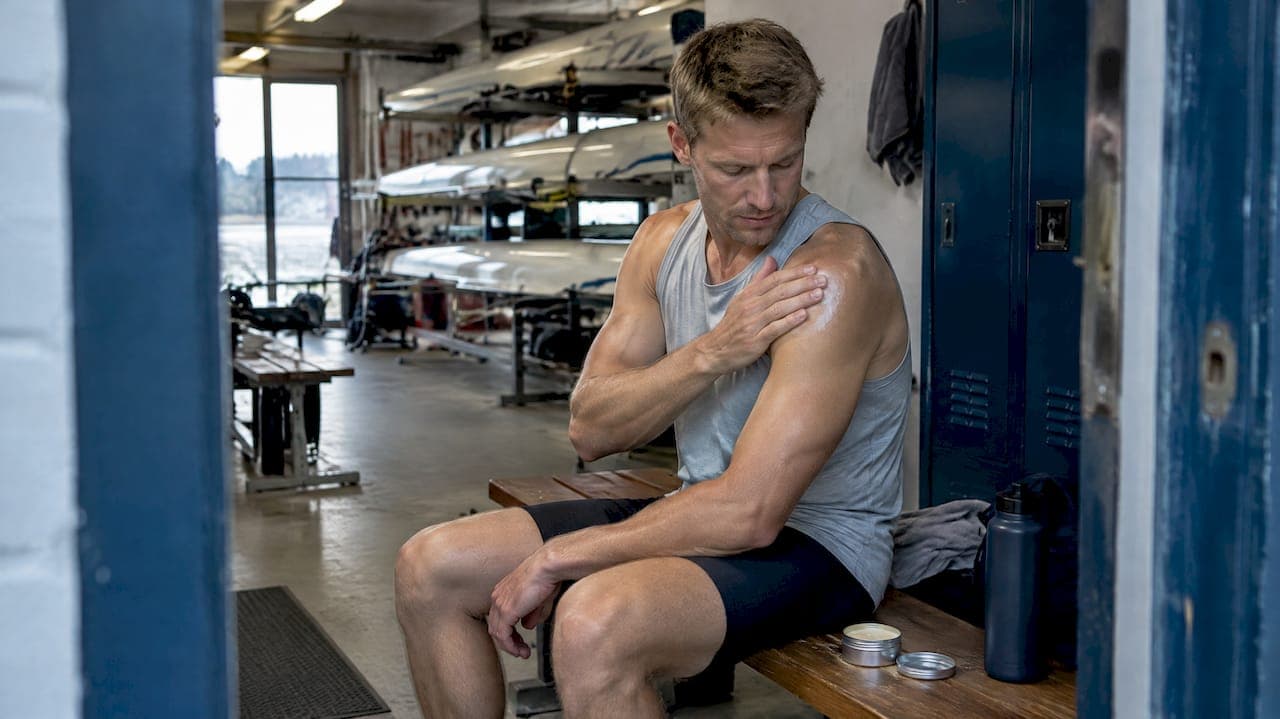
A 1,000mg CBD balm is a topical product made for sore muscles, stiff joints and everyday aches. People use it for targeted comfort, a pleasant cooling or warming sensation, and a simple rub-on routine after activity. Research on CBD itself is mixed, so the best results come from choosing a well-made formula and using it with realistic expectations.
TL;DR
- "1,000mg" is the total CBD in the container. It is not the dose per application.
- People use CBD balms for muscle soreness, joint discomfort and arthritis-related aches. Trials on CBD alone are mixed.
- Other ingredients in a balm, such as menthol, arnica and cayenne, can add their own sensation.
- The FDA has not approved CBD topicals for pain. Check labels, THC content and third-party testing.
- Talk to a doctor first if you take medicines, are pregnant, or have an inflammatory arthritis.
Table of Contents
- What 1,000mg on a balm label means
- Benefits people look for in a 1,000mg CBD balm
- What the research shows
- Why the rest of the formula matters
- How to choose a 1,000mg CBD balm
- How to use a CBD balm
- Safety and side effects
- Try a Mongoose balm
- FAQ
- Sources
What 1,000mg on a balm label means
The number on the tin is the total CBD in the whole container. According to HealthCentral, it does not tell you the amount per application or per milliliter. Container sizes vary, so two products can both say 1,000mg and feel very different.
Our balms are formulated at 1,000mg of CBD per ounce. That is a client-side figure, and it is the kind of number worth comparing across brands: milligrams, ounces and the other active ingredients together.
The same HealthCentral piece notes that commercial CBD products are often inaccurately labeled. The FDA says the same: unapproved CBD products may not contain the amount of CBD claimed and can carry contaminants. That is why third-party lab results matter more than the headline strength.

Benefits people look for in a 1,000mg CBD balm
People reach for a CBD balm for a few practical reasons.
Sore muscles after training
Athletes and fitness enthusiasts use balms after workouts. The appeal is simple: a product applied right where it feels tight, with a massage that many people enjoy. The rubbing itself is part of the routine.
Stiff or aching joints
Knees, hands, shoulders and the lower back are common spots. A balm is easy to apply to a small area, which suits localized discomfort better than a pill that acts on the whole body.
Arthritis-related aches
The Arthritis Foundation reports that some people with arthritis notice pain relief, better sleep or less anxiety with CBD, though reports are mixed and larger human studies are needed. Its guidance on topicals says many people report benefits from CBD topicals, while quality studies are few.
A sensation you can feel
Many balms pair CBD with ingredients that produce a cooling or warming feel. This is often what people notice first, and it is a real part of why a balm feels good to use. Our guide to CBD balm ingredients that matter covers it in detail.
What the research shows
Studies on topical CBD are small and the results differ by condition. Here is what the published trials found.
| Study | Who | What was tested | Result |
|---|---|---|---|
| 2022 randomized trial | Patients with thumb basal joint arthritis | CBD formula (6.2 mg/mL) twice daily | Significantly improved self-reported pain and disability versus placebo |
| Delayed-onset soreness trial | 21 college-aged participants | 1,000 mg topical CBD ointment | No significant difference from placebo in soreness, arm circumference or strength at 24 to 72 hours |
| 2025 pilot study | 28 adults | About 100 mg CBD cream after exercise | No significant group effects on pressure-pain threshold, jump performance or peak torque |
| 2022 knee surgery study | Patients after total knee arthroplasty | Topical CBD after surgery | No reduction in pain or opioid use versus placebo |
The pattern is clear. The one trial with a clear signal looked at hand arthritis. The exercise-recovery trials did not find a difference from placebo on the measures they used.
Three points help put this in context:
- The studies tested single products. Formulas differ in strength, carrier, and added ingredients. HealthCentral notes that finding an effective topical can take trial and error because formulations vary so widely.
- Reaching the joint is an open question. The Arthritis Foundation says it is unclear whether topical CBD reaches tissue below the skin, with small trials giving different results.
- Measures matter. A trial of soreness and strength may not capture how a person feels about a balm in their own routine, such as comfort and ease of use.
For weightlifters, see our look at topical CBD for recovery with a 2 to 3 week trial. For arthritis in the shoulder, there is a write-up on a 2 to 4 week topical CBD trial.
Why the rest of the formula matters
A balm is more than CBD. The Arthritis Foundation's topical guidance points out that a balm's perceived benefit may not come from CBD alone, because products can contain other active ingredients such as menthol. Menthol is a counter-irritant that gives a cooling feel.
That is why we build our balms as full formulas. Our products combine 1,000mg of CBD per ounce with arnica, menthol, turmeric, eucalyptus, peppermint, cinnamon, clove, ginger and cayenne pepper, depending on the balm. Each ingredient is chosen for how the balm feels and works in use.
If you want to go deeper on single ingredients:
- Arnica CBD balm: where the evidence is strongest for bruises.
- Cayenne muscle balm: what the evidence shows for warming balms.
- Balm or salve: which texture suits which job.
Our view on 1,000mg balms
We make balms for people who move hard and hurt sometimes: athletes, lifters, and people living with chronic aches and arthritis. We do not think a number on a label tells the whole story. We think the formula does.
That is why each Mongoose balm pairs 1,000mg of CBD per ounce with botanicals like arnica, menthol, eucalyptus, ginger and cayenne. The goal is a balm that feels good on contact and fits a daily routine. We design for fast, pleasant relief, and we say so as our own claim, not as a medical promise.
We back that with third-party testing and a full refund within 30 days of purchase. If a balm does not work for you, you get your money back. That lets you test it in your own routine, which is the only test that counts for how you feel.
Cindy
How to choose a 1,000mg CBD balm
Use this checklist before you buy any balm, ours or another.
- Read the size and the strength together. Total milligrams only mean something next to the container size.
- Look for a third-party lab report. The FDA warns about pesticides, heavy metals and THC contamination in unapproved products. A current certificate of analysis is the answer.
- Check THC disclosure. A review in the journal literature says hemp-derived topicals with less than 0.3% THC by dry weight meet the federal Farm Bill condition. The Arthritis Foundation adds that THC exposure can still matter for drug testing and employment. Our balms are THC-free.
- Scan the full ingredient list. Look for active ingredients you like and ones you may react to.
- Ask about manufacturing standards. Physical therapy professionals recommend products made under current Good Manufacturing Practices.
- Check the return policy. A trial period lowers the cost of finding out whether a balm suits you.
For a deeper explanation of what the law and the FDA say about claims, this overview of CBD benefits and safe use covers the regulatory limits.
How to use a CBD balm
A balm is simple to use. Clean and dry the area, apply a thin layer, and massage it in. Keep it away from eyes and broken skin. Wash your hands after applying, especially with balms that contain menthol or cayenne.

How much to use depends on the area, the formula and how your skin responds. Start small. The Arthritis Foundation advises tracking your symptoms and dose and stopping if unwanted effects occur. A short written log of when you applied it and how you felt makes it easy to judge a balm after a couple of weeks.
Our step-by-step page, how to use CBD balm for pain, sleep and recovery, walks through timing and placement.
Safety and side effects
Topicals are generally used on the skin only, but a few points apply.
- Allergic reactions are possible. HealthCentral advises avoiding open wounds or damaged skin and consulting a physician. Test a small patch first.
- The FDA has not approved CBD topicals for pain. It states that unapproved CBD products have not been evaluated for effectiveness or safety.
- Medicines can interact with CBD. The Arthritis Foundation lists drowsiness and possible interactions with ibuprofen, naproxen, acetaminophen, corticosteroids, tramadol, gabapentin, warfarin and others. If you take any of these, ask your pharmacist or doctor before starting.
- Inflammatory arthritis needs its own treatment. The same source says CBD is not a substitute for disease-modifying treatment. Discuss a trial with your rheumatologist.
More detail is in our guide to CBD balm side effects.
Try a Mongoose balm
Our Seriously Soothing Pain Balm and RIKKI TIKKI Recovery are made for athletes and for people with chronic aches and arthritis. Both are vegan, non-GMO, paraben-free, THC-free and cruelty-free. Published prices range from $26.95 to $39.95, depending on the product and size. Every order is covered by a full refund within 30 days of purchase.
Pick a scent: Original, Cinnamon & Clove, or Eucalyptus Mint. For post-training use, see RIKKI TIKKI Recovery. The full range is on the Mongoose CBD Co. shop.
FAQ
Does a 1,000mg CBD balm work for muscle recovery?
Trials on CBD alone have not shown a clear difference from placebo on soreness or strength after exercise. Many people still use balms as part of a post-workout routine, and formulas with menthol or arnica add their own sensation. Try one for two to three weeks and judge by how you feel.
Is 1,000mg a strong dose?
Not necessarily. The number is the total CBD in the container, so container size changes the concentration. Compare milligrams per ounce and look for a lab report to confirm what is inside.
Can a CBD balm help arthritis pain?
Some people with arthritis report relief, and one 2022 trial in thumb arthritis found improved self-reported pain and disability. The Arthritis Foundation says results are mixed and CBD does not replace prescribed treatment. Talk to your clinician before adding it.
Will a CBD balm make me fail a drug test?
Products may legally contain up to 0.3% THC, and the Arthritis Foundation notes that THC exposure can matter for drug testing. Choose a THC-free product with a current lab report if testing applies to you.
Is a CBD balm safe with my medications?
CBD can interact with several common medicines, including some pain relievers, antidepressants and blood thinners. Ask your doctor or pharmacist before use, and stop if you notice unwanted effects.
Sources
- Your Guide to CBD Topicals for Muscle and Joint Pain, HealthCentral
- What You Need to Know About Products Containing Cannabis or Cannabis-Derived Compounds, FDA
- CBD for Arthritis Pain, Arthritis Foundation
- Topical Treatments for Arthritis Pain, Arthritis Foundation
- A Randomized Controlled Trial of Topical Cannabidiol for Thumb Basal Joint Arthritis
- Topical Cannabidiol and the Progression Rate of Delayed-Onset Muscle Soreness
- Topical Cannabidiol Application May Not Attenuate Muscle Soreness
- Topical Cannabidiol After Total Knee Arthroplasty
- Cannabidiol in Skin Health: A Comprehensive Review
- Considering Cannabinoid Topical Agents for Pain Management
- Complete Guide to CBD: Benefits and Safe Use