
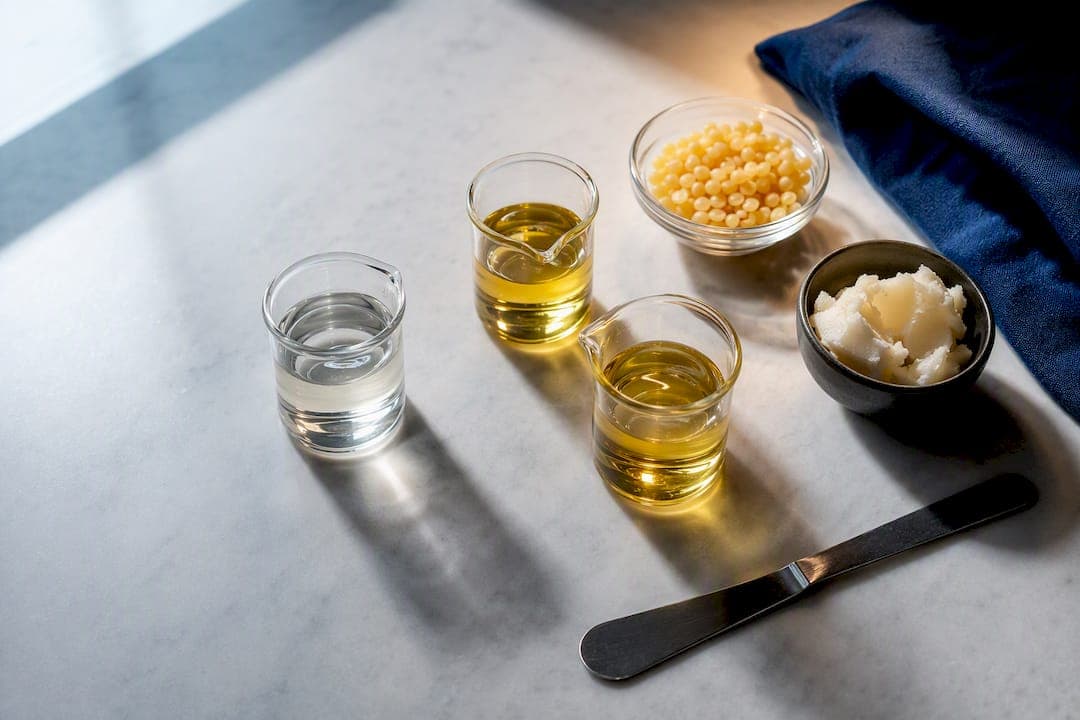
The ingredients that matter most in a pain-focused CBD balm are the carrier oil, which controls delivery into skin; a thickener like beeswax or shea butter, which keeps the balm in contact with sore tissue; sensory actives such as menthol, camphor, or capsaicin for immediate relief; botanicals for supporting effects; and the CBD extract type itself. Check the label for a patch-test warning and a full ingredient list before you buy. The sections below break down each category and how to read them.
TL;DR:
- Look for a high CBD milligram count combined with a visible, near-the-top carrier oil and disclosed active ingredient concentrations for effective results.
- Check for a full ingredient list, especially the presence of menthol, camphor, or capsaicin, and verify third-party lab reports before purchase.
- Patch test any balm on your inner forearm and wait 24 to 48 hours to ensure no allergic reaction, especially for botanical-sensitive individuals.
- Avoid high menthol and capsaicin combinations in the same area to prevent irritation without enhancing relief.
- Prioritize ingredient transparency and formulations built around functional ingredients over just high CBD numbers.
Table of Contents
- CBD Balm Ingredients at a Glance
- Why Carrier Oils Decide How CBD Reaches Sore Tissue
- Beeswax, Plant Waxes, and Butters: What Holds the Balm Together
- The Pain-Fighting Actives: Menthol, Camphor, Capsaicin, and Arnica
- Essential Oils, Botanicals, and Who Should Be Cautious
- Isolate, Broad-Spectrum, or Full-Spectrum: Does It Matter in a Topical?
- What the Research Says About Absorption and Local Effect
- How to Read a Balm's Ingredient List Before You Buy
- Patch Testing and Who Should Talk to a Doctor First
- Why Ingredient Transparency Should Be the Deciding Factor
- Try a Balm Built Around Ingredients That Actually Matter
- Sources
CBD Balm Ingredients at a Glance
Every pain balm is built from the same handful of functional categories, even when the brand names on the label differ. Here's the quick map before you read a single ingredient list:
- Carrier oils (MCT/fractionated coconut, hemp seed, jojoba): dissolve CBD and help it sit against skin long enough to work.
- Thickeners and butters (beeswax, candelilla wax, shea or mango butter): set the texture and slow evaporation so the balm stays put on a knee or shoulder.
- Sensory actives (menthol, camphor, capsaicin, arnica): create the cooling, warming, or counterirritant sensation people associate with fast relief.
- CBD extract type (isolate, broad-spectrum, full-spectrum): determines whether other cannabinoids ride along with the CBD.
Each category solves a different problem: getting CBD into skin, keeping it there, and giving the user an immediate sensory signal that something is happening.
Why Carrier Oils Decide How CBD Reaches Sore Tissue
CBD is lipophilic, meaning it dissolves in fat, not water. That's why every legitimate balm starts with an oil base rather than a water-based gel, and it's the reason topical CBD formulations are built around oil carriers or microemulsions designed to move cannabinoids into the epidermis and dermis instead of the bloodstream.
Fractionated coconut oil, often labeled MCT, is the most common carrier because it stays liquid at room temperature, absorbs quickly, and carries a neutral scent. Hemp seed oil adds omega fatty acids but feels heavier and can leave a slight residue. Jojoba mimics skin's natural sebum, so it feels lighter and suits people prone to breakouts. Olive oil shows up in DIY recipes because it's affordable, though it's the slowest to absorb and can feel greasy on already-inflamed skin.
If you have a tree nut allergy, check whether the carrier is fractionated coconut oil specifically, since coconut is botanically a fruit but sometimes triggers cross-reactivity in nut-sensitive people.
Beeswax, Plant Waxes, and Butters: What Holds the Balm Together
A balm without a thickener would just run off your skin. Beeswax is the traditional choice, and DIY formulator guides treat it as the backbone of most oil:beeswax:butter ratios because it firms up at room temperature and slows moisture loss, keeping the active ingredients in contact with skin longer.
Shea butter and mango butter add richness and a smoother glide. Raising the wax ratio makes a firmer, more occlusive balm suited to a stick or tin you rub directly on a joint; lowering it produces something closer to a lotion. Candelilla wax is the standard vegan substitute for beeswax, so check the label if you're avoiding animal-derived ingredients.
The Pain-Fighting Actives: Menthol, Camphor, Capsaicin, and Arnica
Menthol and camphor create the cooling or warming sensation that makes a balm feel like it's working within seconds. That's not a placebo trick. Menthol acts as a mild counterirritant, distracting nerve receptors from deeper pain signals, and concentrations in commercial balms typically run in the low single-digit percentages, though sensitivity varies widely from person to person.
Capsaicin, derived from chili peppers, works differently. It initially causes a burning sensation by activating heat receptors, then depletes the neurotransmitter responsible for transmitting pain signals, producing longer-term desensitization with repeated use. Arnica and willow bark are botanical adjuncts with a longer folk history than clinical trial record. They're included for anti-inflammatory support, but the evidence behind them is thinner than for menthol or capsaicin.
- Menthol/camphor: fast cooling or warming sensation, short duration.
- Capsaicin: initial heat, longer desensitizing effect with regular use.
- Arnica/willow bark: traditional anti-inflammatory botanicals, modest evidence base.
Pro Tip: Avoid stacking a high-menthol balm with a capsaicin patch or heating pad on the same area. Combining multiple actives can intensify irritation without adding real relief.
Essential Oils, Botanicals, and Who Should Be Cautious
Essential oils do double duty in a pain balm: scent and mild sensory reinforcement. Peppermint and eucalyptus contribute to that cooling effect alongside menthol. Lavender is added mostly for calming aromatherapy value. Cinnamon and clove show up in warming formulations, but they're also among the most common botanical sensitizers, meaning they're more likely to trigger a reaction on repeated use than milder oils like lavender.
Before trying any new balm, run through this quick check:
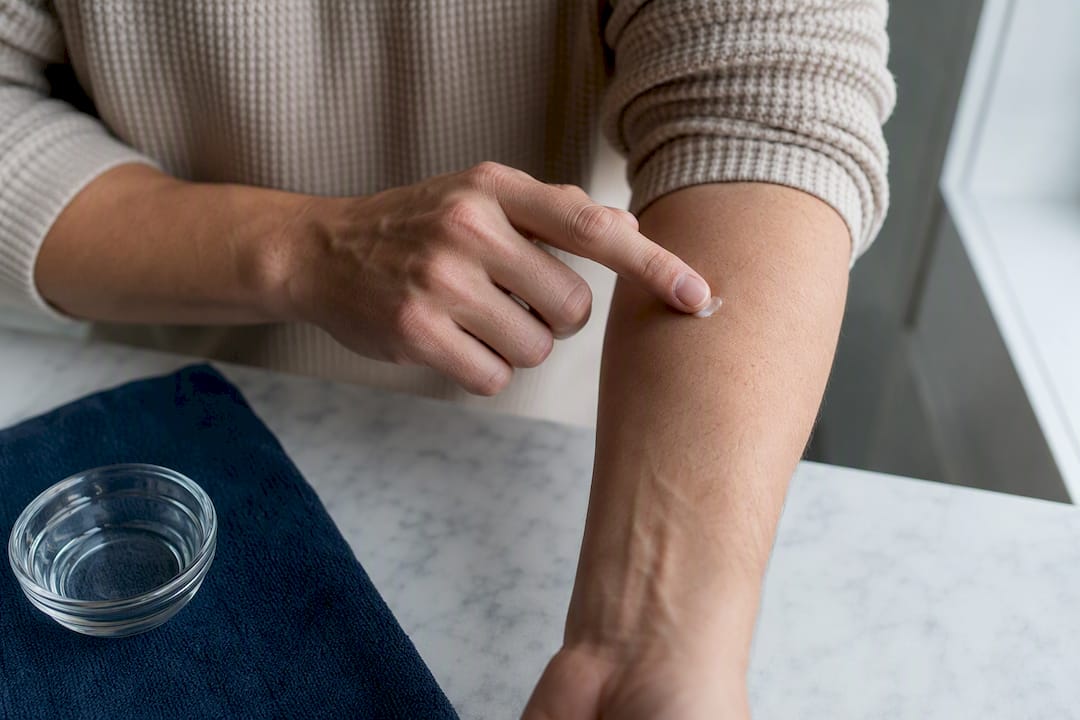
- Apply a dime-sized amount to the inside of your forearm.
- Wait 24 to 48 hours without washing the area.
- Watch for redness, itching, or swelling.
- If irritation appears, wash off immediately and skip that product going forward.
- If nothing happens, you're clear to apply it to the area that actually hurts.
Dermatology guidance on topical cannabis products specifically flags this kind of patch testing as standard practice, since local irritation and allergic contact dermatitis are real possibilities with botanical actives. One label quirk worth knowing: "fragrance" or "parfum" on an ingredient list can legally hide a blend of essential oils and synthetic compounds, so if you're sensitive to a specific botanical, a vague fragrance listing should raise a flag.
Pro Tip: Keep a small log of which balms you've patch tested and the result. Botanical sensitivities build over repeated exposure, so a balm you tolerated fine last year isn't automatically safe forever.
For more detail on what a reaction looks like and what to do next, see CBD balm side effects.
Isolate, Broad-Spectrum, or Full-Spectrum: Does It Matter in a Topical?
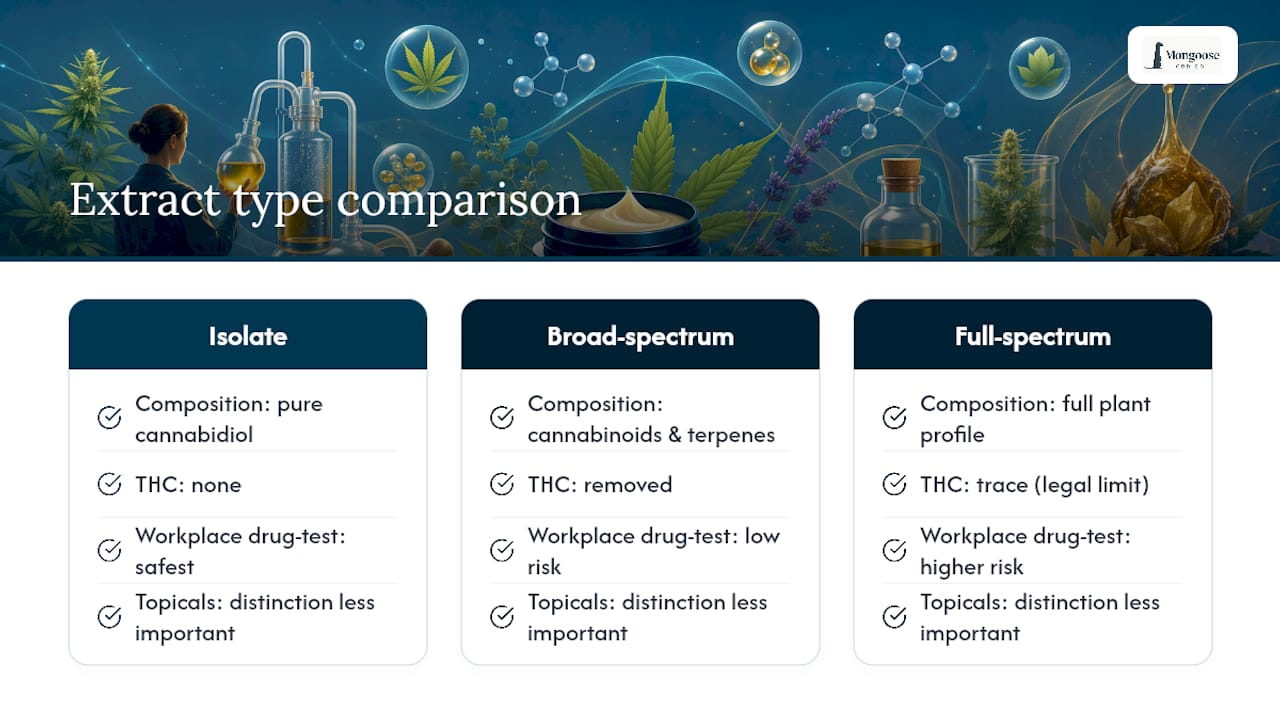
CBD isolate is pure cannabidiol with nothing else riding along. Broad-spectrum includes other cannabinoids and terpenes but has THC removed. Full-spectrum keeps the full plant profile, including trace THC under the legal limit.
For a topical, this distinction matters less than it does for something you swallow, because skin absorption keeps most of the compound working locally rather than entering the bloodstream in meaningful amounts. Still, trace systemic exposure isn't zero, which is why anyone subject to workplace drug testing should default to isolate or verify THC content through a lab report rather than guessing. Whatever the extract type, check the certificate of analysis and confirm the CBD milligrams per container match what the label claims.
What the Research Says About Absorption and Local Effect
Formulation choices, not just ingredient lists, determine whether a balm actually reaches sore tissue or just sits on the surface. Oil-based carriers and microemulsions are specifically engineered to help cannabinoids move through the outer skin layer into the epidermis and dermis, where localized effects happen.
Targeted joint and muscle formulas often lean on occlusive waxes and higher CBD-to-oil ratios to extend contact time and improve how deeply the cannabinoid penetrates, rather than relying on a thin, fast-drying lotion.
Practically, that means a thicker balm in a tin, applied with a bit of rubbing to generate warmth, tends to signal a formula built for penetration rather than a quick-absorbing lotion built mainly for moisturizing. If the label lists CBD near the top of the ingredient list, alongside a wax and a real carrier oil, that's a better sign than a long list of water and fragrance first.
How to Read a Balm's Ingredient List Before You Buy
Run through this checklist before adding any pain balm to your cart:
- CBD milligrams per container, stated clearly, not buried in vague marketing language.
- A real carrier oil listed near the top, not water as the first ingredient.
- Menthol, camphor, or capsaicin concentration disclosed if the balm claims a cooling or warming effect.
- A link to a third-party certificate of analysis you can actually open and read.
- The complete ingredient list, not a partial "key ingredients" summary.
If you want fast, noticeable sensation on top of CBD, prioritize a formula with disclosed menthol or camphor levels. If you want something gentler for daily use on sensitive skin, a simpler CBD-and-oil balm without added actives may suit you better. When in doubt, check safe CBD usage guidance before comparing brands side by side, and see how to use CBD balm for application tips that affect how well any formula performs.
Patch Testing and Who Should Talk to a Doctor First
Apply a small amount to your inner forearm and wait 24 to 48 hours before using a new balm anywhere else. No redness or itching means you're likely clear.
Pregnant or breastfeeding individuals, anyone with open wounds near the application site, and immunocompromised people should check with a clinician before trying a new topical, especially one with multiple actives layered together. Stop use and seek medical care if you notice blistering, spreading rash, or swelling beyond the application site.
Why Ingredient Transparency Should Be the Deciding Factor
Most people shopping for a pain balm focus on the CBD milligram count and skip past everything else on the label. That's backward. The carrier oil, the wax ratio, and the actives determine whether a balm actually does anything beyond smell nice, and Mongoose CBD Co. built its formulations, including Seriously Soothing Pain Balm and Rikki Tikki Recovery, around that principle rather than chasing the highest milligram number on the front of the tin.
Every batch ships with a lab report and a complete ingredient list, because a customer who can't verify what's in a balm has no real way to judge if it's worth using twice.
— Cindy
Try a Balm Built Around Ingredients That Actually Matter
Mongoosecbd formulates around function first: a real carrier oil, a wax ratio built for contact time, and disclosed active concentrations, not a vague "proprietary blend." That's the difference between a balm that sits on skin and one built to stay on sore tissue long enough to matter.
The Seriously Soothing Pain Balm in Cinnamon & Clove combines a full ingredient list with a published lab report, so you can verify exactly what you're applying before you buy. Athletes and anyone managing regular muscle soreness may prefer Rikki Tikki Recovery, formulated for post-workout use. Every product ships with a 30-day refund window, so testing it against your current balm carries no real risk. Check the ingredient list and lab report on either product page, then decide for yourself.
Sources
The dermal delivery claims above draw on the PMC review of topical cannabinoid formulations, practical ingredient guidance from Project CBD's pain balm recipe, and safety framing from the American Academy of Dermatology's notes on topical cannabis. For DIY ratio guidance, see BrambleBerry's balm formulation project.
This article is general information, not a substitute for advice from a qualified doctor. Consult a qualified healthcare professional about your own circumstances before acting on anything here.
- Cannabinoid delivery: topical routes and formulations — PMC
- Topical cannabis: Dermatology notes and safety considerations — AAD