
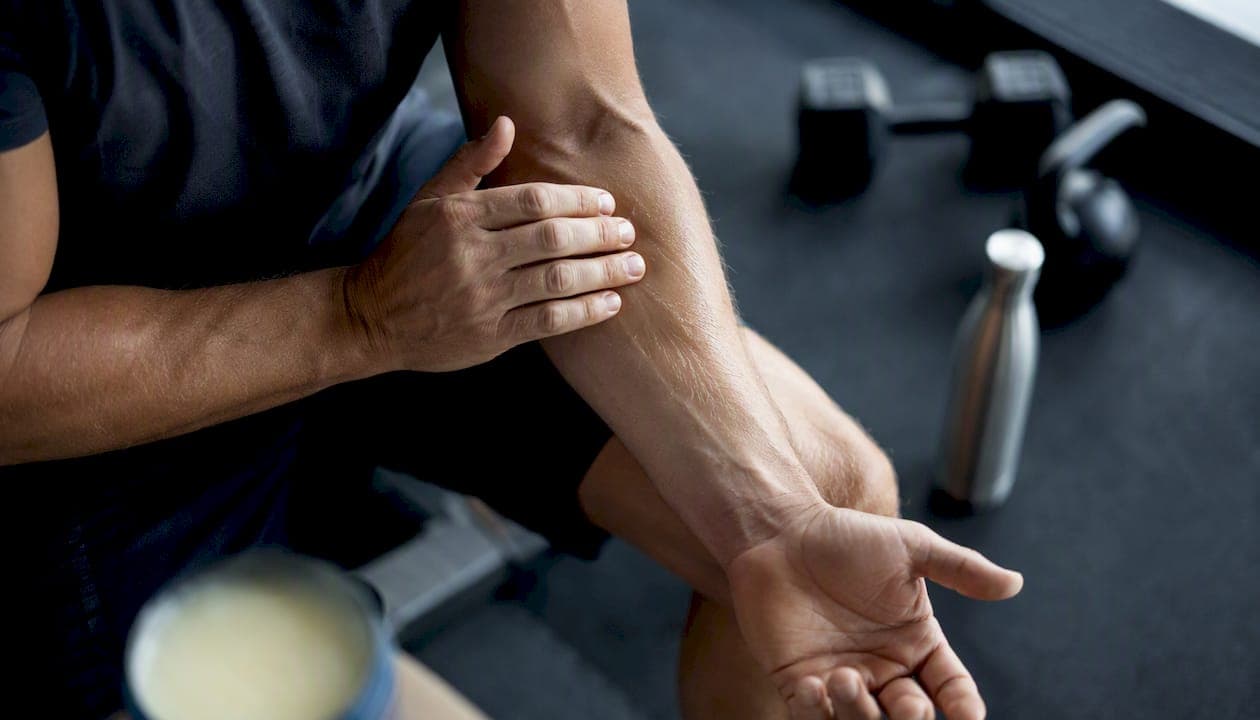
Clean the skin, warm a pea-sized amount between your fingers, and massage it into the target area for 1–3 minutes. Wait 30–45 minutes before deciding whether to reapply. That is the whole routine, and it works better than most people expect when done consistently.
Here is the core sequence:
- Wash and dry the skin where you plan to apply.
- Scoop a pea-sized amount and warm it between your palms for 10–15 seconds.
- Massage into the area using firm, circular strokes for at least 1–2 minutes.
- Wait some time before reapplying or judging the effect.
Pro Tip: Apply right after a shower or post-workout when skin is warm and pores are open. Absorption tends to be noticeably better, and the routine becomes automatic.
For pain relief, Mongoosecbd's Seriously Soothing Pain Balm is the go-to. For muscle recovery after training, Rikki Tikki Recovery is built for that specific job.
Key Takeaways
Applying CBD balm correctly, consistently, and to the right spot is what separates a product that works from one that sits unused in a drawer.
| Point | Details |
|---|---|
| Clean skin first | Wash and dry the area before applying to improve contact and absorption. |
| Start with a small amount | Pea-sized for joints and small areas; two to three fingertip scoops for large muscle groups. |
| Massage for 1–3 minutes | Work the balm in with firm strokes; wait 30–45 minutes before reapplying or judging the effect. |
| Patch test before first use | Apply to the inner forearm and wait 24–48 hours to check for irritation from actives like menthol or clove oil. |
| Mongoosecbd for pain and recovery | Seriously Soothing Pain Balm suits joint and arthritis pain; Rikki Tikki Recovery targets post-workout muscle soreness. |
Table of Contents
- What is a CBD balm, and how does it differ from other topicals?
- How does CBD balm actually work on your body?
- What are the main benefits of using a CBD balm?
- Where should you apply CBD balm for the best results?
- How to apply CBD balm: step-by-step technique
- How long does CBD balm take to work, and how often should you reapply?
- How do you choose a quality CBD balm?
- Is CBD balm safe? Side effects and when to talk to a doctor
- Why Mongoosecbd recommends its balms for pain and recovery
- What most CBD balm advice gets wrong
- Mongoosecbd balms: pain relief and recovery without the guesswork
- Sources
What is a CBD balm, and how does it differ from other topicals?
A CBD balm is a thick, wax-based topical made with oils, beeswax or plant wax, and CBD extract. It sits on the skin longer than a lotion, creating a semi-occlusive layer that slows moisture loss and keeps active ingredients in contact with the tissue underneath. That barrier effect is why balms tend to feel more concentrated and last longer at the application site than a standard cream.
The format differences matter when you are choosing what to buy:
- Balm: Thick, waxy, minimal water content. Best for spot application on joints, sore muscles, or dry areas. Stays put.
- Cream or lotion: Water-in-oil emulsion, lighter feel, absorbs faster. Better for larger surface areas or everyday skin care.
- Salve: Similar to a balm but often softer and with fewer added actives. Simpler formulas, less targeted.
- Transdermal patch: Designed to push CBD through the skin barrier into the bloodstream for systemic effects. A fundamentally different delivery goal.
Mongoosecbd balms are topical, not transdermal. They act at or near the application site rather than delivering CBD systemically, which is exactly what you want for localized pain or muscle tension.
| Format | Texture | Primary goal | Systemic exposure |
|---|---|---|---|
| Balm | Thick, waxy | Spot relief, occlusion | Minimal |
| Cream | Light, fluid | Broad area, daily use | Minimal |
| Salve | Soft, simple | General topical comfort | Minimal |
| Transdermal patch | Adhesive film | Systemic delivery | Intentional |
How does CBD balm actually work on your body?
Topical CBD acts primarily at or near the site where you apply it. It does not typically reach the bloodstream in meaningful amounts, which means no psychoactive effects and no systemic drug interaction risk from the CBD itself.
The mechanism starts in the skin. Research shows the skin contains its own endocannabinoid receptors, including CB1 and CB2 receptors, as well as TRPV1 receptors involved in pain and temperature signaling. When CBD reaches these receptors through the upper layers of skin, it may modulate local sensory and inflammatory pathways. Massage amplifies this by increasing local circulation and warming the tissue, which helps the balm penetrate more effectively.
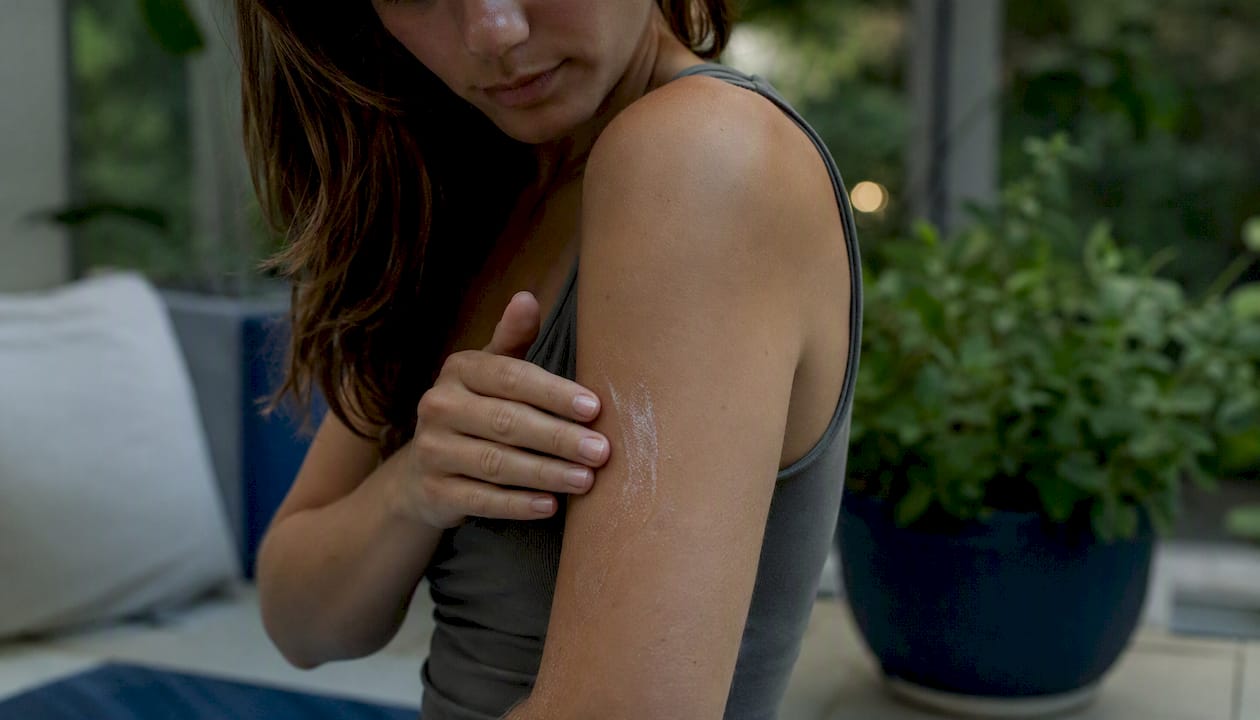
Onset typically runs within tens of minutes, depending on skin prep, formulation, and how thoroughly you massage. Duration varies widely by formula and activity level. The research base is still growing, and most trials to date are small, so expect honest uncertainty rather than guaranteed outcomes.
What are the main benefits of using a CBD balm?
CBD balm is most useful for localized discomfort: spot pain, muscle tension, and recovery support. Sleep-related application is more indirect, typically through relaxing tight muscles or easing tension before bed rather than any sedative effect.
Common use cases where people reach for a topical CBD balm:
- Arthritis and joint pain: The Arthritis Foundation notes that topical CBD is a popular option for localized arthritis symptoms, though the evidence remains preliminary.
- Post-workout muscle soreness: Applying to fatigued muscles after training, particularly larger muscle groups like quads, hamstrings, and shoulders.
- Neck and shoulder tension: Common for desk workers and people who carry stress in the upper back.
- Foot pain: Targeted application to the arch and heel can be part of a conservative management plan for conditions like plantar fasciitis.
- Temple and neck for sleep support: A small amount at the temples and base of the skull before bed helps ease physical tension, which can support winding down.
The evidence for localized pain and muscle comfort is more consistent than for sleep. Topical cannabinoid research is still emerging, with most trials small and preliminary. For systemic effects like deeper sleep or anxiety reduction, an oral CBD product would be a more appropriate tool.
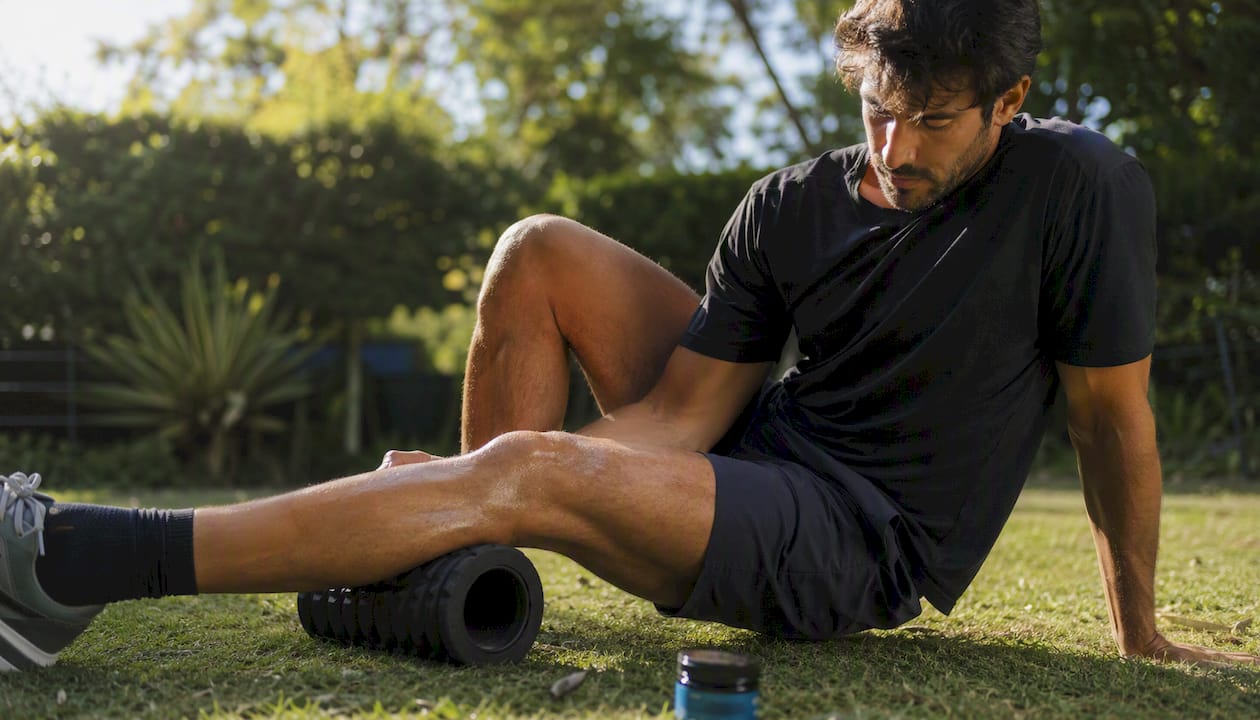
Pro Tip: Combine balm application with 5–10 minutes of light stretching or foam rolling for muscle recovery. The physical work and the topical together tend to produce better comfort than either alone.
Where should you apply CBD balm for the best results?
Placement matters more than most people realize. Applying over a joint capsule or directly along a muscle belly gives the CBD the shortest path to the tissue you are trying to reach.
- Knees and elbows: Apply around the joint, not just on top. Work the balm into the sides and back of the joint where tissue is thinner.
- Lower back: Use multiple fingertip scoops and massage along the muscle length on either side of the spine, not directly on the vertebrae.
- Shoulders and neck: Work from the base of the skull down through the trapezius. Circular strokes, moderate pressure.
- Hands and wrists: A small amount massaged into the palm and between the knuckles works well for arthritis-related stiffness. See Mongoosecbd's CBD balm for arthritis guide for more condition-specific detail.
- Feet and arches: Massage into the arch and heel with firm thumb pressure. Useful as part of a conservative approach to plantar foot pain.
- Temples and base of skull: Use a very small amount, fingertip only, and keep it well away from the eyes. This is for tension relief before sleep, not a sedative effect.
Avoid applying to broken, irritated, or sunburned skin, and always wash your hands after application, especially before touching your eyes or face.
How to apply CBD balm: step-by-step technique
The routine below works for most use cases. Adjust the amount by area size.
- Clean the skin. Wash with mild soap and pat dry. Removing surface oils and sweat helps the balm make better contact with the skin.
- Scoop the right amount. Pea-sized for small joints (fingers, wrists, temples). Fingertip-sized for medium areas (knee, elbow, shoulder). Two to three fingertip scoops for large muscle groups (quads, lower back).
- Warm it first. Hold the balm between your palms for 10–15 seconds. Wax-based balms are firmer at room temperature, and warming them makes application smoother and penetration better.
- Massage with intention. Use firm, circular strokes for 1–3 minutes. For muscles, work along the muscle fiber direction. For joints, work around the perimeter.
- Wait before judging. Give it 30–45 minutes before deciding whether to reapply. Applying too soon just adds product without adding benefit.
- Reapply as needed. For acute soreness, a second application after 60 minutes is reasonable. For chronic daily use, 1–3 applications per day is a typical pattern.
Pro Tip: Warming the balm and massaging along muscle fibers rather than across them tends to feel more comfortable and distributes the product more evenly. Think of it as a short self-massage session, not just a product application.
Patch test procedure for new users: apply a small amount to the inner forearm, cover loosely, and wait 24–48 hours. Watch for redness, itching, or swelling. If none appear, you are clear to use it on larger areas.
Ingredients like menthol, clove oil, and cayenne can cause a warming or tingling sensation that is normal. Burning, hives, or persistent redness means stop use.
How long does CBD balm take to work, and how often should you reapply?
Onset typically falls in the 15–45 minute window for most people, though formulation, skin prep, and massage quality all shift that range. Duration is harder to pin down because it varies by activity level, sweat, and how much product was applied.
Practical timing by scenario:
- Post-workout recovery: Apply within 30–60 minutes after training, while muscles are still warm. Massage for 2–3 minutes. Reapply once more in the evening if soreness persists.
- Before bed for tension relief: Apply to neck, shoulders, or temples 20–30 minutes before lying down. One application is usually enough.
- Chronic daily maintenance: Morning and evening applications to the affected area, with a midday application if needed. Most people find a rhythm of 2–3 times daily for ongoing joint or muscle issues.
Wait at least 30–60 minutes between applications. Layering too quickly does not increase effect and can irritate skin. Tracking your routine at the same time each day makes it easier to judge whether the balm is actually helping, since inconsistent timing makes the results harder to read.
How do you choose a quality CBD balm?
The label tells you most of what you need to know, if you know what to look for. Start here:
- CBD concentration: Look for milligrams per ounce, not just total milligrams. A 1,000mg balm in a 2 oz tin delivers 500mg per ounce, which is a meaningful potency for pain and recovery use.
- Spectrum: Full-spectrum contains trace cannabinoids and terpenes. Broad-spectrum removes THC. Isolate is CBD only. For topical use, the difference is less dramatic than with oral products, but full or broad-spectrum formulas may offer more complementary activity.
- THC content: A THC-free label matters if you are drug tested or sensitive to THC. Verify it with the COA, not just the marketing copy.
- Active botanicals: Ingredients like arnica, menthol, turmeric, eucalyptus, peppermint, clove oil, ginger, and cayenne each contribute to the overall effect. Clove oil, for example, has well-documented analgesic properties. Read Mongoosecbd's clove oil for pain guide for a closer look at how it works in a balm formula.
- Free-from claims: Vegan, non-GMO, paraben-free, and cruelty-free labels indicate cleaner formulation standards.
- Certificate of Analysis (COA): A COA from an independent third-party lab confirms actual CBD content, THC levels, and absence of pesticides or heavy metals. It should be current (within the past year) and accessible on the brand's website. Recent literature reviews specifically call for standardized labeling and third-party verification because product-to-label accuracy varies widely in the market.
The American Academy of Dermatology urges consumers to prioritize products with transparent ingredient lists and COAs, given that clinical data on topical cannabis is still catching up to consumer demand.
Mongoosecbd publishes COAs and maintains a clear ingredient list across all SKUs, and backs every purchase with a 30-day refund policy.
Is CBD balm safe? Side effects and when to talk to a doctor
Topical CBD is generally low-risk, but it is not without caveats. Local skin irritation is the most common issue, usually from botanical actives like menthol, clove, or cayenne rather than CBD itself.
Key safety points:
- Always patch test before first use on a new area.
- Do not apply to broken, cracked, or infected skin.
- Wash hands thoroughly after every application.
- Keep away from eyes, mucous membranes, and open wounds.
- Essential oils and warming agents (menthol, eucalyptus, cinnamon) can cause irritation in people with sensitive skin.
Drug interactions with topical CBD are considered low-risk because systemic absorption is minimal. That said, if you are on medications metabolized by CYP450 enzymes (including some blood thinners and anticonvulsants), mention topical CBD use to your prescribing clinician. The theoretical interaction risk is low for topicals but worth a brief conversation.
The FDA notes that CBD products raise public health concerns and that consumers should report adverse events through MedWatch. Marketing CBD as a dietary supplement or food additive is not currently authorized.
Consult a clinician before using CBD balm if you are pregnant or nursing, have a skin condition like eczema or psoriasis, or are managing a serious chronic condition. This article is general information, not medical advice. Confirm current guidance with your healthcare provider.
Why Mongoosecbd recommends its balms for pain and recovery
Mongoosecbd balms are built around high CBD concentration (1,000mg per ounce) combined with botanical actives that each pull their own weight. That combination is what separates them from lower-potency products that rely on CBD alone.
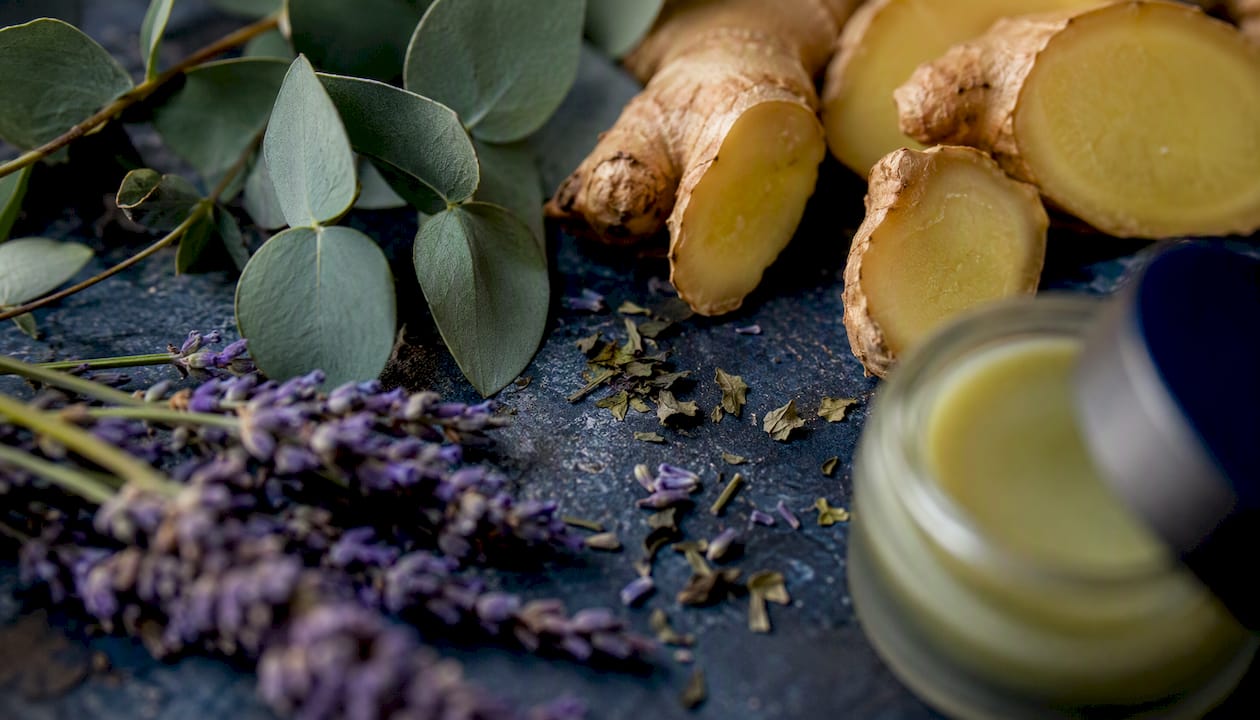
Seriously Soothing Pain Balm is the right choice for arthritis, joint pain, and chronic localized discomfort. The Cinnamon & Clove variant adds clove oil's analgesic properties alongside CBD. The Eucalyptus Mint version delivers a cooling sensation that works well for acute inflammation and hot joints. For bedtime tension relief, the Lavender Lemongrass variant is the quieter, fragrance-forward option.
Rikki Tikki Recovery is formulated specifically for post-workout muscle soreness. Apply it within 30–60 minutes after training, massage along the muscle belly, and let the botanical actives work alongside the CBD.
Trust signals worth knowing:
- Third-party COAs available for every product.
- Full ingredient transparency across all SKUs.
- 30-day refund policy, no questions asked.
- Educational resources on the blog for condition-specific guidance.
Not sure which balm to start with? Mongoosecbd offers a free pain balm sample so you can try before committing to a full size.
What most CBD balm advice gets wrong
Most guides treat CBD balm like a supplement you take and wait for results. That framing sets people up for disappointment. A topical is a technique as much as a product. The massage matters. The skin prep matters. The timing matters. Skipping any one of those steps and then concluding "CBD doesn't work for me" is like blaming a good knife for a bad cut.
The other thing most advice underplays is ingredient synergy. CBD in a plain carrier oil does something. CBD alongside arnica, menthol, clove oil, and cayenne does considerably more, because each of those botanicals has its own mechanism acting on the same tissue. The Mongoosecbd formulas are built on that logic, which is why potency per ounce and the supporting ingredient list both matter when you are reading a label.
One more thing: consistency beats intensity. A modest amount applied at the same time each day, with proper massage technique, will outperform a heavy application done sporadically. Build the routine first. Adjust the amount second.
Mongoosecbd balms: pain relief and recovery without the guesswork
If you have read this far, you know what a good CBD balm application looks like. The next question is whether the product in your hand is worth the routine.
Mongoosecbd's balms deliver 1,000mg of CBD per ounce alongside botanicals like arnica, clove oil, menthol, and cayenne, all in a THC-free, vegan, paraben-free formula. Every batch comes with a third-party COA. Every purchase is backed by a 30-day refund policy. For joint pain and arthritis, the Seriously Soothing Pain Balm is where to start. For post-workout recovery, Rikki Tikki Recovery is the purpose-built option. Not ready to commit to a full size? Grab a free sample and run the routine for a week.
This article is general information, not a substitute for advice from a qualified doctor. Consult a qualified healthcare professional about your own circumstances before acting on anything here.