
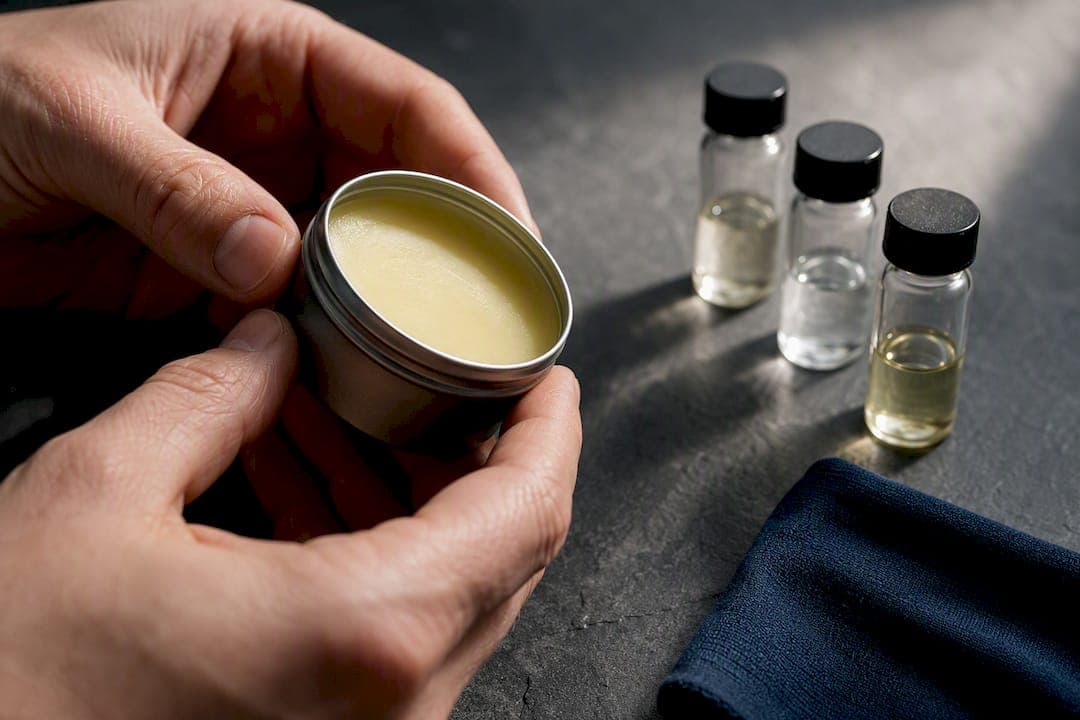
Topical CBD can ease localized pain for some people, particularly muscle soreness and joint discomfort, but it is not a guaranteed fix. A small pilot trial in former professional athletes found real improvement, yet the FDA has not approved CBD for pain in any form. What actually determines your results is formulation quality and lab-verified potency, not the marketing claims on the jar.
TL;DR:
- Topical CBD can provide temporary relief for localized muscle soreness and joint pain, but formulation quality and proper formulation are critical for effectiveness.
- Its benefits are limited to targeted areas because CBD mostly stays local and is less likely to help systemic conditions like fibromyalgia.
- The scientific evidence is mixed, with small studies suggesting benefit for chronic pain from injuries or overuse, but larger reviews show inconsistent or negligible results.
- Quality control is a concern since FDA approval is lacking, and independent lab testing of CBD products is essential to verify potency and purity.
- Correct application involves thorough skin preparation, using an appropriate amount, and consistent reapplication over several weeks to assess individual response.
Table of Contents
- How Does Topical CBD Reduce Pain and Inflammation?
- What Do Human Studies Show About Topical CBD for Pain?
- Is Topical CBD Safe, and Does It Interact With Medications?
- Which Topical CBD Ingredients Actually Matter for Pain Relief?
- How Do You Choose a Topical CBD Product for Pain?
- How Should You Apply Topical CBD for the Best Results?
- Why Mongoosecbd Built Its Balms Around This Evidence
- What Actually Matters Here, and What the Hype Gets Wrong
- Try a Topical CBD Balm Backed by Ingredient Transparency
- Sources
- FAQ
How Does Topical CBD Reduce Pain and Inflammation?
CBD interacts with the endocannabinoid system, a network of receptors that helps regulate inflammation, pain signaling, and skin barrier function. Two receptor types matter most for topical use: CB2 receptors, concentrated in immune cells and skin tissue, and TRPV1 receptors, which influence how nerve endings register heat and pain. CBD is also thought to activate PPARγ, a receptor involved in dialing down inflammatory responses. None of this proves CBD cures anything. It suggests a plausible pathway by which applying it to sore skin could calm local inflammation and blunt pain signals traveling through nearby nerve fibers.
The word "topical" is doing real work here. When you rub a balm into your knee or shoulder, the CBD mostly stays local. It doesn't flood your bloodstream the way an oral tincture or capsule does. Topical administration typically limits systemic absorption, which is good news for tolerability. You're less likely to feel drowsy or foggy. But that same containment means topical CBD has almost no chance of helping pain that isn't localized. It won't touch a systemic condition like fibromyalgia the way it might address arthritis in one specific joint.
Whether CBD actually reaches those receptors depends heavily on formulation. Cannabidiol molecules are fat soluble and don't cross skin easily on their own. A handful of factors determine how much gets through:
- Vehicle type: creams, gels, and oil-based balms carry CBD differently, and thicker oil-based balms tend to sit on skin longer, extending contact time.
- Penetration enhancers: some products use ingredients that temporarily loosen the skin's outer layer to help molecules pass through.
- Excipients and carrier oils: coconut oil, shea butter, and similar bases affect both absorption and how the product feels during application.
- Concentration and particle size: nano-emulsified or finely processed CBD can behave differently on skin than a poorly blended formulation.
Formulation also explains why so many topical CBD products include ingredients that have nothing to do with cannabinoids. Menthol triggers a cooling sensation that distracts the brain from pain signals. Arnica has a long folk history as an anti-inflammatory and is used in many muscle rubs independent of CBD. Camphor and capsaicin create heat or tingling that can mask discomfort temporarily. When you feel relief from a balm, you may be experiencing a combined effect of CBD, these co-ingredients, and simply the act of massaging the area. That's not a knock against the product. It's a reason to judge topical CBD balms on their full ingredient list, not the CBD content alone.
What Do Human Studies Show About Topical CBD for Pain?
The honest answer: promising in a few small studies, unconvincing at scale. Anyone shopping for CBD pain relief creams deserves that nuance instead of a marketing slogan.
The most frequently cited recent evidence comes from a 2023 pilot trial involving 20 former professional athletes with chronic lower extremity pain. Participants applied 10 mg of topical CBD twice daily for six weeks. The treatment was well tolerated, and researchers reported improvements in both pain and physical function over that period. It's a genuinely encouraging result, especially for a population dealing with old sports injuries and joint wear.
Small Trial, Big Caveat: A 20-person pilot study can show a real signal worth investigating further. It cannot tell you what will happen for the broader population of people with arthritis or chronic muscle pain. Treat pilot data as a reason to consider trying something, not as proof it will work for you.
Zoom out from that single trial, and the picture gets murkier. Systematic reviews pooling randomized controlled trials have found mostly mixed or negative results for CBD across pain conditions. Some trials show no meaningful difference between CBD and placebo. A broader review of CBD's effects on athletic performance and recovery, covering studies through April 2024, found limited positive effects on some physiological markers but no consistent benefit for post-exercise recovery specifically.
Condition-specific trials tell a similarly split story. Small studies on thumb basal joint arthritis and postoperative knee pain have produced inconsistent outcomes. Some report a benefit over placebo. Others find no meaningful difference at all. This variability isn't necessarily because CBD "doesn't work." It's because these trials differ wildly in:
- Sample size, often fewer than 30 participants
- Formulation, comparing creams, gels, and oils that behave differently on skin
- Dose, ranging from a few milligrams to much higher concentrations
- Duration, with many trials lasting only a few weeks
Put those limitations together and you get a research landscape that hasn't converged on a clear answer. Harvard Health's clinical summary captures this well: CBD's anti-inflammatory mechanisms are biologically plausible, but the clinical evidence for pain relief is still evolving. It functions, at best, as a symptomatic tool rather than something that resolves the underlying cause of your pain.
The practical conclusion for anyone considering CBD remedies for joint pain is straightforward without being dismissive. Topical CBD has shown real promise in a handful of small, well-designed studies, particularly for people with chronic localized pain from old injuries or overuse. It has not shown itself to be a reliable fix across the board. If you try it, you're testing a plausible therapy with mixed evidence, not applying a proven treatment.
Is Topical CBD Safe, and Does It Interact With Medications?
The single most important regulatory fact: the FDA has not approved any CBD product for pain, chronic or otherwise. The only FDA-approved CBD product remains Epidiolex, prescribed for specific childhood epilepsy syndromes. Every topical CBD balm, cream, or salve sold for pain relief operates outside FDA oversight for that use, which means quality control, labeling accuracy, and purity claims rest almost entirely on the manufacturer's own standards.
That regulatory gap has real consequences. Independent lab analyses of commercial CBD products have repeatedly found discrepancies between what's on the label and what's actually in the jar, sometimes containing more or less CBD than stated, and occasionally detecting trace THC or contaminants the label never mentioned. This is precisely why third-party lab testing matters more for CBD topicals than for almost any other over-the-counter product category.
Reviews of CBD's overall safety profile also flag a few signals worth knowing before you buy:
- Possible hepatotoxicity (liver stress) has appeared in some studies, mostly involving oral or high-dose CBD rather than topical use, but it underscores that CBD isn't universally risk-free.
- Product purity varies enough between brands that two "1,000mg" products can behave completely differently on your skin.
- Skin irritation or allergic reaction is possible, especially with formulations that include strong essential oils like clove or cinnamon.
CBD is metabolized through liver enzymes in the CYP450 pathway, the same system responsible for processing many common medications. While topical use limits how much CBD reaches your bloodstream compared to oral products, anyone taking blood thinners, seizure medications, or other drugs metabolized through this pathway should still talk to a doctor before regular use, especially if applying CBD over large areas of skin or on broken skin where absorption increases.
Pro Tip: If you're on any prescription medication, snap a photo of the topical CBD's ingredient label and Certificate of Analysis (COA) and bring it to your next doctor visit or pharmacist consultation. It takes two minutes and closes the biggest safety gap in CBD shopping: not knowing what's actually interacting with your treatment plan.
A few groups deserve extra caution. Pregnant or nursing individuals should avoid CBD products entirely, given the lack of safety research in these populations. Products aren't formulated or tested for children, and dosing guidance for adults doesn't transfer safely to kids. If you're subject to workplace drug testing, know that even full-spectrum topicals labeled "THC-free" can carry trace amounts capable of triggering a positive test with heavy or frequent use. If you want more detail on reaction risks, Mongoosecbd's guide to topical CBD side effects breaks down what irritation typically looks like and how to tell it apart from an allergic response.
Which Topical CBD Ingredients Actually Matter for Pain Relief?
Milligram count is the number every label shouts loudest, and it's the least reliable predictor of how a balm will feel on your skin. What matters more is the type of CBD used, the vehicle carrying it, and the co-ingredients working alongside it.
Start with spectrum type. Isolate CBD is pure cannabidiol with zero other cannabinoids, making it the safest choice for anyone worried about THC showing up on a drug test. Broad-spectrum includes other cannabinoids and terpenes but has THC removed during processing. Full-spectrum keeps the complete cannabinoid profile, including trace THC, generally under the legal 0.3% threshold. Some researchers believe full-spectrum products benefit from an "entourage effect," where cannabinoids work better together than in isolation, though this remains more theory than settled science. For anyone with drug-testing concerns, the safer bet is checking THC content directly rather than assuming a label claim covers you.
Co-ingredients often do more heavy lifting than people realize. Here's what shows up most often in pain-focused balms and why:
- Menthol produces a cooling sensation that activates cold receptors, which can override pain signals in the same area, a mechanism separate from anything CBD does.
- Camphor works similarly to menthol, creating a warming or tingling counter-irritant effect.
- Capsaicin (derived from chili peppers) desensitizes nerve endings over repeated use, a mechanism used in dedicated capsaicin patches long before CBD balms existed.
- Arnica has a long history in topical pain formulas as an anti-inflammatory, independent of any cannabinoid content.
- Clove oil contains eugenol, a compound with its own mild analgesic and antiseptic properties, though it needs proper dilution to avoid skin irritation. Mongoosecbd's clove oil guide covers safe concentrations if you're sensitive to strong essential oils.
Vehicle matters just as much as ingredient list. A thick ointment sits on skin longer and creates a barrier that can improve absorption over time. A lighter cream or gel absorbs faster and feels less greasy, but may not maintain skin contact long enough for deeper penetration. Neither format is objectively better. It depends on whether you're treating a joint you'll keep moving or an area you can leave covered overnight.
Formulation science backs this up: trial designs that use oral or poorly-optimized topical CBD often fail to show benefit, while permeation enhancers and well-chosen carrier oils appear to be the difference between an inert product and one that reaches target tissue. This is why two balms with identical "1,000mg CBD per ounce" labels can produce completely different results. The milligram count tells you what went into the jar. It doesn't tell you how much actually gets into your skin.
Your best defense against guessing is transparency. Look for a Certificate of Analysis that shows a full cannabinoid breakdown, not just total CBD, along with contaminant screening for heavy metals, pesticides, and solvents. A brand willing to publish that data is telling you something about how seriously they take the product behind the label.
How Do You Choose a Topical CBD Product for Pain?
Run through this checklist before you buy, and you'll avoid the most common mistakes people make shopping for CBD pain relief creams.
- Find the Certificate of Analysis. A legitimate topical CBD product should have a batch-specific COA from an independent lab, not just a general "we test our products" claim. If you can't find one on the product page or by scanning a QR code on the packaging, treat that as a dealbreaker.
- Check that the mg/oz is stated clearly. "1,000mg CBD per ounce" is specific and verifiable. Vague phrases like "maximum strength" or "highly concentrated" with no number attached are marketing filler.
- Confirm the batch number matches your COA. Products change between batches. A COA from six months ago doesn't guarantee what's in the tin you're holding now.
- Look at the expiration date. CBD degrades over time, and a product nearing its shelf-life limit may deliver less active cannabinoid content than advertised.
- Read the full ingredient list, not just the CBD claim. You want to know what else is in there, especially if you have sensitive skin or known allergies to essential oils.
- Verify THC content if you're drug tested. Look for explicit "THC-free" certification with chromatogram data, not just a "broad-spectrum" label, since manufacturing errors do happen.
Red flags are just as telling as green lights. Be wary of any product making exaggerated medical claims, like promising to "cure" arthritis or "eliminate" chronic pain entirely. No topical product, CBD or otherwise, can legally or honestly make that promise. Also watch for brands with no listed manufacturer address, inconsistent labeling between the box and the product page, or COAs that look copied from a template rather than tied to an actual batch.
Two situations call for extra care. Athletes and anyone facing workplace drug screening should stick to isolate or verified THC-free broad-spectrum products, since even trace THC in full-spectrum formulas can accumulate with frequent use. People with sensitive skin should scan for known allergens, particularly strong essential oils like cinnamon, clove, or eucalyptus, before applying a new product broadly.
Pro Tip: Before committing to a full-size product, apply a dime-sized amount to a small patch of skin, like your inner forearm, and wait 24 hours. If there's no redness or irritation, you're clear to try it on the area that actually hurts. Track your pain level on a simple 1 to 10 scale for a week before and after starting, so you're comparing real numbers instead of guessing whether it "feels like it's working."
How Should You Apply Topical CBD for the Best Results?
Getting the technique right matters almost as much as picking the right product, since poor application can waste even a well-formulated balm.
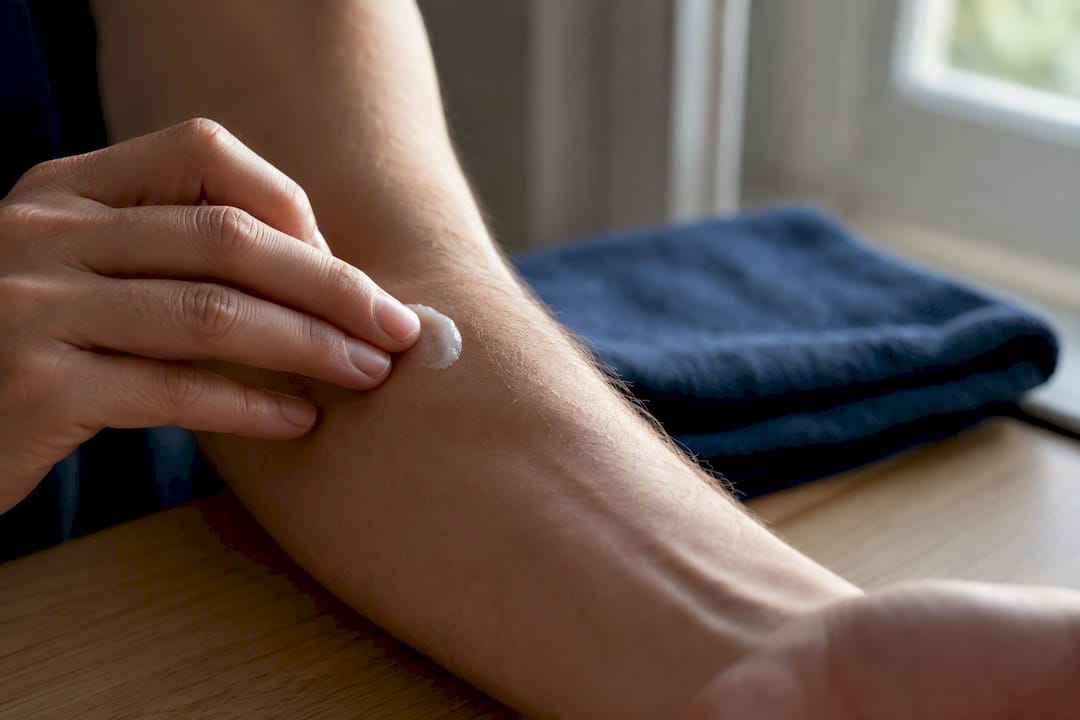
- Clean and dry the area first. Wash the skin where you feel pain and pat it dry. Lotion, sweat, or oil residue on the skin can interfere with absorption.
- Use a small amount to start. A dime to nickel-sized amount is plenty for most joints or muscle groups. More product doesn't mean faster or stronger relief, since skin can only absorb so much at once.
- Massage it in thoroughly. Rub the balm into the skin for 30 to 60 seconds until it's mostly absorbed. The massage itself increases local blood flow, which can add to the relief independent of the CBD.
- Wash your hands after application. This matters especially if the balm contains capsaicin or strong essential oils that can irritate your eyes if transferred accidentally.
- Reapply once or twice daily to start. Consistent with the dosing used in the pilot trial on former athletes, twice-daily application for at least two weeks gives you a fair trial period before judging whether it's working.
- Give it three to fourteen days before adjusting. If you're not noticing any change after two weeks of consistent use, it's reasonable to try a different formulation or ingredient combination rather than assuming more frequent application will help.
Timing can matter depending on your goal. Applying before physical activity may help with anticipated soreness, while applying afterward targets the inflammation response that follows exertion. Many people find nighttime application useful for chronic joint pain, since it gives the product hours of uninterrupted skin contact without friction from clothing or movement. There's no strong evidence against combining topical CBD with other over-the-counter topical analgesics, but layering multiple active ingredients increases the odds of skin irritation, so introduce one new product at a time.
Track your results honestly. Rate your pain on a simple scale before and after each application, and note whether your activity tolerance changes over the trial period, like being able to walk farther or climb stairs with less discomfort. If two to three weeks of consistent, correct application produces no noticeable change, that's a reasonable point to stop and consider talking to a healthcare provider about other options, rather than continuing to apply more product in hopes of a different outcome.
Why Mongoosecbd Built Its Balms Around This Evidence
Every shopping criterion covered above, the COA transparency, the ingredient focus over milligram marketing, the co-ingredients that add real analgesic value, shaped how Mongoosecbd approaches formulation.
Certain Seriously Soothing Pain Balm and Rikki Tikki Recovery balms use CBD alongside ingredients chosen for their own independent track record in pain relief, not just as filler around a CBD claim:
- Arnica for its established anti-inflammatory reputation in topical pain formulas
- Menthol and eucalyptus for the cooling counter-irritant effect that provides immediate sensation while the CBD works locally
- Turmeric, ginger, and cayenne pepper for their traditional roles in warming, circulation-focused topical remedies
- Cinnamon and clove in a dedicated formulation for people who prefer a warming sensation over a cooling one
Some topical CBD balms are vegan, non-GMO, paraben-free, THC-free, and cruelty-free, addressing drug-testing and sensitive-skin concerns covered in the checklist above.
Some CBD companies offer a full refund within 30 days of purchase to back customers' decisions to try topical CBD products. That's not a marketing footnote. It's a practical way to test a formulation on your own pain, on your own schedule, without financial risk if it doesn't work for you. For anyone dealing with a complex medical condition or currently on prescription medication, talk to your doctor first, then use the COA and ingredient transparency on any product page to make an informed choice.
What Actually Matters Here, and What the Hype Gets Wrong
The conventional pitch around topical CBD treats it like a settled science story with a marketing gap. It isn't. The real story is a handful of small, genuinely encouraging trials sitting inside a much larger pile of mixed and negative data, and most buying guides gloss over that tension because "the evidence is mixed" doesn't sell product.
What gets underrated is formulation. People fixate on milligram counts when the vehicle, the co-ingredients, and the manufacturing transparency probably matter more for whether you feel anything at all. A well-made balm with 500mg per ounce and real penetration support can outperform a 2,000mg product that never absorbs properly.
My honest read: try topical CBD as a supplemental tool for localized pain, not a replacement for medical care, and judge any product by its COA before its claims. If a company won't show you what's actually in the jar, that tells you everything you need to know about how much they trust their own formulation.
— Cindy
Try a Topical CBD Balm Backed by Ingredient Transparency
Some topical CBD balms are built around criteria like clear mg/oz labeling, ingredients with analgesic value, and formulations aimed at athletes and chronic pain sufferers rather than a general skincare crowd. That's the direct payoff for you as a reader here. You don't have to cross-reference a COA against five different vague-labeled competitors, because the ingredient list and dosage are stated plainly on every product page.
The Seriously Soothing Pain Balm uses 1,000mg of CBD per ounce alongside arnica and menthol for joint and muscle pain, while Rikki Tikki Recovery targets post-activity soreness for athletes and active adults. If you'd rather test the waters first, Mongoosecbd offers a free sample of the Miracle Pain Balm so you can patch test and trial it exactly the way this guide recommends, with a full refund available within 30 days if it isn't the right fit for your pain.
This article is general information, not a substitute for advice from a qualified doctor. Consult a qualified healthcare professional about your own circumstances before acting on anything here.
Sources
- Topical cannabidiol is well tolerated in individuals with a history of elite physical performance and chronic lower extremity pain
- Can CBD oil help manage pain? - Harvard Health
- Systematic review/meta-analysis reporting mixed or largely negative randomized trial results for CBD in pain
FAQ
What is the most effective topical CBD cream for pain relief?
No single product is proven most effective, since clinical trial results remain mixed across formulations. Your best odds come from a product with a clear COA, transparent mg/oz labeling, and supporting co-ingredients like arnica or menthol, such as Mongoosecbd's Seriously Soothing Pain Balm.
Does CBD cream actually work for pain?
It can help some people with localized pain, particularly muscle soreness and joint discomfort, as shown in a small six-week pilot trial in former athletes. Larger pooled trial data show mixed to negative results overall, so it works better as a supplemental option than a guaranteed fix.
Is CBD cream better than Biofreeze?
Neither is objectively "better." Biofreeze relies entirely on menthol's cooling counter-irritant effect, while CBD balms combine that same mechanism with cannabinoid activity on CB2 and TRPV1 receptors, so results depend on which mechanism your particular pain responds to.
Which form of CBD is best for pain?
For localized pain like knee or joint discomfort, topical CBD limits systemic absorption and targets the area directly, while oral CBD reaches your whole system but with slower onset and more variable results. Comparing the two routes directly can help you decide which fits your specific pain pattern.
How often should you reapply topical CBD for pain?
Most guidance and the pilot trial protocol point to twice-daily application, given consistently for at least two weeks before judging effectiveness. Reapplying more frequently than that doesn't speed up results and mainly increases the chance of skin irritation from co-ingredients like menthol or capsaicin.