
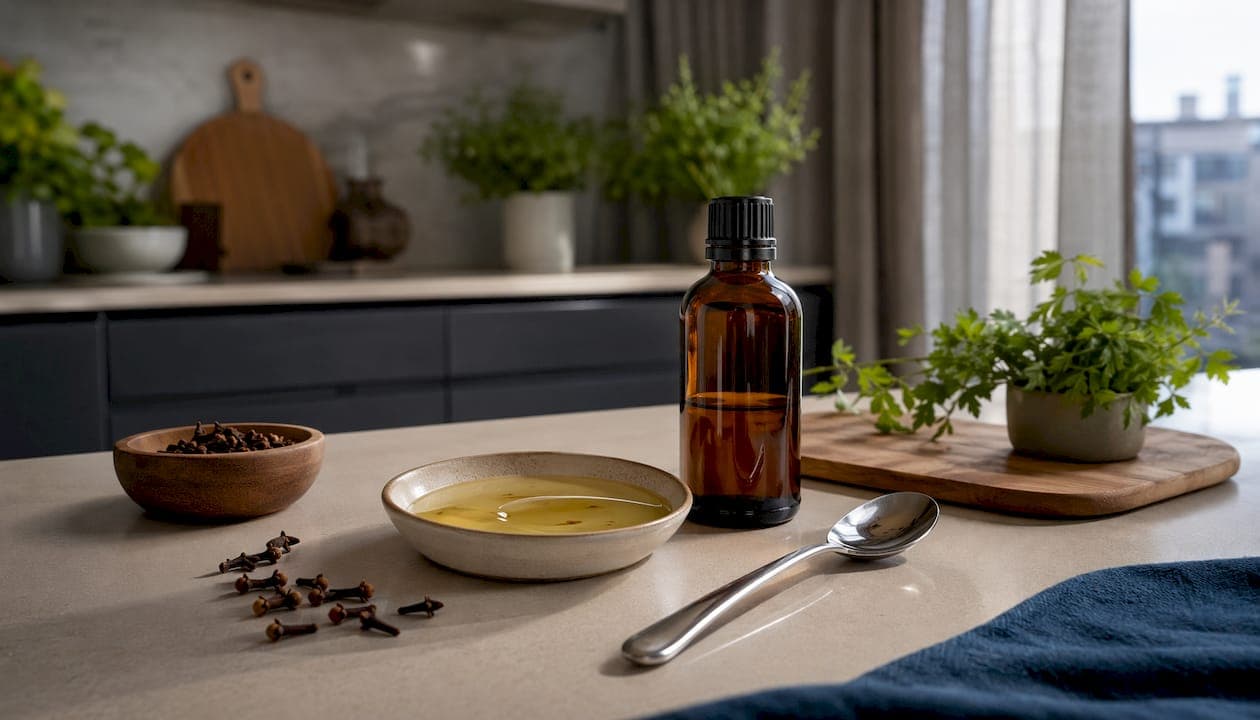
Clove oil can relieve pain short-term when properly diluted, but it demands respect. The active compound, eugenol, acts as a local anesthetic and anti-inflammatory agent, making it genuinely useful for temporary topical relief of muscle soreness, joint discomfort, and dental pain. The hard limit: undiluted eugenol is caustic, toxic if ingested, and dangerous for children. For adults who want repeatable, safer relief, professionally formulated options like Mongoosecbd's Seriously Soothing Pain Balm (Cinnamon & Clove) pair eugenol with 1,000mg CBD per ounce in a pre-diluted, tested formula.
Table of Contents
- How clove oil actually relieves pain
- Safe topical use: how to dilute clove oil for skin
- Side effects, interactions, and who should avoid clove oil
- Using clove oil alongside CBD topical balms
- A safe DIY recipe and when not to DIY
- When to stop using clove oil and see a doctor
- Key Takeaways
- The case for formulated over DIY
- Mongoosecbd's Seriously Soothing Pain Balm is worth trying first
- Useful sources
How clove oil actually relieves pain
Eugenol makes up roughly 70%–90% of clove essential oil, and it works through two distinct pathways. First, it blocks nerve signal transmission locally, producing a numbing effect similar to a mild topical anesthetic. Second, it suppresses inflammatory mediators including histamine and noradrenaline, which helps explain why relief feels fast but fades within an hour or two.
A 2024 randomized clinical study found clove oil to be as effective as 20% benzocaine gel in reducing pain during dental nerve block procedures in children, with no statistically significant difference between groups. A 2006 trial of 73 adults reached the same conclusion comparing clove oil to benzocaine for temporary dental pain. Animal research published on PubMed showed clove oil significantly reduced acetic-acid-induced pain responses and inhibited carrageenan-induced paw edema.
Researchers are also studying nanoemulsion-based delivery systems to improve eugenol's bioavailability and reduce irritation at lower concentrations. That work is still in progress, but it signals where formulation science is heading.
Key insight: Eugenol's relief is real and measurable, but it is temporary and symptomatic. It does not repair tissue, fight infection, or address the underlying cause of chronic pain.
Safe topical use: how to dilute clove oil for skin
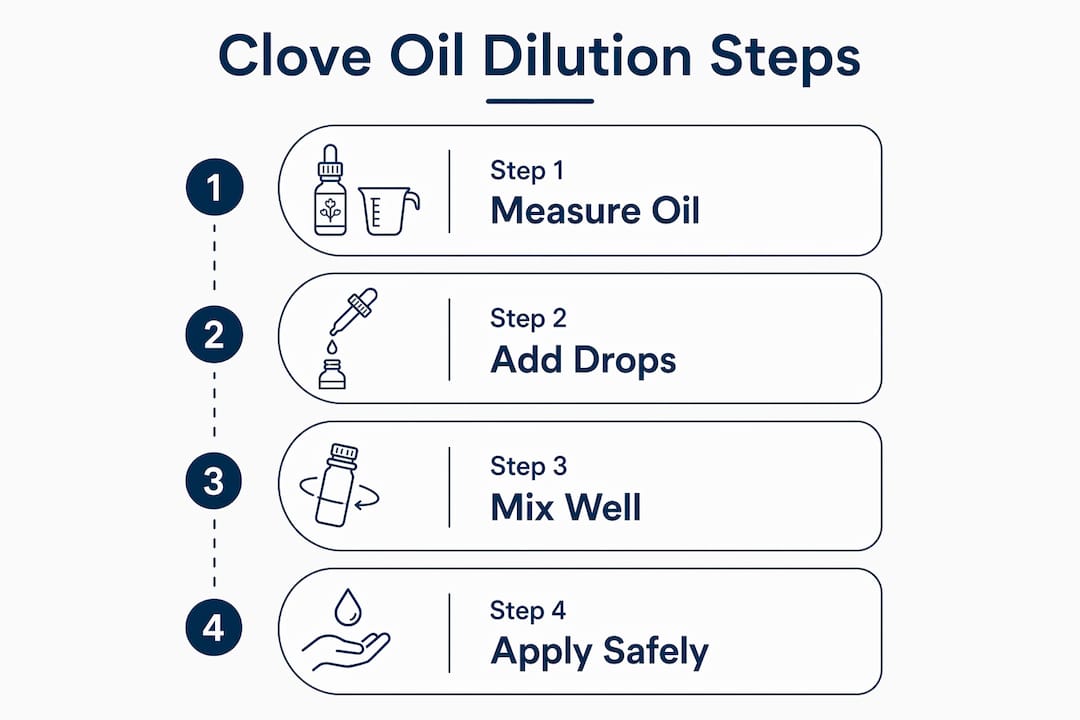
Pure clove oil applied directly to skin causes chemical burns. Practitioners recommend a maximum concentration of 1% for topical use, using a neutral carrier oil. Jojoba, fractionated coconut oil, and olive oil are all safe choices. Jojoba is particularly stable and absorbs cleanly without clogging pores.

Dilution reference table
| Target Concentration | Drops of Clove Oil | Carrier Oil Volume |
|---|---|---|
| 1% (conservative) | 6 drops | 1 teaspoon (5 mL) |
Before applying to a larger area:
- Mix your dilution in a small glass bowl (avoid plastic, which can absorb essential oils).
- Apply a pea-sized amount to the inside of your forearm.
- Wait 24 hours and check for redness, itching, or swelling before proceeding.
- Never apply to broken skin, mucous membranes, or near eyes.
- Limit topical application to once or twice daily on any given area.
Pro Tip: Use fractionated coconut oil rather than regular coconut oil for diluting clove oil. It stays liquid at room temperature, mixes more evenly, and has a longer shelf life, which matters when you are storing a pre-mixed blend.
Side effects, interactions, and who should avoid clove oil
"Natural" does not mean side-effect free. Clove oil's potency is the same property that makes it effective, and misuse carries real consequences.
Warning: Ingesting clove oil, even in small amounts, can cause hypoglycemia, liver toxicity, respiratory depression, and in severe cases, coma. Children are at significantly higher risk of systemic toxicity. Keep clove oil out of reach of children at all times.
Common local reactions include skin irritation, redness, and chemical burns from undiluted application. Repeated oral use damages gum tissue and tooth pulp because eugenol is cytotoxic to human cells at higher concentrations.
Who should avoid clove oil entirely:
- Children under 12 (higher systemic toxicity risk)
- Pregnant or breastfeeding people
- Anyone with liver disease or impaired liver function
- People taking anticoagulants (warfarin, aspirin therapy) — eugenol has blood-thinning properties that can amplify bleeding risk
- People on diabetes medications — clove oil may lower blood glucose unpredictably
- Anyone with a known allergy to eugenol or related compounds
If you take prescription medications metabolized by the liver, talk to your doctor before using clove oil topically with any regularity. The interaction risk is real even through skin absorption at higher concentrations.
Using clove oil alongside CBD topical balms
Topical CBD and eugenol work through different mechanisms, which is exactly why combining them makes sense. CBD modulates inflammatory pathways and interacts with endocannabinoid receptors in skin and muscle tissue. Eugenol adds direct local anesthesia and additional anti-inflammatory action. Clinical observations suggest that clove-derived agents combined with other analgesics produce stronger pain relief than either alone.
Layering guidance:
- Always patch test both products separately before combining them on the same area.
- Apply the formulated CBD balm first, let it absorb for two to three minutes, then apply a diluted clove oil blend if needed.
- Never layer clove oil over broken or irritated skin, even when diluted.
- Avoid applying to mucous membranes regardless of dilution level.
For most adults dealing with muscle soreness, arthritis, or chronic joint pain, a pre-formulated balm that already contains both CBD and clove is a safer and more consistent option than DIY layering.
Mongoosecbd's Seriously Soothing Pain Balm (Cinnamon & Clove) combines 1,000mg CBD per ounce with clove, cinnamon, and complementary botanicals in a pre-tested, paraben-free formula. The Miracle Pain Balm offers a broader botanical blend for muscle and arthritis relief. Both eliminate the guesswork of home dilution and come with a 30-day full refund policy.
| Approach | Dilution Control | Consistency | Risk Level |
|---|---|---|---|
| DIY clove oil blend | Manual, error-prone | Variable batch to batch | Higher (burn/irritation risk) |
| Formulated CBD + clove balm | Pre-tested by manufacturer | Consistent every use | Lower |
A safe DIY recipe and when not to DIY
If you want to try a clove oil blend at home, a 1% dilution is the right starting point.
Simple 1% topical clove oil blend:
- Measure 1 teaspoon (5 mL) of fractionated coconut oil into a small glass container.
- Add exactly 6 drops of pure clove essential oil.
- Stir gently for 30 seconds.
- Perform a 24-hour patch test on your inner forearm before wider use.
- Store in a dark glass bottle, away from heat and light, for up to 6 months.
Drops-to-volume conversion reference
| Drops of Clove Oil | Volume (approx.) |
|---|---|
| 6 drops | 5 mL |
Do not DIY if you are:
- Pregnant, breastfeeding, or treating a child
- Managing a condition requiring prescription blood thinners or diabetes medication
- Dealing with open wounds, inflamed skin, or active infection
- Seeking relief for daily or chronic use (formulated balms are safer for repeated application)
Pro Tip: Label your DIY blend with the date and concentration. Essential oil blends degrade over time, and an unlabeled bottle is a safety hazard if someone else picks it up.
When to stop using clove oil and see a doctor
Clove oil is a stopgap, not a treatment plan. Dental guidance is clear: clove oil only masks symptoms and does not address the underlying cause of a toothache, abscess, or infection. Delaying dental care while relying on clove oil can allow infections to worsen significantly.
Call emergency services or go to an ER immediately if you notice:
- Swelling that makes it difficult to breathe or swallow
- Signs of systemic toxicity after accidental ingestion (seizure, loss of consciousness, difficulty breathing)
- Uncontrolled bleeding in the mouth or on skin
Schedule a dentist or physician within 24–48 hours if you have:
- Tooth pain lasting more than one to two days
- Fever accompanying dental or jaw pain (sign of spreading infection)
- A visibly cracked, broken, or displaced tooth
- Skin that shows blistering or chemical burn after clove oil contact
For muscle or joint pain that has lasted more than a few weeks, clove oil is not the answer. That is a conversation for your primary care provider or a rheumatologist.
Key Takeaways
Properly diluted clove oil provides real but short-lived topical pain relief through eugenol's anesthetic and anti-inflammatory actions, but it carries serious risks if used undiluted, ingested, or applied to children.
| Point | Details |
|---|---|
| Dilution is non-negotiable | Stay within 1% concentration; 6 drops per teaspoon of carrier oil for a 1% blend. |
| Eugenol works two ways | It blocks nerve signals locally and suppresses inflammatory mediators like histamine. |
| Ingestion is dangerous | Swallowing clove oil can cause liver toxicity, hypoglycemia, and respiratory distress. |
| DIY has real limits | Repeated or daily use is better served by a pre-formulated CBD balm with consistent dosing. |
| Mongoosecbd's formulated option | The Seriously Soothing Pain Balm (Cinnamon & Clove) pairs 1,000mg CBD per ounce with clove in a tested, paraben-free formula. |
The case for formulated over DIY
Most people who reach for clove oil are doing so because they want fast, natural relief without a pharmacy run. That instinct is sound. The problem is that "natural" and "safe to use freely" are not the same thing, and clove oil sits closer to the caustic end of the essential oil spectrum than most people realize.
What I find genuinely useful about professionally formulated balms is the consistency. When you mix a DIY clove oil blend, the concentration varies slightly every time, the carrier oil quality differs, and there is no standardized patch-test history behind the formula. A well-made CBD balm with clove already built in removes those variables. You get the eugenol benefit without the burn risk, and the CBD adds a complementary anti-inflammatory layer that straight clove oil cannot provide on its own.
For adults managing chronic muscle pain or arthritis, daily DIY clove oil use is not a sustainable or safe approach. A formulated balm with a known ingredient list, a tested concentration, and a clear return policy is simply a better tool for that job.
Mongoosecbd's Seriously Soothing Pain Balm is worth trying first
If clove oil's benefits interest you but the dilution math and burn risk give you pause, the Seriously Soothing Pain Balm (Cinnamon & Clove) from Mongoosecbd delivers the same eugenol-driven relief in a pre-formulated, ready-to-apply balm. It combines 1,000mg CBD per ounce with clove, cinnamon, arnica, and turmeric, all in a vegan, THC-free, paraben-free base designed for adults with muscle soreness, arthritis, and chronic pain.
Apply a small amount directly to the affected area and rub in until absorbed. No measuring, no mixing, no patch-test anxiety from an unknown concentration. For readers who want to try before committing, Mongoosecbd also offers a free Miracle Pain Balm sample to test the formula on your skin first. Every full-size purchase comes with a 30-day full refund policy.
Useful sources
- Medical News Today — Clove oil for toothache: Use and side effects: Covers eugenol's composition (70%–90% of clove oil), mucosal damage risks from repeated use, and short-term safety guidance.
- Healthline — Clove Essential Oil: Benefits and How to Use: Systemic toxicity risks from ingestion, dilution recommendations (1%–2.5%), and who should avoid clove oil.
- The Conversation (Dipa Kamdar, 2025) — How cloves might help relieve pain and inflammation: Mechanistic reporting on eugenol's action on histamine, noradrenaline, and analgesic synergy with other agents.
- PubMed / Experimental study — Anti-inflammatory, antinociceptive and antipyretic activities of clove oil in mice: Animal trial data showing 87.7% pain reduction and 50.6% edema inhibition with clove oil.
- Journal of Stomatology (2024) — Effectiveness of clove oil as a topical anesthetic during inferior alveolar nerve block: Randomized trial confirming clove oil equals 20% benzocaine gel for dental pain in children.
- Colgate oral health guidance — Clove oil for toothache pain relief: Practical dental guidance on short-term use, symptom masking, and the need for professional dental care.
- Springer (2022) — Nanoemulsion-based delivery of clove oil: Advanced delivery research exploring improved bioavailability and reduced irritation through nanoemulsion formulations.
This article is general information, not medical or dental advice. Confirm current guidance with a licensed healthcare provider or dentist for your specific situation.