
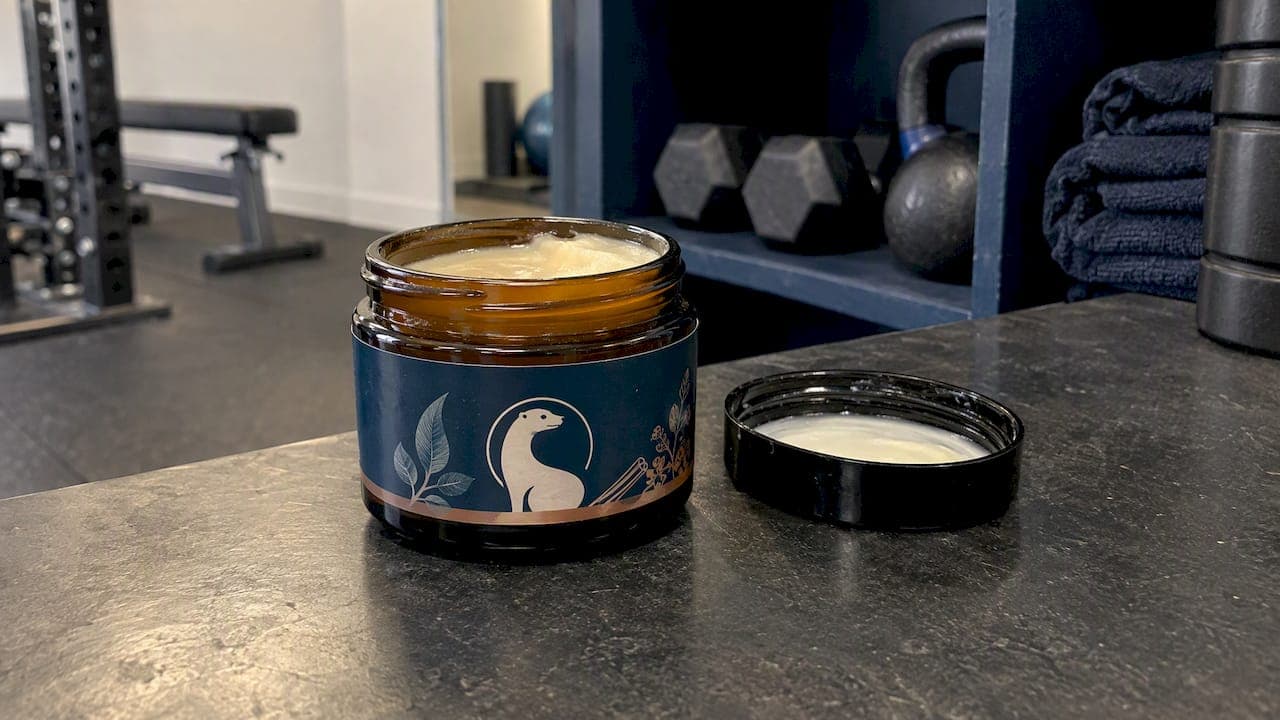
A cinnamon clove muscle balm is a topical salve that pairs warming spice oils with a wax and butter base. You rub it into sore muscles or stiff joints. The warmth is real. The pain-relief evidence is early, and mostly from lab and animal work. Used correctly, it is a reasonable add-on for everyday soreness. Used carelessly, it can irritate skin.
This guide covers what is in these balms, what the research shows, how to apply one, who should skip it, and how our own cinnamon & clove CBD balm fits in.
TL;DR
- Cinnamon clove balms rely on warming spice oils. Clove's eugenol activates a nerve receptor that produces warmth and can dull pain signals.
- Evidence is promising but thin. Much of it comes from cell and animal studies, and one human study of cinnamon taken by mouth found no clear soreness benefit.
- Both oils can irritate skin. Patch test first, keep the balm off broken skin and eyes, and stop if it burns.
- People on blood thinners, people with spice or fragrance allergies, and pregnant or nursing people should ask a clinician first.
- Our Seriously Soothing Pain Balm in cinnamon & clove combines 1,000mg of CBD per ounce with botanicals, and it comes with a 30-day full refund.
Table of Contents
- What a cinnamon clove muscle balm is
- What the research says
- Skin safety: the part most guides skip
- How to apply a cinnamon clove balm
- Adding CBD to the mix
- Our cinnamon & clove balm
- How to choose a cinnamon clove balm
- Perspective: why we pair warmth with CBD
- FAQ
- Sources
What a cinnamon clove muscle balm is
A muscle balm is an oil-and-wax product. Beeswax or plant wax gives it body. Shea butter, cocoa butter or carrier oils make it spreadable. Active botanicals do the work you feel.
In a cinnamon clove version, the spice oils give a deep, spicy warmth. Other common additions in muscle balms include arnica, menthol, peppermint, eucalyptus, ginger, turmeric and cayenne. A look at what ranks for this search shows the pattern. Handcrafted balms list arnica, ginger, turmeric, clove and red pepper. Others pair peppermint with camphor. Cinnamon appears mostly in DIY recipes.
The warming type works differently from a cooling one. Cooling balms lean on menthol. Warming balms lean on spices. If you are unsure which suits you, our piece on warming versus cooling CBD for sore muscles explains why a tingle alone is not proof that a product works.
Why cinnamon and clove together
Both are familiar aromatic spices. Both are used traditionally for aches. Both create a strong sensory effect on the skin. That sensation is part of the appeal. Many people simply like the smell and the heat, and a pleasant routine makes it easier to stay consistent with massage and stretching.
What the research says
The honest summary: there are plausible mechanisms and encouraging early studies, but not strong human trials on cinnamon-clove balms specifically.
Clove oil and eugenol
Clove oil contains eugenol. A 2022 academic review of natural topical pain relievers explains that eugenol activates the TRPV-1 receptor, which desensitizes nerve endings in the skin. That produces a warming sensation and a pain-relieving effect. The same authors stress that rigorous clinical studies are still needed before essential oils like clove can be treated as standardized, reliable alternatives for pain control.
For a deeper look at dilution and safe handling, see our guide to clove oil for pain.
Cinnamon
A 2022 study in rats tested cinnamon and clove essential-oil nanogels. It reported anti-nociceptive and anti-inflammatory effects in standard pain and paw-swelling tests. That is animal work using a specialized nanogel, so it does not translate directly to a balm from a tin.
Cinnamon also contains phenolic and flavonoid compounds. A 2017 review of herbs and supplements for exercise recovery notes that these compounds have been observed to inhibit NF-kB activation, a pathway tied to inflammation.
Human evidence is less kind to eating cinnamon. In a six-week study of female athletes, 3 g of cinnamon per day did not produce a supported reduction in muscle soreness compared with placebo. The authors suggested dose, timing and the small number of participants may have played a role. That study tested a swallowed supplement, not a balm, so it says little about topical use. It does show why you should not assume that a spice that sounds anti-inflammatory will lower soreness.
Our guide to cinnamon oil for pain covers the 0.5 to 1% range and why concentration matters.

Topical essential oils as a group
A 2023 systematic review and meta-analysis of topical essential oils in musculoskeletal pain found pain intensity favored essential oils over placebo, with the biggest relief right after application. The authors described topical essential oil therapy as a safe, cost-effective and accessible add-on treatment for pain and stiffness. Note the wording: add-on. It is not a replacement for medical care.
A 2025 article in The Conversation reached a similar view on clove. Cloves have promising backing, but the author describes them as a complementary remedy rather than a substitute for anti-inflammatory drugs such as ibuprofen.
What this means in practice
| Claim | What supports it | How strong |
|---|---|---|
| Clove oil warms skin and may dull local pain signals | Eugenol activates TRPV-1 (2022 review) | Mechanism plausible, clinical trials lacking |
| Cinnamon and clove oils reduce pain and swelling | Rat studies with nanogels (2022) | Animal data only |
| Topical essential oils ease musculoskeletal pain | 2023 meta-analysis | Favorable, short-term, add-on use |
| Eating cinnamon reduces soreness | Six-week athlete study (2013) | No supported benefit |
Skin safety: the part most guides skip
The same compounds that make these oils effective on nerve endings make them tough on skin.
An in-vitro study found clove oil and eugenol were cytotoxic to cultured human skin cells at low tested concentrations. The authors advise using essential oils with care and in highly diluted form, especially on skin. The Conversation article adds that concentrated clove oil applied topically can cause irritation, rashes or burning.
Three practical points follow from that.
- Dilution matters more than strength. A well-made balm is already diluted in wax and butter. Never add neat clove or cinnamon oil on top.
- Heat is not a sign of power. A strong burn means irritation, not extra relief.
- Formula transparency helps. Look for a product that lists its ingredients clearly, so you can spot anything you react to.
If you want to know more about reactions to CBD balms in general, read our page on CBD balm side effects.
Who should skip it or ask first
- People on blood thinners. High-dose clove oil can interfere with blood clotting, and the source advises caution for people taking anticoagulants such as warfarin. Ask your prescriber or pharmacist before using it regularly.
- Anyone with known allergies to spices, fragrance or balsam products. Skip it, or ask an allergist first.
- People with eczema, psoriasis or sensitive skin. Warming oils are more likely to sting. Ask a dermatologist.
- Pregnant or nursing people. Ask your OB-GYN or midwife before using essential-oil products.
- Children. Do not use adult balms on kids without a pediatrician's advice.
- People with arthritis or chronic pain. A balm can be a comfortable part of a routine. New swelling, redness, fever or worsening pain is a reason to call your doctor, not to apply more.
How to apply a cinnamon clove balm
- Patch test. Rub a pea-sized amount on your inner forearm. Wait 24 hours. Redness, itching or burning means do not use it.
- Start on clean, dry, intact skin. Never apply to cuts, rashes, sunburn or freshly shaved skin.
- Use a thin layer. A pea to dime-sized amount covers a calf or shoulder area. More does not mean more relief.
- Massage it in for a minute or two. The rub itself helps loosen tight muscle.
- Wash your hands right away. Keep them away from eyes, lips and the inside of the nose.
- Skip heat on top. No heating pads, hot water bottles or tight wraps over a warming balm. Together they can burn.
- Limit frequency. Begin once or twice a day and watch your skin. Stop if it reddens.
For general tips on applying CBD balm and lowering the chance of skin irritation, this overview of CBD benefits and safe use is a helpful companion.
When to use it
Most people reach for a warming balm in one of three moments: before a workout on tight muscles, after training on sore ones, or in the evening on stiff joints. Warming products are usually preferred for stiffness. For a fresh, hot, swollen injury, see a clinician instead.
Adding CBD to the mix
Spice oils are one route to relief. CBD is another. Topical CBD is aimed at the same areas, and many people combine both in one product to avoid layering several balms.
The human data on topical CBD are still developing. Our pages on CBD for muscle recovery and CBD for muscle knots go through what is and is not known. If you lift, our weightlifter guide to topical CBD explains how to run a fair two to three week trial so you can judge for yourself.
We also think milligrams are not the whole story. The botanical base matters, and so does what else is in the tin. Our write-up on CBD balm ingredients that matter explains how we think about it.
Our cinnamon & clove balm
The Seriously Soothing Pain Balm comes in a cinnamon & clove version. Our balms use 1,000mg of CBD per ounce, plus natural pain-relieving botanicals such as arnica, menthol, turmeric, eucalyptus, peppermint, cinnamon, clove, ginger and cayenne pepper. They are vegan, non-GMO, paraben-free, THC-free and cruelty-free, and we use third-party testing.
Prices on our site run from $26.95 to $39.95, depending on the product and size. If it does not work for you, we offer a full refund within 30 days of purchase.
Shop the cinnamon & clove balm. Prefer something milder? There is also the original formula, and RIKKI TIKKI Recovery is made for post-workout muscles. You can also compare options on our Icy Hot alternatives page.
How to choose a cinnamon clove balm
Whatever brand you buy, check these points.
- A full ingredient list. Vague wording like "essential oil blend" gives you nothing to check against an allergy.
- Dilution. A balm that stings on first contact is likely too hot.
- Testing. Ask whether a third party has tested the product, particularly if it contains CBD.
- Base ingredients. Beeswax or plant wax, shea or cocoa butter and carrier oils all change how it spreads and feels. Vegan buyers should check the wax.
- Return policy. A scent and heat you cannot predict are easier to try when you can return the tin.
- Realistic claims. Be wary of anything that promises to cure arthritis or replace medication.
Perspective: why we pair warmth with CBD
We built our balms for athletes and for people who live with chronic pain. They have different days, but the same complaint: sore, tight tissue, and not enough ways to ease it without taking something by mouth.
We like warming botanicals because people notice them. A balm you enjoy using is a balm you use consistently, with massage and mobility work, which are probably doing a good share of the job. We do not claim cinnamon or clove cure anything. The research says they are a plausible add-on, and we treat them that way.
What we care about most is the tin you hold. Clear ingredients, a CBD dose you can see on the label, and a refund window so a first-time buyer carries no risk. Test a small patch, give it a fair trial, and keep what works.
— Cindy
FAQ
Do muscle balms really work?
They can help with short-term comfort. A 2023 meta-analysis found topical essential oils favored pain relief over placebo, mostly right after application. Some of the effect comes from warmth and massage. Treat a balm as an add-on, not a cure.
Is there cinnamon in Tiger Balm?
We cannot speak to another company's formula, and recipes change. Check the ingredient list printed on the tin you hold. If cinnamon is a concern for you, the label is the only reliable answer.
What is the best oil for muscle pain?
There is no single proven winner. Clove, cinnamon, peppermint, eucalyptus and ginger oils all have some early support, and carrier oils like sweet almond or jojoba dilute them. Dilution and your own skin tolerance matter more than picking the "best" one.
Can a cinnamon clove balm irritate my skin?
Yes. Both oils can cause redness, rash or burning, especially if undiluted or used on sensitive skin. Patch test on your forearm for 24 hours first, and stop use if it burns. See a doctor if a reaction spreads or swells.
Can I use it with blood thinners?
Ask your prescriber or pharmacist first. High-dose clove oil can interfere with blood clotting, so people taking warfarin or other anticoagulants are advised to use caution.
Sources
- Anti-inflammatory and anti-nociceptive effects of cinnamon and clove essential oil nanogels (2022)
- Natural Herbal Non-Opioid Topical Pain Relievers: Comparison (2022)
- Efficacy of Topical Essential Oils in Musculoskeletal Pain (2023)
- Influence of Ginger and Cinnamon Intake on Inflammation and Muscle Soreness (2013)
- Herbs and natural supplements in the prevention and treatment of exercise-induced muscle damage (2017)
- Cytotoxicity of clove oil and its major constituent eugenol (2006)
- How cloves might help relieve pain and inflammation (The Conversation, 2025)