

Topical CBD balms can help some people manage the pain of a localized muscle knot, especially when paired with massage and adjunct ingredients like menthol or arnica. Oral CBD shows more promise in small trials for broader exercise-related soreness but hits the target less precisely. Start with a well-formulated topical, apply it directly to the knot with light massage, and check with a clinician first if you take other medications.
TL;DR:
- Small trials suggest that oral CBD, especially sublingual, may modestly reduce pain and improve muscle function within 48 hours after injury, but evidence remains limited.
- Topical CBD has not shown consistent benefits in controlled studies, with no significant reduction in soreness or inflammation observed at 24 hours.
- Topical balms are preferable for localized muscle knots due to targeted application, sensory adjuncts like menthol, and lower systemic interaction risk.
- Proper application of CBD balm involves cleaning the area, massaging in a small amount over the knot, and reapplying multiple times daily, with monitoring of pain and mobility.
- Consumers should verify product quality through third-party testing, check CBD concentration per ounce, and confirm THC content before purchasing or use, especially if drug testing is a concern.
Table of Contents
- What Does the Research Say About CBD for Muscle Pain?
- Should You Use a Topical Balm or an Oral CBD Product?
- How Should You Apply CBD Balm to a Knot?
- What Should You Look for When Buying a CBD Topical?
- Is CBD Safe? Side Effects, Interactions, and the FDA Stance
- How Fast Will You Feel Relief, and How Long Should You Try It?
- Mongoose CBD Co.'s Approach to Muscle Knot Relief
- Where the Conventional Wisdom on CBD Gets It Wrong
- Try a Topical CBD Balm Built for Exactly This
- Sources
What Does the Research Say About CBD for Muscle Pain?
The honest answer is: promising but thin. Most of what we know about CBD for muscle pain comes from small trials, and almost none of them were designed around the specific complaint of a muscle knot, or myofascial trigger point, as clinicians call it. That gap matters, and it shapes how confident you should be in what a balm or tincture can realistically do.
The most relevant data point right now comes from a 2026 feasibility trial that gave 29 participants either 67 mg of sublingual CBD daily or a placebo after an induced muscle injury. The CBD group reported less peak pain and better strength retention at 48 hours compared to placebo. That is a real signal, but it's also a feasibility study with a small sample, meaning it was built to test whether a bigger trial is worth running, not to prove efficacy on its own.
Topical evidence is murkier. A 2023 randomized trial testing a CBD ointment on delayed-onset muscle soreness found no significant reduction in inflammation or measured soreness at 24 hours compared with the control group. That result surprises people who assume "if oral CBD helps, topical must too." The two delivery routes behave differently in the body, and topical CBD has to penetrate skin and reach deeper tissue to do anything CBD-specific, which is a much higher bar than a sublingual dose absorbed through mucous membranes.
Zoom out to systematic reviews and the picture gets murkier still. Reviews covering cannabinoids across pain conditions like arthritis, MS, and fibromyalgia describe the evidence as promising but limited, largely because so many studies mix CBD with THC-containing cannabis products. That makes it hard to say how much of any benefit comes from CBD alone versus the broader cannabis plant.
A few numbers worth remembering as you evaluate any product claim:
- The daily sublingual dose used in the 2026 feasibility trial showed reduced peak pain at 48 hours.
- 24 hours was the checkpoint where a 2023 topical CBD trial found no measurable difference in soreness or inflammation.
- The FDA has not approved any CBD products for muscle pain or soreness of any kind.
The takeaway: small trials suggest oral or sublingual CBD may modestly ease pain and speed functional recovery after muscle injury, while topical formulations have a mixed and less convincing track record in controlled testing. A registered clinical trial is currently working to standardize how topical CBD cream is applied and measured for delayed-onset soreness, which tells you the field itself still doesn't have a settled protocol. Some of CBD's apparent benefit may also come indirectly, through better sleep or reduced anxiety rather than a direct anti-inflammatory effect on the knot itself.
Should You Use a Topical Balm or an Oral CBD Product?
The delivery route matters more than the CBD concentration on the label. For a genuine muscle knot, a tight, tender band of tissue you can press your finger into, a topical balm is usually the smarter first move.
Topicals excel for localized knots for three reasons, including formulations like the CBD muscle balm peppermint vitamin E that combine CBD with effective topical adjuncts. First, you apply the product exactly where the pain lives, rather than dosing your entire system and hoping enough reaches the tissue. Second, most topical balms include sensory adjuncts like menthol, camphor, or arnica that create an immediate cooling or warming sensation, which can meaningfully dull the perception of pain even before any CBD-specific effect kicks in. Third, topical use carries far lower systemic exposure, so there's less concern about interactions with medications you're already taking.
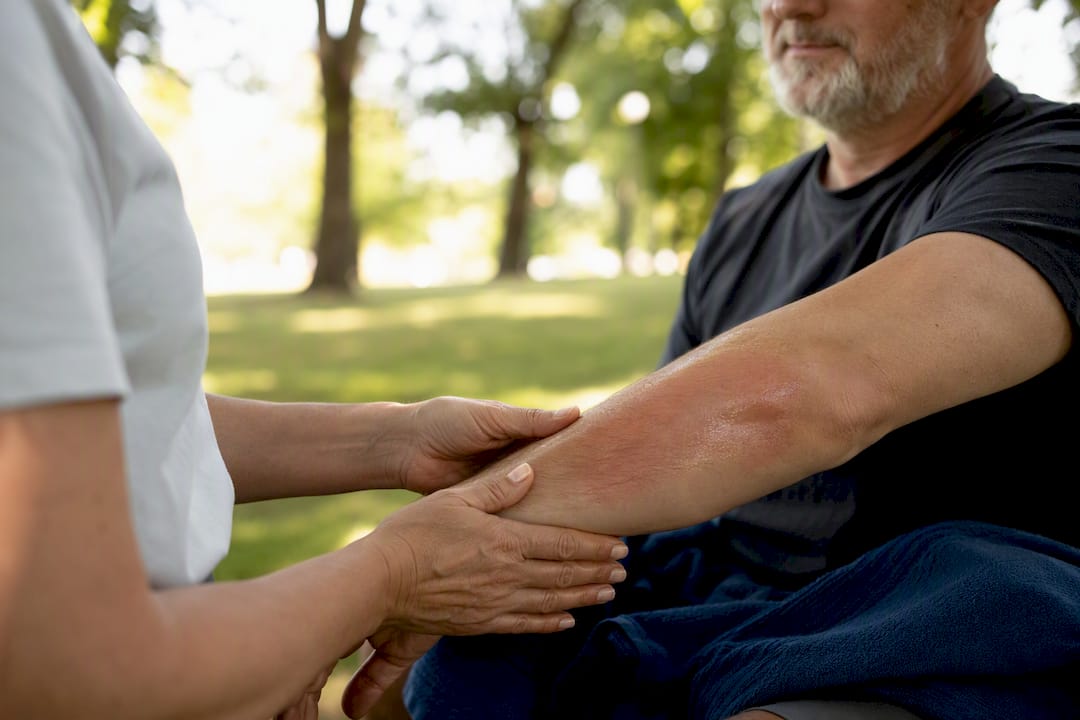
Oral or sublingual CBD earns its place in a different scenario. If you're dealing with generalized post-workout soreness across multiple muscle groups rather than one stubborn knot, or you're recovering from a specific exercise-induced injury, the sublingual route has the better clinical backing right now, including that 48-hour improvement window from the feasibility trial. Research into CBD and exercise recovery is expanding steadily, but dosing, timing, and endpoints still vary too much between studies for anyone to hand you a standardized protocol.
The trade-offs come down to three things:
- Speed of onset: topicals with menthol or camphor deliver a sensory effect within minutes; oral CBD takes longer to show any measurable change.
- Systemic risk: oral CBD interacts with liver enzymes and certain medications; topicals largely avoid that concern unless absorption is unusually high.
- Evidence quality: oral/sublingual CBD has the stronger trial data for pain and function; topical CBD's trial record is thinner and more mixed.
For a single, well-defined knot in your shoulder, low back, or calf, start topical. Save oral CBD for broader, full-body soreness where a topical can't realistically cover the territory.
How Should You Apply CBD Balm to a Knot?
Getting real value from a topical means using it correctly, not just rubbing it on and hoping. Here's the routine worth following.
Before you start:
Clean the area with soap and water and let it dry completely. Do a patch test on a small area of unaffected skin 24 hours beforehand if you've never used the product, and never apply to broken skin, open cuts, or active rashes.
Application steps:
- Use a dime to nickel sized amount for a knot roughly the size of a golf ball, more for a larger muscle group.
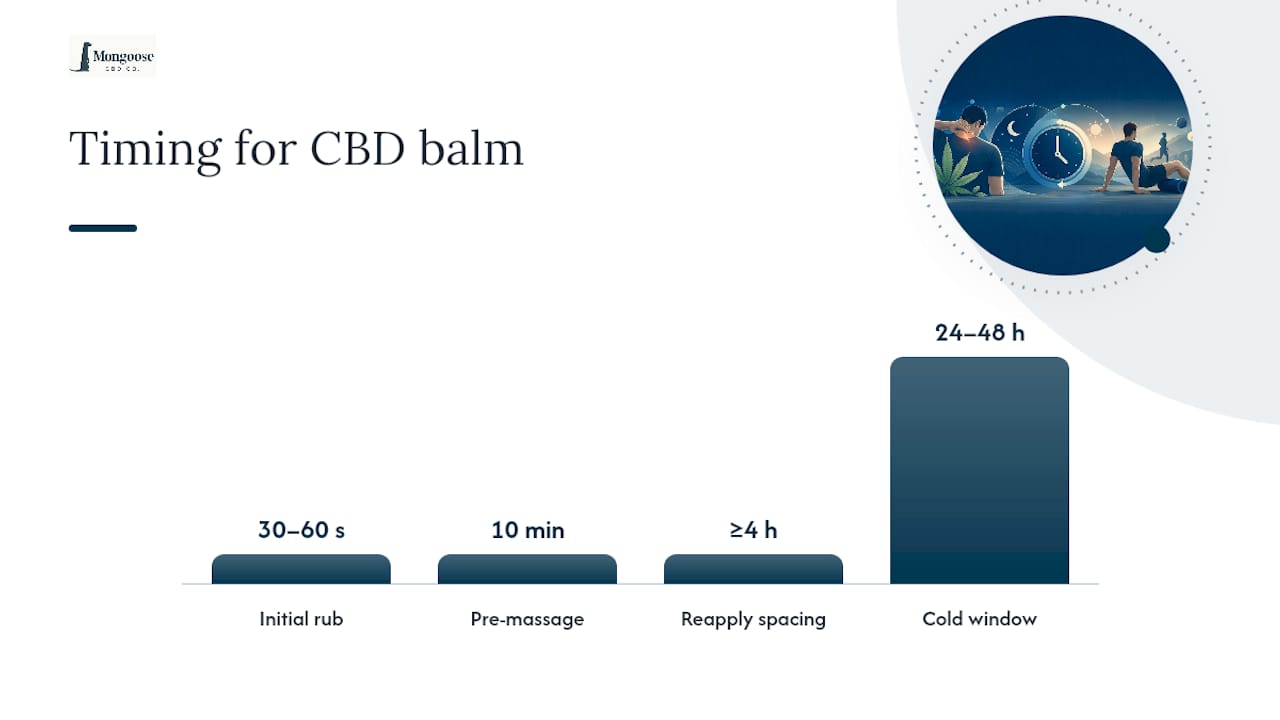
- Rub the balm into the skin using firm, circular pressure directly over the knot for 30 to 60 seconds.
- Follow with several minutes of deeper massage, working around the perimeter of the knot before pressing into the center, since manual pressure itself helps release muscle tension.
- Reapply two to three times daily, spacing applications by at least four hours unless the label states otherwise.
- Track your pain level and range of motion daily so you can judge whether the routine is actually working.
Adjuncts worth combining with your topical: apply cold within the first 24 to 48 hours if the knot is linked to a recent strain or acute flare-up, then switch to heat afterward to encourage blood flow and loosen the tissue before massage. If you're also taking an over-the-counter analgesic like ibuprofen, mention that to a clinician before combining it regularly with a CBD topical, particularly if you take other medications.
Pro Tip: Apply your balm about ten minutes before a scheduled massage or foam-rolling session. The warming or cooling sensation from ingredients like menthol can make deeper tissue work feel more tolerable, which often means you can safely apply more pressure.
Stop and seek medical care if the area becomes increasingly swollen, red, or hot to the touch, if you develop a rash or blistering, or if the knot doesn't improve after a full trial period and instead worsens or spreads.
What Should You Look for When Buying a CBD Topical?
Not every jar on a shelf marked "CBD balm" contains what the label claims. A 2023 study on topical CBD ointment found underwhelming results in a controlled setting, and formulation quality and CBD concentration were part of what varied between products tested industry-wide. Choosing carefully matters as much as choosing to try CBD at all.
Start with the Certificate of Analysis (COA). A legitimate topical will have third-party lab testing confirming actual CBD content, plus screening for solvents, pesticides, and heavy metals. If a brand can't produce a current COA on request, treat that as disqualifying.
Read the label like you would a supplement facts panel. Look for milligrams per ounce, not just a vague "CBD-infused" claim, since concentration determines whether you're getting a meaningful dose or a marketing gesture. Note whether the product is full-spectrum, broad-spectrum, or isolate, and check for adjunct ingredients like menthol, camphor, arnica, or capsaicin that support the sensory relief discussed earlier. Flag any irritant warnings if you have sensitive skin.
A few numbers worth checking before you buy:
- High-strength topicals designed for chronic pain and athletic recovery often use a concentration benchmark around 1,000 mg per ounce.
- Zero THC should be confirmed by COA, not just assumed from a "THC-free" label claim.
- A refund window around one month is reasonable to expect from a brand confident in its formulation.
Check the value math and the brand's transparency. Calculate price per milligram of CBD rather than comparing sticker prices across different jar sizes, and favor brands with a clear return policy that signals they stand behind results.
If you're an athlete or subject to workplace drug testing, choose certified THC-free products and verify batch testing every time, since trace THC in full or broad-spectrum products can create real risk even when the label says "non-detectable."
Is CBD Safe? Side Effects, Interactions, and the FDA Stance
The FDA has not approved CBD for muscle pain or general soreness of any kind. The only CBD-based medication with FDA approval treats specific childhood epilepsy syndromes, a completely different use case with a completely different dosing profile. Any topical or oral CBD product marketed for muscle knots is a wellness product, not a regulated drug, and it carries the label warnings and quality inconsistency that comes with that category.
Topical risks are generally mild but real: skin irritation, redness, or contact dermatitis can occur, especially with products containing strong adjuncts like capsaicin or high-concentration menthol.
Oral or sublingual CBD carries more systemic considerations, including possible changes to liver enzyme activity and interactions through the CYP450 pathway, the same metabolic system affected by drugs like warfarin. That's a meaningful interaction risk if you're on blood thinners or other medications metabolized similarly.
Before starting any CBD product, a few precautions apply across the board:
- Patch test topicals on unaffected skin 24 hours before full application.
- Start with the lowest recommended amount, whether topical or oral, and increase gradually.
- Never apply topical CBD to broken skin, wounds, or active rashes.
- Confirm THC content via COA if you're subject to any form of drug testing.
- Talk to a clinician before combining oral CBD with prescription medications, particularly blood thinners or anything metabolized by the liver.
How Fast Will You Feel Relief, and How Long Should You Try It?
Manage your expectations by separating two different effects. The cooling or warming sensation from menthol or camphor in most topical balms often kicks in within minutes, but that's sensory distraction working on your nervous system, not a CBD-specific anti-inflammatory effect. Actual biological changes tied to CBD, if they happen at all, tend to build more slowly and modestly.
The clearest timeline data we have comes from the oral CBD feasibility trial, where peak benefit for pain and function showed up around 48 hours after exercise-induced injury. That's a useful benchmark even for topical users: don't expect an overnight verdict.
Give a topical a real trial before judging it. A consistent five to fourteen days of regular application, tracked honestly, tells you far more than a single use.
- Log pain intensity on a simple 1 to 10 scale each day.
- Note function, such as range of motion or how the knot feels under pressure.
- Compare day one to day seven, not application one to application two.
- If there's zero change by day fourteen, it's reasonable to try a different formulation or delivery route.
Mongoose CBD Co.'s Approach to Muscle Knot Relief
Mongoose CBD Co. formulates its balms specifically around the checklist above: real concentration, functional adjuncts, and clean ingredient sourcing. Every balm is built at 1,000 mg of CBD per ounce and blended with pain-relieving additions like arnica, menthol, turmeric, eucalyptus, peppermint, cinnamon, clove, ginger, and cayenne pepper, the same category of ingredients this guide flags as meaningful contributors to perceived relief.
Products are vegan, non-GMO, paraben-free, THC-free, and cruelty-free, which matters directly for athletes or anyone concerned about drug testing. The lineup spans an original formula, a cinnamon and clove blend, and the Rikki Tikki Recovery balm built for athletes and chronic pain sufferers who need targeted, repeatable application.
For readers who want the deeper research behind arthritis-related topical use, the CBD balm for arthritis breakdown covers adjunct ingredients and evidence in more depth, while the muscle recovery evidence review walks through what the research says about exercise-related soreness specifically.
Where the Conventional Wisdom on CBD Gets It Wrong
Most CBD content online treats topical and oral products as interchangeable, as if "CBD is CBD" no matter how you take it. That's the biggest misread in this space. The trial data doesn't support that assumption at all. Sublingual CBD showed a measurable benefit at 48 hours in a controlled setting; a topical ointment tested the same way showed nothing significant at 24 hours. Those are two different products doing two different jobs, and treating them as one interchangeable category sets people up for disappointment.
The second thing conventional advice underplays is how much of the "it's working" feeling from a topical comes from menthol or camphor rather than CBD itself. That's not a reason to skip topicals. It's a reason to stop expecting them to behave like a drug and start using them like what they actually are: a combination product where the sensory ingredients and the massage technique matter as much as the CBD concentration on the label.
What should you prioritize first? Skip the marketing claims about "clinical-grade" formulas and go straight to the COA. A product with verified concentration and a genuine refund policy tells you more than any headline on the label.
— Cindy
Try a Topical CBD Balm Built for Exactly This
If a stubborn knot in your shoulder or lower back has you rubbing generic drugstore creams with no real concentration behind them, a properly formulated balm gives you something those products don't: verified CBD content plus adjunct ingredients chosen for how they work together, not just how they smell.
Mongoose CBD Co.'s Seriously Soothing Pain Balm is formulated at 1,000 mg of CBD per ounce with arnica, menthol, and warming spices built for direct application to tight, painful muscle tissue, matching every criterion covered in the buying checklist above. The Rikki Tikki Recovery balm offers a recovery-focused formulation for athletes managing repeated muscle stress. Every purchase is backed by a 30-day refund window, so testing whether a topical works for your specific knot carries no long-term risk. If you're on medication that interacts with CBD, talk to your clinician before adding a daily topical routine. Ready to try one? Pick your formula and place your order today.
Sources
- Can CBD oil help manage pain? - Harvard Health
- Efficacy and safety of cannabidiol (CBD) on reducing pain and functional impairment associated with exercise-induced muscle injury: randomized placebo-controlled feasibility trial
- Topical cannabidiol and the progression rate of delayed onset muscle soreness
- Effects of Cannabidiol (CBD) Cream on Delayed Onset Muscle Soreness (DOMS) and Performance After Exercise
This article is general information, not a substitute for advice from a qualified doctor. Consult a qualified healthcare professional about your own circumstances before acting on anything here.