
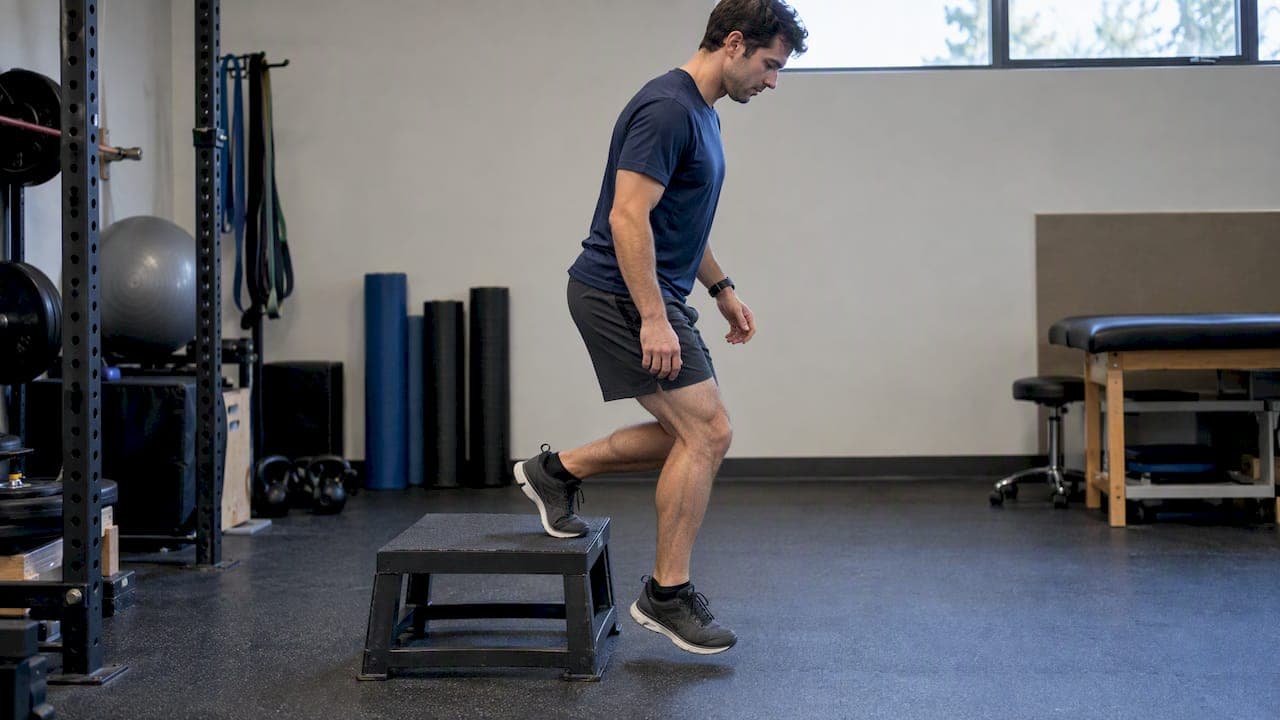
Topical CBD may take the edge off localized IT band soreness for some runners, but nothing shows it treats the structural cause of iliotibial band syndrome. Treat it as an add-on to conservative care, not a replacement. Start with physical therapy and activity changes, talk with a healthcare provider first, and judge any balm with a short, tracked trial.
TL;DR:
- Exercise pain studies are mixed: one topical gel pilot found no clear soreness benefit, while a hemp extract trial reported possible pain and recovery improvements.
- Conservative care typically resolves ITBS symptoms in 6–8 weeks; one review reported a 91.7% return to sport rate at six months.
- Run a 2–6 week trial alongside rehab, patch test first, apply balm twice daily, and track pain at rest, during activity, and medication use.
- The FDA has not approved CBD for ITBS; ask a provider about drug interactions and match each product’s batch number to its lab report.
Table of Contents
- What does the research say about CBD for exercise-related pain?
- How do topical CBD balms work, and why does the formula matter?
- How should you run a topical CBD trial for IT band soreness?
- What safety checks matter before you use CBD?
- Why are the results mixed, and what would better evidence look like?
- How does CBD compare with other options for IT band symptoms?
- What do runners report about CBD balms for IT band pain?
- How do our two balms compare for IT band discomfort?
- Our perspective on pairing a balm with rehab
- Ready to try a balm that fits the trial?
- FAQ
- Sources
What does the research say about CBD for exercise-related pain?
No study has tested CBD on IT band syndrome itself, so we read the closest evidence: trials on exercise-induced muscle pain. Here is what it shows:
- A randomized, placebo-controlled feasibility trial of a CBD-rich hemp extract reported favorable safety and hints of lower peak pain and faster symptomatic recovery after induced muscle injury. The sample was small, and the authors call for larger trials.
- A randomized, double-blinded pilot of a topical CBD gel versus placebo found no clear difference in muscle soreness or blood markers of muscle damage. Some isometric torque measures modestly favored CBD, so the picture was mixed.
- A planned randomized trial of topical CBD for musculoskeletal pain was withdrawn because of regulatory hurdles, which shows how hard it is to build strong evidence for topical products.
Small samples, different formulations and inconsistent results mean the evidence is preliminary. That is why we frame topical CBD as a symptom aid. It can't be your main plan for a runner's knee that keeps flaring.
Your expectations should come from the rehab timeline, not the balm.
Conservative care typically resolves ITBS symptoms in about 6–8 weeks, and one review reports a 91.7% return-to-sport rate at 6 months. Any soreness relief you feel should be read against that backdrop: the exercises and load changes do the heavy lifting.
How do topical CBD balms work, and why does the formula matter?
A balm can act in two ways. Some ingredients stay near the surface and change how the area feels. Others may reach deeper layers, but that depends on the product's design. Pharmacokinetic research on five commercial hemp-derived topicals found that absorption varies by formulation, with permeation enhancers and certain bases potentially reaching deeper. That variation helps explain why clinical results differ from study to study.
Consensus is still evolving. One pilot study's discussion points to supportive comfort rather than definitive treatment as the likely benefit of topical CBD.
What this means when you shop:
- Look for a formula built for deeper tissue delivery, since a thin lotion may do little beyond the skin.
- Expect botanical ingredients such as menthol, arnica or warming spices to create a cooling or warming sensation that eases the feeling of soreness, even if little CBD gets through. Our guide to arnica CBD balm evidence covers what those botanicals can and can't do.
- Check the ingredient list and ask for a certificate of analysis (COA) before you buy. Our piece on CBD balm ingredients that matter explains why milligrams alone don't tell the story.
Pro Tip: Judge a balm by its full ingredient list and lab report, not by the CBD milligram number on the front.
How should you run a topical CBD trial for IT band soreness?
A short, tracked trial beats guessing. Run it alongside your rehab plan, not instead of it. The length matches the 6–8 week recovery window, so plan on 2 to 6 weeks.
- Patch test first. Apply a small amount to the inner forearm and wait to check for irritation.
- Clean and dry the skin over the sore area on the outside of the knee and thigh. Never apply to broken skin.
- Use a pea-sized to fingertip-sized amount and massage it in with gentle, even strokes along the outer thigh.
- Apply twice daily, usually morning and evening, and keep your rehab routine going: activity modification and the hip and glute exercises your physical therapist gives you.
- Keep a simple log: pain at rest, pain during activity, and any pain relievers you take.
- Review at the 2-week mark and again before the end. Meaningful improvement means less soreness during activity, less reliance on NSAIDs and better function.
- Stop if you see a rash, burning that lingers, or no change by the end of your trial window.
For a longer template, see our 4–6 week CBD balm trial for runners.
Pro Tip: Change only one thing at a time. If you add a new shoe or a new training plan during the trial, you can't tell what helped.
What safety checks matter before you use CBD?
Know the regulatory picture first. The FDA has not approved CBD for musculoskeletal conditions, and it warns that CBD products may carry risks, including drug interactions and quality concerns. It also notes a gap between popular use and rigorous peer-reviewed data.
The FDA has approved only one CBD-containing product, for specific epilepsy conditions, and none for musculoskeletal pain or ITBS.
Before you start:
- Tell your healthcare provider, especially if you take other medicines. Interaction concerns come from the approved epilepsy product's evidence, so don't assume a balm is risk-free.
- Ask for a third-party COA that confirms CBD content and tests for THC.
- Check for a batch number on the tin that matches the lab report.
- Avoid products with vague or inflated labeling.
If you're subject to drug testing, read our runner-focused trial guide and talk with your testing body before you begin.
Why are the results mixed, and what would better evidence look like?
The mixed results trace to a few causes. Trials are small, topical products differ widely, follow-up is short, and studies measure different outcomes. The topical gel pilot and the hemp extract feasibility trial used different products and endpoints, so they can't be stacked into a clean verdict.

Stronger evidence would use a standardized topical formulation, objective functional outcomes, enough participants and clinician oversight.
Until then, an athlete can reasonably try a balm while putting first what is known to reduce recurrence. A systematic review of conservative treatment in runners found that strengthening, stretching and manual therapies commonly improve pain and function over 2–8 weeks.
How does CBD compare with other options for IT band symptoms?
Think of CBD as a comfort tool next to proven care. The IT band is connective tissue, and ITBS is an overuse injury that causes lateral knee pain. First-line care is nonoperative: rest, physical therapy and activity modification. Effective rehab strengthens the hip abductors and glutes that load the band instead of trying to "strengthen" the band itself.
Against that standard, tools like NSAIDs, ice and balms all manage symptoms. A balm's possible advantages are that it targets one spot, it is easy to use right after a run, and it can leave you feeling more comfortable while you do the real work. Its limit is that no study shows it speeds healing of ITBS.
If a balm lets you sleep better or move through your exercises with less guarding, that is a practical gain. If it tempts you to run through pain, it is working against you. Our article on CBD for swelling sets realistic expectations for how quickly relief tends to show up.

What do runners report about CBD balms for IT band pain?
We don't have clinical case studies of CBD balms for IT band syndrome, and we won't dress up anecdotes as evidence. What you will find among runners is a pattern of individual reports: some say a balm makes the outer knee feel looser after a long run, while others notice nothing. Those accounts can't tell you whether the balm changed the injury or just changed how it felt.
What we can say is that sensory effects are real. A cooling or warming balm can change your perception of soreness for a while, and that matters for comfort. It doesn't tell you the tissue is healing.
So treat any testimonial, including ones you read on product pages, as a prompt to run your own log. Your numbers for pain at rest, pain during activity and pain reliever use are better evidence for your knee than someone else's story. If the log shows no change after your trial window, that is a clear answer too.
How do our two balms compare for IT band discomfort?
We make Seriously Soothing Pain Balm and RIKKI TIKKI Recovery, two topical balms with botanicals.
Seriously Soothing Pain Balm is our pain-focused option, available in several scents. It suits daily use on the outer thigh and knee when soreness is the main complaint, and its botanicals give the cooling or warming sensation many runners look for after a session.
RIKKI TIKKI Recovery is built around muscle recovery. If your soreness shows up mostly after hard training days, this is the one to try as part of a post-run routine.
Both run $26.95 to $39.95 depending on size. We don't have head-to-head data on which one works better for IT band discomfort, and we won't claim one does. A fair way to choose is by when you feel the soreness: during daily life, or after workouts. Whichever you pick, follow the same trial steps above and let your log decide.
Our perspective on pairing a balm with rehab
Rehab comes first. Physical therapy, strengthening the muscles around the hip and sensible activity changes remain the main drivers of recovery, and a balm belongs in the supporting role. We build athlete-focused balms with botanicals. Check the refund terms before buying. We make no claim that a balm treats ITBS. Use the 2 to 6 week protocol, keep your log honest, and bring your clinician into the loop. If the numbers improve, great. If they don't, you've learned something worth knowing.
— Cindy
Ready to try a balm that fits the trial?
Our Seriously Soothing Pain Balm and RIKKI TIKKI Recovery are topical balms formulated for muscle soreness and recovery, and they fit the trial steps above.
- Their botanical ingredients, including arnica and menthol, provide the cooling or warming sensations many runners want after a session.
- Our third-party testing can help you assess the product. Check the refund terms before buying.
- We make no clinical claims about IT band syndrome. These balms are for comfort while your rehab does the work.
Patch test first, check with your clinician if you take medications, then run your 2 to 6 week trial. You can see both balms and sizes at Mongoosecbd.
This article is general information, not a substitute for advice from a qualified doctor. Consult a qualified healthcare professional about your own circumstances before acting on anything here.
FAQ
Can CBD oil help with rotator cuff pain?
There is no solid evidence that CBD oil treats rotator cuff injuries. The FDA has not approved CBD for musculoskeletal conditions. Some people use it for comfort alongside physical therapy, so talk with a clinician first.
Is CBD good for eczema?
We can't support a claim that CBD treats eczema, and the research we cite doesn't cover skin conditions. If you have eczema, check with a dermatologist before putting any balm on affected skin, and patch test any new product.
What are the potential benefits of using CBD oil?
The best human evidence we cite is early, with small trials suggesting possible reductions in peak pain after exercise-induced muscle injury. Results are mixed, and larger studies are needed before firm benefits can be stated.
Can CBD help with nerve pain?
The studies we cite look at exercise-related muscle pain, not nerve pain, so we can't say. The FDA notes that rigorous peer-reviewed data lag behind popular use. Persistent nerve pain deserves a clinician's evaluation.