
Short answer: CBD offers modest, mostly subjective relief for delayed onset muscle soreness, and the clinical evidence backs limited but real benefits for how sore you feel and how much soreness interferes with daily movement. What it doesn't reliably do, at least based on current trials, is speed up objective markers of muscle repair.
That gap matters. A repeated-dose pilot study using a CBD and CBG beverage powder found a modest drop in self-reported soreness at 72 hours and less interference with daily activities, but no significant change in objective recovery measures. A topical CBD gel trial found no significant difference in soreness scores or plasma myoglobin compared to placebo. And a small sublingual feasibility trial using 67 mg per day reported reduced peak pain at 48 hours. Three studies, three different formulations, three different answers. That's the honest state of the science right now.
- Where evidence is strongest: self-reported soreness and perceived interference with daily activity
- Where evidence is weak: objective markers like plasma myoglobin, isometric torque, and strength recovery
- What varies most: dose, delivery method (oral, sublingual, topical), and whether CBD is combined with other actives
Quick take: A randomized pilot study recorded an estimated mean difference in soreness of −1.33 at 72 hours in a 40-person trial, a small but statistically noted effect size, alongside a topical brand like Mongoosecbd built around the same CBD-plus-complementary-actives approach the trials point toward.
Key Takeaways
CBD provides modest, mostly subjective relief for DOMS in small trials, while objective recovery markers show little consistent change across formulations.
| Point | Details |
|---|---|
| Evidence is mixed by design | Topical, oral, and sublingual studies measure different outcomes, so results don't align neatly across formulations. |
| Subjective relief beats objective proof | Trials show reduced perceived soreness more consistently than improved strength or biomarker recovery. |
| Dosing varies widely | Trials used anywhere from varied oral dosing levels and repeated-dose protocols. |
| Drug-tested athletes need isolate products | Broad and full-spectrum products carry residual THC risk even when labeled compliant. |
| Mongoosecbd balms match the checklist | Formulated with complementary actives like arnica and menthol, positioned for topical DOMS relief. |
This article is general information, not a substitute for advice from a qualified doctor. Consult a qualified healthcare professional about your own circumstances before acting on anything here.
Table of Contents
- Does CBD Actually Help With DOMS?
- Topical vs Oral CBD: Does Delivery Method Change the Result?
- How Do You Actually Use CBD for Muscle Soreness?
- Is CBD Safe? What Athletes Need to Know About Drug Testing
- How Do You Choose a Quality CBD Topical for DOMS?
- What Should You Realistically Expect From CBD for Soreness?
- An Honest Editorial Take on the CBD-for-DOMS Hype
- Ready to Try a CBD Balm for Post-Workout Soreness?
- Sources
- FAQ
Does CBD Actually Help With DOMS?
The honest answer requires unpacking what "help" means in a clinical trial versus what it means to someone limping down stairs two days after leg day. Researchers have tested CBD in beverage powders, sublingual oils, and topical gels, and the picture that emerges is inconsistent by design, not by accident, because each study measures something slightly different.
Types of studies you'll find
Four distinct categories of research exist on CBD and DOMS, and conflating them is where a lot of online confusion starts:
- Topical randomized controlled trials applying CBD gel or cream directly to sore muscle groups
- Oral or sublingual small trials testing capsules or oils at doses ranging from roughly 16 mg to 300 mg
- Repeated-dose pilot formulations combining CBD with other compounds like CBG, BCAAs, or magnesium
- Systematic reviews pooling multiple small studies to look for consistent signals across the literature
| Study | Design | Population | CBD Dose/Formulation | Primary Outcome | Main Result |
|---|---|---|---|---|---|
| Topical gel crossover | Randomized, double-blind, crossover | a small number of participants | Topical CBD gel, repeated application over 72h | DOMS scores, plasma myoglobin | No significant condition differences; one metric showed moderate torque effect |
| Topical cream RCT | Registered randomized, double-blind, placebo-controlled | Not yet fully reported | Standardized topical CBD cream | Soreness, performance recovery | Registered trial examining localized vs. systemic effects |
Compare that to the topical gel crossover trial, which found no significant differences in DOMS scores or plasma myoglobin between CBD and placebo conditions across a small sample of 13 to 15 participants per measure. The researchers did note a moderate effect on isometric torque in one metric, but they stopped short of claiming topical CBD accelerated muscle function recovery overall.
Zooming out, a systematic review that searched the literature through April 2024 found seven studies meeting inclusion criteria. The conclusion: limited beneficial effects on some physiological performance parameters, but limited and inconsistent evidence that CBD meaningfully improves post-load recovery or strength metrics. Most included studies were small and used different formulations, which makes direct comparison difficult.
A few limitations show up across nearly every study in this space:
- Sample sizes rarely exceed 40 participants, which limits statistical power
- Outcomes mix subjective measures (perceived soreness) with objective ones (myoglobin, torque), and they don't always move together
- Formulations vary wildly, some combine CBD with CBG, BCAAs, or magnesium, making it hard to isolate CBD's specific contribution
- Bioavailability differs by delivery method, so a 70 mg dose in a beverage powder isn't equivalent to 70 mg applied topically
None of this means CBD does nothing. It means the current evidence supports a cautious, scoped claim: modest subjective relief in some formulations, unclear objective benefit, and a research base that's still filling in gaps.
Topical vs Oral CBD: Does Delivery Method Change the Result?
Route of administration explains a lot of the inconsistency between trials, and it's the piece most consumer articles skip. When you rub a CBD balm onto sore quads, the compound has to cross the skin barrier to reach muscle tissue underneath. That's a fundamentally different job than swallowing an oil that gets absorbed through the gut and liver before circulating systemically.
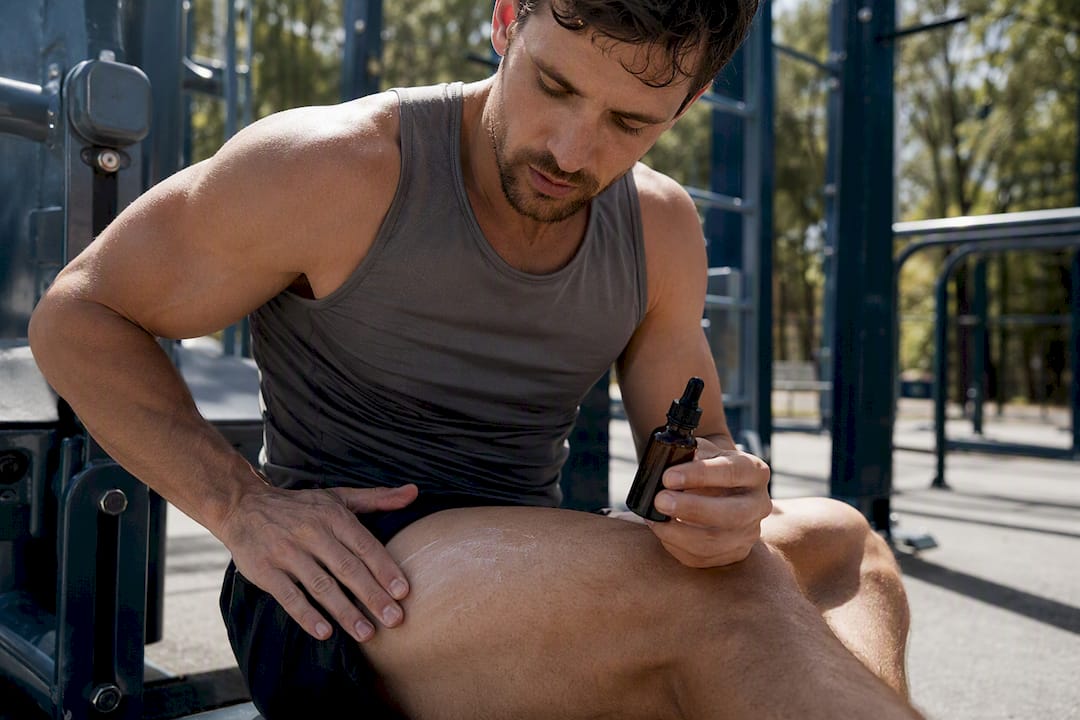
Topical application aims for a local effect: CBD interacting with receptors near the site of application without much of it entering the bloodstream. Oral and sublingual delivery aims for systemic exposure, CBD circulating throughout the body and potentially influencing broader inflammatory or pain-signaling pathways. Neither is inherently better for DOMS. They're solving different problems, and the trial data reflects that split. Preclinical research suggests CBD may interact with pathways like TRPV1, 5-HT1A, and COX enzymes involved in pain and inflammation signaling, but translating that mechanism into a consistent, measurable clinical benefit for DOMS specifically hasn't been proven.
Formulation differences that actually matter
The three main formulation types studied so far behave differently once they hit the body:
- Topical gels and balms: absorption depends heavily on carrier base, skin condition, and how much product is used; penetration is generally shallow, which limits systemic exposure but may still deliver enough concentration for local effect
- Water-soluble nanoemulsions: break CBD into smaller particles to improve absorption, whether topical or oral, though this technology varies significantly between brands and complicates direct comparison across studies
- Oral or sublingual oil: subject to first-pass metabolism if swallowed, though sublingual absorption (holding oil under the tongue) can bypass some of that loss
Formulation technology matters here more than people assume. Water-soluble nanoemulsions and proprietary delivery systems can change how much CBD actually reaches target tissue, and that variability is a big part of why one study's 70 mg dose doesn't behave like another study's 70 mg dose.
When shopping for a topical, the variables worth checking are concentration (measured in mg per ounce), whether the product uses any kind of enhanced-absorption technology, what carrier base it's built on, and whether it includes complementary actives like menthol, arnica, or eucalyptus that provide their own sensory or anti-inflammatory contribution.
Pro Tip: Don't expect a topical balm to work like an oral capsule. Topical CBD is playing a local, surface-level game, so realistic expectations mean judging it on how it feels applied to a specific sore spot, not whether it changes how you feel systemically.
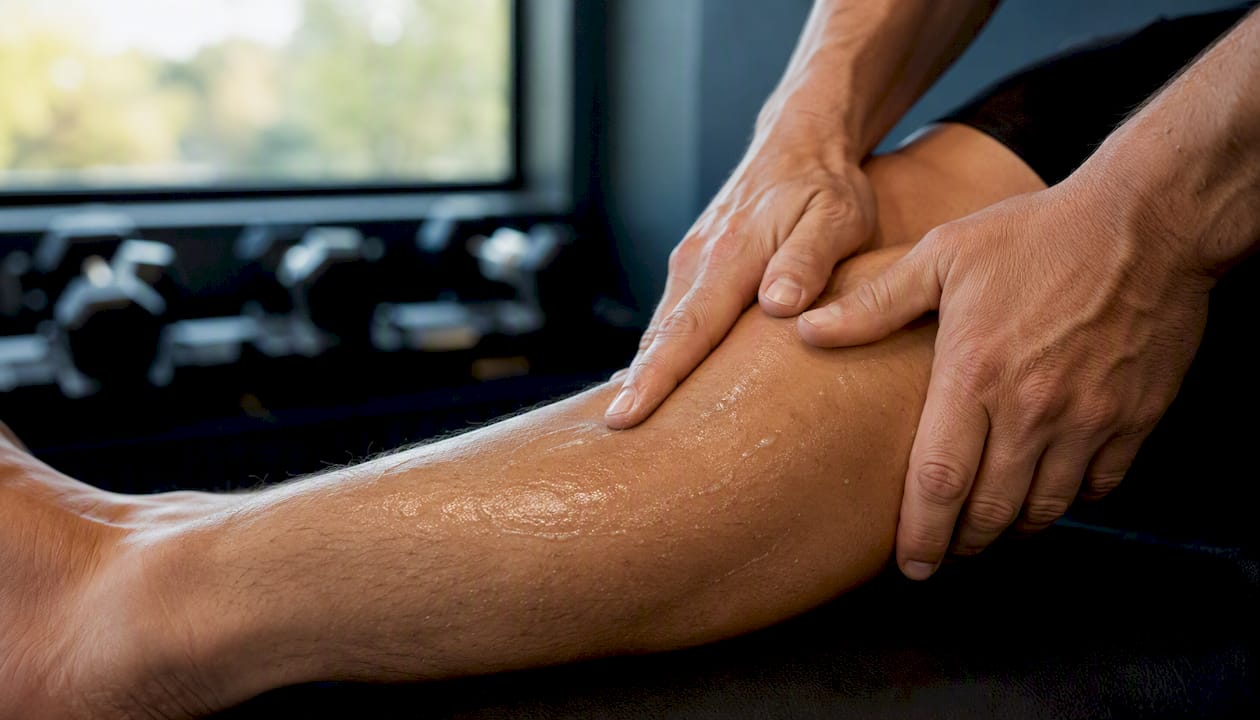
Application technique isn't a footnote here, either. The mechanical act of massaging a balm into sore tissue, working it in with steady pressure for a minute or two, likely contributes to the relief people report, independent of whatever the CBD itself is doing. That's not a knock against topicals. It's a reason to actually use them properly instead of just dabbing some on and walking away.
How Do You Actually Use CBD for Muscle Soreness?
Dosing in the research world varies more than most product labels suggest. Single-dose oral trials have used amounts ranging from roughly 16 mg up to 300 mg, while the repeated-dose beverage protocol delivered 35 mg per packet, twice daily, for a total of 70 mg per day. There's no single "correct" dose established across the literature, which is exactly why practical application matters as much as the number on the label.
A simple protocol for topical application
- Clean and dry the sore area before applying, so the product isn't fighting against sweat or lotion residue.
- Use a dime to nickel-sized amount for a single muscle group, more for larger areas like the entire back or both legs.
- Warm the balm between your palms for a few seconds before application; this helps it spread evenly and may improve local absorption.
- Massage in circular motions for 60 to 90 seconds, working the product into the tissue rather than just spreading it on the surface.
- Apply within a few hours of exercise, then reapply every 8 to 12 hours through the peak soreness window, which typically runs 48 to 72 hours post-exercise.
- Reassess after 72 hours; if soreness hasn't started easing by then, the issue may not be DOMS-related soreness at all.
For oral or sublingual products, the trial data suggests starting conservatively. The sublingual feasibility study used 67 mg daily and reported benefits by 48 hours, while the beverage powder trial split 70 mg total across two 35 mg doses. Neither amount is enormous, and there's no evidence from these trials that higher doses produce proportionally better results.
Safety basics worth keeping in mind before you start:
- Start with the lowest labeled dose and give it several days before increasing
- CBD can interact with the CYP450 liver enzyme system, which also processes many common medications, so check with a doctor or pharmacist if you take prescription drugs
- Watch for mild side effects like dry mouth or gastrointestinal upset, particularly with oral products
- Stop use and consult a healthcare provider if you notice unusual fatigue, appetite changes, or liver-related symptoms
Pro Tip: If you're combining a topical balm with an oral product, track how you feel separately for a week using just the topical before adding anything oral. That way you actually know which one, if either, is doing something for you.
Is CBD Safe? What Athletes Need to Know About Drug Testing
The safety profile across current trials looks reassuring, but with an asterisk: sample sizes are small, so rare side effects wouldn't necessarily show up yet. Across the pilot studies referenced here, most reported few adverse events, and Harvard Health's overview notes that while evidence for CBD as a pain treatment remains mixed, the safety data collected so far hasn't raised major alarms for most healthy adults using typical doses.
That doesn't mean zero risk. A few things show up consistently enough to flag:
- Mild gastrointestinal upset, particularly with oral or sublingual products at higher doses
- Dry mouth, a common and generally harmless side effect
- Potential CYP450 enzyme interactions, which matters if you're on blood thinners, certain seizure medications, or other prescriptions metabolized through the same liver pathway
- Drowsiness or fatigue in some users, though this varies widely by individual and dose
If you're a tested athlete, the bigger concern isn't CBD itself, it's what else might be in the bottle. Isolate products contain purified CBD with no other cannabinoids, which minimizes THC exposure risk. Broad-spectrum products strip out THC but may retain trace amounts of other cannabinoids. Full-spectrum products contain the whole range of naturally occurring compounds, including legal trace THC, typically under 0.3%.
That trace amount matters more than the percentage suggests. Even products staying within legal THC limits have, in some documented cases, produced positive results on drug tests looking for prohibited analytes, particularly with repeated use over time as cannabinoids can accumulate. If competition testing is a factor in your life, prefer isolate products and insist on a current third-party Certificate of Analysis (COA) confirming non-detectable THC, not just "compliant" THC levels.
How Do You Choose a Quality CBD Topical for DOMS?
Product quality varies enormously in this category, and the label rarely tells the whole story. Building a real shopping checklist protects you from paying premium prices for a product that doesn't match what it claims.
Start with the Certificate of Analysis. Any legitimate CBD topical should have one available, either printed on the packaging via QR code or posted on the brand's website. That COA needs to confirm the actual milligram count per ounce matches what's advertised, and it should test for pesticides, heavy metals, and residual solvents, not just cannabinoid content.
Beyond the COA, a few other details separate a serious product from a marketing exercise:
- Milligrams per ounce, stated clearly, not buried in vague language like "premium strength"
- Spectrum type, isolate, broad-spectrum, or full-spectrum, disclosed plainly, not hidden behind trademarked names
- Complementary actives, ingredients like menthol, camphor, arnica, or capsaicin that contribute their own documented pain-relief mechanisms
- Manufacturing transparency, including where the hemp is sourced and whether the company discloses batch testing dates
- Realistic claims, no promises of curing injuries or replacing medical treatment
Pro Tip: *When you pull up a COA, check two numbers specifically: total cannabinoid content per serving and the THC line.
Red flags are just as telling as green lights. Walk away from any product that skips the COA entirely, uses vague strength descriptors instead of actual mg counts, lists cannabinoids not disclosed anywhere on the COA, or makes claims that sound more like a miracle cure than a topical pain-relief aid. A CBD balm formulated with a high concentration of CBD per ounce, alongside ingredients like arnica, turmeric, and menthol, reflects the kind of transparent, dosed-and-disclosed approach the research points toward, even if no topical, including this one, is going to eliminate soreness outright.
What Should You Realistically Expect From CBD for Soreness?
Manage your expectations around subjective relief, not a dramatic transformation. The trial data consistently shows people reporting they feel less sore or less limited in daily movement, while objective measures like strength recovery or blood markers of muscle damage often don't move much at all.
That gap between "feels better" and "measurably recovers faster" isn't a failure. It reflects how DOMS itself works, most of what you feel is nerve sensitivity and inflammation, not a strict correlate of muscle repair speed. A treatment that dulls the sensory experience without changing tissue repair timelines still has real value if it gets you moving comfortably again.
CBD works best as one piece of a broader recovery approach, not a standalone fix:
- Active recovery (light movement, walking, easy cycling) reliably eases soreness perception and is supported by decades of exercise science
- Sleep remains one of the most underrated recovery levers; poor sleep measurably delays muscle repair
- Nutrition and hydration, particularly adequate protein intake, support the tissue repair process CBD alone doesn't address
- NSAIDs, when used appropriately and not chronically, can reduce inflammation and pain, though some research suggests overuse may blunt long-term training adaptations
- Gradual eccentric-load programming reduces how severe DOMS gets in the first place by building tolerance over time
Think of CBD as a comfort tool layered on top of the fundamentals, not a replacement for them.
An Honest Editorial Take on the CBD-for-DOMS Hype
Most of the marketing around CBD and muscle recovery oversells what a handful of small pilot studies can actually support. That's the uncomfortable truth buried in most of the trial data covered here. A 40-person beverage powder study and a small sublingual feasibility trial are the kind of research designed to justify a bigger, better-funded trial, not to declare a verdict on an entire ingredient category.
But here's what the skeptics often miss: the modest, inconsistent signal across these studies isn't nothing. Real relief, even subjective relief, has genuine value for someone trying to walk down stairs without wincing two days after a hard training session. The mistake isn't using CBD. It's expecting it to behave like a performance-enhancing recovery drug when the evidence points to something closer to a comfort aid with real, if limited, backing.
What gets underestimated most is formulation and technique. The people getting the most out of topical CBD aren't necessarily using the strongest product, they're applying it correctly, consistently, during the actual soreness window, and pairing it with sleep and movement instead of expecting it to do all the work alone. That's not a marketing angle. It's what the beverage powder trial and the sublingual feasibility study actually measured: modest gains from consistent, dosed, well-timed use, not miracle results from a single application.
Ready to Try a CBD Balm for Post-Workout Soreness?
If you've read this far, you already know what to look for: a transparent milligram count, a real COA, and a formulation built with complementary actives instead of vague marketing language. Mongoosecbd's balms use a high concentration of CBD per ounce, paired with ingredients like arnica, menthol, turmeric, and eucalyptus, the same category of complementary actives the clinical research points toward as contributors to perceived relief.
The Seriously Soothing Pain Balm comes in several active-ingredient blends, including a cinnamon and clove version built for deeper muscle soreness, and a eucalyptus mint formulation for a cooling sensation during application. Every product is THC-free, vegan, and paraben-free, with third-party testing behind it. If you'd rather test the waters first, the free sample of Miracle Pain Balm is a low-commitment way to see how your skin and soreness respond before committing to a full-size tin. And every purchase carries a 30-day refund window, so trying a new recovery product doesn't have to feel like a gamble.
Sources
- A randomized, double-blind, placebo-controlled, repeated-dose pilot study of the safety, tolerability, and preliminary effects of a cannabidiol (CBD)- and cannabigerol (CBG)-based beverage powder to support recovery from delayed onset muscle soreness (DOMS) - PMC
- The Effect of Cannabidiol on Performance and Post-Load Recovery among Healthy and Physically Active Individuals: A Systematic Review - PMC
- Topical application of cannabidiol for muscle recovery after exercise-induced muscle damage: a randomized, double-blinded pilot study | Journal of Cannabis Research
- Efficacy and safety of cannabidiol (CBD) on reducing pain and functional impairment associated with exercise-induced muscle injury: a randomized placebo-controlled feasibility trial
- Clinicaltrials
- Cannabidiol (CBD): What we know and what we don't — Harvard Health
FAQ
Does CBD actually reduce muscle soreness after exercise? Small trials suggest CBD can modestly reduce self-reported soreness and its interference with daily activity, particularly in repeated-dose oral or beverage formulations. Objective recovery markers haven't shown the same consistent improvement.
Is topical CBD or oral CBD better for DOMS? Neither has proven clearly superior. Topical products target localized relief at the application site, while oral and sublingual products aim for systemic effects. Trial results are mixed for both, so the right choice often depends on whether your soreness is localized or widespread.
How much CBD should I use for muscle soreness? Trials have tested oral doses from roughly 16 mg to 300 mg, and repeated-dose protocols around 35 to 70 mg per day. For topicals, start with the labeled serving size and reapply every 8 to 12 hours during the 48 to 72 hour soreness window.
Can CBD cause a positive drug test? Trace THC in broad-spectrum or full-spectrum products has caused positive results in some documented cases, even within legal limits. Athletes subject to testing should choose isolate products and verify a COA showing non-detectable THC.
How long does DOMS typically last, and when should I apply CBD? DOMS usually peaks between 24 and 72 hours after exercise. Applying a topical shortly after activity and continuing through that window, rather than waiting until soreness peaks, tends to align with how trial protocols were structured.