
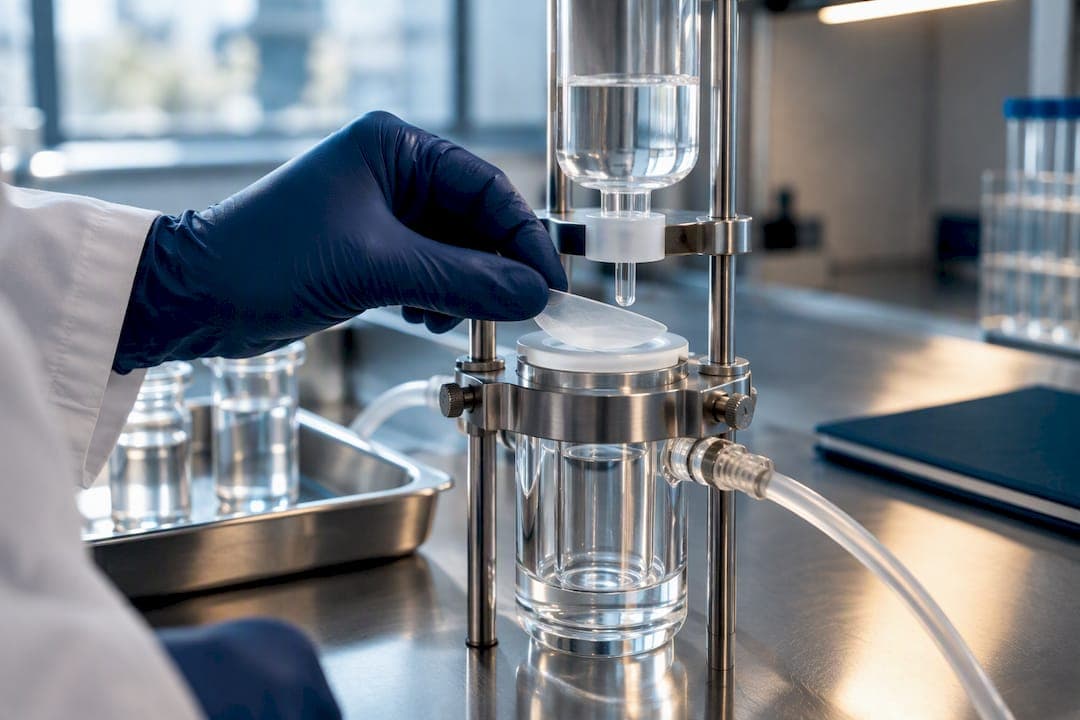
Short answer: CBD deposits into the skin's outer layers on contact, but reaching your bloodstream is rare and depends heavily on the formulation. In vitro membrane assays and small human pharmacokinetic trials confirm this pattern. The rest of this guide explains the biology behind it, what the evidence actually supports, and how to apply topical CBD for the best local results.
TL;DR:
- Most topical CBD deposits into the skin's outer layers but rarely reaches systemic circulation unless formulated with permeation enhancers or designed as a transdermal system.
- The stratum corneum acts as a significant barrier, allowing CBD to penetrate primarily through intercellular lipids without necessarily entering the bloodstream.
- Formulation choices, including carriers and permeation enhancers, determine whether CBD stays localized or crosses into systemic circulation, impacting the intended effect.
- Human pharmacokinetic studies show that only some specially engineered topical products can produce detectable CBD levels in blood after repeated use, but these levels are generally low.
- For targeted pain relief, products formulated for local deposition are preferable, and a trial period of 1 to 2 weeks is recommended to assess effectiveness.
Table of Contents
- Does CBD Absorb Through Skin? The Skin Barrier Explained
- Topical Vs. Transdermal CBD: Why the Distinction Matters
- What Ingredients Help CBD Penetrate Skin?
- Do Studies Prove CBD Penetrates Skin? Here's the Evidence
- How to Apply Topical CBD for Better Results
- Is Topical CBD Safe? Drug Testing and Liver Concerns
- Where Mongoosecbd Fits Into the Science
- Separating What CBD Can Do From What It's Sold to Do
- Try Mongoosecbd's Topical Balms for Local Relief
- Sources
- FAQ
Does CBD Absorb Through Skin? The Skin Barrier Explained
Your skin is built to keep things out, not let them in. The outermost layer, the stratum corneum, is a dense wall of dead, flattened cells packed with lipids, and it's the single biggest obstacle any topical CBD product has to clear. Nothing gets past it easily, which is exactly the point of having skin in the first place.
Molecules can cross that barrier through three routes: between cells (intercellular), straight through cells (transcellular), or down through hair follicles and sweat glands (the follicular route). Most CBD relies on the intercellular path, sliding through the lipid matrix between corneocytes because CBD itself is highly lipophilic, meaning it dissolves in fat far more readily than in water.
That chemistry cuts both ways. CBD's molecular weight sits around 314.47 Da with a logP near 5.7, according to research on cutaneous CBD delivery, which makes it fat-friendly enough to slip into the lipid-rich stratum corneum but not water-soluble enough to easily move into the aqueous environment of deeper tissue or blood plasma. CBD also degrades under light, heat, and oxygen exposure, so raw potency on a label doesn't guarantee what actually reaches your skin cells.
This is why deposition and systemic absorption are two different outcomes. CBD can build up in the epidermis and upper dermis without ever meaningfully reaching your bloodstream, and for most topical use cases, that's exactly what you want.
A few structural facts explain why:
- The stratum corneum is only 10 to 40 micrometers thick, but it accounts for most of the resistance a topical has to overcome.
- Living epidermis and the papillary dermis sit just below it, rich in nerve endings and immune cells, which is where localized effects are most plausible.
- Blood vessels don't appear until deeper in the dermis, so a molecule has to travel further, and survive longer, to reach systemic circulation.
- Skin thickness and hydration vary by body site, so the same balm behaves differently on a knuckle versus a forearm.
Topical Vs. Transdermal CBD: Why the Distinction Matters
These two words get used interchangeably in marketing copy, and that's where a lot of confusion starts. They describe fundamentally different goals.
Topical CBD is designed to act locally. It's meant to deposit into the skin and surrounding tissue, targeting a sore knee, an inflamed joint, or tight muscle fibers without needing to travel anywhere else in the body. Balms, salves, and most creams fall into this category.
Transdermal CBD is designed to cross all the way through the skin into the bloodstream, delivering a systemic dose the same way a nicotine patch delivers nicotine. This requires far more aggressive formulation work, because it means defeating the stratum corneum's job description entirely.
Here's how that difference plays out in practice:
- Product format signals intent. A patch engineered with permeation enhancers is built for systemic delivery. A balm massaged into sore tissue is built to stay local.
- Formulation complexity scales with the goal. Transdermal products typically need chemical enhancers, higher CBD concentrations, or advanced carrier systems to have any chance of systemic delivery. Topical products don't need any of that to work as intended.
- Expected outcomes differ. A topical aims for relief where you rub it in. A transdermal product aims for a measurable blood concentration, which then theoretically produces broader effects.
- Someone managing localized soreness or arthritis pain in a specific joint doesn't need systemic exposure. They need the CBD staying right where they applied it, which is the whole appeal of a topical.
If your goal is targeted relief in one spot, whether that's a runner's knee or an arthritic wrist, a topical product formulated for deposition is the more sensible tool. Transdermal systems introduce more variables, more cost, and more formulation complexity for a systemic effect that, based on current pharmacokinetic data, tends to be modest anyway.
What Ingredients Help CBD Penetrate Skin?
Formulation is where the real engineering happens, and it's also where marketing claims tend to outrun the evidence. Several categories of ingredients show up repeatedly in products claiming enhanced absorption.
Permeation enhancers work by temporarily disrupting the stratum corneum's lipid structure or increasing CBD's solubility at the skin surface. Common ones include:
- Ethanol, which can extract lipids from the skin barrier and increase drug solubility
- Oleic acid, a fatty acid that fluidizes the lipid matrix between cells
- Vitamin E, often included for stability and mild penetration support
- Transcutol, a solvent frequently used in pharmaceutical topicals to boost drug solubility
- DMSO, a potent solvent capable of significantly increasing permeability, though it's less common in over-the-counter balms
- Terpenes like limonene, which some formulators use for their own permeation-enhancing properties
The vehicle carrying the CBD matters just as much as the additives inside it. Oil-based carriers tend to keep CBD sitting closer to the surface. Propylene glycol and gel formats often improve spreadability and can support deeper penetration. Cream bases balance hydration with occlusion. Colloidal delivery systems, such as VESIsorb, use micelle-like structures to improve how evenly CBD disperses through skin layers, and research on cutaneous CBD biodistribution found these systems delivered CBD efficiently into the viable epidermis and papillary dermis, with deposition in skin tissue far exceeding whatever crossed into deeper transdermal permeation.
Particle size also plays a role. Studies using porcine and in vitro models found that particles under roughly 300 nanometers permeated more effectively in Franz cell testing than larger formulations, according to research on topical cannabinoid particle size. This is part of why some brands invest in nanoemulsion technology, though smaller particle size alone doesn't guarantee better real-world outcomes.
Pro Tip: A product that lists a permeation enhancer like Transcutol or oleic acid isn't automatically better for pain relief. If your goal is local deposition rather than systemic absorption, those ingredients add formulation cost without adding benefit for your use case.
Patches represent the most engineered end of this spectrum, layering enhancers, occlusion, and sustained release to maximize the odds of systemic delivery over many hours.
One caution worth flagging: many in vitro studies use aggressive solubilizers and infinite-dose, fully occluded conditions to test permeability. Those conditions don't resemble how a real person applies a balm at home, so lab results showing strong permeability can overstate what you'd actually experience with a finger-applied dose that dries and rubs off within an hour.
Do Studies Prove CBD Penetrates Skin? Here's the Evidence
The research on topical CBD absorption breaks into two tiers: laboratory membrane studies and human trials. Both matter, and they answer different questions.
Laboratory evidence comes primarily from Franz cell diffusion assays and PAMPA (parallel artificial membrane permeability assay) testing. A study evaluating CBD skin permeability using both methods found that CBD's permeability is highly formulation-dependent, with surfactant choice significantly changing how much CBD crossed the membrane. CBD showed notably better solubility in formulations using Tween 20 compared to other surfactants, reinforcing that the vehicle matters as much as the cannabinoid itself.

Franz cell testing simulates skin layers using either synthetic membranes or excised human or animal skin, then measures how much of a compound diffuses through over time. It's the gold standard for early-stage formulation testing, but it isn't a substitute for how a product performs on living, hydrated, actively circulating human skin.
Human evidence is where things get more interesting, and more nuanced. A pharmacokinetic study of five commercially available hemp-derived topical products, published through Johns Hopkins researchers, found that three of the products produced measurable, detectable CBD or its metabolites in participants' blood after repeated daily application. Peak blood concentrations, however, were far lower than what oral or vaporized CBD produces, and importantly, no pharmacodynamic effects were observed at those levels. Peaks generally didn't show up until 7 to 10 days into consistent use, not after a single application.
What the numbers show: In the Johns Hopkins pharmacokinetic trial, only three of five tested topical products produced detectable systemic CBD after repeated daily use, and those blood concentrations remained far below levels seen with oral or vaporized CBD.
A separate exploratory study examining a novel transdermal delivery system found that a formulation delivering close to 95 mg of CBD per application, built specifically with permeation enhancers, did produce measurable blood CBD and THC levels in healthy adults, though overall systemic exposure remained modest next to oral dosing.
Meanwhile, the cutaneous biodistribution research cited earlier found the opposite pattern for colloidal topical formulations: strong deposition in the epidermis and dermis, with transdermal permeation into deeper tissue orders of magnitude lower than what stayed in the skin.
A few caveats apply across all of this evidence:
- Sample sizes in human PK trials tend to be small, often a handful to a few dozen participants, which limits how confidently results generalize.
- Products tested vary enormously in CBD concentration, carrier oil, and enhancer use, so one product's results don't predict another's.
- Detection methods differ between studies, with LC-MS/MS being the standard for identifying trace CBD and metabolite levels, but detection limits vary by lab and protocol.
- No human trial reviewed here demonstrated a clear pharmacodynamic (felt) effect tied specifically to the blood CBD levels detected.
Put together, the evidence supports a formulation-dependent conclusion: most topical CBD deposits locally, some specially engineered products can push measurable amounts into the bloodstream with repeated use, and neither outcome has been consistently linked to a proven pain-relief effect in rigorous trials.
How to Apply Topical CBD for Better Results
Getting the most out of a topical product isn't complicated, but it does require more intention than most people bring to it.
- Use enough product. A thin, sparing dab won't saturate the area. Apply a generous layer, roughly a dime to quarter-sized amount depending on the area, directly over the sore muscle or joint.
- Massage it in for at least 60 to 90 seconds. Friction generates mild heat and helps work the balm into the skin's surface, improving initial contact with the stratum corneum.
- Apply twice daily for a fair trial. Since human PK data shows systemic absorption, when it happens at all, tends to build gradually over 7 to 10 days, judging a product after one use isn't a fair test of what it can do locally either.
- Consider light occlusion for stubborn areas. Covering the area with a bandage or wrap after application can trap moisture and mildly enhance penetration, similar to the sustained-contact conditions used with patches.
- Track your results over 7 to 14 days. Log a baseline before you start: pain intensity on a simple 0 to 10 scale, range of motion, visible swelling, and how the area feels first thing in the morning.
Pro Tip: If you want to isolate whether CBD itself is doing the work versus sensory ingredients like menthol or arnica, try comparing your regular balm to a version without those additives for a few days, or simply pay attention to whether relief lingers after the cooling or warming sensation fades. Sensory ingredients tend to peak and fade within minutes; genuine anti-inflammatory or analgesic effects, if present, tend to build more gradually.
Sensory additives deserve their own scrutiny. Menthol and arnica are commonly blended into pain balms, and Harvard Health has noted that a lot of the immediate relief people report from topical CBD products may actually come from these adjunct ingredients rather than CBD's own pharmacology. That doesn't mean CBD contributes nothing, but it does mean the tingling or cooling sensation you feel within seconds of application isn't proof CBD absorbed anywhere.
Is Topical CBD Safe? Drug Testing and Liver Concerns
Safety concerns around CBD almost always trace back to systemic exposure, and topical use produces far less of that than oral consumption.
Liver injury risk associated with CBD is tied to high oral doses, where the compound is metabolized through the liver in concentrations high enough to affect liver enzyme levels in some studies. Topical application, by contrast, generally results in far lower systemic CBD levels even in products shown to have some transdermal absorption, which limits the relevance of oral hepatotoxicity data to a balm rubbed onto a sore knee.
Drug testing is a separate concern worth addressing directly:
- Most standard drug panels test for THC metabolites, not CBD itself, so pure CBD topicals are unlikely to trigger a positive result.
- The pharmacokinetic research on commercial topical products found detectable CBD in blood via LC-MS/MS testing for some products after repeated use, but concentrations were far below what oral consumption produces.
- Oral fluid testing has, in some contexts, shown higher detection rates than urine testing, an effect researchers link partly to residual product contamination in the mouth rather than true systemic absorption.
- If a topical product contains any trace THC, even within legal hemp limits, repeated heavy use theoretically raises the odds of a trace detection, though this remains a low-probability scenario for topical-only use.
A few practical safety steps make sense regardless of product choice: review the brand's third-party lab report before buying, patch-test any new topical on a small area of skin for 24 hours to rule out irritation, and talk to a clinician if you're on medications metabolized through the same liver pathways CBD uses, particularly if you suspect meaningful systemic absorption from a transdermal-style product.
Where Mongoosecbd Fits Into the Science
Mongoosecbd formulates topical balms built for local deposition, not systemic delivery. The Seriously Soothing Pain Balm and RIKKI TIKKI Recovery combine 1,000 mg of CBD per ounce with ingredients like arnica, menthol, turmeric, and eucalyptus, targeting muscle soreness, inflammation, and arthritis discomfort right where they're applied. That focus lines up with what the deposition research actually supports: topical CBD's most defensible use case is local tissue exposure, not blood-level change.
For readers who want to go deeper on formulation choices, Mongoosecbd's blog covers how arnica contributes to topical pain relief and which balm ingredients actually matter for pain relief beyond the milligram count on the label.
Transparency matters here. The formulation science supports plausible local deposition of CBD into skin tissue. It does not yet support a confident claim that CBD alone produces reliable, clinically proven pain relief, a distinction backed by the critical pain-efficacy review cited earlier in this piece. Mongoosecbd's 30-day refund policy exists precisely because individual results vary, and a real-world trial on your own body is still the most honest way to find out if a product works for you.
Separating What CBD Can Do From What It's Sold to Do
The gap between CBD marketing and CBD evidence isn't small, and pretending otherwise doesn't serve anyone. Topical CBD depositing into skin tissue is well-supported by both membrane assays and human biodistribution research. Claims that a balm will meaningfully change your bloodstream chemistry, or reliably eliminate arthritis pain, are not supported by the same rigor, and the critical review of CBD pain products found existing trials have generally failed to show clinically meaningful relief.
That doesn't make topical CBD worthless. It makes it a product category where your own trial, run honestly over one to two weeks with a clear baseline, matters more than any label claim. Before buying, run through this checklist:
- Look for permeation enhancers only if systemic delivery is actually your goal, not local relief.
- Check for third-party lab testing that confirms CBD content and screens for contaminants.
- Give any product a real 7 to 14 day trial before judging it, since single-application impressions mostly reflect sensory additives.
- Talk to a clinician about interactions if you suspect meaningful systemic absorption, particularly with transdermal-style products.
The field needs larger, better-controlled human trials and more consistent product standardization before anyone can make confident efficacy claims. Until then, informed skepticism paired with a fair personal trial is the most rational approach.
— Cindy
Try Mongoosecbd's Topical Balms for Local Relief
If the evidence in this guide tells you anything, it's that local deposition, not blood-level change, is where topical CBD has the most support behind it. That's exactly what Mongoosecbd formulates for.
The Seriously Soothing Pain Balm and RIKKI TIKKI Recovery are built around 1,000 mg of CBD per ounce, blended with arnica, menthol, turmeric, and other natural ingredients specifically for muscle recovery, soreness, and arthritis discomfort. Every product is formulated to be vegan, non-GMO, paraben-free, and THC-free, designed for individuals seeking relief where it actually hurts. For a lower-cost way to test whether a formulation works for you, the SMOKO CBD guide on using topical CBD for muscle pain offers useful background on running your own trial safely.
Since individual results vary, Mongoosecbd backs every purchase with a 30-day full refund policy, so trying a balm carries no financial risk if it doesn't work for your body. Visit the Mongoosecbd shop to compare formulations and find the one built for your specific pain pattern.
This article is general information, not a substitute for advice from a qualified doctor. Consult a qualified healthcare professional about your own circumstances before acting on anything here.
Sources
- Pharmacokinetics and pharmacodynamics of five distinct commercially available hemp-derived topical cannabidiol products
- Cutaneous delivery and biodistribution of cannabidiol in human skin after topical application of colloidal formulations
- Cannabidiol (CBD) Products for Pain: Ineffective, Expensive, and With Potential Harms
- CBD for chronic pain: the science doesn’t match the marketing — Harvard Health
FAQ
Can you rub CBD oil into your skin?
Yes, CBD oil can be applied directly to skin, and it will deposit into the outer layers on contact. Whether it reaches your bloodstream in any meaningful amount depends on the formulation, with most CBD oils staying localized rather than becoming systemic.
Is CBD harder on the liver than alcohol?
Liver injury risk from CBD is tied specifically to high oral doses, where the compound is processed through liver metabolism in ways that can affect liver enzymes. Topical CBD produces far lower systemic exposure, so this concern applies mainly to oral or high-dose ingestible products, not balms or creams applied to skin.
What does CBD feel like when it kicks in?
Immediate sensations from a topical CBD product, like cooling, tingling, or warmth, usually come from adjunct ingredients such as menthol or arnica rather than CBD itself, according to Harvard Health's analysis. Any CBD-specific effect on soreness or inflammation, if present, tends to build more gradually over days of consistent use rather than appearing within minutes.
Does CBD do anything topically?
Whether that deposition translates into clinically meaningful pain relief remains unproven, since the pain-focused critical review found existing trials haven't consistently demonstrated significant effects.
How much does Mongoosecbd's pain balm cost?
Mongoosecbd's Seriously Soothing Pain Balm and RIKKI TIKKI Recovery are available for purchase through the Mongoosecbd shop. Every purchase includes a 30-day full refund policy if the product doesn't meet your expectations.