
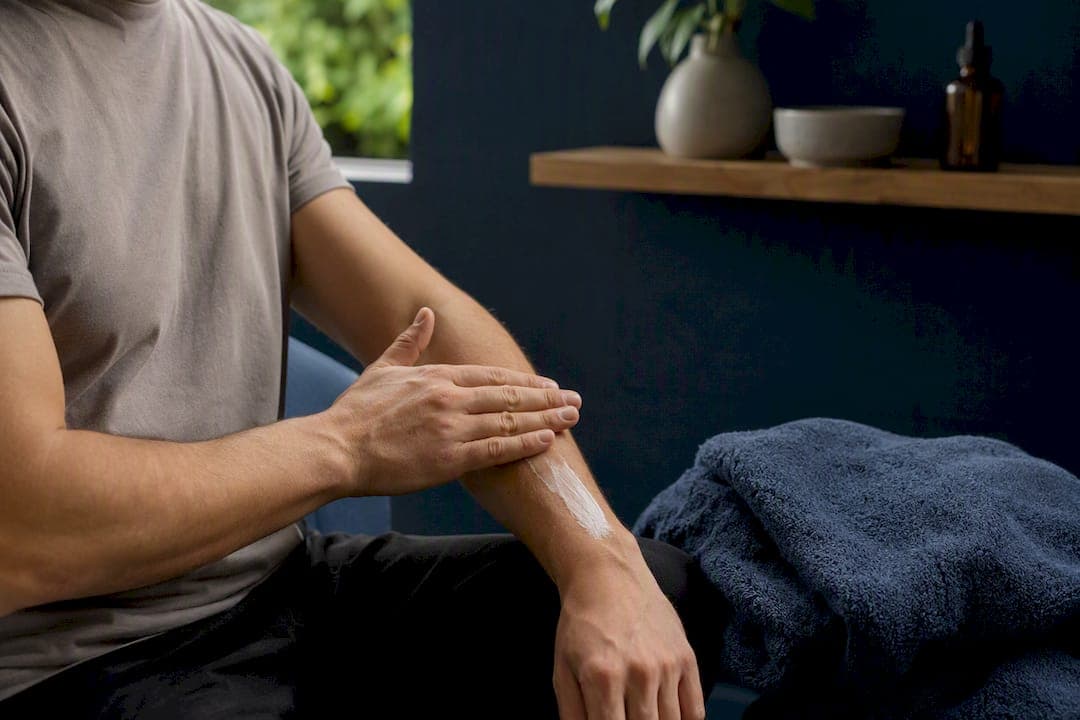
Short answer: standard CBD creams are unlikely to make you fail a drug test, but there are exceptions worth taking seriously. Workplace screens look for THC metabolites, not CBD itself, and a controlled study on topical THC application found no detectable cannabinoids in blood or urine even after volunteers applied THC-containing salves extensively for three days. That's reassuring, but it isn't a blanket guarantee.
Several factors can change the outcome:
- Contaminated or mislabeled products containing more THC than advertised
- Transdermal patches or "penetration-enhanced" creams built to enter the bloodstream
- Broken, abraded, or inflamed skin at the application site
- Chronic, heavy use combined with oral CBD products
The Department of Transportation specifically warns safety-sensitive employees to avoid CBD products altogether, since federal guidance doesn't distinguish between "a little THC" and "enough THC to trigger a positive."
Key Takeaways
Standard CBD creams rarely trigger a positive drug test because labs screen for THC metabolites, not CBD, but contamination, transdermal formulations, and broken skin change that calculus.
| Point | Details |
|---|---|
| Tests target THC, not CBD | Immunoassay screens and LC-MS/MS confirmation look for THC-COOH, which pure topical CBD doesn't produce. |
| Formulation changes risk | Full-spectrum and transdermal products carry more systemic absorption risk than isolate-based creams. |
| Mislabeling happens | Market testing has found CBD products with undisclosed THC levels high enough to trigger positives. |
| Verify with a COA | A batch-specific Certificate of Analysis, not a package claim, is the only reliable way to confirm THC content. |
| Mongoosecbd offers THC-free topicals | Its balms are formulated for local relief only, batch tested, and backed by a 30-day refund policy. |
Why safety-first framing matters more than marketing claims
The biggest blind spot in most CBD advice isn't the science. It's the assumption that a friendly label means a verified product. I've seen plenty of coverage treat "broad-spectrum" and "THC-free" as interchangeable with "tested and confirmed," when they're really just claims waiting on a lab result to back them up. The peer-reviewed evidence on topical THC absorption is genuinely reassuring, but it studied controlled products under controlled conditions, not the wide variability sold online.
What gets underrated is how much the delivery system matters more than the cannabinoid profile. A full-spectrum cream that stays in the skin's outer layers is a different risk category than an isolate-based transdermal patch engineered to cross into the bloodstream. Readers fixate on ingredient lists when they should be asking how the product is designed to move through skin.
If you work in a DOT-regulated or safety-sensitive role, the honest advice isn't "CBD cream is fine." It's "verify before you apply, and don't confuse a marketing label for a lab result."
— Cindy
Table of Contents
- Does CBD Cream Show Up on a Drug Test? How Screening Actually Works
- What Raises the Risk of a Topical CBD Product Causing a Positive Result
- What the Research and Federal Guidance Actually Say
- How to Lower Your Risk Before a Test
- What to Do If a CBD Topical Leads to a Positive Result
- Sources
Does CBD Cream Show Up on a Drug Test? How Screening Actually Works
Drug tests don't look for CBD. They look for THC-COOH, the metabolite your liver produces after THC enters your system. That distinction is the entire reason topical CBD creams carry low risk in the first place.
Most workplace programs use a two-step process outlined by SAMHSA: an initial immunoassay screen, followed by confirmatory testing if the screen flags positive.
- Urine immunoassay screen: typically set around a 50 ng/mL cutoff for THC metabolites
- Confirmatory test: liquid chromatography tandem mass spectrometry (LC-MS/MS), which uses a much lower, more precise threshold to verify the initial result
- Sample types: urine dominates employment testing, though saliva, hair, and blood appear in specific contexts with different detection windows
Urine tests can catch use going back days to weeks depending on frequency. Hair testing can stretch that window to months, though it's rarely used for routine workplace panels. Saliva testing captures a shorter, more recent window and shows up more often in roadside or post-accident testing than pre-employment screening.
Here's the practical takeaway: because CBD isn't the analyte labs are hunting for, applying a CBD cream to your skin doesn't put THC-COOH into your urine unless THC is present in the product and enters your bloodstream. That's the whole mechanism. Everything else in this article is about how that "unless" can sneak in.
What Raises the Risk of a Topical CBD Product Causing a Positive Result
Not all CBD creams carry the same risk profile. The formulation, the skin you're applying it to, and how often you use it all shift the odds.
- Full-spectrum products contain trace THC by definition. Federal law allows up to 0.3% THC by dry weight, and while that's small, it isn't zero. Broad-spectrum products are formulated to remove THC while keeping other cannabinoids, and isolate products contain only CBD with no other cannabinoids at all.
- Transdermal patches and nano-emulsions are built differently than creams. Standard topical creams stay in the epidermis and dermis, producing local effects without meaningfully entering circulation. Transdermal systems use chemical penetration enhancers specifically to push compounds into the bloodstream, and research on transdermal cannabinoid delivery confirms this systemic absorption is a real mechanistic difference, not a marketing distinction.
- Mislabeling is more common than most buyers assume. A Johns Hopkins Medicine analysis found some commercially available CBD products contained enough undisclosed THC to produce cannabis-positive urine results. The FDA reinforces this, noting cannabis-derived products aren't FDA-approved and labeling accuracy isn't guaranteed.
- Broken or inflamed skin absorbs more than intact skin. Clinicians note that applying any topical to abraded or irritated areas increases permeability substantially, according to research on topical absorption and drug testing — a relevant caution if you're using a balm on a healing injury.
- Stacking topical and oral use adds up. Someone applying CBD cream daily while also taking CBD oil or gummies has more cumulative cannabinoid exposure than someone using cream alone.
Pro Tip: If you're in a safety-sensitive role, treat "broad-spectrum" and "full-spectrum" labels as a red flag worth double-checking, not a guarantee. The label only means as much as the lab test behind it.
What the Research and Federal Guidance Actually Say
The clearest evidence comes from a peer-reviewed toxicology study that directly tested this question. Researchers had volunteers apply THC-containing salves extensively over three days, then tested blood and urine using GC-MS with a limit of detection around 1.2 ng/mL for THC-COOH in urine.
Every blood and urine sample came back negative for detectable cannabinoids, despite heavy, repeated topical exposure to THC over multiple days.
That's a meaningful data point, and it's the strongest single piece of evidence behind the BLUF at the top of this article. But it has limits worth naming honestly:
- Small sample sizes mean the finding is a strong signal, not an absolute rule for every body and every product
- Engineered transdermal and nano-emulsion formulations weren't the focus of this research, and they behave differently by design
- Product-to-product variability in the real market is far higher than in a controlled study
Federal guidance fills in the rest of the picture. SAMHSA governs the screening and confirmation process for federally regulated programs, while the DOT goes further, explicitly advising safety-sensitive employees to steer clear of CBD products entirely, regardless of state cannabis law.
How to Lower Your Risk Before a Test
If you have a test coming up, or your job requires random screening, a few concrete steps make a real difference.
- Choose isolate or verified broad-spectrum products. Look for a batch-specific Certificate of Analysis (COA) showing non-detectable THC, not just a "THC-free" claim on the label.
- Skip transdermal patches and enhanced-penetration creams if staying THC-free is a hard requirement. Standard topical balms formulated for local relief are a lower-risk category than products engineered for systemic delivery.
- Build in a buffer window. Many testing consultants recommend abstaining from all CBD products, topical and oral, for two to three weeks before a test to let any trace THC clear.
- Test yourself first. An at-home urine test can flag a problem before an employer's test does, giving you time to react instead of react in a panic.
- Keep your paperwork. Save receipts and COAs for anything you're using. If a question ever comes up, documentation is your best evidence.
Pro Tip: A "THC-free" claim printed on packaging isn't proof of anything. A third-party COA with a batch number matching your product is the only real verification, and reputable CBD education resources make the same point.
What to Do If a CBD Topical Leads to a Positive Result
A positive screen isn't the end of the story. It's a screen, not a confirmed result, and the process has built-in checkpoints.
- Request confirmatory testing. Ask for LC-MS/MS confirmation rather than accepting an initial immunoassay result as final.
- Loop in the Medical Review Officer (MRO). The MRO reviews positive results and considers legitimate explanations before anything gets reported to an employer.
- Bring documentation. COAs, purchase receipts, and any relevant medical notes give the MRO something concrete to evaluate.
- Ask about retesting timelines so you know exactly what the process looks like and how long it takes.
- Understand your specific policy. Safety-sensitive and DOT-regulated roles often have stricter, federally governed rules that don't bend for state-level CBD legality.
A publisher's note on safety and quality
We take the concerns of safety-sensitive workers seriously, and the evidence here supports a measured answer: standard topical CBD carries low risk, but not zero risk. Mongoosecbd's balms, including the Seriously Soothing Pain Balm and Rikki Tikki Recovery, are formulated as topical-only products backed by a 30-day refund policy.
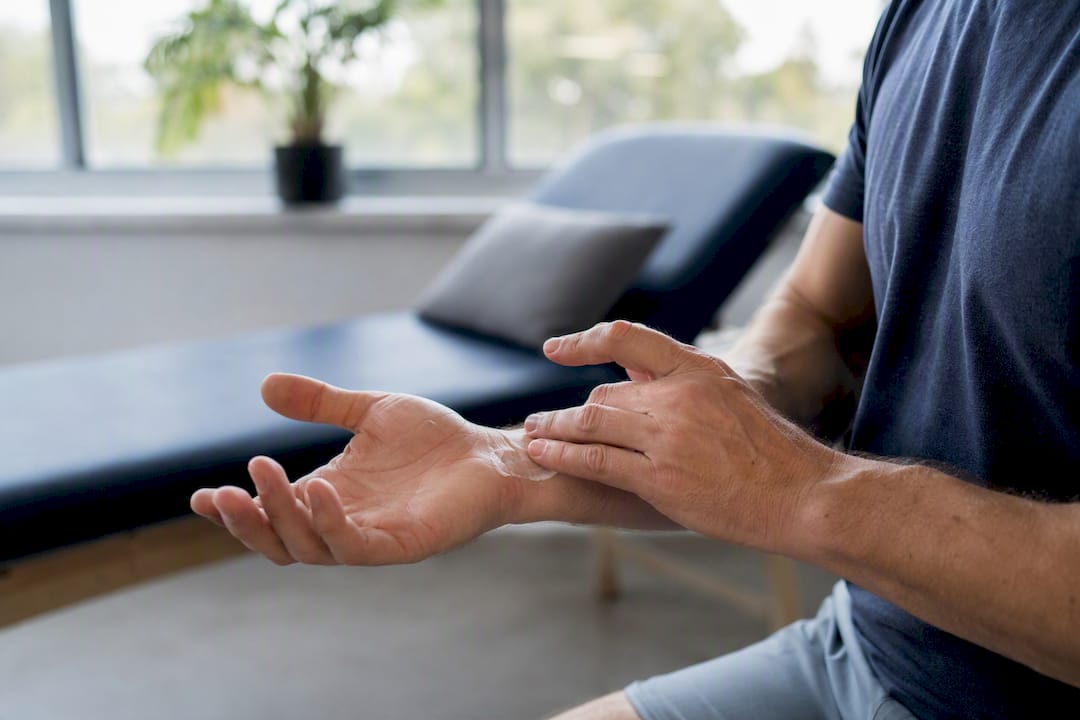
A THC-free option for readers who still want topical relief
If you've read this far because you need pain relief without putting a testing career on the line, that's exactly the gap Mongoosecbd's balms are built to fill.
Mongoosecbd formulates its balms, including the Seriously Soothing Pain Balm and Rikki Tikki Recovery, as THC-free topical products meant for local application, not systemic delivery, with arnica, menthol, turmeric, and other natural pain-relieving ingredients doing the work alongside 1,000mg of CBD per ounce. Every batch is tested, and Mongoosecbd backs every purchase with a 30-day refund policy if it doesn't work for you. Before you buy any topical, including this one, check the product's Certificate of Analysis to confirm what's actually in the jar. No topical claim, including ours, should replace that verification step for someone in a safety-sensitive role. Ready to try it? Start with the Seriously Soothing Pain Balm in Cinnamon Clove and check the batch COA listed on the product page before checkout.
Sources
- Topical application of THC containing products is not able to cause positive cannabinoid finding in blood or urine
- What You Need to Know About Products Containing Cannabis or Cannabis-derived Compounds – FDA
- Some CBD products may yield cannabis-positive urine drug tests – Johns Hopkins Medicine
- CBD notice – U.S. Department of Transportation