
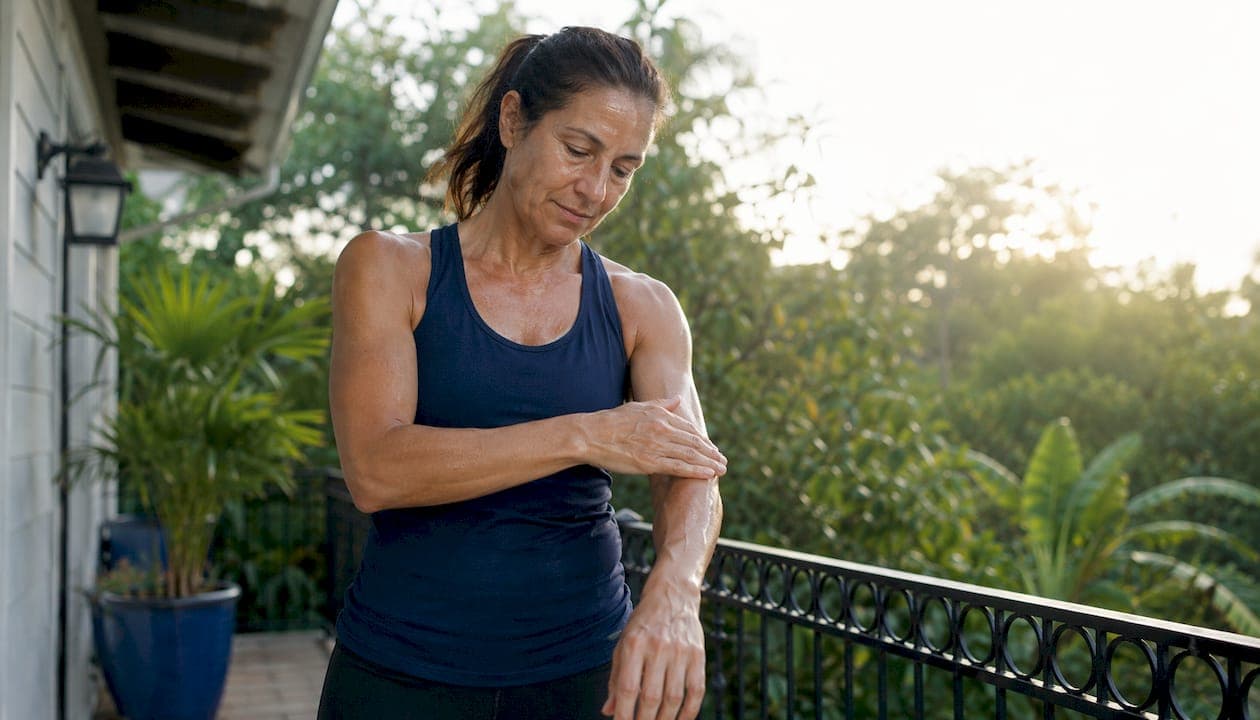
Topical arnica can reduce muscle pain for some users when applied consistently to intact skin, though the clinical evidence is mixed and individual responses vary. The German Commission E has approved external arnica use for muscle and joint pain, bruising, and inflammation. Ingestible arnica is a different story entirely: oral preparations carry real toxicity risk and should be avoided.
For athletes and chronic pain sufferers looking for a tested topical option, Mongoosecbd's Seriously Soothing Pain Balm and Rikki Tikki Recovery combine arnica with high-potency CBD and natural actives, backed by third-party lab testing and a 30-day full refund policy.
Key facts up front:
- Topical arnica is the recommended and safest form for muscle pain.
- Ingestible arnica is discouraged due to cytotoxicity.
- Clinical benefit tends to appear after several days of consistent application, not immediately.
- Combining arnica with a CBD balm is compatible when layered thoughtfully.
Table of Contents
- What arnica actually does for sore muscles
- What the clinical evidence actually shows
- Safety: who should be cautious and what to watch for
- How to apply topical arnica and layer it with a CBD balm
- What to look for when buying an arnica CBD balm
- Other recovery measures and when to see a clinician
- Where this guidance comes from
- Key Takeaways
- Why tested arnica and CBD topicals are worth the attention
- Ready to try a tested arnica and CBD balm?
- Primary sources and further reading
What arnica actually does for sore muscles
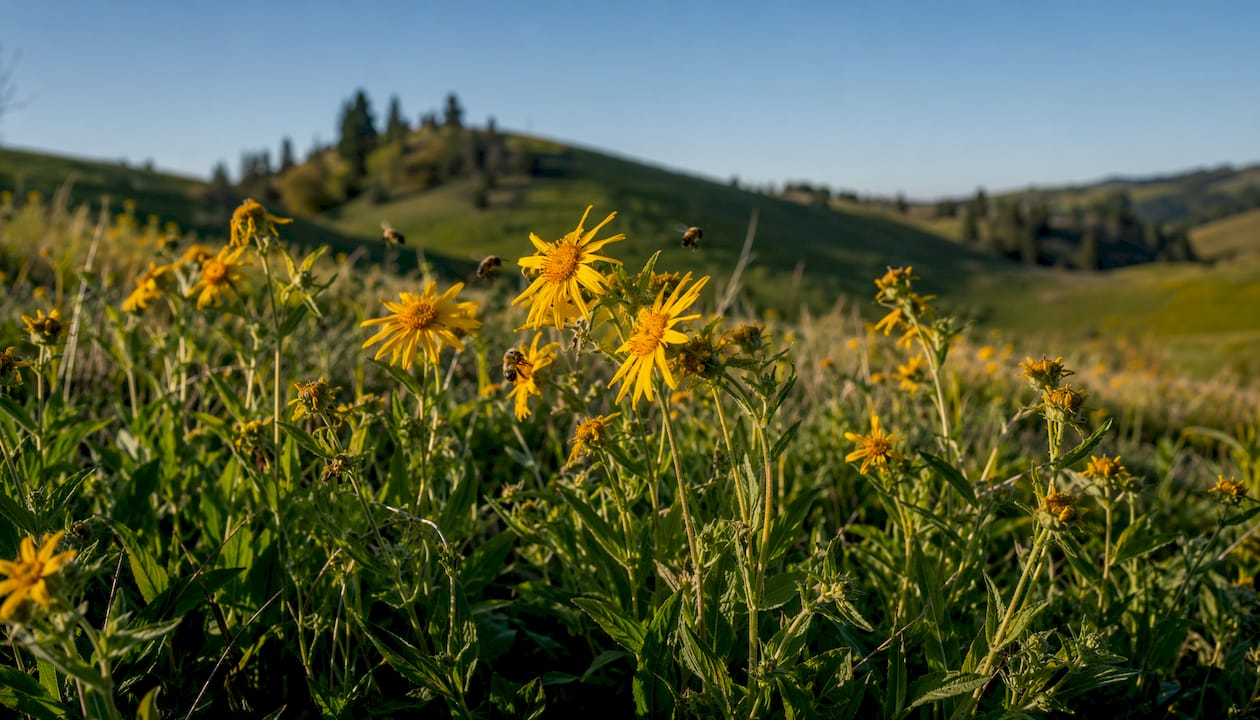
Arnica montana is a flowering plant whose extracts have been used in topical gels, creams, and salves for centuries. The biologically active compounds, primarily sesquiterpene lactones like helenalin, are credited with anti-inflammatory, analgesic, antioxidant, and antirheumatic activities that plausibly explain why some users feel less soreness after applying it.
Topical delivery matters here. When you apply arnica to skin, the active compounds concentrate locally rather than entering systemic circulation at meaningful levels. That limits both the therapeutic reach and the risk profile, which is exactly why regulatory bodies restrict arnica to external use.
Common topical forms include:
- Herbal extracts (gels, creams, salves with measurable arnica concentration)
- Homeopathic dilutions (highly diluted preparations; lower biological activity expected)
- CO2 extracts (concentrated botanical extracts used in premium formulations)
The distinction between a herbal extract and a homeopathic dilution matters for expected effect. A 5% Solidago chilensis gel (a South American arnica relative) applied for 21 days reduced arm pain in tendinitis patients in one trial. Homeopathic dilutions operate on a different premise and show different results in trials.
Statistic callout: In a double-blind randomized trial, topical arnica applied every four waking hours reduced subjective pain 72 hours after intense downhill running in well-trained males, though it showed no effect on blood markers of inflammation or performance measures.
What the clinical evidence actually shows
The honest summary: some trials support topical arnica for post-exercise soreness; others show no benefit or even a transient increase in pain at the 24-hour mark.
The Pumpa et al. trial found reduced pain at 72 hours post-eccentric exercise with consistent reapplication. The Adkison et al. study, by contrast, found arnica cream actually increased leg pain 24 hours after eccentric calf raises compared to placebo, with no significant difference at 48 or 72 hours. Both were small, well-controlled trials. The Cleveland Clinic notes that recommendations often rest on clinical observation rather than large RCTs.
What limits the evidence:
- Small sample sizes across most trials
- Heterogeneous formulations (homeopathic vs. herbal extract, varying concentrations)
- Inconsistent application schedules and dosing
- U.S. arnica products vary in concentration and labeling due to less stringent requirements than some international jurisdictions
Pro Tip: When evaluating a study, check three things: the formulation type (extract vs. homeopathic), the application frequency, and the population studied. A trial on well-trained athletes using herbal extract every four hours tells you more than a marathon study using homeopathic pills.
Safety: who should be cautious and what to watch for
Topical arnica is generally safe for most adults when applied to intact, unbroken skin. That caveat about intact skin is not a formality. Applying arnica to open wounds or broken skin raises absorption and irritation risk significantly.
Common topical side effects include itching, redness, rash, and contact dermatitis. Allergic reactions are possible, particularly in people sensitive to the Asteraceae plant family (ragweed, chrysanthemums, daisies).
Higher-risk groups who should consult a clinician first:
- Pregnant or breastfeeding individuals
- Young children
- People with known plant or pollen allergies (Asteraceae family)
- Anyone on blood-thinning medications
Ingestible arnica, including concentrated herbal preparations, carries documented cytotoxicity risk. Even some homeopathic internal products can be confused with potent herbal extracts — always confirm the form before use.
Pro Tip: Before applying any new arnica product to a large area, do a patch test: apply a small amount to the inside of your forearm and wait 24–48 hours. Stop use and seek care if you develop spreading redness, swelling, or systemic symptoms like hives or difficulty breathing.
How to apply topical arnica and layer it with a CBD balm
Start with clean, dry, intact skin. That baseline is non-negotiable for both safety and absorption. When combining arnica with a CBD balm, layer thoughtfully to avoid additive skin irritation from stacking multiple strong actives at once.
- Cleanse the area with mild soap and water; pat dry completely.
- Patch test any new product on a small area for 24 hours before full application.
- Apply a pea-sized amount of arnica topical and massage it in gently until absorbed.
- Wait 10–15 minutes before applying your CBD balm over the same area.
- Apply the CBD balm using the same massage technique; avoid rubbing aggressively if skin feels sensitized.
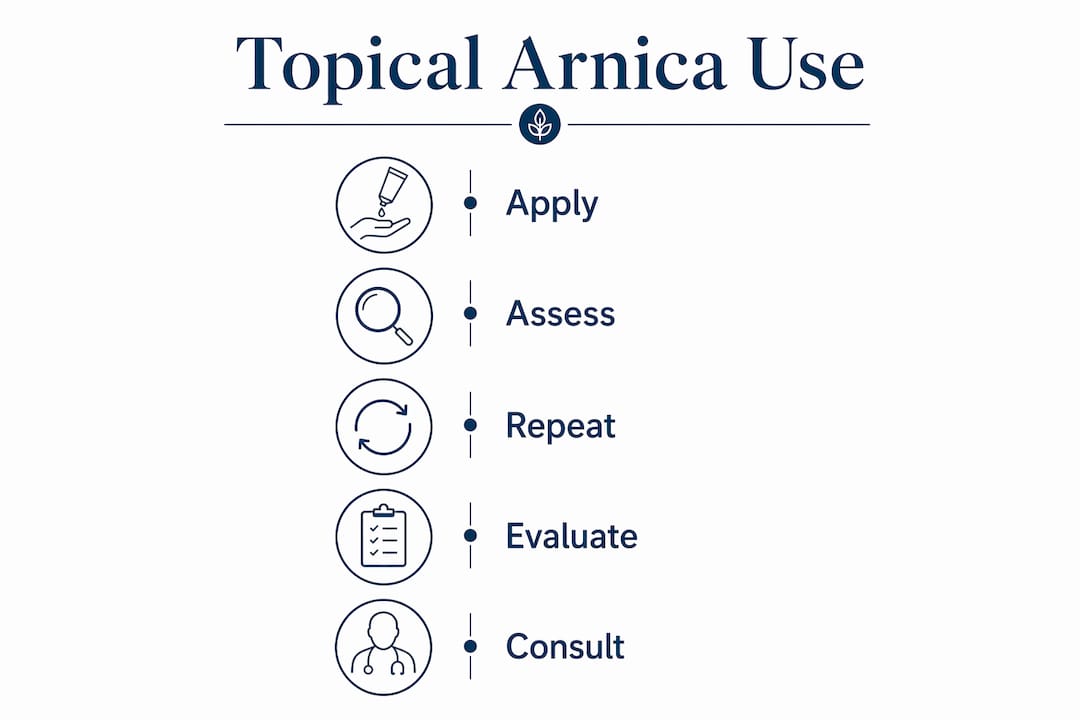
- Track your response over 72 hours, noting pain levels, skin reaction, and any changes in soreness.
Avoid applying either product to broken skin, mucous membranes, or near the eyes. Don't layer multiple menthol-heavy products simultaneously without guidance.
What to look for when buying an arnica CBD balm
Ingredient transparency is the starting point, not a bonus feature. U.S. arnica product concentrations vary widely, so third-party testing is the only reliable way to confirm what you're actually getting.
| Checklist item | Why it matters | How to verify |
|---|---|---|
| CBD concentration (mg/oz) | Determines potency; 1,000 mg/oz is a meaningful benchmark | Check product label and COA |
| THC-free lab results | Legal compliance and drug-test safety | Request or download the COA |
| Arnica extract type | Herbal extract has more biological activity than homeopathic dilution | Read ingredient list for "Arnica montana extract" or "Solidago chilensis" |
| Complementary actives | Menthol, eucalyptus, peppermint add cooling/analgesic effect | Full ingredient list on product page |
| No parabens or harsh solvents | Reduces irritation risk for sensitive skin | Look for paraben-free labeling |
| Vegan and cruelty-free claims | Matters for some consumers; signals formulation care | Brand certifications or product page |
| Refund or satisfaction policy | Signals brand confidence in efficacy | Check brand policy page |
Mongoosecbd's formulations check these boxes: high-potency CBD per ounce, third-party COA availability, THC-free labeling, and a 30-day full refund policy. The ingredient lists are published openly, including arnica extract alongside menthol, turmeric, eucalyptus, and other natural actives.
Other recovery measures and when to see a clinician
Topical treatments work best as part of a broader recovery plan, not as a standalone fix. Rest, progressive movement, appropriate icing or heat, hydration, and sleep all contribute to how quickly muscle tissue repairs.
Practical complements to arnica and CBD topicals:
- Acute injury: RICE protocol (rest, ice, compression, elevation) for the first 24–48 hours
- Overuse injuries: Graded mobility and progressive loading rather than complete rest
- Soft-tissue work: Foam rolling and targeted massage to improve circulation and reduce tension
- Sleep and hydration: Both are underrated recovery variables with real physiological effects
Topical care is not a substitute for medical evaluation when symptoms are severe or worsening.
Red flags that mean you should see a clinician:
- Severe swelling or inability to bear weight
- Fever alongside muscle pain
- Numbness, tingling, or radiating pain
- Spreading redness or signs of infection
- Symptoms that worsen despite 72 hours of conservative care
Athletes returning from injury should consider professional evaluation before resuming full training loads, even when pain feels manageable.
Where this guidance comes from
This article synthesizes peer-reviewed clinical reviews, specific randomized controlled trials, expert commentary from the Cleveland Clinic, and product-level information from Mongoosecbd.
Key sources:
- PMC clinical review (Medicines, 2021): comprehensive summary of arnica trials, mechanisms, and adverse effects
- Pumpa et al. (2014): randomized trial on topical arnica and eccentric exercise; published in European Journal of Sport Science
- Adkison et al. (2010): randomized trial on topical arnica and calf-raise pain; published in Annals of Pharmacotherapy
- Cleveland Clinic (Dr. Price): clinical perspective on arnica's evidence base
- WebMD: consumer-facing safety and interaction summary
This article is general information, not a substitute for professional medical advice. Confirm any new treatment approach with your clinician, particularly if you take medications or have a chronic health condition.
Brand trust signals you can verify directly: Mongoosecbd publishes third-party COAs, lists full ingredient information on each product page, and offers a 30-day full refund policy on all purchases.
Key Takeaways
Topical arnica can reduce muscle soreness for some users when applied consistently over several days, and it pairs well with a tested CBD balm when layered carefully.
| Point | Details |
|---|---|
| Topical only | Apply arnica exclusively to intact skin; ingestible forms carry cytotoxicity risk. |
| Realistic timeline | Expect changes over 48–72 hours of consistent use, not within minutes of a single application. |
| Patch test first | Test any new arnica or CBD product on a small skin area for 24 hours before full use. |
| Layer carefully | Wait 10–15 minutes between arnica and CBD balm application; avoid stacking multiple strong actives. |
| Mongoosecbd | Seriously Soothing Pain Balm and Rikki Tikki Recovery offer high-potency CBD per ounce, arnica extract, third-party COAs, and a 30-day refund. |
Why tested arnica and CBD topicals are worth the attention
The conventional wisdom on arnica tends to go one of two ways: either it's dismissed as folk medicine with no real evidence, or it's oversold as a miracle herb. Neither framing is accurate. The clinical record shows genuine signal in specific contexts, particularly topical herbal extracts applied consistently over multiple days after eccentric exercise. That's a narrow claim, but it's a real one.
What gets underestimated is the value of combining arnica with a high-potency CBD balm from a brand that publishes its lab results. CBD's own anti-inflammatory and analgesic properties work through different pathways than arnica's helenalin-based mechanisms. Using both together, layered correctly, gives you two complementary approaches rather than doubling down on one. The Mongoosecbd Seriously Soothing Pain Balm and Rikki Tikki Recovery are formulated with exactly this kind of multi-active thinking: arnica alongside menthol, turmeric, eucalyptus, and high-potency CBD per ounce. The 30-day refund policy means you can test it properly without financial risk.
Ready to try a tested arnica and CBD balm?
Mongoosecbd offers two standout options for athletes and chronic pain sufferers who want a formulated, lab-tested topical with arnica and high-potency CBD.
The Rikki Tikki Recovery is built for post-workout muscle recovery, with arnica extract, high-potency CBD per ounce, and a full complement of natural actives. The Seriously Soothing Pain Balm suits chronic sore spots and everyday aches, available in several scent profiles including cinnamon and clove and eucalyptus mint. Both are vegan, paraben-free, THC-free, and backed by third-party COAs you can request directly. Not sure which to start with? A free sample lets you patch-test before committing to a full tin. Every purchase comes with a 30-day full refund policy.
Primary sources and further reading
- PMC clinical review — Arnica as an Adjunct for Pain Management: Comprehensive summary of trials, mechanisms, and adverse effects; the most thorough starting point for the evidence base.
- Pumpa et al. (2014) — European Journal of Sport Science: Randomized trial showing pain reduction at 72 hours post-eccentric exercise with consistent topical arnica application.
- Adkison et al. (2010) — PubMed: Randomized trial finding increased pain at 24 hours with arnica cream after calf raises; important counterpoint to positive trials.
- Cleveland Clinic — Arnica overview: Clinician perspective on evidence quality and practical use; useful for setting realistic expectations.
- WebMD — Arnica uses, side effects, and interactions: Consumer-facing safety summary covering topical side effects and interaction considerations.
Consult your clinician before combining arnica with other treatments, especially if you take anticoagulants or have known plant allergies. For product-specific potency and contaminant data, request the COA directly from the brand before purchasing.