
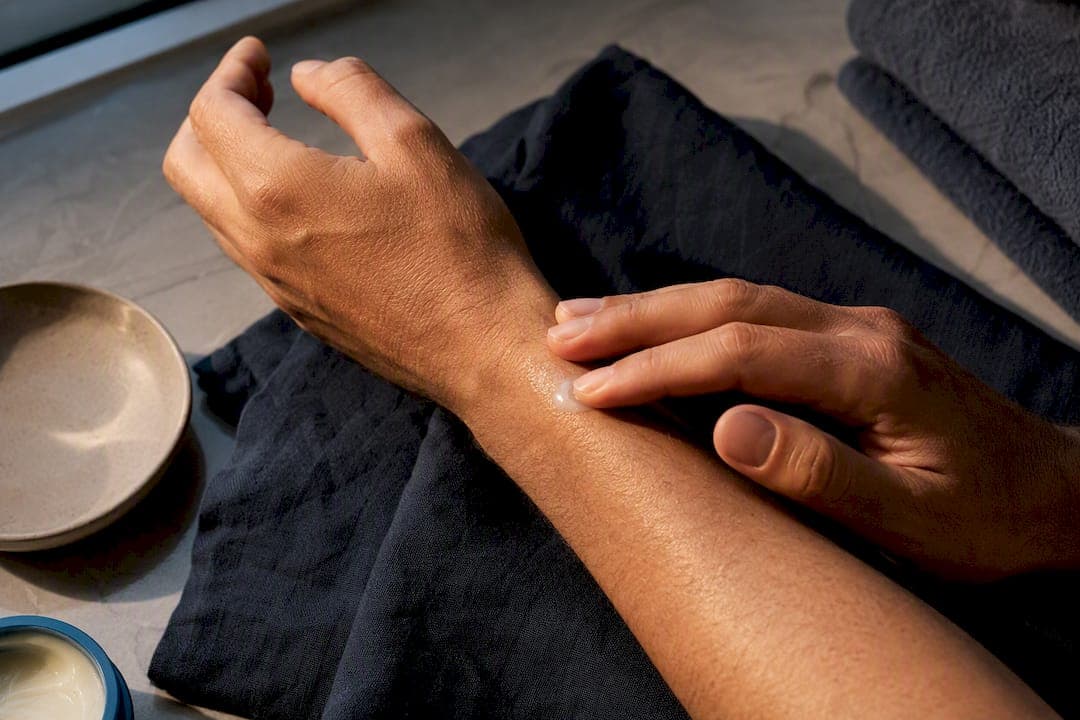
Topical CBD can ease localized wrist pain for some people, especially with osteoarthritis, tendonitis, or repetitive strain, though results vary from person to person. Oral CBD shows weaker, less consistent results for wrist-specific problems because it works systemically rather than at the joint itself. If your pain is isolated to the wrist, start with a supervised topical trial before considering an oral product, and talk to your clinician about interactions and how to track results with a simple pain log.
TL;DR:
- Topical CBD shows more consistent short-term pain relief for wrist joint issues like osteoarthritis than oral CBD, which has less reliable results.
- Well-designed, two- to six-week trials with logs of pain scores help determine if CBD is effective for your specific wrist pain.
- Always request third-party testing certificates and check ingredient lists when choosing a CBD product to ensure quality and safety.
- Consult a healthcare professional before starting CBD, especially if on blood thinners or arthritis medications, due to potential drug interactions.
- CBD may help reduce local inflammation and pain but is not proven to heal tendonitis or nerve damage; it should complement other treatments like physical therapy.
Table of Contents
- What the Research Says About CBD for Wrist Pain
- Topical vs. Oral CBD: Which One Fits Your Wrist Pain
- How to Run a Fair Two- to Six-Week Topical CBD Trial
- What to Check Before Buying a Topical CBD Product
- Safety and Drug Interactions to Review Before You Start
- Timeline: What Success (and Failure) Looks Like
- Side Effects: Topical Balms vs. Oral CBD
- Is CBD Legal for Wrist Pain Treatment?
- The Mechanism: How CBD Might Ease Wrist Pain
- CBD Versus NSAIDs and Physical Therapy for Wrist Pain
- Why I Trust the Cautious, Trial-Based Approach to CBD
- Trying a Topical CBD Balm the Right Way
- Sources
- FAQ
What the Research Says About CBD for Wrist Pain
The honest answer is: some evidence, but not enough to call it settled. Preclinical research shows CBD interacts with anti-inflammatory and pain-signaling pathways in ways that make it a reasonable candidate for joint pain, but plausibility isn't proof. Human trials are smaller, shorter, and more inconsistent than most product marketing suggests.
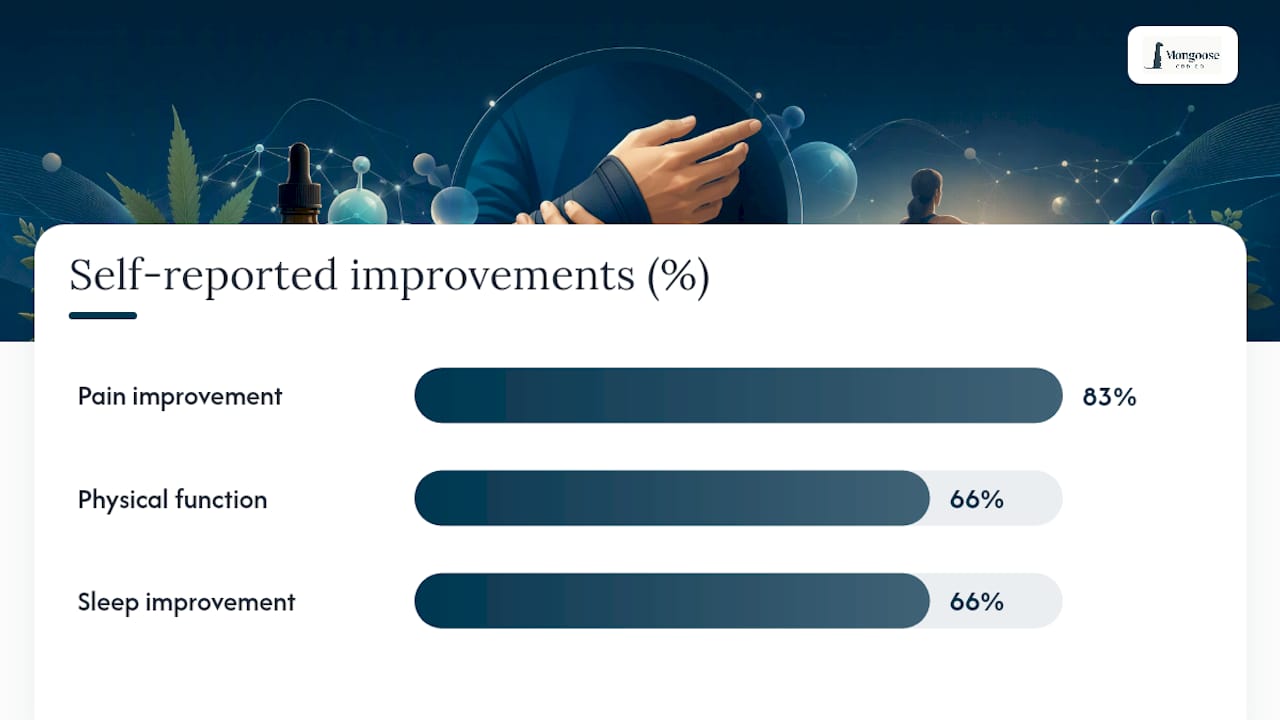
A randomized controlled trial of topical cannabidiol for thumb basal joint osteoarthritis, a condition that shares a lot of mechanical overlap with wrist arthritis, found short-term improvements in patient-reported pain and disability. The trial was small and single-center, so it's a promising signal rather than a verdict. Separately, an exploratory cross-sectional study found that people using CBD self-reported improvements in pain (83%), physical function (66%), and sleep (66%), but the design relied on self-reporting rather than controlled comparison, which limits how much weight you can put on those numbers.
Not every trial lands positive. Some topical studies for hand and wrist osteoarthritis have shown no meaningful difference from placebo, and the field lacks the kind of large, multi-site trials that would settle the question either way. The Arthritis Foundation's own review of CBD evidence sums it up well: research is mixed, and individual response varies quite a bit.
Oral CBD fares worse in the data so far. A randomized controlled trial of oral CBD capsules using a crossover design is currently examining upper-extremity musculoskeletal pain, and existing oral trials for musculoskeletal conditions have not consistently beaten placebo. Harvard Health's review of CBD and arthritis pain reaches a similar conclusion: animal and lab data look encouraging, but well-designed human trials proving clear efficacy for chronic arthritis pain simply don't exist yet.
A key data point worth remembering: researchers are actively studying whether topical CBD helps carpal tunnel syndrome specifically. A pilot study tracking topical CBD for carpal tunnel syndrome is measuring symptom severity and pain scores at days 14, 21, and 28, which tells you two things: wrist-specific research is underway, and the field considers two to four weeks a reasonable window to judge results.
Here's what the current evidence base breaks down to:
- Small RCTs for hand and thumb joint osteoarthritis show short-term benefit for some patients, with no reported adverse events in those trials.
- Self-reported survey data shows majority-positive experiences, but survey data can't rule out placebo effect.
- Oral CBD trials for musculoskeletal and upper-extremity pain have not shown consistent superiority over placebo.
- A dedicated carpal tunnel syndrome trial is in progress, which should sharpen wrist-specific answers within the next few years.
Wrist and hand arthritis affects a meaningful share of the millions of American adults living with arthritis, which explains why so many people are searching for a non-systemic option that doesn't come with the stomach or kidney risks of long-term NSAID use. CBD isn't a proven fix, but it's a reasonable thing to test under the right conditions.
Topical vs. Oral CBD: Which One Fits Your Wrist Pain
If your pain sits in one joint, start with a topical. If you're dealing with widespread inflammation, poor sleep, or anxiety layered on top of physical pain, an oral product deserves a conversation with your clinician.
Topical CBD works locally. Rubbed into the skin over the wrist, it interacts with cannabinoid receptors and sensory nerve endings in that immediate area without needing to travel through the bloodstream first. That's exactly why the strongest human data for joint-specific pain comes from topical trials, not oral ones. When the problem is contained to a single joint, a treatment that concentrates its effect there simply makes more sense than one that spreads throughout your entire system.
Oral CBD takes a different route. It gets absorbed through the digestive system, filtered by the liver, and distributed throughout your body, which means slower onset (often an hour or more) and effects that are harder to predict. Oral products make more sense for systemic complaints, poor sleep tied to pain, or general anxiety about a chronic condition, rather than a single sore joint. CreakyJoints' guidance on CBD and interactions draws this same distinction: topicals for localized joint symptoms, oral formats reserved for systemic or whole-body concerns, with a low-dose oral trial in 2026 failing to outperform placebo for some inflammatory conditions.
Vaping and smokable CBD products carry an added complication for anyone managing inflammatory arthritis: inhaled irritants can aggravate airway inflammation, and dosing consistency from vape products is notoriously unreliable. Edibles carry their own dosing unpredictability, since absorption depends on what else is in your stomach and how your liver processes it that day. Neither format offers an advantage over a well-formulated topical for wrist-specific pain, and both introduce risk categories a topical doesn't.
A simple way to decide:
- Pain confined to the wrist, thumb base, or hand joints: start with a topical CBD balm applied directly to the affected area.
- Pain accompanied by poor sleep, widespread stiffness, or anxiety about the condition: discuss oral CBD with your clinician as an add-on, not a replacement.
- You're on prescription medication for arthritis or blood thinning: loop in your pharmacist before trying either format.
- You want the fastest, most direct signal on whether CBD helps your joint: topical application gives you the clearest read, since the effect (or lack of one) shows up close to where you applied it.
For readers dealing with autoimmune-driven wrist pain specifically, it's worth reading how CBD interacts with rheumatoid arthritis symptoms, as the inflammatory drivers differ from mechanical wear-and-tear osteoarthritis and the trial approach shifts slightly as a result.
How to Run a Fair Two- to Six-Week Topical CBD Trial
Guessing whether a balm "worked" is how most people waste money on pain products. Running an actual structured trial, even an informal one, tells you something real.
1. Get a quick clinician check first. Before starting, mention it to your doctor or pharmacist, especially if you take blood thinners, arthritis medication, or antidepressants. This step matters more than most people assume, and it takes five minutes.
2. Record a baseline before you apply anything. Rate your pain on a simple 0 to 10 scale (a Visual Analog Scale, or VAS) and note what you can and can't do with that wrist right now, whether that's gripping a coffee mug or typing for an hour without a break. Some clinical trials use a "Single Assessment Numeric Evaluation" (SANE) score for exactly this reason. Write it down or snap a photo of your notes. Memory is unreliable two weeks in.
3. Patch test before full use. Apply a small amount to unaffected skin (inner forearm works well) and wait 24 hours. Stop immediately if you see redness, itching, or swelling; that's a sign the formulation isn't right for your skin, not necessarily that CBD itself is the problem.
4. Apply consistently, twice daily, for at least two weeks. Most topical trials, including the pilot study on topical CBD for carpal tunnel syndrome, track outcomes at the two, three, and four-week marks. Rub a dime-sized amount into the wrist and surrounding tissue until it's absorbed, and give it a few minutes before using that hand for anything demanding.
5. Keep doing your other self-care. Don't stop bracing, stretching, or icing just because you started a balm. You want to know if CBD adds something on top of your existing routine, not whether it replaces it entirely.
6. Log your pain score every few days. A short weekly note, even three lines in your phone, is enough to catch a trend a memory alone would miss.
7. Reassess at two weeks, then again at four to six. Look for a real shift, not a vague sense of "maybe." A drop of two or more points on your 0 to 10 scale, or a genuine improvement in what you can do with that wrist, counts as meaningful. Nothing after six weeks is a reasonable signal to stop and explore other options.
Pro Tip: If you want to know whether the CBD itself is doing the work or if it's the menthol, arnica, or massage motion doing the heavy lifting, alternate a CBD balm with a non-CBD version of a similar balm for a few days mid-trial. It's not a lab-grade control, but it's a far more honest test than most people ever run.
The publisher's own documented two-week topical trial protocol for bursitis pain follows this same basic structure, and it's worth reading if you want a real-world example of how the timeline plays out for a different joint condition.
What to Check Before Buying a Topical CBD Product
Most topical CBD products on the market are indistinguishable from each other at a glance. The differences that actually matter are on the label, not the packaging.
Demand a third-party Certificate of Analysis (COA). This is a lab report, independent of the brand, confirming what's actually in the jar. Check three things specifically: total CBD milligrams per container (does it match the label claim?), contaminant screening for heavy metals and pesticides, and THC content in parts per million. A product without a publicly available COA is a product you're trusting on faith alone.
Understand the spectrum type. Isolate contains pure CBD with nothing else from the plant. Broad-spectrum includes other cannabinoids and terpenes but strips out THC. For topical use, this distinction matters less for drug-test concerns since skin absorption into the bloodstream is minimal, but it's still worth knowing which one you're buying.
Read the full ingredient list, not just the CBD claim. Many effective balms combine CBD with other analgesic ingredients like menthol, arnica, capsaicin, turmeric, or eucalyptus. These aren't filler; they contribute to the cooling, warming, or anti-inflammatory sensation that makes a balm feel effective within minutes, well before CBD's own effects would plausibly kick in.
Calculate your actual cost per milligram of CBD. A $30 jar with 500mg of CBD costs six cents per milligram. A $30 jar with 100mg costs thirty cents per milligram, five times more for the same amount of active ingredient. Total CBD content, not container size, is the number that determines value.
| What to check | Why it matters | Red flag |
|---|---|---|
| Third-party COA | Confirms actual CBD content and screens for contaminants | No COA available on request or website |
| Spectrum type | Affects cannabinoid profile and trace THC presence | Label doesn't specify isolate, broad, or full-spectrum |
| Adjunct ingredients | Contribute to fast-acting sensation and perceived relief | Vague "proprietary blend" with no ingredient breakdown |
| Cost per mg of CBD | Determines real value versus container size marketing | Large jar, low total CBD content |
| Batch number | Lets you match your specific jar to its COA | No batch number printed on packaging |
Before buying, request the COA, confirm the batch number on your specific product matches the lab report, and check the seller's return policy. A brand confident in its formulation usually backs that confidence with a real refund window. For more on how topical formulations for arthritis specifically stack up, see this breakdown of what actually works in a CBD balm for arthritis.
Safety and Drug Interactions to Review Before You Start
CBD is generally well-tolerated, but "generally well-tolerated" doesn't mean risk-free, especially for the exact population managing wrist pain from arthritis, who are often already on medication.
The most common side effects reported in studies are mild: dry mouth, drowsiness, and digestive upset, mostly tied to oral formats rather than topicals. More significant, though less common, findings include liver enzyme elevations at higher oral doses and some fertility-related signals in animal studies, both of which underscore why oral CBD warrants more caution than a topical balm applied to skin.
The interaction risk that gets underestimated most often involves the liver's CYP450 enzyme system. CBD can inhibit certain CYP450 enzymes responsible for metabolizing a long list of common prescriptions, including blood thinners like warfarin, several classes of antidepressants, and some medications used to manage arthritis symptoms. This isn't a theoretical concern. It's the reason a short medication review with a clinician or pharmacist before starting CBD, oral or topical, is one of the highest-impact safety steps available to you, and it takes far less time than most people assume.
Topical products carry a narrower risk profile because skin absorption into systemic circulation is limited, but that doesn't eliminate every concern:
- Skin irritation or allergic contact reactions to CBD or adjunct ingredients like menthol or essential oils.
- Reduced but nonzero systemic absorption, meaning very high-frequency, high-dose topical use over broken or thin skin could carry more systemic exposure than intended.
- Interference with wound healing if applied over broken skin near a joint injury.
Practical safety steps worth taking regardless of which format you choose: start with a lower-strength product before scaling up, tell your prescribing clinician or pharmacist you're adding CBD to your routine, and ask whether liver function monitoring makes sense if you're taking oral CBD alongside other medications metabolized by the liver.
Timeline: What Success (and Failure) Looks Like
Topical CBD tends to show its hand faster than oral formats. Most people who respond notice some change within a few days to two weeks of consistent, twice-daily application, which lines up with the 14 to 28-day windows used in current carpal tunnel research. Oral CBD, by contrast, tends to work more slowly and less predictably, and current trial data doesn't support expecting the same reliability.
A meaningful result isn't vague relief. It's a measurable shift: your pain score dropping two or more points on a 0 to 10 scale, or a real gain in function, gripping something you couldn't grip before, typing longer without a break, sleeping through the night without waking to wrist pain.
Watch for red flags that mean it's time to stop the trial and see a doctor promptly, regardless of how long you've been using the product:
- Pain that worsens rather than improves, even after adjusting dose or frequency.
- New numbness, tingling, or weakness in the hand or fingers, which can signal nerve involvement beyond simple joint inflammation.
- Progressive loss of function, like dropping objects or being unable to perform tasks you managed a month earlier.
- Skin reactions that don't resolve after stopping the product.
CBD, in any format, is an adjunct, not a substitute for disease-modifying arthritis medication if your doctor has prescribed one. It's a tool to try alongside your existing management plan, not instead of it, and if six weeks pass with no meaningful change, that's your answer for this particular product.
Side Effects: Topical Balms vs. Oral CBD
The side effect profile shifts significantly depending on how you take CBD, and conflating the two leads to a lot of unnecessary worry.
Topical formulations carry the lowest overall risk. The main concerns are localized: skin redness, itching, or a burning sensation, usually tied to adjunct ingredients like menthol or essential oils rather than the CBD itself. Because absorption into the bloodstream through skin is limited, systemic side effects like drowsiness or digestive upset are uncommon with topical use. If a reaction happens, it usually shows up within minutes to hours and resolves once you stop applying the product.
Oral CBD carries a broader risk profile because it passes through your digestive system and liver before reaching the rest of your body. Reported effects include drowsiness, dry mouth, diarrhea, changes in appetite, and, at higher doses over time, elevated liver enzymes. Because oral CBD is processed the same way many prescription drugs are, it also carries the CYP450 interaction risk discussed earlier, something topical use largely avoids.
The practical takeaway: if you're cautious about side effects or already managing multiple medications, a topical trial gives you a meaningfully lower risk starting point than jumping straight to capsules or oils. That's part of why clinicians and patient organizations tend to steer people toward topicals first for joint-specific pain.
Is CBD Legal for Wrist Pain Treatment?
Marijuana-derived CBD with higher THC content falls under a different, more restricted legal category depending on your state.
The Food and Drug Administration has not approved most over-the-counter CBD topicals or oils as drugs for treating arthritis, wrist pain, or any other medical condition, with the exception of one prescription CBD medication approved specifically for certain seizure disorders. That means the CBD balm you buy online is regulated as a supplement or cosmetic, not a medication, which has real implications: manufacturers aren't required to prove efficacy before selling, and oversight of label accuracy varies. This is exactly why the third-party COA testing covered earlier isn't optional. It's the closest thing to regulatory assurance you'll get in this product category right now.
Buy from sellers who publish lab results, list a clear ingredient breakdown, and can produce a batch number matching your specific product. That's the practical substitute for FDA drug approval in a market that doesn't require it.
The Mechanism: How CBD Might Ease Wrist Pain
CBD doesn't work like a typical painkiller, and understanding the difference helps explain why results vary so much from person to person.
CBD interacts with the body's endocannabinoid system, a network of receptors and signaling molecules involved in regulating pain perception, inflammation, and immune response. Rather than blocking pain signals directly the way an opioid does, CBD appears to modulate how nerve endings and immune cells respond to inflammatory triggers in and around a joint. Preclinical research suggests CBD may reduce the release of certain inflammatory compounds and desensitize some of the pain-signaling pathways activated by joint irritation.
For wrist pain specifically, this matters because conditions like osteoarthritis, tendonitis, and mild carpal tunnel syndrome all involve local inflammation, whether from cartilage wear, repetitive strain on tendons, or nerve compression aggravated by swelling. A topical applied directly over the joint puts CBD in closer proximity to that local inflammatory activity than an oral dose diluted throughout your entire bloodstream ever could.
None of this amounts to a fully mapped-out mechanism proven in humans. It's a plausible, partially studied pathway that explains why CBD might help without guaranteeing that it will for any specific person or condition.
CBD Versus NSAIDs and Physical Therapy for Wrist Pain
CBD isn't competing to replace the established treatments for wrist pain; it's better understood as an addition to them.
NSAIDs like ibuprofen work fast and have decades of clinical evidence behind them for joint inflammation, but long-term use carries real risks: stomach ulcers, kidney strain, and cardiovascular concerns with extended daily use. CBD's side effect profile, particularly topical CBD, is generally milder, but its evidence base for pain relief is nowhere near as established.
Physical therapy addresses the mechanical root of a lot of wrist pain, wrist brace positioning, grip strengthening, tendon gliding exercises, in a way no topical or oral product can. It's typically the more durable long-term fix for repetitive strain and mild carpal tunnel symptoms.
A reasonable approach layers these together rather than picking one: physical therapy to correct the underlying mechanical issue, occasional NSAID use for acute flare-ups under medical guidance, and a topical CBD trial as a lower-risk daily option for ongoing localized discomfort. None of the three should be treated as a stand-alone solution for chronic wrist pain from arthritis.
Why I Trust the Cautious, Trial-Based Approach to CBD
The biggest mistake I see people make with CBD isn't trying it. It's treating a single jar of balm as a verdict on whether "CBD works," when the honest answer depends heavily on their specific condition, the product's formulation, and how carefully they tracked results.
Running our own two-week topical trials internally taught us something the clinical literature backs up: people who track their pain score before and after get a far clearer read than people who just "wait and see." Vague impressions are unreliable. A written baseline isn't.
I also think the industry oversells oral CBD for joint-specific pain. The trial data for topical application in hand and wrist conditions is more encouraging, even with its small sample sizes, than the trial data for oral capsules addressing the same problems. If you're going to spend money testing this, the topical route gives you a faster, more direct signal, and a much lower interaction risk than swallowing a capsule that has to pass through your liver first.
What I don't buy is the framing that third-party lab testing is a nice bonus rather than a baseline requirement. In an unregulated supplement category, a Certificate of Analysis is the only real check on whether you're getting what the label promises. A brand with nothing to hide publishes it. A 30-day refund window is a similar signal: it tells you the company expects most trials to go well enough that customers don't ask for their money back.
None of this makes CBD a guaranteed fix. It makes it a reasonable, low-risk experiment worth running properly, alongside your doctor's advice, not instead of it.
— Cindy
Trying a Topical CBD Balm the Right Way
Some topical balms are built around the criteria this guide recommends checking before you buy anything: real botanical adjuncts, third-party lab testing, and formulations aimed at chronic joint pain rather than generic all-purpose lotion.
The Seriously Soothing Pain Balm combines CBD with arnica, menthol, and other natural pain-relieving ingredients in a formulation designed for fast, localized relief, which fits directly into the patch-test-then-twice-daily protocol outlined earlier. If you're recovering from a repetitive strain injury or want a formula aimed more squarely at muscle and joint recovery after activity, RIKKI TIKKI Recovery is worth comparing against it. Some products may be vegan, non-GMO, paraben-free, and THC-free, and include a refund window to support consumer confidence.
To run your own trial fairly, patch test on your forearm first, apply twice daily to the wrist for two to four weeks, and log your pain score along the way. If you want a lower commitment starting point before buying a full-size jar, the sample-size Miracle Pain Balm lets you test the formulation before you decide.
FAQ
What are the treatment options for wrist joint pain?
Common options include NSAIDs, physical therapy, splinting or bracing, corticosteroid injections for severe cases, and topical treatments like CBD balms for localized relief. Most people get the best results combining a mechanical fix, like physical therapy, with a lower-risk topical option for daily symptom management.
Which type of CBD is best for joint pain?
Topical CBD applied directly to the affected joint has the strongest human trial support for localized pain like hand and wrist osteoarthritis, based on small RCTs for thumb basal joint arthritis. Oral CBD hasn't shown the same consistency in trials for musculoskeletal pain.
Can CBD heal tendonitis?
CBD hasn't been shown to heal or reverse tendon damage in any human trial. It may help reduce the associated inflammation and pain when applied topically, but tendonitis recovery still depends primarily on rest, physical therapy, and addressing the repetitive movement causing the strain.
Can CBD repair nerve damage?
There's no clinical evidence that CBD repairs nerve damage. Some preclinical research suggests it may help modulate inflammation that contributes to nerve compression symptoms, which is part of why a pilot trial is studying topical CBD for carpal tunnel syndrome, but that trial is measuring symptom relief, not nerve regeneration.