
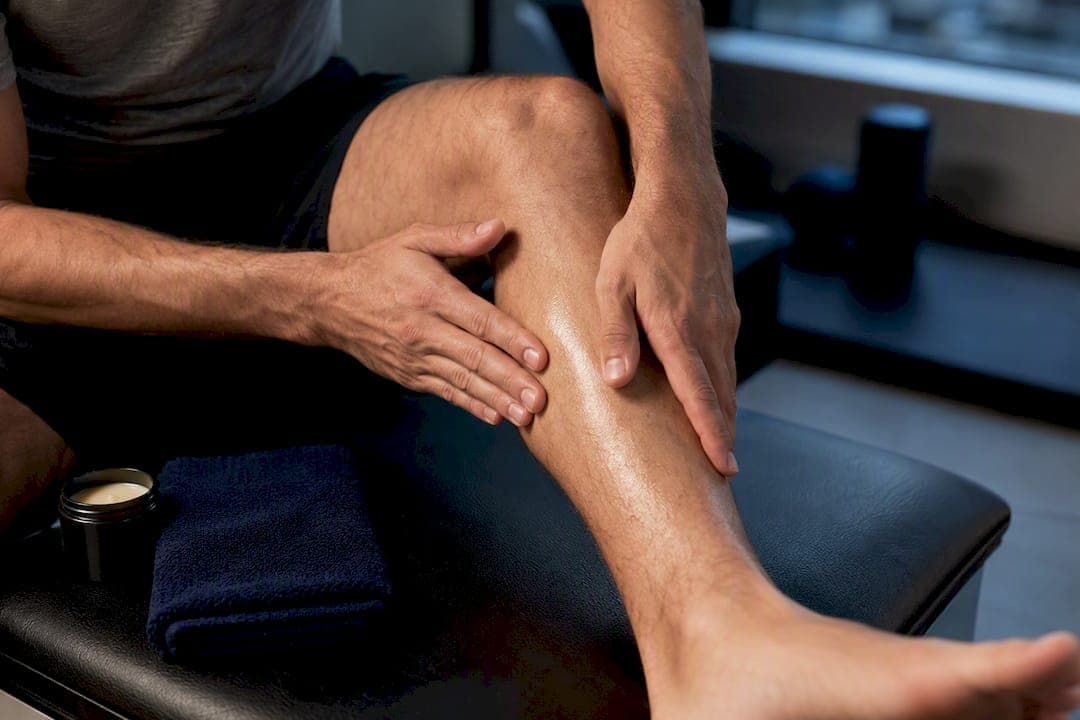
CBD shows modest, inconsistent evidence as a standalone remedy for muscle spasms, but combined THC:CBD formulas have stronger trial data for spasticity tied to conditions like multiple sclerosis. The FDA has not approved CBD for muscle spasms in any form. Topical CBD may ease localized soreness and tension, though systemic oral or inhaled approaches show mixed results depending on the trial.
TL;DR:
- CBD alone has limited, inconsistent evidence for muscle spasm relief, especially outside neurological conditions like multiple sclerosis.
- Trials show stronger results for THC:CBD formulations, such as nabiximols, in reducing MS-related spasticity, with some subjective improvement reported.
- Topical CBD may help localized soreness through counterirritant effects, but systemic oral or inhaled products often show mixed or delayed results.
- CBD's primary mechanisms involve anti-inflammatory and nerve modulation effects, not immediate muscle relaxation, making expectations realistic.
- Expect slow onset and modest benefits from CBD, with targeted topicals suited for localized tension and oral products better for broader, chronic spasms.
Table of Contents
- What Causes Muscle Spasms, and How Is Spasticity Different?
- What Does the Clinical Evidence Say About Cannabinoids and Spasticity?
- How Might CBD Help With Spasms? The Likely Mechanisms
- Topical, Oral, Inhaled, or Oromucosal: Which CBD Form Fits Your Spasms?
- Is CBD Safe for Spasms? Side Effects and Drug Interactions to Know
- How to Try CBD for Muscle Spasms: A Step-by-Step Approach
- What Results Can You Realistically Expect?
- Why We Wrote This: A Grounded Take on Topical CBD
- Where a Topical Balm Fits Into Your Own Trial
- Sources
What Causes Muscle Spasms, and How Is Spasticity Different?
A muscle spasm is a sudden, involuntary contraction. An ordinary leg cramp at 2 a.m. and the muscle stiffness that comes with multiple sclerosis both fall under that umbrella, but they come from very different places in the body.
Ordinary cramps usually trace back to overuse, dehydration, or electrolyte imbalances, or nerve fibers firing when they shouldn't after a long workout or a day of standing. Spasticity is a different animal entirely. It stems from damage to the central nervous system, in conditions like multiple sclerosis, cerebral palsy, or spinal cord injury, where the brain's normal braking signal to muscles gets disrupted, leaving muscles chronically tight or prone to sudden clenching.
The distinction matters because it changes what "working" looks like:
- Exercise cramps typically respond to hydration, electrolyte correction, and stretching within minutes.
- Nocturnal cramps often relate to nerve hyperexcitability and may need magnesium or medication review.
- Spasticity is a neurological condition that rarely resolves with topical rubs alone and usually requires a coordinated treatment plan.
- Overuse-related tightness in athletes often reflects inflammation and microtrauma rather than nerve misfiring.
If you're reaching for CBD because of an occasional charley horse, you're solving a different problem than someone managing MS-related spasticity. That distinction shapes which product, dose, and expectations actually make sense.
What Does the Clinical Evidence Say About Cannabinoids and Spasticity?
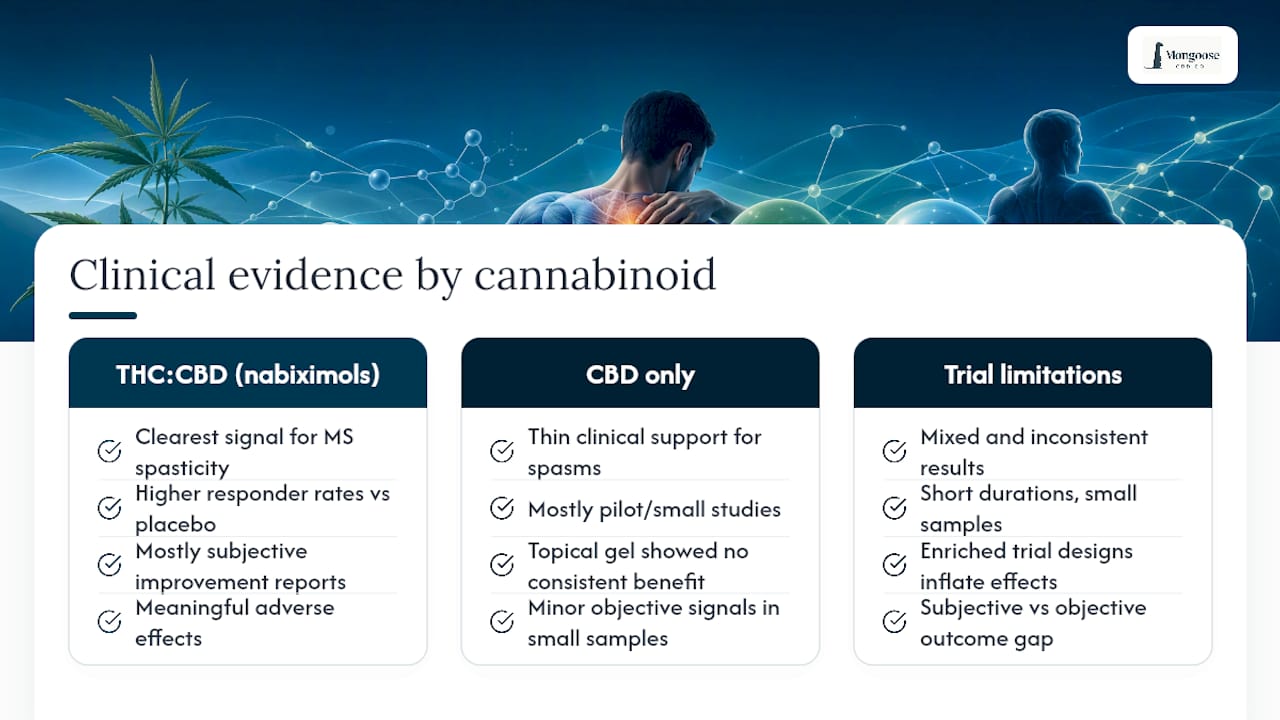
The honest answer is: it depends heavily on which cannabinoid, and which condition, you're asking about. CBD by itself has thin clinical support for spasm relief. THC combined with CBD has considerably more trial data behind it, specifically for spasticity related to multiple sclerosis, not for the garden-variety leg cramp.
A systematic review examining cannabinoids and spasmolytic activity found mixed results across the available trials. Some studies reported measurable improvements on spasticity rating scales, but the overall body of evidence is inconsistent, and much of it suffers from small sample sizes, short trial durations, and designs that enrich the study population with people already known to respond to cannabinoids. That last detail matters more than it sounds. An "enriched" trial design pre-selects participants who showed benefit during an open-label run-in phase, then randomizes only those responders to the placebo-controlled portion. It's a legitimate research method, but it tends to inflate how effective a treatment looks compared to the general population.
The clearest signal in the data comes from nabiximols, an oromucosal THC:CBD spray. Trials of this combined-cannabinoid spray reported higher responder rates for MS-related spasticity compared with placebo, according to research evaluating its efficacy and effectiveness. Responders in these trials generally reported subjective improvement, meaning they felt looser or less clenched, more often than objective measurement tools captured a change. That gap between how people feel and what a clinical scale registers shows up repeatedly in this research, and it's worth remembering that a subjective sense of relief is real to the person experiencing it, even when a rating scale barely moves. Adverse effects and discontinuation rates in these trials weren't trivial either. Dizziness, fatigue, and dry mouth pushed a meaningful share of participants to stop treatment before the trial ended.
CBD-only evidence for spasm relief is far sparser. Most of what exists comes from smaller pilot studies or extrapolation from CBD's broader anti-inflammatory research, not from dedicated spasticity trials isolating CBD as the sole active compound. A randomized, double-blind pilot study on topical CBD gel tested it against objective muscle-recovery markers after exercise and found no consistent benefit, though isometric torque showed small improvements in a limited sample. That's a useful data point for anyone hoping a CBD-only balm will function like a muscle relaxant. It probably won't, at least not by the mechanisms researchers have measured so far.
Some reviewers go further and argue that where cannabinoids do show a spasmolytic effect, it may reflect a general central nervous system depressant action rather than a targeted mechanism aimed at the spastic muscle itself, according to research on cannabinoids in multiple sclerosis spasticity management. In plain terms: the muscle might relax because the whole system is a bit sedated, not because CBD found the specific nerve pathway causing the spasm and switched it off.
None of this means CBD does nothing. It means the evidence is strongest for combined THC:CBD products in a specific neurological condition, and considerably weaker for CBD alone across the range of muscle spasm complaints most people actually search for.
How Might CBD Help With Spasms? The Likely Mechanisms
CBD almost certainly isn't acting like a prescription muscle relaxant such as baclofen or a benzodiazepine, which work by directly dampening nerve signaling at specific receptor sites. Its influence looks more indirect, and understanding that difference sets realistic expectations before you spend money on a product.
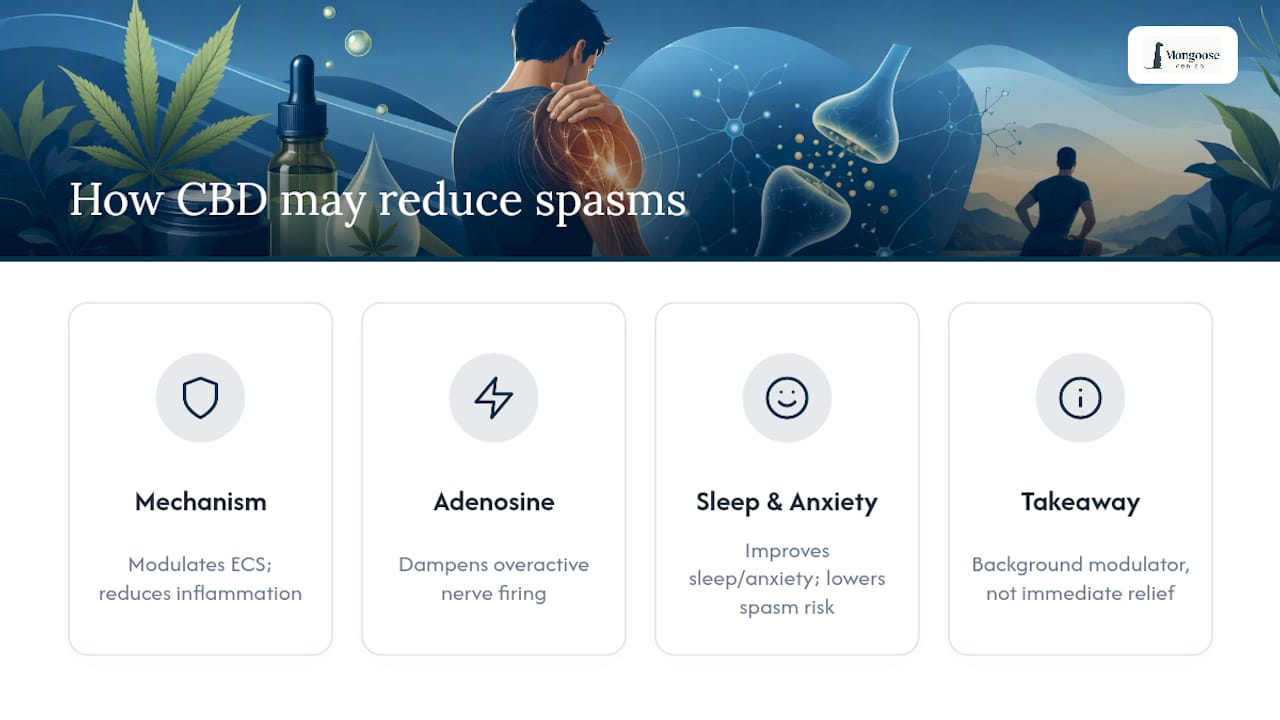
Research describes CBD as primarily an anti-inflammatory and modulator of the endocannabinoid system rather than a direct spasmolytic agent, according to a mechanistic review of its ECS-modulating actions. The endocannabinoid system helps regulate pain signaling, inflammation, and nerve excitability throughout the body. When CBD interacts with that system, along with adenosine receptors involved in dampening overactive nerve firing, the plausible result is reduced inflammation and calmer nerve activity, which can translate into fewer or milder spasms over time rather than an immediate mechanical release of a tight muscle.
There's also an indirect pathway worth taking seriously: sleep and anxiety. Poor sleep and chronic stress both tend to worsen muscle tension and lower the threshold for cramping. If CBD helps someone sleep more soundly or feel less anxious, spasm frequency may drop as a side effect of that improvement, not because CBD touched the muscle fiber directly. A Harvard Health review of CBD and pain management describes this modest, early-stage evidence picture accurately: some benefit is plausible through anti-inflammatory action, but the research on CBD alone remains thin and mixed.
The practical takeaway: expect CBD to behave more like a background modulator than an on-demand release valve. If you're picturing something that grabs a locked-up calf muscle and switches it off in seconds, that's a job better suited to stretching, hydration, or, in clinical settings, prescription antispasmodics.
Topical, Oral, Inhaled, or Oromucosal: Which CBD Form Fits Your Spasms?
Product form changes both how fast CBD reaches the affected tissue and how much of it actually gets absorbed. Here's how the main delivery routes compare for spasm-related use.
Topical balms and creams apply CBD directly to the skin over the affected muscle. Absorption stays largely local, so you're not getting meaningful blood-level CBD, but that's not necessarily a downside if your goal is targeted relief for a tight calf or sore lower back. A pilot study on topical CBD gel for post-exercise recovery found no strong benefit on objective recovery markers, though small effects on strength output appeared in some participants. Much of the felt relief from topicals likely comes from counterirritant ingredients like menthol or eucalyptus working alongside the CBD, not CBD in isolation.
Oral capsules and tinctures offer systemic exposure but come with a catch: oral CBD has notoriously low and variable bioavailability depending on formulation, and onset typically takes one to two hours with effects building over days of consistent use rather than delivering instant relief.
Sublingual drops held under the tongue absorb somewhat faster than swallowed capsules because some CBD enters the bloodstream through tissue in the mouth before hitting the digestive tract.
Inhaled and oromucosal sprays produce the fastest systemic onset, sometimes within minutes. This is the delivery method behind most of the meaningful THC:CBD spasticity trial data, though those products combine THC and CBD together rather than using CBD alone.
Here's how a sensible trial might look for someone starting out:
- Start with the lowest labeled dose on the product for three to five days before increasing.
- Give oral or sublingual products at least two weeks before judging whether they're doing anything.
- Reserve topicals for localized tension and reapply as needed rather than expecting all-day systemic coverage.
- Check every product for a third-party lab report before buying.
Pro Tip: Keep a simple notebook of when you applied CBD, how much, and what you noticed over the following 24 hours. Patterns that feel obvious in the moment often disappear by day ten unless you write them down.
Is CBD Safe for Spasms? Side Effects and Drug Interactions to Know
CBD is generally well tolerated, but "well tolerated" doesn't mean "risk free," especially once you factor in what else you're taking. Reported side effects from CBD-only products tend to be mild: fatigue, dry mouth, diarrhea, and appetite changes show up most often. Rates of adverse effects climb noticeably higher in THC-containing preparations, where dizziness, mood changes, and cognitive fog become more common alongside the higher discontinuation rates seen in nabiximols trials.
The interaction risk deserves more attention than most product labels give it. CBD is metabolized by the same liver enzyme family, cytochrome P450, that processes a long list of common medications. That creates real potential for interaction with:
- Benzodiazepines, where CBD may increase sedation.
- Muscle relaxants like cyclobenzaprine or tizanidine, raising the risk of excess drowsiness.
- Blood thinners, since CBD can alter how quickly the liver clears certain anticoagulants.
- Anti-seizure medications, which share metabolic pathways with CBD.
The FDA has not approved CBD oil for treatment of chronic pain or muscle spasms, according to its own guidance on regulation of cannabis and cannabis-derived products. Its only approved cannabidiol use remains a specific set of childhood epilepsy syndromes. That regulatory gap also means product quality varies widely, since labeling accuracy isn't consistently enforced across the CBD market the way it is for FDA-approved drugs.
One more caution specific to this audience: athletes or anyone subject to drug testing should be careful with full-spectrum or broad-spectrum products. Trace THC in those formulations can accumulate with regular use and trigger a positive drug screen, according to research on CBD product composition and testing risk. If drug testing is a concern, a THC-free, isolate-based product with a verified lab report is the safer choice.
How to Try CBD for Muscle Spasms: A Step-by-Step Approach
If you want to test whether CBD does anything for your particular spasms, treat it like a small personal experiment rather than a leap of faith. Here's a workable sequence.
- Define the target. Are you trying to reduce the frequency of nighttime calf cramps, ease chronic spasticity, or calm post-workout muscle tightness? Each goal points toward a different product form.
- Pick the delivery method that matches the goal. Localized soreness favors a topical balm; broader, recurring spasm patterns may call for an oral or sublingual product tried consistently over weeks.
- Vet the product before buying. Look for a current third-party Certificate of Analysis, clear labeling of CBD and THC content per serving, and a full ingredient list with no vague "proprietary blend" language.
- Start low. Use the lowest suggested serving for the first several days and note any side effects before increasing.
- Commit to a real trial window. Two to six weeks is a reasonable minimum for oral or sublingual products; topicals can be judged faster, often within days of consistent use for localized tension.
- Track outcomes, not just impressions. Log spasm frequency, intensity, sleep quality, and any side effects so you're comparing data, not vague memory, at the end of the trial.
- Know when to loop in a clinician. New neurological symptoms, spasms that worsen despite treatment, or any medication you're already taking for spasticity or muscle relaxation are all reasons to talk to a doctor before adding CBD.
Pro Tip: If you're on a prescription muscle relaxant already, don't stop or adjust it because you started CBD. Bring your tracking log to your next appointment and let your clinician decide whether anything should change.
What Results Can You Realistically Expect?
Timelines vary a lot depending on delivery method and what you're treating. Topical balms tend to produce a noticeable local sensation, warmth, cooling, or looseness, within 15 to 30 minutes, though that's largely the counterirritant ingredients at work alongside the CBD. Systemic effects from oral or sublingual products build more slowly, often requiring days to a few weeks of consistent use before any pattern in spasm frequency becomes clear.
Magnitude matters as much as timing. Most people should expect a modest effect at best, not a dramatic one. The clearest documented benefit shows up in select multiple sclerosis spasticity trials using combined THC:CBD sprays, where a meaningful subset of participants responded well. Everyday exercise cramps or tension-related spasms sit on much shakier evidential ground, and a CBD product is far more likely to feel like one helpful piece of a broader routine than a standalone fix.
Why We Wrote This: A Grounded Take on Topical CBD
We built this piece around what the trial data actually shows, not around what's convenient to sell. That distinction matters at Mongoosecbd, where our own catalog is built around topical balms designed for muscle recovery, not oral drops promising systemic cures.
Our position is straightforward: topical CBD fits best as one tool in an evidence-aware plan, alongside stretching, hydration, and a clinician's input for anything neurological. We'd rather a reader understand the real limits of the research on CBD for muscle knots than buy a product expecting a cure it was never shown to deliver.
— Cindy
Where a Topical Balm Fits Into Your Own Trial
If localized tightness or soreness is the problem you're actually trying to solve, not neurological spasticity, a topical balm is a reasonable, low-risk place to start your trial. Their balms use CBD alongside arnica, menthol, turmeric, and eucalyptus, ingredients chosen to work together on the skin rather than relying on CBD alone.
Apply a small amount directly to the sore area two to three times daily and watch for warmth, cooling, and gradual loosening over the following days, the kind of localized response topical CBD research on exercise recovery has actually studied, rather than a claim about curing spasticity or replacing prescribed muscle relaxants. The Seriously Soothing Pain Balm in Cinnamon & Clove works well for general muscle and joint tension, while Rikki Tikki Recovery is formulated specifically for post-activity recovery. Every order comes with a 30-day refund window, so trying one costs you nothing but the trial itself. Pick the balm that matches your situation and give it a real two-week test on the muscle that's actually bothering you.
Sources
- FDA — Regulation of Cannabis and Cannabis-Derived Products, Including Cannabidiol (CBD)
- Meta-analysis and review on cannabinoids and spasmolytic activity (Biomolecules review)
This article is general information, not a substitute for advice from a qualified doctor. Consult a qualified healthcare professional about your own circumstances before acting on anything here.