
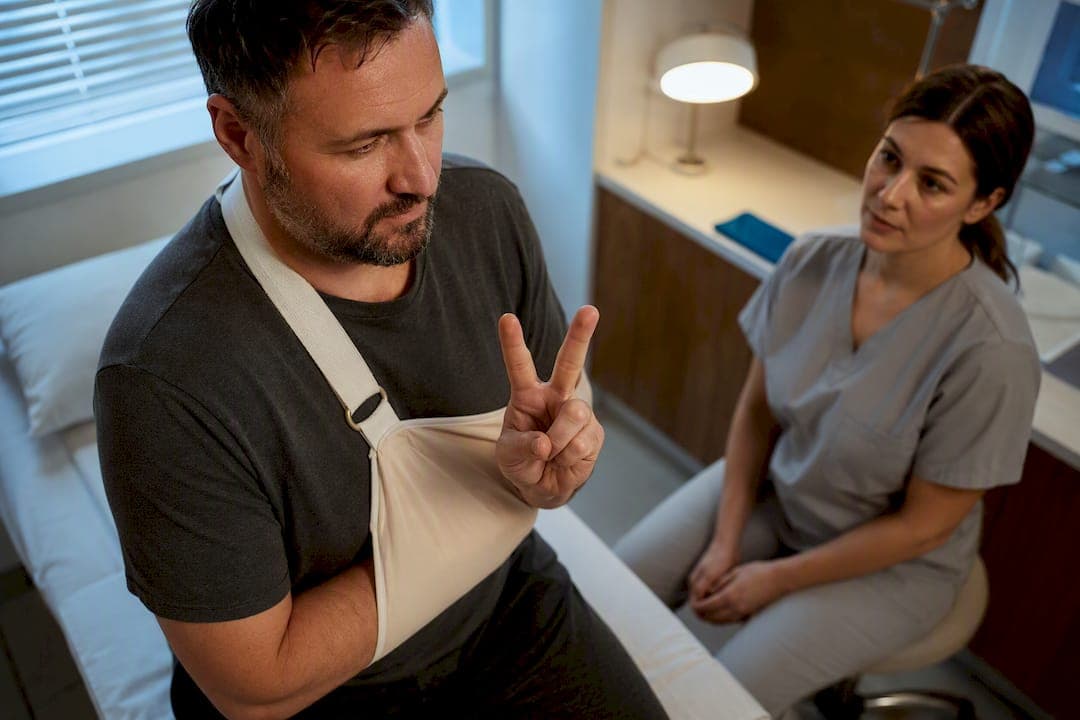
Randomized trials show that CBD can meaningfully lower shoulder pain on Day 1 after rotator cuff repair, with patients on systemic CBD reporting less pain and higher satisfaction than those on placebo. That advantage does not hold up over time. By one year, pain scores, shoulder function, and satisfaction look essentially identical between CBD and placebo groups. The honest takeaway: CBD works as a short-term addition to standard post-surgical pain control, not a long-term fix, and it should never replace physical therapy.
TL;DR:
- CBD provides a meaningful reduction in shoulder pain on Day 1 after rotator cuff surgery, but the effect does not last beyond the first 48 hours.
- Most clinical trials use weight-based, systemic dosing (25-50mg three times daily) with buccal tablets, unlike typical retail products which are usually topical with unstandardized CBD amounts.
- Short-term CBD appears safe when used over two weeks in controlled settings but interacts with liver enzymes, potentially affecting medications like blood thinners or opioids.
- By one year after surgery, patients on CBD and placebo report similar pain levels, shoulder function, and satisfaction, indicating no long-term benefit.
- CBD should be considered an adjunct for acute pain relief, not a substitute for physical therapy or long-term healing, and the best results come from guided, short-course use.
Table of Contents
- What Does the Clinical Trial Evidence Show for CBD and Rotator Cuff Pain?
- How Are the Trial Doses Different From Store-Bought CBD Products?
- Is CBD Safe to Use With Rotator Cuff Medications?
- When Is CBD Actually Worth Trying for Shoulder Pain?
- Does CBD Help With Rotator Cuff Rehab, or Just Mask the Pain?
- Our Take on CBD's Role in Shoulder Recovery
- A Practical Next Step for Localized Shoulder Soreness
- Sources
What Does the Clinical Trial Evidence Show for CBD and Rotator Cuff Pain?
The strongest data on CBD for rotator cuff pain comes from a handful of placebo-controlled, double-blinded randomized trials run around arthroscopic rotator cuff repair, the surgery used to reattach a torn tendon to the shoulder bone. These aren't survey studies or brand-sponsored write-ups. They're FDA-sanctioned trials with a placebo arm, blinding, and predefined pain endpoints, which is a different tier of evidence than most CBD claims you'll find online.
The headline finding is consistent across studies: patients given CBD reported significantly lower pain on the first day after surgery. In one placebo-controlled trial, Day 1 VAS pain scores (a 0 to 10 self-reported pain scale) came in around 4.1 to 4.4 for the CBD group versus 5.7 to 6.0 for placebo, a gap with a p-value under 0.05, meaning it's unlikely to be chance. Patients also reported higher satisfaction with their pain control in that early window.
That last point matters as much as the first one. A separate multicenter randomized trial found the same pattern: lower pain and better satisfaction immediately after surgery, using buccal tablets (dissolved against the cheek lining rather than swallowed) dosed at weight-based amounts three times daily based on body weight. No significant liver function test abnormalities showed up at the Day 7 or Day 14 checkpoints, which is a reasonable safety signal for a two-week course, though it doesn't tell us much about longer use.
The one-year data is where the picture gets less exciting for anyone hoping CBD speeds up healing. A follow-up study tracking the same patient cohorts found no statistically significant differences in VAS pain, ASES scores (a standard shoulder function questionnaire), or SANE scores (a single-number "normal shoulder" self-rating) between the CBD and placebo groups. Pain scores at one year sat around 0.8 for the CBD group versus 1.2 for placebo, with a P value of .38, well above the threshold for significance. A related conference poster reached the same conclusion: no functional deficits at one year, but also no measurable long-term advantage.
Here's what that combination of findings actually tells you:
- Early, systemically dosed CBD appears to genuinely blunt the worst of Day 1 post-surgical pain and offers a range of benefits on body and mind.
- That effect fades fast. Most trials show no significant difference by Day 2.
- One year out, CBD and placebo patients report the same pain, function, and satisfaction.
- CBD didn't cause harm in these trials, but it also didn't accelerate healing or improve long-term outcomes.
Research on this is still expanding. Clinicaltrials testing formulations like Epidiolex at doses such as 150mg twice daily for two weeks after shoulder surgery, so the dosing and formulation questions aren't fully settled yet. What's already clear is that the benefit window is narrow and front-loaded.
How Are the Trial Doses Different From Store-Bought CBD Products?
The CBD used in these rotator cuff studies looks nothing like what's sitting on a typical CBD retail shelf, and that distinction matters if you're trying to translate trial results into a real decision.
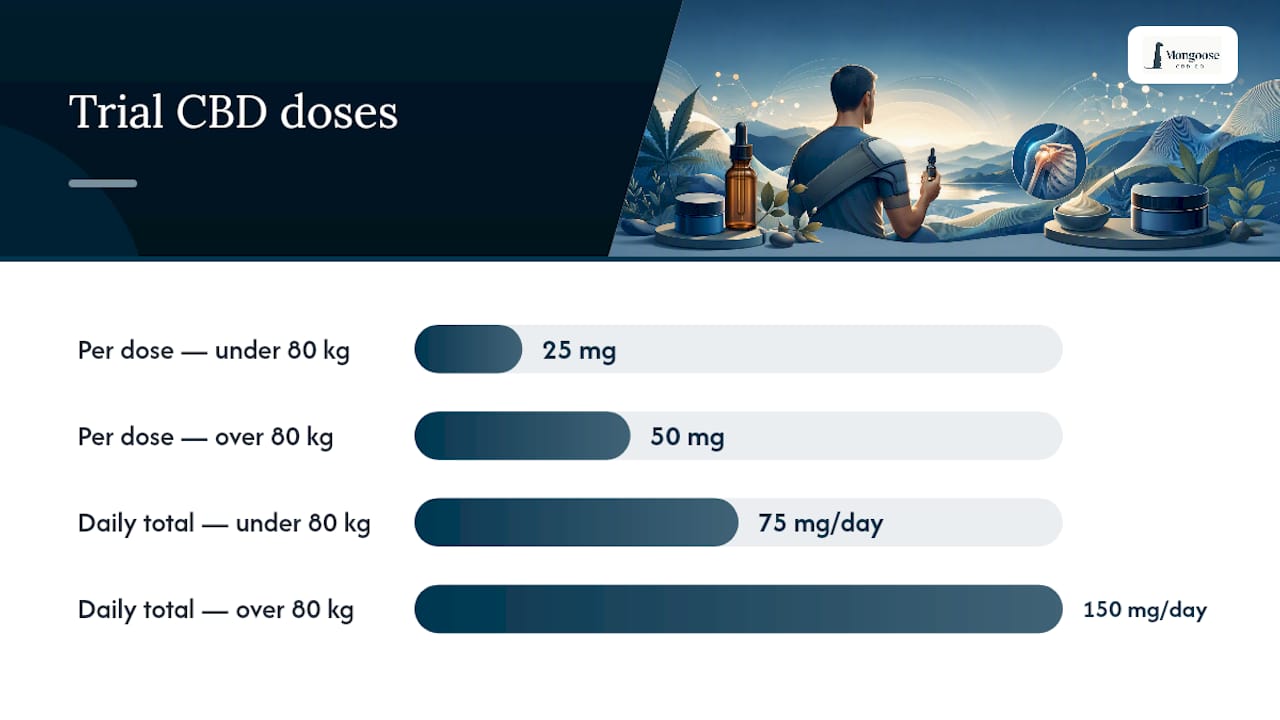
Trial protocols used weight-based, oral or buccal dosing: 25mg three times daily for patients under 80kg, and 50mg three times daily for those over 80kg, typically for a 14-day course. That's a precise, calibrated regimen designed to hit a measurable blood concentration of CBD, and researchers chose weight-based dosing because body mass affects how a drug distributes and clears, the same logic used for many prescription medications. Some trials also tested higher doses in subgroup comparisons and found that patients on 50mg TID reported somewhat better Day 1 pain reduction than those on 25mg, suggesting the effect may be dose-dependent rather than a flat CBD "on/off" switch.
Buccal absorption, where the tablet dissolves against the inner cheek, lets CBD enter the bloodstream faster than swallowing it, and it skips some of the liver's first-pass breakdown that happens with standard oral capsules. That's a meaningfully different delivery route than either swallowed CBD oil or a topical balm rubbed onto skin.
Here's where consumer confusion usually starts:
- A topical balm labeled "1,000mg CBD per ounce" tells you nothing about how much CBD reaches your bloodstream, because topical CBD works locally on skin and underlying tissue, not systemically.
- Trial dosing was calculated in milligrams per dose, matched to body weight. Retail topical labeling is calculated in milligrams per container, which isn't a comparable unit.
- A systemic buccal tablet dosed at 50mg TID is chasing a different physiological target (whole-body pain signaling) than a topical rubbed over a sore shoulder joint (localized inflammation and skin-level nerve endings).
If you're using an over-the-counter topical, expect localized, surface-level effects on stiffness and soreness. It isn't going to replicate what a weight-based buccal tablet did in a surgical recovery ward, and no reputable brand should claim otherwise. Comparing topical versus oral CBD absorption side by side makes the distinction easier to picture if you're deciding which format actually fits your situation.
Is CBD Safe to Use With Rotator Cuff Medications?
The trial safety data is reassuring for short courses but incomplete for anything beyond that. Researchers monitored liver function tests, since CBD is processed through the liver, and the multicenter randomized trial reported no significant LFT abnormalities at the Day 7 and Day 14 checkpoints. Nausea and typical postoperative side effects were tracked and didn't spike meaningfully in the CBD arms. That's a solid short-term safety signal, though it's worth remembering these were two-week, medically supervised courses, not open-ended self-directed use.
The bigger safety conversation is drug interactions, and this is where a lot of people using CBD after surgery skip a step they shouldn't. CBD is metabolized by liver enzymes in the CYP450 family, the same enzyme system responsible for breaking down a long list of common medications. That creates real interaction risk with:
- Blood thinners like warfarin, where CBD can raise blood levels of the drug and increase bleeding risk.
- Certain anticonvulsants, since CBD can alter their metabolism and blood concentration.
- Some statins, which share the same liver enzyme pathway and can build up to higher levels when combined with CBD.
- Opioid pain medications commonly prescribed after shoulder surgery, where combined sedative effects need monitoring.
People who should talk to a doctor before starting CBD, not after, include anyone with existing liver disease, anyone pregnant or breastfeeding, and anyone already on a medication metabolized through the liver. This isn't a "natural means automatically safe" situation. Clinical teams running these trials checked liver function specifically because higher-dose systemic CBD isn't risk-free, even though it performed well in supervised settings.
Pro Tip: Bring your full medication list, including over-the-counter supplements, to your surgeon or pharmacist before starting any CBD product, systemic or topical. A five-minute interaction check is a lot cheaper than an unplanned liver panel.
Practical monitoring is straightforward: ask your surgical team whether CBD makes sense alongside your current prescriptions, and if you're taking a systemic product for more than a couple of weeks, ask whether a baseline and follow-up liver function test is reasonable. That mirrors exactly what the trial protocols did.
When Is CBD Actually Worth Trying for Shoulder Pain?
Timing is the single biggest factor separating a reasonable use of CBD from an unrealistic one. The trial evidence points to a narrow but real window: the first 24 to 48 hours after arthroscopic rotator cuff repair, when systemic, weight-based CBD dosing showed a genuine pain advantage over placebo. Outside that window, especially for chronic rotator cuff strain or tendonitis without surgery, the trial evidence simply doesn't extend that far yet.
Here's a practical sequence if you're considering CBD around a rotator cuff injury or repair:
- Talk to your surgeon before your procedure, not after. If systemic CBD (buccal tablets, prescription-grade formulations) interests you, this needs to be part of your pre-op pain management plan, not a decision made solo in a pharmacy aisle.
- Don't substitute CBD for prescribed pain medication without guidance. The trials used CBD alongside standard care, not instead of it.
- If you're using a topical balm for shoulder soreness, treat it as symptomatic, localized relief for muscle tightness and surface discomfort, not a substitute for the systemic pain control used in trials.
- Mirror trial durations if you try a systemic product. A 14-day course matches what was actually studied. Open-ended, months-long use hasn't been tested to the same standard.
- Track your own response honestly. If a topical isn't noticeably reducing stiffness or soreness within a week or two of consistent use, it's reasonable to stop and reassess rather than assume more time will fix it.
Realistic expectations matter here. If you're recovering from a rotator cuff repair and hoping systemic CBD will shorten your overall recovery timeline or improve your one-year function, the current data doesn't support that. What it supports is a modest, short-lived reduction in the sharpest early pain, which for some patients is enough to matter during the roughest 24 hours. If you're dealing with chronic shoulder strain or tendonitis rather than a surgical recovery, topical application for localized soreness is the better-supported use case, since it's working on a different problem than what the surgical trials tested.
Does CBD Help With Rotator Cuff Rehab, or Just Mask the Pain?
Physical therapy is what actually restores shoulder function after a rotator cuff injury or repair. No trial on CBD, at any dose or formulation, has shown it improves range of motion, strength, or tendon healing on its own. Orthopedic researchers are consistent on this point: CBD belongs in a multimodal pain management plan alongside rehab, not as a substitute for it.
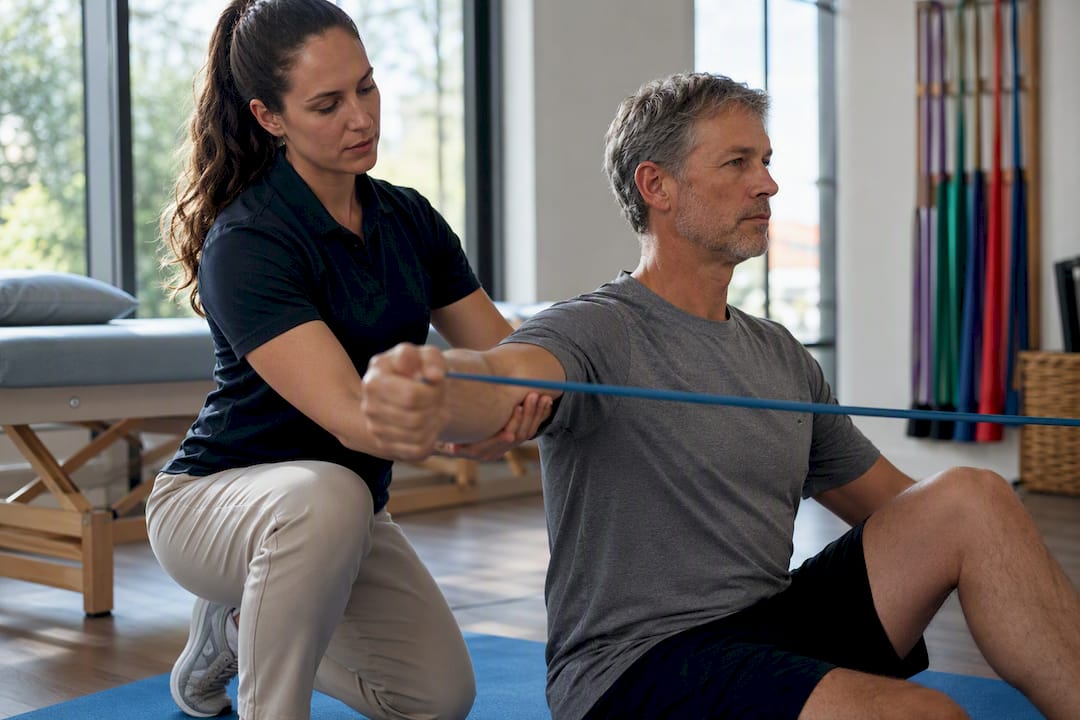
Where CBD may earn a real place is comfort during the hardest early rehab sessions. If reduced Day 1 pain means a patient can tolerate their first passive range-of-motion exercises with less dread, that's a legitimate, if indirect, contribution to recovery. It's a supporting role, not a starring one.
Certain symptoms after rotator cuff surgery or injury need a clinician's eyes, not a CBD adjustment. Watch for:
- Fever or chills, which can signal infection.
- Sudden, worsening swelling around the shoulder or incision.
- A sharp increase in pain that doesn't match your expected recovery timeline.
- Numbness, tingling, or weakness spreading down the arm.
- Any drainage, redness, or odor at a surgical wound site.
Before discussing CBD with a provider, bring a current medication list, note any history of liver disease, and have a specific dosing plan in mind rather than a vague "should I try CBD" question. That focused conversation gets you a more useful answer.
Our Take on CBD's Role in Shoulder Recovery
Mongoosecbd built its topical balms, including Seriously Soothing Pain Balm and Rikki Tikki Recovery, around one honest premise: localized relief for sore muscles and joints, backed by a 30-day refund policy if a product doesn't deliver for you. That's a different category from the buccal tablets used in surgical trials, and we're not going to blur that line to sell a jar of balm. Systemic, weight-based CBD showed real Day 1 benefit in clinical settings; our topical formulas are built for the everyday ache that trial doesn't cover.
— Cindy
A Practical Next Step for Localized Shoulder Soreness
If a systemic, trial-style CBD regimen isn't part of your recovery plan, or your soreness is more of the everyday tightness variety than a fresh surgical repair, a topical approach solves a different problem well: it goes directly on the sore spot, works fast, and skips the systemic drug interaction questions entirely.
Mongoosecbd's Seriously Soothing Pain Balm uses 1,000mg of CBD per ounce blended with arnica, menthol, turmeric, and eucalyptus, ingredients chosen for localized muscle and joint discomfort rather than systemic pain control. It's vegan, THC-free, and made without parabens, and it's meant to sit alongside your physical therapy routine, not replace anything your surgeon prescribed. For post-workout shoulder tightness or recovery days between rehab sessions, the Rikki Tikki Recovery balm is formulated specifically for that muscle-recovery window. Every order carries a 30-day refund policy, so trying it costs you nothing if it doesn't work for your shoulder. Order a balm today and see how it fits into your recovery routine this week.