
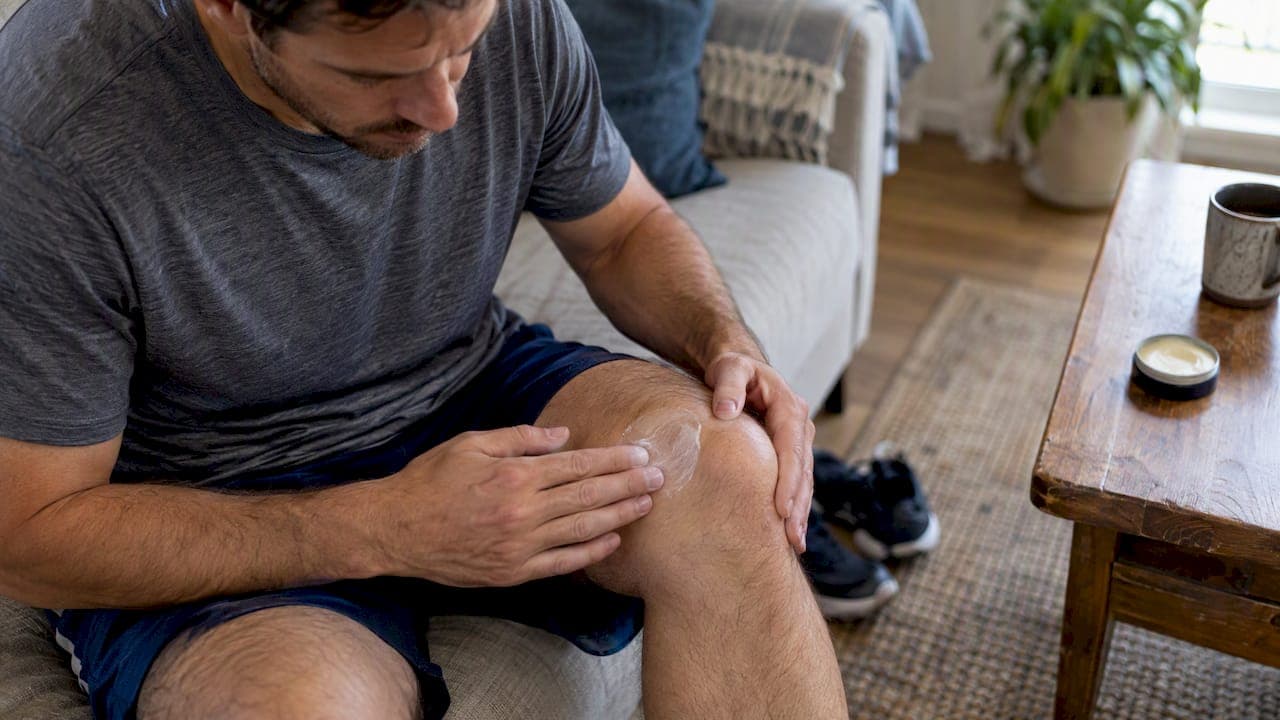
Current evidence does not show that CBD reliably reduces meniscus pain, though a short topical trial is a reasonable, low-risk option to try alongside standard care. High-dose oral CBD has not outperformed placebo in knee osteoarthritis trials and carries more safety concerns than topical use. Continue RICE, NSAIDs, and physical therapy as prescribed, and if you want to try CBD, consider a 2 to 6 week topical trial while tracking your symptoms.
TL;DR:
- No randomized trial has tested CBD for meniscus tears; osteoarthritis findings are only an indirect proxy because these injuries involve different tissue and mechanics.
- A randomized trial found no significant pain advantage after 600 mg of oral CBD daily for eight weeks among 86 people with knee osteoarthritis.
- If testing a balm, patch test first, apply as directed twice daily for 2–6 weeks, and log daily pain, function, and pain medicine use.
- After four weeks of oral CBD, 5.6% of participants had ALT levels above three times the upper limit of normal; warfarin and some antidepressants may interact.
- Diclofenac gels have more direct clinical support for localized joint pain than CBD balms, while locking, catching, or instability warrant clinical assessment.
Table of Contents
- What clinical trials and studies say about CBD for knee and joint pain
- How CBD might affect pain and inflammation, and why that doesn't guarantee results
- Choosing a route: topical balm vs oral CBD for knee pain
- Safety first: liver risk, drug interactions, and who needs medical supervision
- A conservative 2 to 6 week topical CBD trial for meniscus-related knee pain
- Publisher's experience and case studies: trials we've run and what our products contain
- How CBD balms compare with other topical analgesics for meniscus pain
- What people report after trying CBD balm for meniscus pain
- Fitting CBD balm into your post-exercise recovery routine
- When to apply CBD balm relative to physical therapy or activity
- Where the real priorities lie with CBD and meniscus pain
- Consider a short trial with Seriously Soothing Pain Balm or RIKKI TIKKI Recovery
- FAQ
- Sources
What clinical trials and studies say about CBD for knee and joint pain
The clinical record on CBD and joint pain is more limited than marketing suggests. The best available trials point to one consistent finding: oral CBD, even at meaningful doses, has not separated from placebo in knee osteoarthritis.
A randomized trial on PubMed gave 86 patients with symptomatic knee osteoarthritis either 600 mg per day of oral CBD or placebo for eight weeks. There was no statistically significant difference in WOMAC pain scores between groups, and lower-dose trials in the same body of research showed similarly flat results. A separate CANOA trial published in Frontiers tested a CBD-rich cannabis oil at 45 mg per day over 60 days in knee osteoarthritis patients and again found no superiority over placebo, though the oil was well tolerated.
Topical CBD tells a somewhat different story, though the evidence base is thinner. A study in the Journal of Cannabis Research looked at topical CBD in people with a history of elite athletic performance and reported good tolerability, with some pilot and open-label studies noting self-reported pain reduction in small cohorts.
Three things matter here:
- Oral CBD trials in knee osteoarthritis have consistently failed to beat placebo at the doses tested.
- Topical CBD pilot studies show tolerability and occasional symptom improvement, but sample sizes are small and results are mixed.
- No published randomized trial has tested CBD specifically in meniscus tears, so the osteoarthritis data is the closest available proxy, not a direct answer.
Meniscus tears involve different tissue, mechanical loading, and injury patterns than degenerative osteoarthritis, so applying OA trial results to meniscal pain is an extrapolation, not a confirmed effect.
How CBD might affect pain and inflammation, and why that doesn't guarantee results
CBD's proposed effects on pain rest on interactions with several receptor systems, though the clinical payoff of this biology is still unproven for joint injuries specifically.
- CBD interacts weakly with CB1 and CB2 cannabinoid receptors, which are involved in modulating pain signaling and inflammatory responses.
- It also affects TRPV1 channels, which play a role in how sensory neurons detect heat and irritation, and 5-HT1A serotonin receptors, linked to pain perception and mood.
- These interactions feed a hypothesis that CBD can dampen local inflammatory signaling, which is plausible but not the same as a demonstrated clinical outcome.
Topical application aims to act locally, delivering CBD to skin and underlying tissue near the joint without much entering the bloodstream. Oral dosing works the opposite way: it produces higher systemic exposure, which raises both the theoretical chance of a body-wide effect and the practical risk profile.
Mechanism-level plausibility is a reason to investigate CBD, not a reason to expect it will work. The CB1, CB2, and TRPV1 pathways exist and respond to CBD in laboratory and animal studies, but a receptor interaction is not a clinical outcome, and knee osteoarthritis trials have shown that gap directly.
Choosing a route: topical balm vs oral CBD for knee pain
For meniscus-related pain, the choice between topical and oral CBD comes down to where you want the effect and how much systemic exposure you are willing to accept.
- Topical products stay largely local, which lowers systemic absorption and is why small trials have found them generally well tolerated.
- Oral CBD produces far higher blood levels and has not shown a clear benefit over placebo in knee osteoarthritis trials at tested doses.
- Topical penetration to deeper joint structures is uncertain. A balm applied to skin over the knee may not meaningfully reach the meniscus itself, even if it helps with surface-level or muscular discomfort around the joint.
Formulation matters too. Isolate products contain only CBD, while broad-spectrum and full-spectrum products include other plant compounds; full-spectrum options may contain trace THC. Many people managing pain, especially athletes subject to drug testing, prefer THC-free labeling for that reason.
Pro Tip: Check for a third-party lab certificate of analysis (COA) before buying any topical CBD product, so you know the actual CBD amount per ounce matches the label.
Quality signals worth checking before you buy anything:
- A current, product-specific COA from an independent lab.
- Clear CBD milligram content per ounce or per container.
- A full ingredient list with no unlisted fillers or contaminants.
Safety first: liver risk, drug interactions, and who needs medical supervision
Safety data on CBD is more concrete than the pain-relief data, and it points mainly at oral, higher-dose use rather than topical application.
In a randomized trial reviewed by FDA/CDER investigators, 5.6% of CBD-treated participants had ALT elevations greater than three times the upper limit of normal after four weeks, a marker of liver stress. That trial used oral CBD, and the finding is a central reason oral, high-dose use warrants more caution than topical application.
Steps worth taking before starting any CBD product, oral or topical:
- Tell your prescriber or pharmacist you plan to use CBD, especially if you take warfarin, certain antidepressants, or other medications metabolized by liver enzymes in the CYP450 family, since CBD can affect how those drugs are processed.
- Avoid high-dose oral CBD without medical supervision, given the liver enzyme signal seen in trial data.
- Stop use and seek medical care if you notice yellowing skin or eyes, unusual fatigue, dark urine, or abdominal pain, all possible signs of liver irritation.
- Mention CBD use at any upcoming blood work, since it can occasionally affect liver function test results.
Common side effects reported with oral CBD include tiredness, diarrhea, and appetite changes. Topical products are generally associated with milder, localized reactions like skin irritation.
People who are pregnant or breastfeeding, those with existing liver disease, and older adults on multiple medications should talk with a clinician before using CBD in any form, given the limited safety data in these groups.
A conservative 2 to 6 week topical CBD trial for meniscus-related knee pain
If you want to test whether a topical CBD balm helps your meniscus pain, a short, structured trial gives you something more useful than a vague impression.
- Patch-test a small amount of the product on your forearm and wait 24 hours, checking for redness, itching, or irritation before applying it to your knee.
- Apply a thin layer to the area of maximal pain twice daily, following the product's own instructions for amount and frequency.
- Commit to at least 2 weeks, ideally 4 to 6 weeks, since short, isolated uses rarely reveal a real pattern.
- Track a daily pain rating on a 0 to 10 scale, note any change in function (stairs, walking distance, kneeling), and log any reduction in NSAID or other analgesic use.
- Review your notes at the end of the trial period to see whether pain, function, or medication use moved in a meaningful direction.
Before buying, confirm the product has a current COA, states its CBD potency per ounce, carries THC-free labeling if that matters to you, and lists its full ingredients. A sample size option lets you test fit before committing to a full tin.
Pro Tip: Stop the trial and see a clinician if you notice new swelling, locking, catching, or a feeling of instability in the knee, since those are mechanical symptoms that a topical product cannot address.
Publisher's experience and case studies: trials we've run and what our products contain
We have run several in-house topical trials that shaped the protocol above, including a 2 to 6 week trial for Achilles pain, a two-week trial for bursitis, and a 4 to 6 week IT band syndrome trial.
- Our balms contain a high concentration of CBD per ounce plus botanical additives like arnica, menthol, turmeric, and eucalyptus.
- We formulate every product without animal-derived ingredients, genetically modified organisms, parabens or THC, and test batches through third-party labs.
- We back every purchase with a refund policy, which is how we built the sample-size options referenced in the trial protocol above.
This approach directly informed the 2 to 6 week structure we recommend for a personal topical trial.
How CBD balms compare with other topical analgesics for meniscus pain
CBD balms sit alongside several other topical options people use for meniscus-related discomfort, and each works through a different mechanism. Menthol-based rubs create a cooling sensation that can distract from pain signals but offers no anti-inflammatory action. Capsaicin creams desensitize nerve endings over repeated use, which can help with chronic discomfort but often causes a burning sensation during the adjustment period. NSAID gels like diclofenac deliver a topical anti-inflammatory directly to the skin and have more direct clinical support for localized joint pain than CBD currently does.
CBD-based balms typically combine CBD with some of these same complementary ingredients, pairing CBD with arnica, menthol, or capsaicin-adjacent warming agents like cayenne pepper and ginger in a single formulation. This layered approach means a CBD balm often delivers a sensory effect (cooling or warming) alongside CBD's theoretical anti-inflammatory action, rather than one isolated mechanism.
None of these topical categories, including CBD, have strong meniscus-specific trial data behind them. The practical difference for most people comes down to sensation preference and ingredient tolerance: some prefer the cooling of menthol, others the mild heat of capsaicin-adjacent botanicals, and some want to avoid the burning sensation capsaicin alone can cause. A balm that combines several of these elements, as ours does with arnica and warming spices alongside CBD, gives you more than one potential avenue for localized relief in a single application.
What people report after trying CBD balm for meniscus pain
Individual reports on topical CBD for meniscus pain vary, which matches what the small pilot studies on topical CBD show: tolerability is generally good, but symptom response is mixed and personal.
Some people using topical CBD for localized joint pain report a noticeable easing of surface discomfort and stiffness within the first one to two weeks of consistent twice-daily use. Others notice little difference beyond the standard sensory effect of ingredients like menthol or arnica, which can feel soothing on their own regardless of the CBD content.
This spread in personal outcomes is exactly why a tracked trial matters more than a single anecdote. Because meniscus tears vary widely in severity, location, and whether they involve mechanical symptoms like locking or catching, a response that works well for one person's partial tear may do nothing for someone with a different injury pattern. Logging your own pain scores and function notes over several weeks gives you a more honest answer than relying on someone else's experience, since the published pilot data itself shows outcomes differ from person to person even under similar conditions.
Fitting CBD balm into your post-exercise recovery routine
If you are managing a meniscus injury while staying active, timing a topical CBD balm around your exercise routine can make the habit easier to stick with and easier to evaluate.
Applying balm after activity, once you have finished your workout, walk, or physical therapy session, lets you pair it with routines you are already doing, like icing or stretching. Many people fold it into the same five minutes they spend on post-exercise stretching or foam rolling, which helps the habit stick through a multi-week trial.
A few practical notes for recovery routines:
- Apply after activity rather than immediately before, so you are not relying on it to mask pain during exercise itself.
- Pair it with standard RICE elements (rest, ice, compression, elevation) rather than in place of them.
- Keep your application timing consistent day to day, since that consistency is what makes your tracking data meaningful at the end of a trial period.
None of this changes the underlying evidence picture. A consistent recovery routine built around rest, ice, and physical therapy remains the foundation, with a topical balm as an optional addition layered on top rather than a substitute for any of it.
When to apply CBD balm relative to physical therapy or activity
Timing matters less for CBD balm than for an oral medication with systemic absorption, but a few practical patterns make sense for people doing physical therapy or regular activity.
Applying a thin layer after a physical therapy session, rather than right before, avoids masking sensations your therapist needs you to report accurately during exercises. Save pre-activity application for situations where you want localized comfort during daily movement, like walking or light chores, rather than during supervised rehab work where feedback on pain and range of motion matters.
For general daily activity, a twice-daily schedule, for example once in the morning and once in the evening, keeps exposure consistent without requiring you to apply the product immediately around every workout. This steadier schedule also makes it easier to judge whether the product is doing anything over the 2 to 6 week trial window, since you are not trying to separate an activity-timing effect from a genuine symptom change.
If your physical therapist has specific instructions about topical products during sessions, follow those first. Most topical CBD balms have no documented interaction with physical therapy modalities like heat, ice, or manual therapy, but your therapist knows your specific injury and treatment plan better than a general guideline can.

Where the real priorities lie with CBD and meniscus pain
The honest takeaway from the evidence is that CBD is not a proven treatment for meniscus pain, and the conventional marketing framing, that CBD is a natural anti-inflammatory that works where NSAIDs fall short, overstates what the osteoarthritis trials have actually shown.
What gets underrated in most discussions of CBD for joint pain is how much the delivery route matters for safety, not just effectiveness. The liver enzyme signal in oral CBD trials is a real finding that deserves more attention than it gets in casual recommendations, while topical use carries a much smaller systemic footprint and a cleaner safety record in small trials.
What should come first for anyone with meniscus pain is conservative, well-supported care: RICE, NSAIDs as appropriate, and physical therapy, with surgery reserved for cases involving locking, instability, or failed conservative treatment. A topical CBD trial is a reasonable add-on for people who want to try it, tracked honestly over several weeks, never a replacement for that foundation or a reason to delay seeing a clinician about mechanical symptoms.
— Cindy
Consider a short trial with Seriously Soothing Pain Balm or RIKKI TIKKI Recovery
If the trial protocol above sounds worth trying, our Seriously Soothing Pain Balm and RIKKI TIKKI Recovery formulations fit that 2 to 6 week structure directly: 1,000mg of CBD per ounce, THC-free, and built with arnica, menthol, and warming botanicals for localized application. Orders are backed by a refund policy, so starting with a single tin to run your own tracked trial carries little downside.
- Choose Seriously Soothing Pain Balm for general joint and muscle discomfort.
- Choose RIKKI TIKKI Recovery if you want a formulation geared toward post-activity recovery.
| Product | Price | Best for |
|---|---|---|
| Seriously Soothing Pain Balm | $26.95 to $39.95 one-off | Localized joint and muscle pain |
| RIKKI TIKKI Recovery | $26.95 to $39.95 one-off | Post-exercise recovery routines |
This article is general information, not a substitute for advice from a qualified doctor. Consult a qualified healthcare professional about your own circumstances before acting on anything here.
FAQ
How fast does CBD oil work on arthritis pain?
Response time varies widely and has not been consistently measured in knee osteoarthritis trials, since those trials found no significant benefit over placebo at the doses and durations tested. For a topical trial, give it at least 2 weeks, and ideally 4 to 6 weeks, before judging whether it made a difference for you.
What is the strongest pain relief for knee pain?
The most reliably effective approach for most meniscus-related knee pain combines rest, ice, NSAIDs, and physical therapy, with surgery reserved for tears causing locking or instability, according to AAOS-aligned guidance. CBD has not been shown to outperform these standard measures in clinical trials.
What is CBD oil?
CBD, or cannabidiol, is a compound derived from the cannabis plant that does not produce the intoxicating effects associated with THC. It is sold in oral forms like oils and capsules and in topical forms like balms, which deliver it locally to skin and surrounding tissue rather than into the bloodstream.
Does CBD interact with medications?
Yes, CBD can affect how the liver processes certain drugs through CYP450 enzymes, which matters for medications like warfarin and some antidepressants. The EPIDIOLEX prescribing label requires baseline liver monitoring for oral prescription CBD specifically because of these interaction and liver-safety concerns.
Sources
- Nonsurgical treatments for meniscus tears — NYU Langone
- Randomized trial reporting no significant benefit of oral CBD in knee osteoarthritis — PubMed
- CDER investigators address the safety of CBD in a randomized trial — FDA
- Effects and safety of a CBD-rich Cannabis sativa oil in knee osteoarthritis — Frontiers (CANOA) 2025
- Topical cannabidiol is well tolerated in individuals with a history of elite performance — Journal of Cannabis Research