
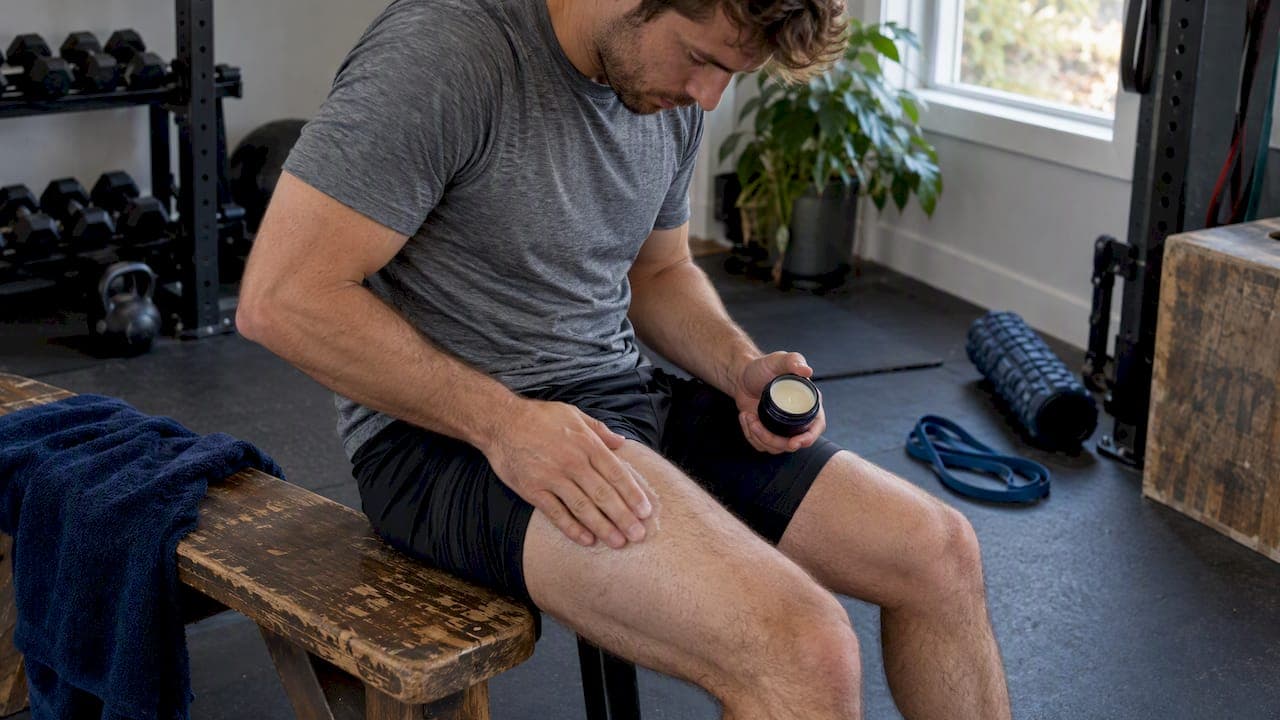
Topical CBD can ease the discomfort of a groin strain as an adjunct to standard care, not as a treatment that heals the tear itself. The research on topical CBD and muscle recovery stays mixed, so we treat it as one tool among several. If you notice a bulge, severe swelling, or inability to bear weight, see a clinician before trying anything else. Judge any benefit by what you can do, not how the area feels.
TL;DR:
- Topical CBD has not shown clear benefits for muscle recovery or soreness in large studies, with most small trials failing to outperform placebos.
- Oral CBD may reduce peak pain and support faster recovery in exercise-induced muscle injuries, but evidence remains limited and preliminary.
- Red flags such as inability to bear weight, visible bulges, severe swelling, or worsening pain require immediate medical attention rather than topical treatment.
- Choosing high-quality CBD products involves checking for verified lab reports, clear labeling as THC-free, and avoiding products with unexpected cannabinoids like delta-8 THC.
- CBD balms are best used as an adjunct to rest and rehab, not as a substitute for medical treatment or proper injury management.
Table of Contents
- What the research actually shows about CBD for strains
- When groin pain needs a doctor, not a balm
- How to trial a topical CBD balm safely
- How to choose a safer CBD topical
- Where our own balm formulations fit into a trial plan
- A pragmatic take on CBD and groin strains
- Try a topical balm as part of your recovery plan
- FAQ
- Sources
What the research actually shows about CBD for strains
Clinical evidence for CBD and muscle injury is thinner than the marketing around it suggests. A living systematic review of cannabinoids for pain found that combination THC/CBD products produced small, fairly consistent benefits for certain pain types, while CBD-only formulations generally showed minimal or no effect compared with placebo. That distinction matters for anyone reaching for a CBD-only balm expecting the same results reported for combination products.
Oral and sublingual studies tell a slightly different story. A 2026 randomized feasibility trial testing 67 mg of sublingual CBD per day in people with exercise-induced muscle injury found reduced peak pain at 48 hours and early signals of faster functional recovery. The trial was small and described as a feasibility study, meaning it was built to test whether a larger trial is worth running, not to prove the treatment works.
Topical CBD has not fared as well. A randomized, double-blinded pilot study on topical CBD after exercise-induced muscle damage found no clear benefit for recovery or soreness compared to the placebo balm. Several small topical trials report the same pattern: a cooling or warming sensation that feels like relief, without a measurable change in strength or mobility.
Some cannabinoid trials for pain report meaningful adverse events, but these tend to be relatively infrequent, and most available studies are short-term and with small participant numbers, according to the cannabinoid pain evidence review. That short duration limits what anyone can claim about long-term use.
A few patterns show up across the available trials:
- THC/CBD combination products outperform CBD alone for some pain types, but not dramatically.
- Topical CBD pilot studies have mostly failed to beat placebo for muscle recovery or soreness.
- Sublingual CBD shows early promise for exercise-induced muscle pain, pending larger trials.
- Adverse events in cannabinoid trials are usually mild (drowsiness, dry mouth, digestive upset) but not absent.
An independent review of CBD and athletic recovery studies reaches a similar conclusion: the evidence base is growing but still inconsistent across trial designs, doses, and formulations.
When groin pain needs a doctor, not a balm
Some symptoms point to something beyond a simple strain, and no topical product addresses them. AAOS guidance on sprains and strains recommends RICE and graded rehab for ordinary strains, but flags when that approach is not enough.
See a clinician promptly if you notice:
- Inability to bear weight or walk without significant pain.
- A visible bulge or lump in the groin or lower abdomen.
- Significant swelling, bruising, or a feeling of tearing at the moment of injury.
- Fever, chills, or signs of infection near the area.
- Numbness, testicular pain, or pain that worsens despite rest.
A bulge can signal a hernia rather than a muscle strain, and severe weakness or numbness can point toward nerve or bone involvement that rest alone will not fix. When you go in, bring a short timeline: when the pain started, what you were doing, what treatments you have already tried, and how the pain has changed day to day.
How to trial a topical CBD balm safely
Once you have ruled out red flags, a short, structured trial tells you more than guessing. Here is a practical approach:
- Patch-test on your forearm first, waiting 24 hours to check for redness, itching, or a rash before applying anywhere else.
- Apply a small amount to the sore area, avoiding broken skin, mucous membranes, and the genitals directly.
- Wash your hands after application to avoid transferring the balm to your eyes or other sensitive areas.
- Pick one functional measure to track, such as a timed 10-meter walk or a pain score during a resisted hip movement, and record your baseline before starting.
- Apply consistently, usually twice daily, for 4 to 7 days, then compare your functional measure to the baseline.
- Stop immediately if you notice a rash, increased pain, or any new symptom, and check with a pharmacist or clinician if you take regular medications, since some cannabinoids interact with liver enzymes involved in drug metabolism.
A two-week topical trial protocol for muscle spasms uses a similar framework if you want a longer reference window.
Pro Tip: Track one number, not a feeling. A stopwatch and a 0-to-10 pain scale beat "it feels a bit better" every time.

How to choose a safer CBD topical
Product quality varies enormously in this category, and the label rarely tells the full story on its own. The FDA's review of CBD regulation notes limited safety evidence for topical use and warns that mislabeled or adulterated products remain a real risk in this market.
Before buying, check for:
- A batch-specific certificate of analysis (COA) showing CBD content and total THC, not a generic one copied across product lines.
- Clear labeling as THC-free if you want to avoid any impairment risk or need to pass a drug test.
- Transparent third-party lab reports, since products without them are harder to trust.
- No unexpected cannabinoids like delta-8 THC, which regulators have flagged repeatedly in mislabeled hemp products.
- A full ingredient list checked against your known allergens, plus any pregnancy or breastfeeding warnings on the label.
Products labeled as CBD have been found to contain delta-8 THC or synthetic cannabinoids tied to adverse events, according to a CDC health advisory. A separate CDC outbreak investigation in Utah confirmed synthetic cannabinoids in products sold as CBD, linked to emergency room visits.
High milligram counts on a label represent marketed potency but do not guarantee product effectiveness. A well-tested balm with verified content and quality is preferable to an untested product with a higher milligram count.
Where our own balm formulations fit into a trial plan
We formulate our topical balms with the aim of soothing muscle soreness and supporting recovery. Our product line includes pain balms formulated with CBD alongside arnica, menthol, and other botanical ingredients aimed at localized relief.
We have published our own trial write-ups on our blog, including a two-week topical protocol for muscle spasms and a broader comparison of topical versus oral CBD, so readers can see exactly how we tested our formulations and what we measured.
We offer a 30-day full refund policy on purchases to allow customers to try a short, functional trial without financial risk if the balm does not work for them.

A pragmatic take on CBD and groin strains
The honest answer is that topical CBD is a comfort measure, not a cure. The groin strains that heal do so through rest, graded loading, and time, the same RICE-and-rehab framework orthopedic guidance has recommended for years. A balm might make that process more tolerable day to day.
What I would tell a friend: use a topical as an add-on to your rehab plan, not instead of it, and judge progress by whether you can walk, climb stairs, or move your hip without pain, not by how warm or cool the area feels after applying it.
— Cindy
Try a topical balm as part of your recovery plan
If you have ruled out red flags and want to add a topical to your rehab routine, our Seriously Soothing Pain Balm and RIKKI TIKKI Recovery are built for exactly this kind of use case: post-exercise soreness, tight hip flexors, and the lingering discomfort that comes with a healing strain.
- A pain balm formulated with arnica and menthol for localized soreness.
- Another recovery balm aimed at muscle recovery after activity or minor strain.
- Both come with a refund policy allowing returns within 30 days if the balm does not suit you.
| Product | Best suited for |
|---|---|
| Pain Balm | General muscle soreness and localized strain discomfort |
| Recovery Balm | Post-activity recovery during a rehab program |
These balms support symptomatic relief alongside rest and rehab. They are not a substitute for medical evaluation if you notice any of the red flags described earlier.
FAQ
Does CBD help with strained muscles?
Topical CBD may offer mild symptomatic comfort, but randomized pilot trials have not shown a clear benefit for muscle recovery or soreness compared to placebo. Oral or sublingual CBD has shown more promising early signals in small feasibility studies.
Does CBD actually help with muscle pain?
The evidence is mixed and depends heavily on the form used. Systematic review data shows THC/CBD combination products have more consistent small benefits for pain than CBD-only products, which generally show minimal effect over placebo.
What is the best CBD for muscle pain?
There is no single product proven best, since the clinical evidence for any specific topical remains limited. Look for a batch-specific COA, clear THC labeling, and a formulation with ingredients like arnica or menthol alongside CBD, such as our Seriously Soothing Pain Balm.
Can CBD be used as a muscle relaxer?
CBD is not an approved muscle relaxant and should not replace one if your clinician has prescribed a specific medication. Some people use topical CBD alongside rest and stretching for general soreness, but the mechanism for muscle relaxation specifically is not well established in current research.
Sources
- FDA regulation of cannabis and cannabis-derived products, including cannabidiol (CBD)
- Cannabinoids for pain: living systematic review (NCBI Bookshelf)
- Topical application of cannabidiol for muscle recovery after exercise-induced muscle damage: a randomized, double-blinded pilot study
- Health Advisory Network (HAN): Products labeled as containing cannabidiol (CBD) may contain delta-8 THC or synthetic cannabinoids