
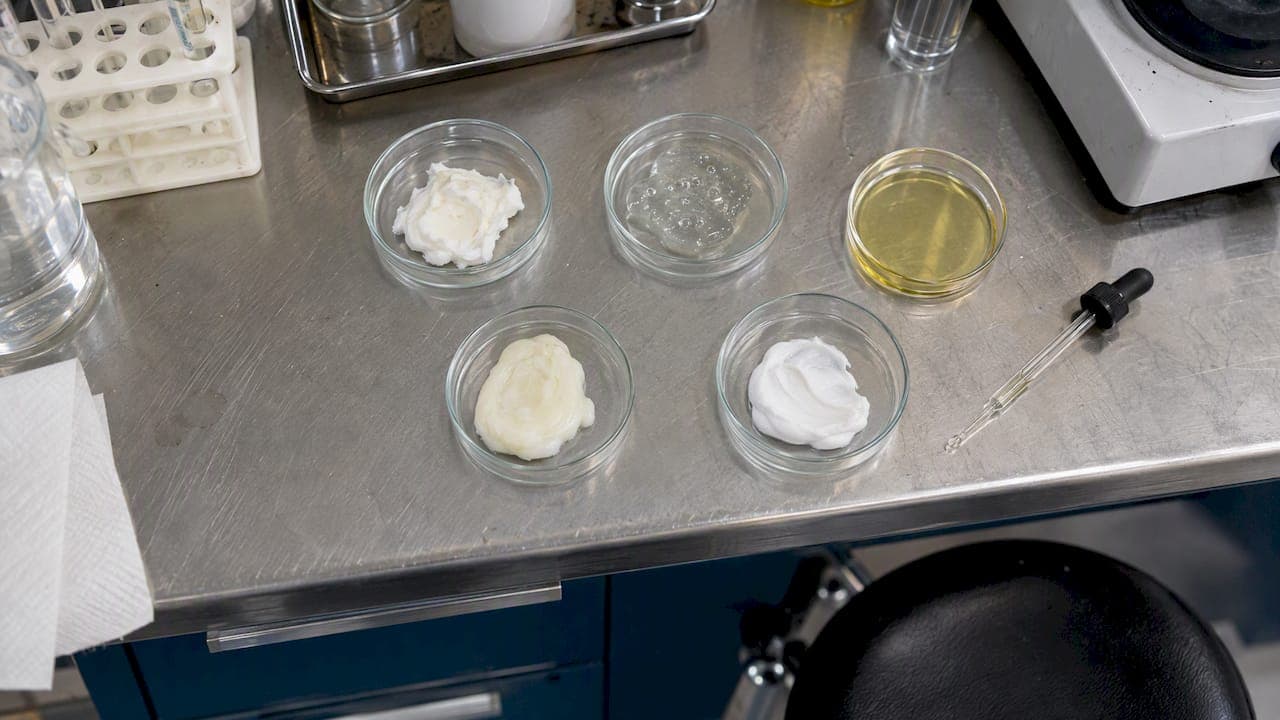
The entourage effect is the idea that compounds in the cannabis plant work better together than alone. In topicals, this means cannabinoids, terpenes and other plant ingredients may interact on or in the skin. The idea is popular. The evidence for skin products is still thin, and one rat study found no added benefit from pairing CBD with a terpene. This guide covers what is proposed, what has been tested, and how to choose a balm with that in mind.
TL;DR
- The entourage effect is a proposed synergy between cannabis compounds. Researchers describe it as a real possibility, but not yet a stable, predictable one.
- For skin, one proposed route is indirect: compounds may change how the body's own endocannabinoid signals are made, broken down or received.
- One 2022 rat study found myrcene reduced joint pain and swelling, but adding CBD gave no extra effect.
- Labels are not a guarantee. A 2022 study of 105 topical products found many had CBD amounts different from the label.
- Choose by formula, testing and a fair trial period, not by the phrase "entourage effect" alone.
Table of Contents
- What the entourage effect means
- How it might work on skin
- What studies on topical use found
- Full-spectrum, broad-spectrum and isolate
- Why labels need a closer look
- What U.S. rules mean for claims
- Safety and product-by-product thinking
- Perspective
- How to choose a balm with this in mind
- Try a Mongoose CBD balm
- FAQ
- Sources
What the entourage effect means
The cannabis plant contains many compounds: cannabinoids such as CBD, aromatic terpenes, and other minor molecules. The entourage effect proposes that these compounds modulate each other, so a whole-plant mix acts differently from one isolated molecule.
A 2024 academic review describes it as a synergistic phenomenon in which multiple components interact to modulate therapeutic actions. The same review says evidence that the effect is stable and predictable is limited.
That is a fair summary of where the field stands. The concept is plausible and still being tested. It is not a settled measurement you can read off a product label.
How it might work on skin
Most entourage effect talk comes from oral or inhaled cannabis. Skin is a different setting. It has its own endocannabinoid system, and a 2019 review of that system explains one way a mix of compounds could matter there.
According to the 2019 review on the epidermal endocannabinoid system, an entourage effect in skin can be indirect. Compounds may inhibit the enzyme FAAH, or alter how endocannabinoids are made, taken up or broken down, or how well they bind to receptors. The result would be more endocannabinoid activity without the added compound acting as the main cannabinoid itself.
In plain terms: an ingredient does not have to be a cannabinoid to influence how the skin's own signals behave.
Compounds named in the discussion
The usual candidates are:
- Minor cannabinoids, such as CBG or CBC, found in whole-plant extracts.
- Terpenes, such as myrcene, limonene and caryophyllene, which give plants their scent.
- Other plant botanicals, such as arnica, menthol, eucalyptus or ginger, which are not from cannabis but are common in balms for muscles and joints.
The last group matters for topicals. A balm that pairs CBD with other botanicals is a formulation choice. It is not the same thing as the cannabis-internal entourage effect, and it should not be described as proof of it.
What studies on topical use found
The most direct skin-related test used a terpene and CBD together. In a 2022 peer-reviewed rat study, local application of myrcene reduced joint pain and inflammation. Co-applying myrcene with CBD did not produce a synergistic effect. Adding CBD was not significantly different from myrcene alone.
A review of entourage effect research in medicinal products reached a similar overall view. Topical myrcene showed no significant additional effect with CBD, and enhancement of cannabinoid efficacy by terpenes remains unproven.
This is one compound pair, in one animal model, under set conditions. It does not rule out other combinations. It does show why a general claim of synergy is not enough, and why the question needs testing combination by combination.
Evidence from other routes
Some results do support the broader idea of terpenes shaping cannabis effects. A 2024 human study found that vaporized d-limonene selectively reduced the anxiety-raising effects of THC. That supports the concept that terpenoids can change how a cannabinoid acts.
It was inhaled, it involved THC, and it measured anxiety. It does not transfer directly to a balm applied to a sore knee. Treat it as conceptual support only.
Full-spectrum, broad-spectrum and isolate
The entourage effect is often used to sell full-spectrum products. The three common types are:
| Type | What it generally contains | Link to the entourage idea |
|---|---|---|
| Full-spectrum | CBD, other cannabinoids, terpenes, trace THC (under 0.3% in U.S. hemp) | The classic entourage claim |
| Broad-spectrum | CBD, other cannabinoids and terpenes, with THC removed | Partial: many compounds, no THC |
| Isolate | CBD only | None from other cannabis compounds |
The legal THC limit comes from the 2018 Farm Bill, which allows sale of hemp-derived CBD with less than 0.3% delta-9 THC on a dry-weight basis. FDA rules still apply to how products are marketed.
If you want a closer comparison for pain, see our guide to isolate vs full spectrum topicals.
A practical reading
There is not yet strong human evidence for topicals showing that one type beats another. So the decision rests on other things: whether you want to avoid THC entirely, how the balm feels and smells, which other ingredients it has, and whether the maker tests each batch.
For many people the other botanicals in a balm are the part they notice first. Menthol cools. Cinnamon, clove, ginger and cayenne warm. Arnica is a long-standing ingredient in muscle rubs. That sensory effect is real, whatever the answer on the entourage effect turns out to be.
Why labels need a closer look
A label that lists terpenes or "full-spectrum" tells you what the maker says is inside. It does not show how the product performs.
A 2022 case series of 105 hemp-derived topical products found that 18% were overlabeled and 58% underlabeled for CBD. Overlabeled means less CBD than advertised. Underlabeled means more. The authors also noted that clinical research on efficacy is limited.

The lesson is to look for evidence that a maker checks its own products: third-party lab results, batch numbers and a clear CBD amount per container. Our checklist for choosing a CBD cream covers seven checks to run before you buy.
What U.S. rules mean for claims
You will notice that careful brands avoid promising specific results. There is a reason.
The FDA treats topical CBD marketed for pain, arthritis or inflammation as an unapproved drug, according to a legal summary of the agency's warning letters. The reasoning is that CBD is not recognized as a safe and suitable inactive ingredient for over-the-counter drugs.
The FTC has also acted on health claims. Its warning letters state that disease claims need competent and reliable scientific evidence, which can include well-controlled human studies.
For you as a buyer, this means treating any page that promises a cure or guaranteed relief with caution. A balm is a personal-care product. Talk to a doctor about arthritis, ongoing joint pain or any pain that is getting worse.

Safety and product-by-product thinking
A 2021 dermatology review states that topical cannabinoid safety and efficacy may need to be assessed product by product, because formulation, dose and skin absorption differ. That applies to the entourage question as well. A study on one formula says little about another.
Practical points for safe use:
- Test a small patch of skin first, especially with menthol, cinnamon, clove or cayenne in the formula.
- Keep balms away from broken skin, eyes and mucous membranes.
- Ask a pharmacist or doctor before use if you take medicines, are pregnant or nursing, or have a skin condition.
- Stop use if you see redness, itching or irritation.
More detail is in our guide to CBD balm side effects.
Perspective
We make balms for people who are sore from training or from daily pain. Our view on the entourage effect is simple.
We do not claim that our balms prove it. The research is still open, and we would rather say so than overstate it.
What we can describe is how we build a formula. Each balm uses 1,000mg of CBD per ounce. We pair it with plant ingredients with a long history in muscle and joint rubs: arnica, menthol, turmeric, eucalyptus, peppermint, cinnamon, clove, ginger and cayenne pepper. Our formulas are designed to feel good on the skin, with a cooling or warming sensation people can notice right away.
We keep the formula THC-free, vegan, non-GMO, paraben-free and cruelty-free. We use third-party testing. We also offer a full refund within 30 days of purchase, so you can judge a balm yourself.
That is the point of a good topical. Use it consistently, watch how you feel, and decide on your own results.
Cindy
How to choose a balm with this in mind
Use these criteria rather than the term "entourage effect":
- Clear CBD amount. Look for the milligrams per container, and a lab report that matches it.
- Ingredient list you understand. Know what each botanical is there for, and whether any could irritate your skin.
- THC status. If you are drug tested or want zero THC, look for a THC-free product.
- Return policy. A trial needs a fair way out if the product is not for you.
- Realistic claims. Prefer brands that describe their formula, not ones that promise cures.
Then run a structured trial. Pick one balm, apply it the same way each day, and note how your soreness feels over two to six weeks. Our dosage guide for topicals explains how much balm to use.
Try a Mongoose CBD balm
Our Seriously Soothing Pain Balm and RIKKI TIKKI Recovery are made for athletes and for people with chronic aches. Prices run from $26.95 to $39.95 depending on size. Every order is covered by our 30-day full refund policy.
See the full range on the Mongoose CBD shop, or go straight to the RIKKI TIKKI Recovery balm.
FAQ
Is the entourage effect proven?
No. It is a proposed mechanism with some supporting lab and human findings, mostly from non-topical routes. A 2024 review says evidence of a stable, predictable effect is limited. Studies on specific pairs, such as myrcene with CBD on skin, have so far shown no added benefit.
Do full-spectrum topicals work better than isolate?
There is no strong human evidence that they do. The choice often comes down to THC preference, other ingredients, feel and product testing. Reviewers suggest judging each product on its own.
Does the entourage effect apply to balms with arnica and menthol?
Not in the strict sense. The entourage effect describes interaction among cannabis compounds. Arnica and menthol are separate plant ingredients added to the formula. They are a design choice and give a noticeable cooling or warming feel.
Can I trust the CBD amount on a topical label?
Not automatically. A 2022 study of 105 topical products found many differed from their labels. Look for third-party lab testing and a clear milligram amount per container.
Sources
- Does the "Entourage Effect" in Cannabinoids Exist?
- Epidermal Endocannabinoid System (EES) and its Cosmetic Application
- The Entourage Effect in Cannabis Medicinal Products
- Anti-Inflammatory and Analgesic Properties of the Cannabis Terpene Myrcene in Rat Adjuvant Monoarthritis
- Vaporized D-limonene selectively mitigates the acute anxiogenic effects of THC
- Cannabinoid Content and Label Accuracy of Hemp-Derived Topical Products
- Safety and Sourcing of Topical Cannabinoids
- FDA Hits CBD Cos. With Warning Letters for Pain Relief Claims
- FTC and FDA warning letter on products containing CBD