
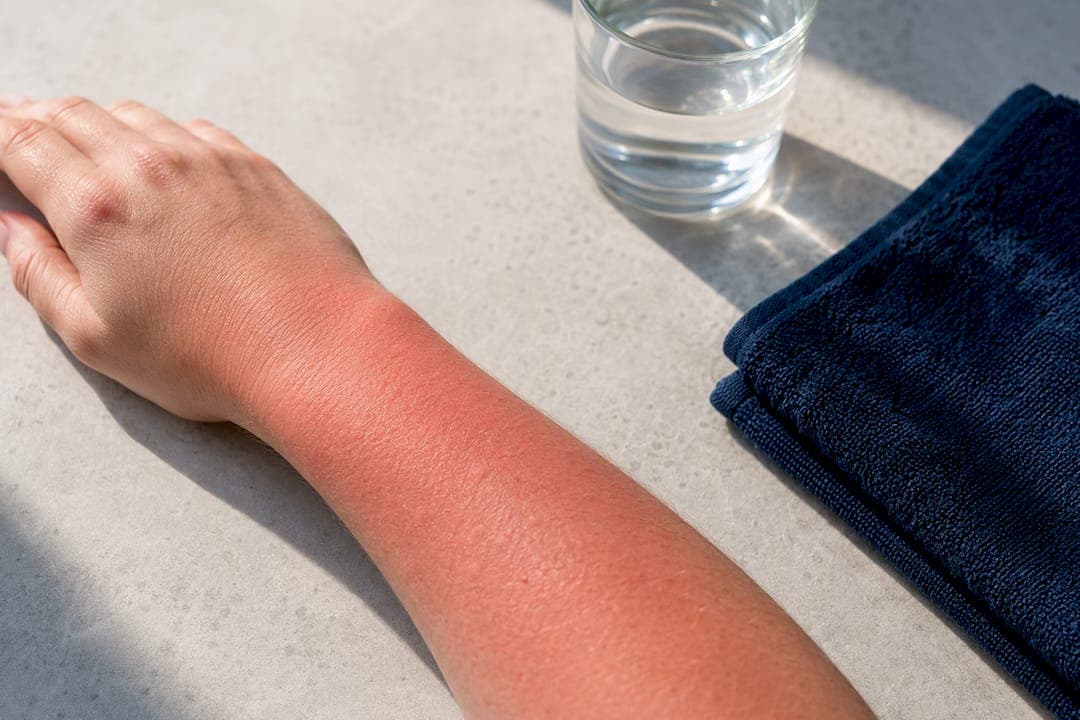
Topical CBD shows early, genuine promise for calming sunburn redness and inflammation, but it is not a cure and not a sunscreen substitute. A small 2024 pilot trial found nano-encapsulated CBD reduced visible redness at 24 hours, and the American Academy of Dermatology still recommends cool baths, moisturizer, and OTC pain relief as the core treatment. Products like those from Mongoosecbd can serve as an adjunct, never a substitute for standard sunburn care or intact skin.
TL;DR:
- Nano-encapsulated CBD showed a 21% reduction in skin redness 24 hours after sun exposure in a small 2024 trial, indicating potential anti-inflammatory effects.
- The trial also noted decreases in UV-related mitochondrial DNA mutations, suggesting cellular protection, but formulations used are not yet standard retail products.
- Topical CBD should be used alongside traditional sunburn care, with patch testing and avoiding application on broken or blistered skin for safety.
- CBD does not prevent sunburn or block UV rays and may cause mild skin irritation or interact with certain medications; consult a healthcare professional before use.
- Proper sunburn treatment emphasizes cooling, moisturizing, hydration, and OTC pain relief, with CBD as a supportive adjunct rather than a replacement.
Table of Contents
- What Does the Research Say About CBD for Sunburn Relief?
- How Might CBD Reduce Sunburn Inflammation?
- How Should You Use CBD on a Sunburn Safely?
- Is CBD Regulated as a Sunburn Treatment?
- What Are the First Steps to Treat a Sunburn?
- Where CBD Fits in a Sunburn Recovery Plan
- Trying a Topical CBD Balm for Sunburn Relief
- Sources
- FAQ
What Does the Research Say About CBD for Sunburn Relief?
The strongest human evidence so far comes from a 2024 pilot randomized clinical trial testing nano-encapsulated CBD (nCBD) topical on sun-exposed skin. With only 19 participants, it's a small study, but the results are worth paying attention to.
- Sites treated with nCBD showed a measurable reduction in visible erythema (redness) at 24 hours compared to control sites.
- Researchers also measured significant reductions in specific mitochondrial DNA mutations, ND4 and ND1, both markers tied to UV-induced cellular damage.
The 21% figure matters because erythema is the clinical stand-in for how much inflammatory damage UV light actually did to the skin — a smaller redness response usually tracks with less underlying tissue stress, according to the trial's published findings.
Beneath that human trial sits a stack of preclinical work. Lab studies using 3D-cultured skin keratinocytes have found that cannabidiol modulates intracellular signaling triggered by UV exposure, reducing oxidative stress markers in cell culture. Other mechanistic research indexed on PubMed points in the same direction.
None of this adds up to proof. The human trial is small and used a specialized nano-formulation, not the standard balms sold at most retailers. Most of the mechanistic data comes from cell cultures and animal-adjacent models, not intact human skin exposed to real sun. Read it as a coherent, early signal, not a settled verdict.
How Might CBD Reduce Sunburn Inflammation?
The biological case for CBD after sun exposure rests on two overlapping systems: inflammation control and cellular defense.
- Anti-inflammatory signaling. CBD interacts with TRPV1 and GPR55 receptors and influences adenosine pathways, both of which help regulate cytokine release, the chemical messengers that drive swelling, heat, and pain after UV damage.
- Antioxidant and mitochondrial protection. The mtDNA mutation reductions seen in the 2024 trial suggest CBD may help blunt oxidative stress at the cellular level, where UV rays do some of their worst long-term damage.
- Delivery matters as much as the compound. CBD molecules don't cross skin easily on their own. That's why the pilot trial used nano-encapsulation, a formulation technique that improves skin penetration. A standard balm without that technology may not deliver CBD to the same depth.
The gap between "CBD does this in a petri dish" and "your sunburn balm does this on your shoulders" is real. Formulation, concentration, and skin barrier condition all affect whether any of this lab-level plausibility translates to something you'd actually feel.
How Should You Use CBD on a Sunburn Safely?
Stick to topical CBD products for pain relief for sunburn. Oral CBD circulates through your whole system and does nothing targeted for the specific patch of skin that's burned, so it isn't a substitute for direct application.
- Patch-test first. Clean a small, unaffected area of skin, apply a pea-sized amount, and wait 24 hours. Watch for redness, itching, or stinging beyond what the sunburn itself causes, a protocol echoed in MedlinePlus burn care guidance.
- Never apply to broken or blistered skin. Open skin absorbs more than it should and carries a real infection risk. If blisters have formed or the burn covers a large area, that's a signal to seek medical care, not a home remedy.
- Check the label before you buy. Look for a batch-specific certificate of analysis (COA) from third-party testing. Skip anything vague about sourcing or potency.
- Watch for interaction risks. CBD can interact with certain medications metabolized by the liver, and pregnant people or children should avoid it without a clinician's input.
Pro Tip: Apply CBD balm to damp skin right after a cool shower, while pores are open and skin is still slightly hydrated. It helps the product spread evenly without dragging on tender skin.
If you're comparing formulations, understanding the difference between isolate and full-spectrum topicals helps explain why some balms feel different on skin even at similar CBD concentrations. For a deeper look at who should avoid topical CBD altogether, see this breakdown of CBD balm side effects.

Is CBD Regulated as a Sunburn Treatment?
No CBD topical is FDA-approved to treat sunburn, and none function as a UV filter. The FDA has been direct about this: most CBD products on the market haven't been evaluated for the safety or dosing claims they carry, and Epidiolex remains the only FDA-approved CBD product, for a specific seizure condition unrelated to skin.
The bigger concern is contamination. The FDA issued a consumer advisory after finding that KUKA FLEX CBD contained undisclosed diclofenac, a prescription-strength anti-inflammatory drug never listed on the label. That's not a one-off. It's the reason third-party lab testing matters more than marketing copy.
- CBD does not block or filter UV rays. It has no role in sunburn prevention.
- Mild side effects some people notice on sensitive, sun-damaged skin include dryness, a tingling sensation, or contact irritation from carrier oils or added botanicals.
- Anyone taking blood thinners or other liver-metabolized medications should talk to a doctor before using CBD topically or orally.
What Are the First Steps to Treat a Sunburn?
Before reaching for any CBD product, cover the basics that dermatologists actually recommend.
- Get out of the sun immediately and stay covered.
- Take cool baths or showers to pull heat out of the skin.
- Moisturize while skin is still damp, using aloe vera or soy-based lotions rather than heavy, greasy creams.
- Use an OTC pain reliever like ibuprofen for discomfort and swelling.
- Drink extra water since sunburn draws fluid to the skin's surface and can mildly dehydrate you.
- Never pop blisters. If they cover a large area, or you develop fever or chills, get medical care.
- Prevent the next one with sunscreen, protective clothing, and shade, the CDC's baseline guidance for a reason.
Where CBD Fits in a Sunburn Recovery Plan
The evidence justifies cautious optimism, not confidence. CBD may take the edge off redness and inflammation once you've already done the basics: cool water, moisture, hydration, and time. It has no business replacing sunscreen or standing in for medical care on a severe burn. If you try it, treat product selection like you would any supplement: check for lab reports, patch-test first, and ask a clinician if you're on medication that interacts with cannabinoids.
— Cindy
Trying a Topical CBD Balm for Sunburn Relief
If you're looking for a tested topical option rather than guessing at a random online listing, Some CBD balms are formulated specifically for localized skin relief, not just general wellness claims. The Seriously Soothing Pain Balm and RIKKI TIKKI Recovery were built for muscle soreness and inflammation, and the same properties that ease a strained shoulder can apply to calming irritated, sun-stressed skin when used on intact skin.
Every order comes with a 30 day refund window, so you can patch-test a balm on a small area first without financial risk if it turns out your skin doesn't respond well. Start with the Seriously Soothing Pain Balm in its original formula or browse the full Mongoosecbd product lineup to compare scent and ingredient options before you buy. Remember this is symptomatic support alongside standard sunburn care, not a replacement for it.
This article is general information, not a substitute for advice from a qualified doctor. Consult a qualified healthcare professional about your own circumstances before acting on anything here.
Sources
- PubMed: nano-encapsulated CBD trial (2024)
- The effect of cannabidiol on UV-induced changes in intracellular signaling of 3D-cultured skin keratinocytes (PMC)
- American Academy of Dermatology: How to treat sunburn
FAQ
What Draws Heat Out of a Sunburn Fastest?
Cool water is the fastest, most reliable method: a cool bath, shower, or damp compress pulls surface heat out of inflamed skin within minutes. Follow it immediately with a light moisturizer like aloe or soy lotion while the skin is still damp, per AAD guidance.
Does Rubbing CBD Oil on Skin Actually Do Anything?
Yes, topical CBD can be absorbed into skin, particularly with formulations designed for penetration, and a 2024 pilot trial found nano-encapsulated CBD reduced visible redness on treated skin. Absorption and effect size depend heavily on formulation and concentration, so results vary by product.
What Heals a Sunburn the Fastest?
There's no shortcut around a sunburn's healing timeline, but cooling the skin, moisturizing while damp, staying hydrated, and taking an OTC anti-inflammatory speeds up comfort and reduces peeling. Topical CBD, including balms from Mongoosecbd, may support this process as an adjunct once basic first aid is underway.
Can CBD Help With Skin Inflammation?
Early research suggests CBD can influence inflammatory signaling pathways, including cytokine activity tied to TRPV1 and GPR55 receptors, and lab studies show it reduces oxidative stress markers in UV-exposed skin cells. The evidence is still preliminary, so treat it as supportive rather than a proven anti-inflammatory therapy.
How Much Does a Mongoosecbd Balm Cost?
Mongoosecbd's Seriously Soothing Pain Balm and RIKKI TIKKI Recovery are priced between $26.95 and $39.95 depending on size and formula, available directly through Mongoosecbd's product pages.