
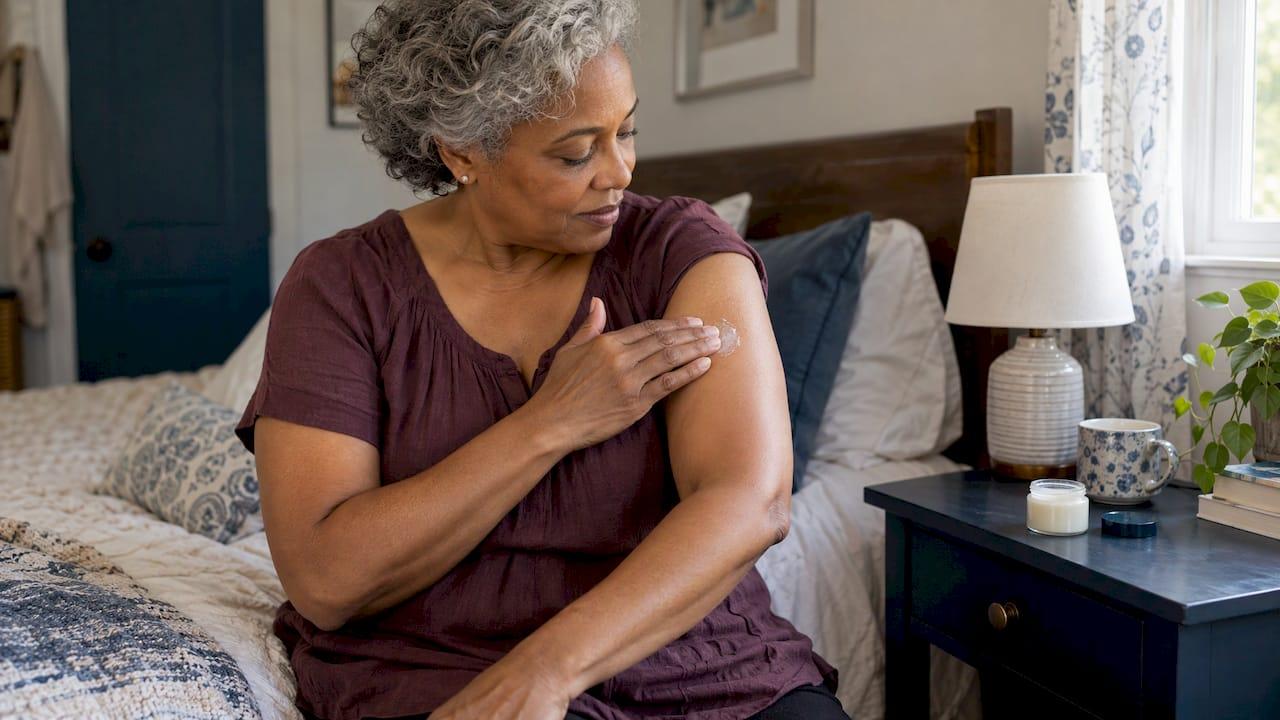
Shingles pain is nerve pain, so the first move is medical: see a clinician quickly, because antivirals work best when started within 72 hours of symptom onset. A topical CBD balm is something people add alongside that care for everyday comfort. If you want to try one, choose a THC-free balm with a clear CBD amount per ounce, apply it as your clinician advises, and keep your prescribed treatment in place. Our Seriously Soothing Pain Balm and RIKKI TIKKI Recovery are made for people who want a soothing topical, and they come with a 30-day full refund.
TL;DR
- Shingles pain starts with a medical visit: antivirals are recommended within 72 hours of symptom onset, and persistent pain afterward deserves a clinician's attention.
- Prevention matters most. Two doses of the shingles vaccine are recommended for adults 50 and older.
- A topical CBD balm is a comfort step you add to your plan, not a replacement for prescribed treatment.
- Check the label for CBD per ounce, THC-free status, and third-party testing before you buy.
- Our balms are priced from $26.95 to $39.95 and carry a 30-day full refund policy.
Table of Contents
- What shingles pain actually is
- Start here: what medical guidelines recommend
- Where a topical CBD balm fits
- Why topical rather than oral for many people
- Who should talk to a clinician before using any CBD
- How to choose a balm: a label checklist
- A simple 4-week routine
- Why prevention beats any balm
- When to call a doctor and not wait
- Our perspective
- Our balms for everyday pain relief
- FAQ
- Sources
What shingles pain actually is
Shingles is a reactivation of the chickenpox virus. It travels along a nerve and shows up as a painful band of rash on one side of the body. The pain can burn, sting, or feel like electricity, and for some people even clothing against the skin hurts.
The pain does not always end when the rash heals. Postherpetic neuralgia (PHN) is nerve pain that lingers after the rash is gone. According to a 2026 review in American Family Physician, PHN occurs in 10% to 18% of shingles cases. That is why the early steps matter so much.
You may also feel a tingling, burning or aching patch of skin before any rash appears. If that happens, call your clinician rather than waiting for the rash to confirm it.
Start here: what medical guidelines recommend
Before any balm, know what the standard treatment looks like. It gives you a baseline, and it helps you have a better conversation with your doctor.
Antivirals come first. The same American Family Physician review recommends acyclovir, valacyclovir or famciclovir within 72 hours of symptom onset. A March 2025 US Pharmacist article agrees that prompt antiviral therapy is first-line, ideally started within 72 hours of the rash.
Nerve pain medicines come next if pain lingers. For established PHN, the first-line prescription options are gabapentinoids, tricyclic antidepressants and SNRIs. The FDA label for gabapentin lists postherpetic neuralgia in adults as an approved use, with the dose raised step by step under a prescriber's direction.
Topicals have a place too. The AFP review lists capsaicin 8% patches, capsaicin 0.075% cream and lidocaine 5% as add-on therapies. In other words, putting something on the skin is already a recognized part of managing this pain. Topical balms fit that same idea: local, on the skin, and alongside a broader plan.
Dosing, timing and choice of medicine belong to your doctor. Do not adjust them yourself.

Where a topical CBD balm fits
Most people searching for CBD and shingles are not looking for a cure. They want something calming for the days when the pain is wearing them down. A balm suits that goal for a few practical reasons:
- It stays where you put it. You choose the area, the amount and the timing.
- It does not need to be swallowed, so it avoids the questions that come with oral products, such as dosing by body weight and how a swallowed product interacts with other medicines.
- It can be part of a simple routine you track over several weeks.
There is some research interest in the topical form. A small 2020 study of 29 people with neuropathy, summarized by Healthline, randomized them to topical CBD oil or placebo. After 4 weeks the CBD group reported a statistically significant drop in intense or sharp pain and in cold or itchy sensations, with no adverse side effects reported. It was a small trial in neuropathy generally, not in shingles specifically, so treat it as a reason to try a topical thoughtfully rather than a promise.
If you want to read more about nerve pain and balms, our guide on CBD for neuropathy goes deeper into how to use one.
Why topical rather than oral for many people
Oral CBD is processed by the liver, and that is where most of the drug-interaction questions come from. US Pharmacist's guide to CBD oil reports that CBD can inhibit the CYP2C19 enzyme, which can raise levels of medicines including diazepam, citalopram, clopidogrel, phenytoin, proton pump inhibitors and warfarin. It also reports that combining CBD with other central nervous system depressants can increase sedation.
The same guide lists side effects of oral CBD: decreased appetite, dry mouth, diarrhea, dizziness, drowsiness and fatigue. It reports that the risk of liver injury rises at doses of 20 mg/kg/day or with clobazam or valproate.
Shingles is most common in older adults, and many take several medications. If you take any of the drugs above or any prescription at all, tell your doctor or pharmacist about every CBD product you use, including balms, and ask whether it fits with your medications. That conversation is the one safety step worth doing before you start.
If you want the longer comparison, see our article on topical CBD versus oral. If you are an older adult, our 4-week topical trial and product checklist for seniors lays out a routine you can follow.

Who should talk to a clinician before using any CBD
The American College of Physicians advises that people in certain groups talk through risks before using cannabis or cannabinoid products. Its 2025 guidance summary names:
- young adults and adolescents
- people with a current or past substance use disorder
- people with serious mental illness
- frail patients or those at risk of falling
- anyone who is pregnant, breastfeeding or trying to conceive
If you are in one of these groups, ask your own doctor before using any CBD product. Also note that no cannabinoid is FDA-approved for chronic pain. The only FDA-approved CBD medicine is a purified prescription product for certain seizure disorders, as the American College of Physicians' 2024 guidance explains.
How to choose a balm: a label checklist
CBD products sold outside of FDA approval are not reviewed by the agency for safety, efficacy or quality. US Pharmacist's guide advises readers to check the label for the amount of CBD, get a Certificate of Analysis from an independent lab, and look for the Hemp Authority seal. Use this as your checklist:
| What to look at | Why it matters |
|---|---|
| CBD amount stated on the label | Lets you compare products and track what you use |
| THC-free claim | Avoids THC, which is the compound behind most of the dizziness and drowsiness reported with cannabis products |
| Third-party lab testing | Confirms potency and checks for contaminants |
| Full ingredient list | Lets you spot anything you react to, such as menthol, cinnamon or clove |
| Refund policy | Lets you try the product without financial pressure |
Our balms are built around this list. They contain 1,000 mg of CBD per ounce, are THC-free, and are third-party tested. They are also vegan, non-GMO, paraben-free and cruelty-free.
The formulas combine CBD with botanicals people have long used in topical rubs: arnica, menthol, turmeric, eucalyptus, peppermint, cinnamon, clove, ginger and cayenne pepper. Menthol and peppermint give the cooling feel, while cinnamon, clove, ginger and cayenne give a warming one. Read the ingredient list, and if any ingredient has bothered your skin before, mention it to your clinician before using the balm.
Isolate or full spectrum
You will see both terms on labels. If you want to understand the difference, our guide to isolate versus full spectrum topicals walks through how each is labeled and what to look for on a topical.
A simple 4-week routine
A balm is easiest to judge when you use it the same way for a set period and write down what happens. Here is a routine that works for most topical products.
- Get your medical plan in place first. Confirm with your clinician that you can add a topical, and ask where on your skin it is appropriate to apply it. Skin affected by shingles can be very sensitive, and your clinician is the right person to say what is suitable on it.
- Pick one product. Changing several things at once makes it impossible to know what helps.
- Rate your pain each day. Use a 0 to 10 scale at the same time each day, plus a short note on sleep and clothing sensitivity.
- Apply a thin layer as directed on the label. Start small, wash your hands afterward, and keep the balm away from eyes and mucous membranes.
- Stay consistent for 4 weeks. That matches the length of the small topical study above, and it gives you enough days to see a pattern.
- Review the notes. Share them with your doctor at your next visit. They make a far better conversation than a vague memory of how things went.
If you notice irritation, stop using the balm and speak with your clinician.
Why prevention beats any balm
The most reliable way to avoid shingles pain is to avoid shingles. The CDC recommends two doses of the shingles vaccine for adults 50 and older, and for adults 19 and older with weakened immune systems. It says the vaccine is over 90% effective at preventing shingles and postherpetic neuralgia in adults 50 and older with healthy immune systems. It also notes you should get vaccinated even if you have had shingles before.
If you are 50 or older and unvaccinated, a doctor or pharmacist can give you the shot. That decision is worth more to your future comfort than any product on a shelf.
When to call a doctor and not wait
Put the balm down and call a clinician if:
- you think you are developing shingles, with burning, tingling or a one-sided rash, and you are within the first days
- the pain continues after the rash has healed
- the rash is near your eye
- your pain is getting worse, or sleep and daily tasks are suffering
- you are taking prescription medicines and want to add CBD
Endotext, a clinical reference, advises that anyone with persistent pain after shingles should discuss treatment options with a health care professional and not delay proven care. A balm works best when it supports that care.
Our perspective
Most of the people who write to us about nerve pain are not chasing a miracle. They want a few hours when the skin feels calmer, or when an aching shoulder or back stops being the loudest thing in the room.
That is why we built our balms the way we did. Each one pairs 1,000 mg of CBD per ounce with arnica and a set of botanicals such as menthol, peppermint, eucalyptus, turmeric, ginger, clove, cinnamon and cayenne. We formulated them for athletes and for people living with chronic pain and arthritis, and we designed them to feel pleasant on the skin from the first use.
We keep the formula THC-free, we use third-party testing, and we back every order with a full refund within 30 days. If you are dealing with shingles pain, our advice is simple: see your doctor first, follow the plan you are given, and if you choose to add a topical, track how it goes for a few weeks and share the notes with your clinician.
Cindy
Our balms for everyday pain relief
If you want a topical to add to your routine, Seriously Soothing Pain Balm is our original formula, made for sore muscles, inflammation and arthritis discomfort. RIKKI TIKKI Recovery is the formula built for muscle soreness and recovery. Both are priced from $26.95 to $39.95, depending on size, and both are covered by our 30-day full refund policy.
You can see both on our home page, along with ingredient details for each formula.
FAQ
Can I use CBD balm if I have shingles?
Ask your clinician first. Skin affected by shingles is often very sensitive, and your doctor can tell you whether and where a topical is appropriate. A balm is meant to sit alongside your prescribed treatment, not replace antivirals or nerve pain medicines.
Is CBD approved for shingles or postherpetic neuralgia?
No. According to Endotext, the FDA has not approved cannabis for PHN or any disease. The only FDA-approved CBD product is a purified prescription medicine for specific seizure disorders. CBD balms are sold as consumer products, which is why checking the label and the lab testing matters.
Does a topical CBD balm interact with medications?
The interaction concerns in the research mostly involve oral CBD, which is processed by the liver. Even so, tell your doctor or pharmacist about every product you use, balms included, particularly if you take warfarin, clopidogrel, diazepam, citalopram or similar medicines.
Can I get shingles pain before the rash appears?
Yes. Burning, tingling or aching on one side of the body can come before the rash. If you notice it, contact a clinician quickly, since antivirals are recommended within 72 hours of symptom onset.
How long should I try a balm before deciding?
A 4-week trial with a daily pain rating gives you enough information to judge. Our balms carry a 30-day full refund policy, so the trial period and the refund window line up.
Sources
- Herpes Zoster and Postherpetic Neuralgia: Common Questions (American Family Physician, 2026)
- Proactive Prevention and Treatment of Shingles Pain and PHN (US Pharmacist, 2025)
- GABAPENTIN capsule label (DailyMed)
- 4 Over the Counter Medications for Nerve Pain (Healthline)
- Pharmacist's Guide to CBD Oil (US Pharmacist, 2020)
- ACP's Best Practice Advice Addresses Use of Cannabis, Cannabinoids for Chronic Noncancer Pain (2025)
- Cannabis or Cannabinoids for the Management of Chronic Noncancer Pain (ACP, 2024)
- Shingles Vaccination (CDC)
- Cannabis for Postherpetic Neuralgia: What the Evidence Shows (Endotext)