
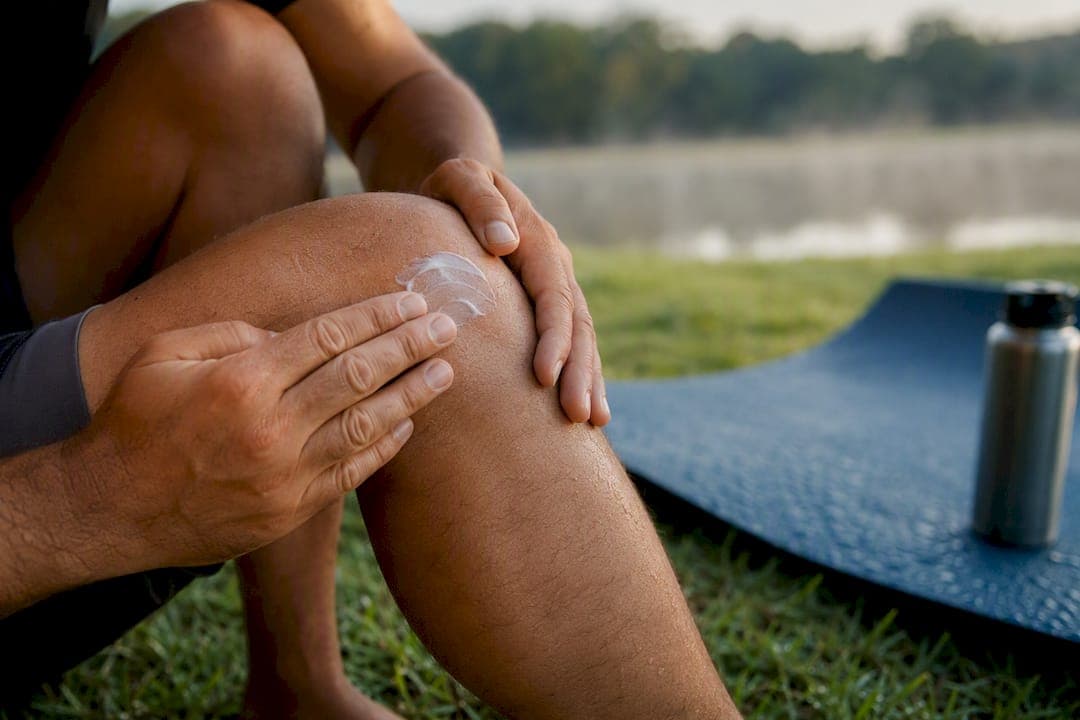
Topical capsaicin can modestly reduce joint pain, and the strongest evidence sits with osteoarthritis, not other joint conditions. Most people who stick with it notice change somewhere between a few days and a few weeks, though the first sessions often bring a burning sensation that fades with repeated use. The sections below break down the research, the mechanism, and exactly how to apply it without wasting the trial period on irritation instead of relief.
TL;DR:
- Most users experience initial burning that diminishes over a few weeks, with effective treatment typically requiring consistent application for four to twelve weeks.
- Topical capsaicin has a moderate to large effect in reducing osteoarthritis pain, but its benefits for other joint conditions like rheumatoid arthritis are less supported by research.
- The desensitization mechanism involves depleting Substance P from nerve endings, which lowers pain signals over time after repeated use.
- Applying capsaicin accurately—using proper technique, starting with low concentrations, and persevering through the initial discomfort—is essential for seeing results.
- Long-term safety appears favorable, but adherence often drops in the first two weeks due to uncomfortable burning, which is part of the intended desensitization process.
Table of Contents
- What the Research Shows About Capsaicin for Joint Pain
- How Does Capsaicin Help Joints? The TRPV1 Mechanism
- Creams, Gels, and Patches: Picking the Right Strength
- How to Apply Capsaicin Cream for Joint Pain
- Side Effects: How Much Burning Should You Expect?
- Capsaicin vs. Topical NSAIDs vs. Lidocaine: Which Should You Choose?
- Publisher Note: Topical Formulations and Product Context
- Is Capsaicin Safe to Use Long-Term for Joint Pain?
- Can You Use Capsaicin for Rheumatoid Arthritis or Bursitis?
- Contraindications and Drug Interactions to Know Before Starting
- Should You Combine Capsaicin With Other Joint Pain Treatments?
- The Real Bottleneck Isn't the Science, It's the First Two Weeks
- Where to Find a Botanical Balm Built for Joint and Muscle Pain
- Sources
What the Research Shows About Capsaicin for Joint Pain
The clinical record on capsaicin for joint pain is more mature than most people assume. Trials go back decades, and a 1991 double-blind study already concluded capsaicin cream was both safe and effective for arthritis pain. That early signal has held up under more rigorous scrutiny since.
A 2024 systematic review and meta-analysis pooling randomized trials through February 2023 found topical capsaicin reduced osteoarthritis pain with a standardized mean difference of −0.84, a moderate to large effect in statistical terms. The trade-off was clear too: the number needed to harm for application-site burning is common, meaning many users experience that irritation. A separate body of reviews and meta-analyses reports similar moderate pain reduction over treatment windows of four to twelve weeks, with effects sometimes comparable to topical NSAIDs.
A few caveats matter before you set your expectations:
- Many trials are small, and study designs vary enough that pooling results introduces real uncertainty.
- Osteoarthritis has by far the best-supported evidence; rheumatoid arthritis and other inflammatory joint diseases have thinner, less conclusive data.
- Effect sizes describe averages across groups. Individual response varies based on formulation, skin sensitivity, and how consistently someone applies it.
None of this makes capsaicin a cure. It makes it a modest, evidence-backed option worth trying before reaching for something with more systemic risk.
How Does Capsaicin Help Joints? The TRPV1 Mechanism
Capsaicin works by binding to a receptor called TRPV1, found on the sensory nerve endings that detect pain, or nociceptors. That initial binding triggers a burst of nerve signaling, which is why the first applications sting or burn. But repeated exposure exhausts the system: the nerve endings gradually deplete their supply of Substance P, a chemical messenger responsible for transmitting pain signals to the brain, according to mechanistic research on capsaicin analgesia.
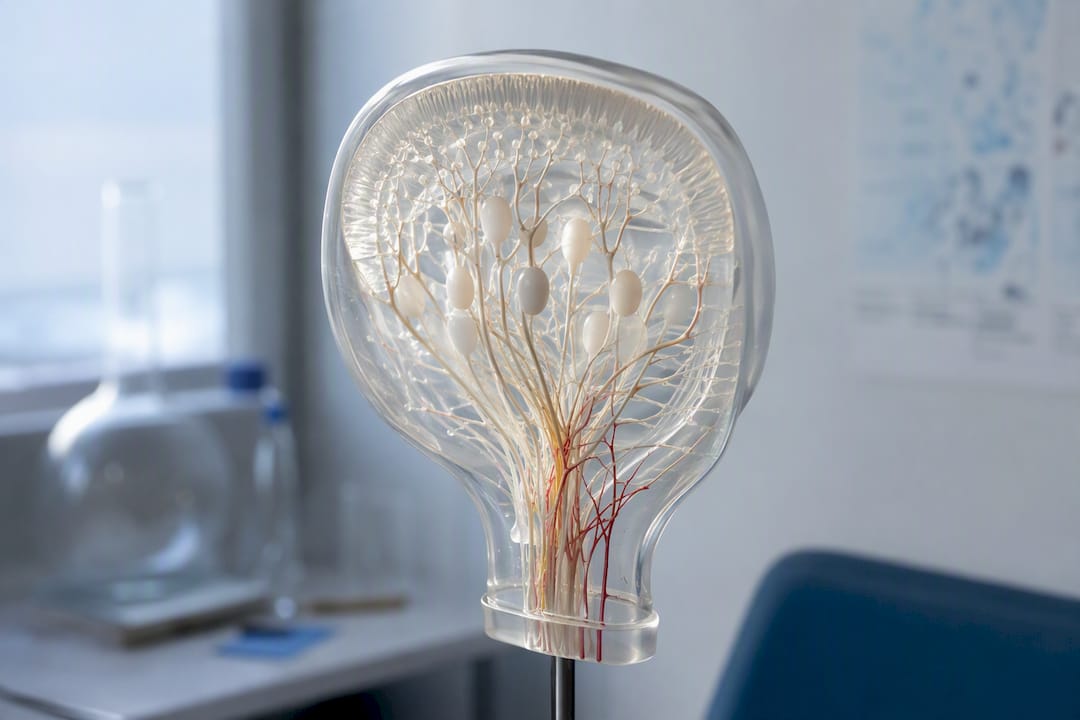
That depletion is what produces the delayed payoff. Pain signaling drops over days to weeks of consistent use, not immediately. This is fundamentally different from how NSAIDs or local anesthetics work. NSAIDs block inflammatory chemicals at the source. Lidocaine numbs nerve conduction directly. Capsaicin instead retrains the nerve's signaling capacity, which explains why it burns before it helps rather than the other way around.
Creams, Gels, and Patches: Picking the Right Strength
Formulation choice depends heavily on what you're treating and how much friction you're willing to tolerate. Over-the-counter creams and gels used in most joint pain trials sit in the 0.0125% to 0.075% range, while high-concentration 8% patches exist for neuropathic pain and are typically applied under clinical supervision.
- Low-concentration OTC creams (0.0125%–0.075%): applied multiple times daily, milder burning, suited to self-managed osteoarthritis or muscle pain.
- High-concentration patches (8%): used for localized neuropathic pain, often clinic-administered, with a different and sometimes more intense side-effect pattern.
- Gels and lotions: absorb faster than thick creams, useful for larger joint areas like knees.
Patches deliver a longer, steadier dose but require more oversight. For most joint pain at home, a lower-concentration cream applied consistently is the more practical starting point.
How to Apply Capsaicin Cream for Joint Pain
Getting technique right matters as much as picking the correct strength. Mayo Clinic's drug guidance recommends applying capsaicin multiple times daily for muscle or joint pain, and consistency across that schedule is what separates people who see results from people who quit early.
- Wash and dry the affected area before application.
- Use a pea-sized amount for a joint the size of a knee or elbow; less for smaller joints.
- Rub it in fully until it's absorbed, not left sitting on the surface.
- Wash your hands immediately afterward or wear gloves during application, and avoid touching your eyes, mouth, or broken skin, per MedlinePlus safety guidance.
- Never apply to broken, irritated, or recently shaved skin.
Test a small patch of skin first if you've never used capsaicin before, so you can gauge your sensitivity before committing to a joint-wide application.
Pro Tip: If you're treating your hands, apply with an applicator or cotton swab instead of your fingers, and skip washing that spot for a set period so the product has time to absorb rather than rinsing off before it works.
Stop and reassess if burning becomes severe, spreads beyond the application site, or is accompanied by blistering or swelling that looks like an allergic reaction rather than normal irritation.
Side Effects: How Much Burning Should You Expect?
Burning and stinging are the expected cost of using capsaicin, not a warning sign in themselves. Reported incidence in clinical studies tracking adverse effects ranges from 35% to as high as 100% of users, depending on concentration and formulation, typically peaking in the first week and declining with continued use.
What the data shows: application-site burning is common enough that it should be treated as an expected part of the adjustment period, not a reason to stop after one try.
Beyond burning, watch for:
- Redness, local dermatitis, or skin irritation that doesn't fade within a few days.
- Rare systemic effects, which are uncommon with topical use compared to oral medications.
- Never apply to skin that's already broken, inflamed, or sunburned.
Talk to a clinician before starting capsaicin if you're pregnant or breastfeeding, treating a child, dealing with pain of unclear origin, or managing a neuropathic condition that needs specialist oversight. Severe or worsening skin reactions warrant stopping and getting it checked rather than pushing through.
Capsaicin vs. Topical NSAIDs vs. Lidocaine: Which Should You Choose?
The right choice depends less on which product is "strongest" and more on what you're treating and what you can tolerate. Short-term pain relief from capsaicin can be comparable to topical NSAIDs for osteoarthritis, but the two work through entirely different pathways and come with different friction points.
- Capsaicin: initial burning that fades into desensitization; best for people who can tolerate early discomfort for later payoff.
- Topical NSAIDs: anti-inflammatory action without the burning, but carry their own skin sensitivity risks and less benefit for pain that isn't inflammation-driven.
- Lidocaine: numbs locally and fast, useful for acute flare-ups, but doesn't address underlying signaling the way capsaicin's longer-term desensitization does.
If you can't tolerate oral NSAIDs because of gastrointestinal risk, a topical option, capsaicin included, avoids that systemic exposure entirely, according to health-system clinical reviews. Choose based on your comorbidities and how much initial discomfort you're willing to accept for the payoff later.
Publisher Note: Topical Formulations and Product Context
Mongoosecbd formulates balms around 1,000mg of CBD per ounce combined with botanical pain-relieving ingredients, including capsaicin-rich cayenne pepper, arnica, menthol, and turmeric. That combination approach reflects the same principle behind clinical capsaicin products: a topical, localized delivery method rather than a systemic one.
A few practical notes worth knowing:
- Combining CBD with capsaicin-containing botanicals in one balm doesn't inherently increase systemic risk, since both stay localized to the skin.
- If you're already using a prescription-strength capsaicin cream, check with a pharmacist before layering another capsaicin-containing product on the same area to avoid over-application.
- Mongoosecbd backs its balms with a 30-day full refund policy, which is a reasonable signal of product confidence when comparing topical options.
Readers weighing capsaicin against a CBD-based alternative can compare formulations directly in this breakdown of CBD balm approaches for arthritis.
Is Capsaicin Safe to Use Long-Term for Joint Pain?
Most of the clinical evidence on capsaicin covers trial windows of four to twelve weeks, which means long-term data beyond a few months is thinner than the short-term picture. What exists suggests capsaicin doesn't accumulate systemic toxicity the way some oral medications do, since it stays localized to the skin and nerve endings in the application zone.
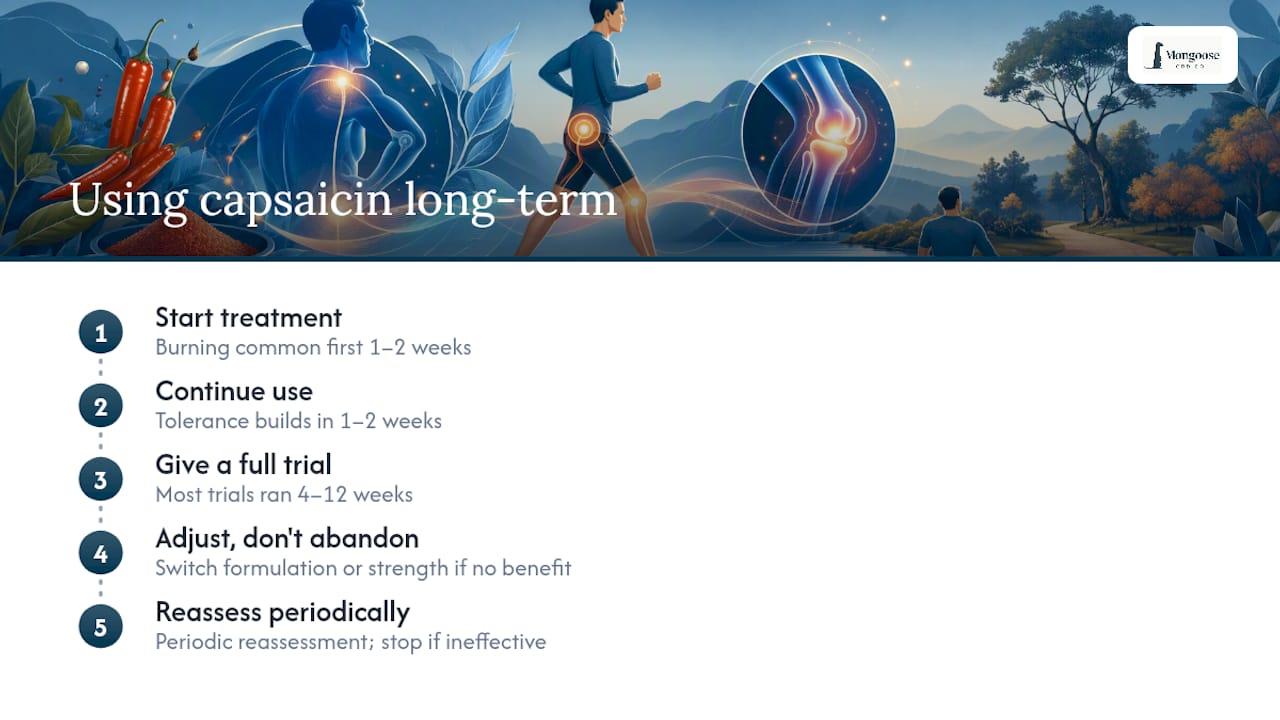
That said, effectiveness over months depends heavily on adherence. Clinicians note that people frequently stop within the first week or two because the initial burning outpaces the benefit, according to Cleveland Clinic's overview of capsaicin. That's a shame, because the desensitization effect that actually reduces pain needs sustained exposure to build. Stopping at day three means never reaching the payoff the trials measured.
Tolerance to the burning itself tends to build over the first one to two weeks, which is a good sign, not a sign the product has stopped working. If burning intensity holds steady or gets worse past that point rather than fading, that's a cue to reconsider the formulation or concentration rather than push through indefinitely.
There's also a formulation-adherence link worth understanding: research on osteoarthritis treatment notes that trials use varied concentrations and regimens, so how well capsaicin works for you may hinge on which formulation you're using and how consistently you apply it, per the same systematic review on efficacy and safety cited earlier. If one product isn't working after several weeks of consistent use, switching strength or formula, rather than abandoning capsaicin altogether, is often the more useful next step.
Long-term safety data doesn't show alarming red flags, but it also doesn't support treating capsaicin as a permanent, unsupervised fix without periodic reassessment of whether it's still pulling its weight.
Can You Use Capsaicin for Rheumatoid Arthritis or Bursitis?
Osteoarthritis dominates the capsaicin research for good reason: it's where the joint damage is mechanical and localized, which matches how capsaicin works on surface nerve endings. Rheumatoid arthritis and other inflammatory joint diseases involve a systemic immune process, and the evidence supporting capsaicin there is considerably thinner and less conclusive than the osteoarthritis data.
That doesn't mean capsaicin is off the table for RA. Many people with rheumatoid arthritis use topical capsaicin for localized flare pain on specific joints, even though it doesn't address the underlying inflammatory disease process the way disease-modifying medications do. It's a symptom tool, not a treatment for the condition itself. Readers managing rheumatoid arthritis specifically may find more direct guidance in this breakdown of CBD and rheumatoid arthritis evidence, which covers how inflammatory arthritis differs from osteoarthritis in treatment response.
Bursitis, an inflammation of the fluid-filled sacs that cushion joints, is a different case again. It's often acute and localized, closer in behavior to a soft-tissue injury than to osteoarthritis. Capsaicin's localized desensitization effect can help with the pain of bursitis, though the same caution applies: it addresses the pain signal, not the swelling or the underlying cause. If bursitis pain is severe, sudden, or accompanied by visible swelling and warmth, that warrants a clinical exam rather than a topical trial run on its own.
Contraindications and Drug Interactions to Know Before Starting
Capsaicin's biggest safety advantage is also its biggest limitation: because it works locally on the skin rather than systemically, it has very few documented drug interactions with oral medications. That's a real point in its favor for anyone managing multiple conditions or a long medication list already.
Where the real cautions live is on the skin itself. Never apply capsaicin to broken, cut, sunburned, or recently irritated skin. Avoid combining it with other topical products that also cause skin irritation, such as strong retinoids or other capsaicin-containing balms, on the same area at the same time, since the combined irritation can be harder to gauge and manage.
A few groups should check with a clinician before starting:
- Pregnant or breastfeeding individuals, given the limited safety data specific to that population.
- Anyone applying it to a child, since dosing and skin sensitivity differ from adults.
- People with diabetic neuropathy or other nerve conditions where pain signaling itself may already be altered.
- Anyone with a known allergy to chili peppers or capsaicinoids specifically.
If you use a heating pad or other warming device on the same area, discontinue it. Heat combined with capsaicin's own warming effect can intensify burning to an uncomfortable or even harmful degree.
Should You Combine Capsaicin With Other Joint Pain Treatments?
Capsaicin works best as one piece of a broader pain management plan rather than a standalone fix, and the evidence supports layering it with other approaches rather than choosing just one. For osteoarthritis specifically, physical therapy that maintains joint mobility and strengthens supporting muscle groups addresses the mechanical side of the problem that a topical treatment simply can't touch.
Oral medications and topical capsaicin can coexist without much conflict, since capsaicin's localized action means it rarely interferes with systemic drugs. Someone taking an oral NSAID or acetaminophen for baseline pain control can often add topical capsaicin for flare days without adjusting the oral regimen, though it's worth mentioning to a pharmacist or physician, especially if you're also using other topical products on the same joints.
The practical sequencing that tends to work: start with physical therapy or a movement routine to address the mechanical root cause, use topical capsaicin for flare management on specific painful days, and reserve oral medication for baseline control or breakthrough pain that topicals don't reach. None of these should be treated as interchangeable. Capsaicin reduces the pain signal; it doesn't rebuild joint cartilage or resolve inflammation the way physical therapy or disease-modifying medication can. Readers exploring a botanical topical alongside capsaicin might also look at how capsaicin-infused balm formulations combine multiple active ingredients rather than relying on capsaicin alone.
The Real Bottleneck Isn't the Science, It's the First Two Weeks
The research on capsaicin for joint pain is more solid than its reputation suggests. A standardized mean difference of −0.84 for osteoarthritis pain is a genuinely meaningful effect, comparable to plenty of treatments people trust without question. The problem isn't the evidence. It's that most people quit during the exact window where the treatment is supposed to feel uncomfortable before it works.
That's the gap conventional advice glosses over. Product labels and quick online summaries tell you capsaicin "may cause burning," which undersells how disruptive that first week can actually feel for some people. What they rarely explain is that the burning is the mechanism doing its job, not a side effect to just tolerate. Understanding that distinction changes whether someone sticks with it past day four.
If there's one priority to take from all this, it's patience paired with technique. Get the application method right, use a low concentration to start, and give it the full two to four weeks trials actually measured before deciding it doesn't work. Most people who abandon capsaicin do so before the desensitization effect ever had a chance to show up.
— Cindy
Where to Find a Botanical Balm Built for Joint and Muscle Pain
If daily capsaicin application feels like too much friction on its own, a combination balm gives you the same botanical pain-fighting ingredients without needing a separate product for inflammation, absorption, and scent. Mongoosecbd's balms blend cayenne pepper with arnica, menthol, turmeric, and 1,000mg of CBD per ounce, built specifically for joint stiffness and muscle recovery rather than treating capsaicin as an isolated ingredient.
The Seriously Soothing Pain Balm is formulated for everyday arthritis and joint discomfort, while the Rikki Tikki Recovery balm targets muscle soreness after activity. Every product is vegan, THC-free, and backed by a 30-day full refund policy, so testing whether a botanical topical fits your routine carries no financial risk if it doesn't work out. If your joint pain is persistent, worsening, or unclear in origin, talk to a clinician before starting any new topical, capsaicin included. Otherwise, pick a balm, apply it consistently for a few weeks, and see how your joints respond.
This article is general information, not a substitute for advice from a qualified doctor. Consult a qualified healthcare professional about your own circumstances before acting on anything here.
Sources
- Efficacy and safety of topical capsaicin in the treatment of osteoarthritis pain: systematic review and meta-analysis
- Topical capsaicin for osteoarthritis: systematic reviews/meta-analyses
- Capsaicin topical route — Mayo Clinic drug information
- Adverse effects of topical capsaicin: incidence and time course
- Clinical review: capsaicin patch efficacy, safety and health-economics