
Yes, CBD balm expires. Most topical CBD products lose meaningful potency and should be treated like any other cosmetic: expect a usable range of roughly 12 to 24 months when stored properly, with wax based balms often lasting toward the longer end. Potency loss won't hurt you, but contamination can, especially in water containing creams that pass their prime.
TL;DR:
- Water-based CBD creams last around 12 to 18 months due to microbial growth risks, while wax and oil balms can last up to 24 months if stored properly.
- Light, heat, and moisture accelerate breakdown and microbial contamination, making dark, cool, and sealed storage essential for longevity.
- Sensory signs of spoilage include rancid smell, texture changes, color darkening, or broken seals, but microbial contamination may not always be detectable.
- Choosing products with a current certificate of analysis and packaging that protects against light and air can significantly extend shelf life.
- Proper disposal is necessary if signs of contamination or expiration are present, especially for creams past their PAO date or showing mold, discoloration, or strong odors.
Table of Contents
- How Long Does CBD Balm Last? Shelf-Life Ranges Explained
- What Makes CBD Topicals Break Down Faster
- Signs Your CBD Balm Has Gone Bad
- Smart Storage Habits That Extend Shelf Life
- Reading the Label: PAO Dates, COAs, and Packaging Clues
- When to Toss an Old CBD Balm
- How Mongoose CBD Builds Products That Hold Up
- What Actually Matters Here (and What Doesn't)
- Get a Balm Formulated to Last, Not Just to Sell
- Sources
How Long Does CBD Balm Last? Shelf-Life Ranges Explained
A wax or oil based balm typically holds up for 18 to 24 months unopened, and often close to that once opened if you keep it sealed and away from heat. Water containing creams and lotions are less durable, usually good for 12 to 18 months, because water creates the conditions bacteria and mold need to grow. Once you break the seal on either type, the clock accelerates.
That said, general ranges are a fallback, not a rule. A manufacturer's printed best-by date or the small jar icon with "12M" or "18M" inside it (the Period-After-Opening symbol) reflects testing specific to that formula, and it should always override a generic estimate. Consumer guides and ingredient analyses commonly cite the 12 to 24 month range as a baseline for CBD topicals, with wax based products outlasting emulsions.
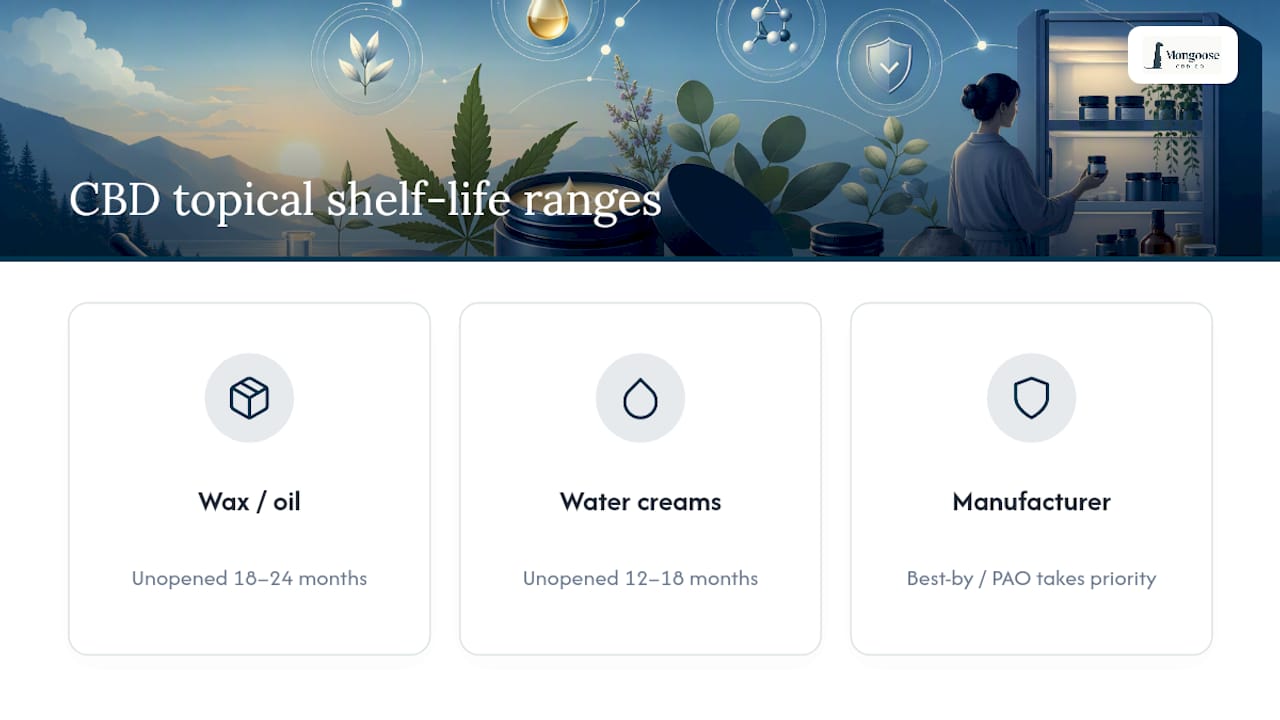
Formulas backed by a current certificate of analysis (COA) give you more confidence in those numbers. A COA verifies potency at the time of testing, and when paired with a visible manufacture date, it lets you calculate roughly how much cannabinoid strength might remain by the time you're using the last of the jar.
What Makes CBD Topicals Break Down Faster
Light is one of the fastest ways to wreck a batch. UV exposure drives oxidation in both the cannabinoids and the carrier oils, which is why stability studies on cannabinoid storage show refrigerated, dark storage preserving potency far longer than a jar left on a sunny counter.
Heat works the same way, just faster. Warmth speeds up the chemical reactions behind rancidity, so a balm baking in a hot car or sitting on a bathroom shelf near a shower will degrade quicker than one kept at a stable room temperature.
Water content matters just as much as light or heat. Oil and wax based balms have almost nothing for bacteria to feed on, but water containing creams and lotions need functioning preservatives to stay safe, and once those preservatives break down, microbial growth becomes a real risk.
Carrier oil choice affects shelf life too. Research on lipid oxidation across common carrier oils found that MCT oil and coconut oil resist rancidity noticeably better than hemp seed oil, which oxidizes faster. Antioxidants like mixed tocopherols (vitamin E) or rosemary extract slow that process further, and packaging that limits air exposure, like an airless pump system, keeps oxygen from reaching the formula in the first place.
Signs Your CBD Balm Has Gone Bad
Your senses are the first line of defense, and they're usually reliable for oil based products. Here's what to check before you scoop out another dose:
- Smell: A sour, rancid, or "off" odor replacing the balm's original scent is the clearest red flag.
- Texture: Grittiness, clumping, or a formula that's separated into layers means the emulsion or wax structure has broken down.
- Color: Darkening or an uneven, blotchy appearance often signals oxidation.
- Packaging: A broken safety seal, a faded or unreadable batch number, or a date long past the PAO symbol are all reasons to think twice.
One caveat worth taking seriously: sensory checks don't always catch microbial contamination in water based creams. A cream can look and smell fine while still harboring bacteria if the preservative system has failed. When you're genuinely unsure, especially with a cream well past its printed date, throw it out rather than test it on your skin.
Smart Storage Habits That Extend Shelf Life
Small habits make a bigger difference than most people expect. Follow these steps to get the most usable life out of every jar or tin:
- Keep it cool, dark, and dry. A drawer, cabinet, or closet shelf beats a bathroom or a windowsill every time, since both humidity and sunlight speed up degradation.
- Close the lid immediately after use. Every extra second of air exposure adds to cumulative oxidation.
- Refrigerate for bulk or infrequent use. A range of roughly 40 to 50°F (4 to 10°C) meaningfully slows oxidation compared to room temperature, which matters if you bought in bulk or use the product sparingly. Skip the freezer. Freezing can alter the texture of waxes and oils and cause separation once thawed.
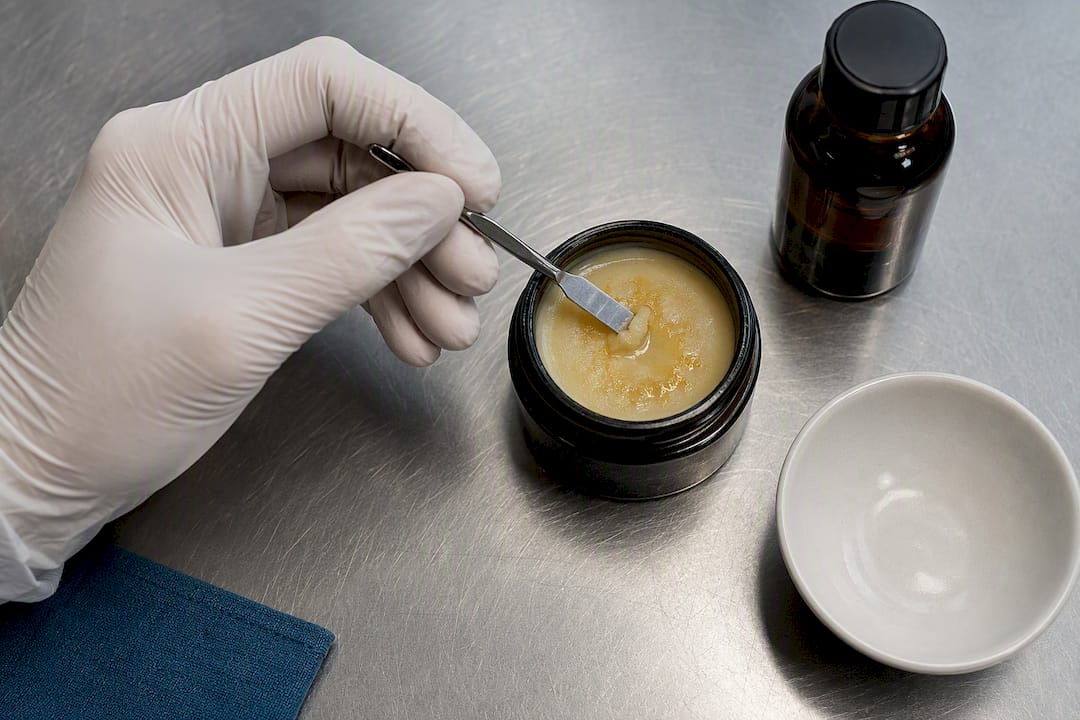
- Use a spatula instead of your fingers. Dipping fingers into a jar introduces oils, bacteria, and skin cells that shorten shelf life fast.
- Store the container upright. This limits leakage and keeps the product away from the cap threads, where contamination tends to start.
Pro Tip: If your balm came in an open jar rather than an airless pump, consider transferring what you don't use daily into a small, opaque, airtight container for backup storage. Less air exposure on the reserve supply means the part you're not touching yet stays fresher longer.
Formulation choices you can't control from the outside, like which carrier oils and botanical extracts went into the balm, also shape how well it holds up under these storage conditions.
Reading the Label: PAO Dates, COAs, and Packaging Clues
The small open jar icon on packaging, often printed as "12M" or "24M," is the Period-After-Opening symbol. It tells you how long the product stays reliable once you break the seal, not from the day it was manufactured. A best-by date, by contrast, applies to the sealed product. In the U.S., cosmetics regulation doesn't require either marking, but responsible manufacturers use them anyway to set clear expectations.
A certificate of analysis matters just as much as the date. A useful COA lists cannabinoid potency at the time of testing and screens for contaminants like heavy metals, pesticides, and residual solvents. Project CBD treats COA transparency, along with batch numbers on the label, as a core trust signal for judging any topical's real quality.
Packaging tells its own story. Airless pumps and opaque, amber, or otherwise light-blocking containers protect the formula far better than a clear jar sitting on a store shelf under fluorescent light. If a label skips batch numbers, storage instructions, or any mention of third-party testing, treat that as a warning sign rather than an oversight.
When to Toss an Old CBD Balm
Potency loss and contamination risk are two different problems, and they deserve different responses. A balm that's simply lost some strength might just work a little less effectively; a contaminated one can cause a skin reaction or infection.
Throw a product away if you see visible mold, discoloration, or separation, if it smells rancid, if it's been open well beyond its PAO window, or if you'd be applying it to broken or irritated skin. A wax based balm that's slightly past its window with no sensory red flags carries lower risk than a cream in the same position, given the higher microbial vulnerability of water containing formulas. When in doubt, it's not worth the risk to your skin.
To dispose of an old topical safely, seal it in its original container, wrap it in a bag, and put it in household trash rather than pouring it down a drain. If you're also wondering how a topical might affect an unrelated concern, like skin sensitivity from an active ingredient, our guide to CBD balm side effects covers what to watch for.
How Mongoose CBD Builds Products That Hold Up
Mongoose CBD formulates its balms, including Seriously Soothing Pain Balm and Rikki Tikki Recovery, around 1,000mg of CBD per ounce combined with natural pain relieving ingredients like arnica, menthol, and turmeric. These are the same wax and oil based formats that tend to hold up longer on the shelf, and the choices behind carrier oils and packaging directly affect how long a product performs the way it's supposed to. If a balm ever doesn't meet expectations, Mongoose CBD backs it with a full refund within 30 days of purchase. For more on how to get consistent results while a product is fresh, see how to use CBD balm for pain, sleep, and recovery.
What Actually Matters Here (and What Doesn't)
Most of the anxiety around CBD balm expiration is misplaced. People fixate on exact dates when the real variable is exposure. A balm stored in a dark drawer for 20 months will often outperform one left on a sunny windowsill for six. Date stamps are a useful shortcut, but they're a proxy for conditions, not a guarantee.
The conventional advice, "just check the date," undersells how much control you actually have. Where you keep the jar, how quickly you close the lid, and whether you dip fingers or use a spatula probably matter more than the calendar. That's not a reason to ignore best-by dates. It's a reason to treat storage as the first lever and the date as a backstop.
If I had to prioritize one thing for readers, it's this: buy from brands that publish COAs and use protective packaging, then store the product like you'd store good olive oil. Cool, dark, sealed. The chemistry doesn't care about marketing claims. It cares about light, air, and heat.
— Cindy
Get a Balm Formulated to Last, Not Just to Sell
Mongoose CBD's balms are built around the same principles this article just walked through: stable wax and oil bases, protective packaging, and clear guidance so you're never guessing whether a jar is still good.
Where a lot of topical brands lean on thin, water heavy formulas that demand near-perfect storage conditions to stay safe, Mongoose CBD's oil and wax based balms, like Miracle Muscle Balm, are formulated with 1,000mg of CBD per ounce and natural ingredients like menthol and eucalyptus that hold up well under normal home storage. Every product is vegan, non-GMO, paraben-free, and THC-free, and backed by a full refund within 30 days if it doesn't work for you. If you're comparing options for muscle soreness or arthritis relief, see how Mongoose CBD stacks up as an alternative to Icy Hot and pick a tin built to stay effective for as long as you need it.
Sources
- PubMed: Stability of cannabinoids under different storage conditions
- PubMed: Lipid oxidation characteristics of common carrier oils
- CBD shelf life and storage guide — Buds Canna Corner
- Project CBD