

The strongest evidence-backed natural alternatives to ibuprofen are curcumin (turmeric extract), omega-3 EPA/DHA (fish oil), topical capsaicin and menthol balms, ginger, boswellia, and for migraine specifically, magnesium and coenzyme Q10. Non-drug therapies including targeted exercise, heat, and physical therapy round out the practical toolkit.
Here is where each one fits best:
- Curcumin (turmeric extract) — osteoarthritis knee pain; a 2014 multicenter RCT found it noninferior to ibuprofen over four weeks, with fewer GI complaints
- Omega-3 EPA/DHA (fish oil) — inflammatory joint and disc pain; may reduce NSAID reliance in select patients
- Topical capsaicin/menthol balms — localized muscle and soft-tissue pain; low systemic risk
- Ginger — mild inflammatory pain, nausea-related discomfort; blood-thinning caution applies
- Boswellia (Boswellia serrata) — chronic joint inflammation, especially knee OA
- Magnesium and CoQ10 — migraine prevention, not acute pain rescue
Safety caveat: Several of these agents interact with anticoagulants and blood thinners. If you take warfarin, aspirin, or any prescription blood thinner, check with your clinician before adding ginger, willow bark, garlic, or high-dose fish oil. See a doctor immediately if pain is severe, sudden, follows trauma, or is accompanied by fever, numbness, or chest symptoms.
Key Takeaways
Curcumin, omega-3 EPA/DHA, and topical analgesic balms have the strongest clinical support among natural alternatives to ibuprofen, and non-drug therapies like exercise and heat should be the first line of defense for most musculoskeletal pain.
| Point | Details |
|---|---|
| Start non-drug first | Exercise, heat/cold, and physical therapy reduce NSAID reliance for most musculoskeletal pain. |
| Curcumin for joint OA | A 2014 RCT found 1,500 mg/day noninferior to ibuprofen for knee OA with fewer GI events. |
| Topicals for localized pain | A 2025 RCT showed 83.7% pain resolution with a herbal topical vs. 71.3% for oral paracetamol. |
| Interaction risk is real | Ginger, willow bark, and high-dose fish oil can increase bleeding risk; disclose all supplements to your clinician. |
| Mongoosecbd topical balms | The Seriously Soothing Pain Balm combines 1,000 mg CBD/oz with menthol, arnica, and turmeric for localized, low-systemic relief. |
Table of Contents
- How natural alternatives reduce inflammation differently than ibuprofen
- Evidence-based natural agents: what each one actually does
- Non-drug therapies that cut your need for NSAIDs
- Who should avoid specific natural alternatives
- How to pick a quality supplement or topical product
- What the key clinical studies actually show
- A practical approach to integrating natural alternatives
- Mongoosecbd topical balms: targeted relief without the systemic exposure
- Further reading and primary sources
- Sources
How natural alternatives reduce inflammation differently than ibuprofen
Ibuprofen is a nonselective COX inhibitor. It blocks both COX-1 and COX-2 enzymes, cutting prostaglandin production fast, which is why it relieves pain within 30–60 minutes. The tradeoff is systemic: COX-1 inhibition also strips the stomach's protective lining, which is why GI irritation is ibuprofen's most common complaint.
Most natural agents work differently. Curcumin, boswellia, and ginger modulate NF-kB signaling and 5-LOX pathways rather than blocking COX directly. Omega-3 fatty acids shift the body's eicosanoid balance by competing with arachidonic acid, reducing the raw material for inflammatory prostaglandins and leukotrienes. Topical agents like capsaicin work locally by depleting substance P in peripheral nerve endings, while menthol activates TRPM8 cold receptors to create a counter-irritant analgesic effect. Magnesium and CoQ10 don't target inflammation at all; they address migraine through neurological and mitochondrial pathways.
Pro Tip: Use a systemic agent like curcumin or omega-3 when the pain is diffuse, inflammatory, and chronic (think knee OA or morning joint stiffness). Reach for a topical first when the pain is localized to one muscle, joint, or soft-tissue area — you get faster local relief with almost no systemic exposure.
Evidence-based natural agents: what each one actually does
Curcumin (turmeric extract)
Best for osteoarthritic joint pain. The 2014 Curcuma domestica multicenter RCT found 1,500 mg/day of standardized extract was noninferior to 1,200 mg/day of ibuprofen for knee OA pain over four weeks, with fewer gastrointestinal adverse events in the curcumin group. That is a meaningful finding, though it is one trial in a specific population.
The catch is bioavailability. Plain curcumin powder absorbs poorly. Look for formulations paired with piperine (black pepper extract), phospholipid complexes (Meriva), or nanoparticle delivery. Standard research doses run 500–1,500 mg/day of curcuminoids. Avoid high doses if you are on blood thinners or have gallbladder disease.
Omega-3 EPA/DHA (fish oil)
Best for inflammatory joint and spine pain. Research on omega-3 mechanisms shows EPA and DHA reduce prostaglandins and leukotrienes by competing with arachidonic acid in the inflammatory cascade. Typical research doses are 2–4 g/day of combined EPA+DHA. Effects build over 6–12 weeks, so patience is required. At doses above 3 g/day, bleeding time may increase; disclose to your clinician if you are on anticoagulants.
Ginger (Zingiber officinale)
Ginger inhibits both COX and 5-LOX pathways, giving it a dual anti-inflammatory profile similar in theory to boswellia. Clinical trials show modest but real benefit for muscle soreness and mild OA pain. Typical doses in studies range from 500–2,000 mg/day of standardized extract. Ginger has blood-thinning properties, so it carries the same anticoagulant interaction warning as willow bark. It is generally well-tolerated at culinary amounts.
Boswellia (Boswellia serrata)
Boswellia's active compounds, boswellic acids, selectively inhibit 5-LOX without touching COX, which means less GI irritation than NSAIDs. Several small-to-moderate RCTs show benefit for knee OA and inflammatory bowel conditions. A standardized extract labeled for AKBA (acetyl-11-keto-beta-boswellic acid) content is preferable. Doses in trials typically run 100–400 mg of AKBA-standardized extract per day. Evidence is moderate; larger trials are still needed.
Topical agents: capsaicin, menthol, arnica, and CBD balms
Topical preparations deserve their own category because they work through an entirely different mechanism and carry a fundamentally different risk profile. Applying a balm directly to the skin bypasses the digestive tract, eliminating GI risk and reducing systemic exposure to near zero for most ingredients.
Statistic callout: A 2025 randomized, double-blind trial found a herbal topical analgesic achieved pain resolution by day 7 in 83.7% of participants versus 71.3% for oral paracetamol, with a faster median time to resolution in soft-tissue injuries. This single trial reinforces what practitioners have observed: topicals can outperform oral agents for localized injuries.
Capsaicin (from chili peppers) depletes substance P over repeated application, reducing pain signal transmission. Menthol activates cold receptors to create a counter-irritant effect. Arnica has anti-inflammatory properties supported by small trials for bruising and muscle soreness. CBD in topical form stays largely local, making it practical for muscle and joint discomfort without the systemic unknowns of oral CBD. For more on how capsaicin-containing balms work mechanically, the ingredient science is worth reviewing before you buy.
Magnesium and coenzyme Q10 (for migraine)
These two belong in a separate category because they address migraine prevention, not general inflammation. A multidisciplinary expert review identified magnesium and CoQ10 as among the most commonly recommended natural agents for migraine prophylaxis. Magnesium glycinate or citrate at 300–400 mg/day is the most studied form. CoQ10 at 100–300 mg/day has shown benefit in several small trials for reducing migraine frequency. Neither replaces acute rescue medication during a migraine attack.
Willow bark and other agents
Willow bark (Salix alba) contains salicin, which the body converts to salicylic acid, the precursor to aspirin. It has a long history for low-back pain and OA. Evidence is limited to small trials, and the blood-thinning risk is real. Avoid it entirely if you are on anticoagulants, have aspirin sensitivity, or are pregnant. Devil's claw (Harpagophytum procumbens) shows modest evidence for low-back pain. Both are covered in the PMC herbal medicine review as agents with genuine but limited clinical support.
Non-drug therapies that cut your need for NSAIDs
For low-back pain, knee OA, and soft-tissue injuries, non-drug approaches including exercise, heat, and conservative therapies can relieve pain as effectively as OTC NSAIDs for some people. That is not a fringe claim; it reflects what major clinical guidelines now recommend as first-line care.

Exercise is the most evidence-supported non-drug intervention for chronic musculoskeletal pain. Resistance training and low-impact aerobic activity (swimming, cycling, walking) reduce joint inflammation, strengthen supporting muscles, and lower pain sensitivity over time. The American College of Physicians recommends exercise as a first-line treatment for chronic low-back pain. Starting with 20–30 minutes of low-impact movement three times per week is a realistic entry point.
Heat and cold work for different situations. Heat increases blood flow and relaxes muscle spasm, making it useful for chronic stiffness and muscle tension. Cold reduces acute inflammation and numbs sharp pain in the first 48–72 hours after an injury. Alternating both can help with subacute injuries.
Acupuncture has moderate evidence for chronic low-back pain, neck pain, and OA. Several systematic reviews support it as an adjunct to standard care, and the American College of Physicians includes it in its low-back pain guidelines.
TENS (transcutaneous electrical nerve stimulation) provides short-term relief for localized musculoskeletal pain by stimulating sensory nerves and modulating pain gate signals. It is safe, inexpensive, and available without a prescription.
Weight loss is one of the most underused interventions for knee and hip OA. Each pound of body weight adds roughly four pounds of force across the knee joint. Even modest weight reduction measurably reduces OA pain and NSAID use.
Practical action plan for a soft-tissue flare:
- Apply the PRICE protocol (Protect, Rest, Ice, Compress, Elevate) in the first 24–48 hours.
- After 48 hours, switch to heat and gentle range-of-motion movement.
- Apply a topical analgesic balm to the area two to three times daily.
- If pain persists beyond 7–10 days or worsens, see a clinician before reaching for ibuprofen long-term.
Practice-oriented naturopathic guidance recommends integrating targeted exercise, anti-inflammatory dietary patterns, and stress management as a sustained strategy to reduce analgesic reliance, not just acute management.
Who should avoid specific natural alternatives
Natural alternatives can be safer than NSAIDs in some respects, but they carry real interaction and contraindication risks that are easy to underestimate.
Major contraindications and interactions:
- Anticoagulants (warfarin, heparin, newer blood thinners): Willow bark, ginger, garlic, high-dose fish oil, and vitamin E can all increase bleeding risk. Do not combine without clinician approval.
- Antiplatelet drugs (aspirin, clopidogrel): Same concern as above; additive bleeding risk with several herbal agents.
- Pregnancy and nursing: Most herbal supplements lack safety data for pregnancy. Avoid willow bark (salicylate risk), high-dose ginger, boswellia, and most concentrated herbal extracts unless a qualified provider approves.
- Renal disease: High-dose curcumin may affect kidney oxalate levels; omega-3 at high doses requires monitoring in patients with compromised renal function.
- Cardiovascular disease: Consult a cardiologist before starting high-dose fish oil if you have a history of atrial fibrillation; some trials have shown mixed cardiovascular signals at very high doses.
- Pediatric use: Most herbal supplement dosing data comes from adult trials. Do not give concentrated herbal extracts to children without pediatric provider guidance.
- Perioperative period: Stop all herbal supplements at least two weeks before planned surgery. Ginger, garlic, willow bark, and fish oil all affect bleeding.
Disclose everything to your clinician. The PMC herbal medicine review specifically flags that herb–drug interactions are underreported because patients assume "natural" means safe to combine freely. That assumption is wrong. Bring a list of every supplement you take to every medical appointment, and stop all herbal agents before any surgical procedure per your provider's guidance. This article provides general information only and is not a substitute for professional medical advice. Always confirm current guidance with a qualified healthcare provider.
How to pick a quality supplement or topical product
The single most important rule: choose standardized extracts with third-party testing and a clearly stated dose per serving. Without those two things, you have no way to know what you are actually taking.
Standardization means the extract is guaranteed to contain a specific percentage of the active compound. For boswellia, look for AKBA content on the label. For fish oil, the label should state the exact milligrams of EPA and DHA per serving, not just "fish oil" in milligrams. A product listing only total fish oil weight is hiding how little active omega-3 it actually contains.
Third-party certificates of analysis (COA) verify that what is on the label is in the bottle, and that heavy metals, pesticides, and microbial contaminants are within safe limits. NSF International, USP, and Informed Sport are the most recognized third-party certifiers in the U.S. market. If a brand cannot produce a COA on request, move on.
Product red flags to avoid:
Vague proprietary blends that list ingredients without individual doses are a consistent warning sign. If a label says "Herbal Pain Complex 500 mg" and lists six ingredients underneath with no individual amounts, you cannot evaluate the dose of any single ingredient. Similarly, any product claiming to work "like ibuprofen overnight" or promising to eliminate pain in 24 hours is overstating what the clinical evidence supports for any natural agent.
For topical balms specifically, check the carrier base. A well-formulated balm uses a skin-penetrating carrier (beeswax, shea butter, or a lipid base) that helps active ingredients reach the target tissue. Alcohol-heavy formulations evaporate quickly and reduce contact time. For topical CBD balms, the ingredient list should name the CBD concentration per ounce, the carrier base, and any additional active ingredients (menthol, arnica, capsaicin) with their concentrations.
What the key clinical studies actually show
Curcumin for osteoarthritis and omega-3 for inflammatory joint pain have the strongest RCT and meta-analysis support among oral natural agents; topical analgesics have emerging RCT evidence for soft-tissue injuries; magnesium and CoQ10 have moderate evidence for migraine prophylaxis.
| Study | Design | Primary finding | Practical takeaway |
|---|---|---|---|
| Curcuma domestica vs. ibuprofen, 2014 | Multicenter RCT | 1,500 mg/day curcumin noninferior to 1,200 mg/day ibuprofen for knee OA over 4 weeks; fewer GI events | Curcumin is a credible OA option; use bioavailable formulation |
| Herbal topical vs. paracetamol, 2025 | Randomized double-blind RCT | 83.7% pain resolution by day 7 (topical) vs. 71.3% (oral paracetamol) for soft-tissue injuries | Topicals can outperform oral analgesics for localized injuries |
| Multidisciplinary expert review | Expert consensus/review | Curcumin and fish oil recommended for OA joint pain; Mg and CoQ10 for migraine prophylaxis | Aligns expert preference with RCT findings |
| Herbal medicine safety review | Systematic review | Herbal agents effective for mild-to-moderate pain; significant herb–drug interaction risk | Quality control and interaction screening are non-negotiable |
| Omega-3 mechanisms review | Narrative/mechanistic review | EPA/DHA reduce prostaglandins and leukotrienes; some patients reduce NSAID use | Supports fish oil as an adjunct for inflammatory pain |
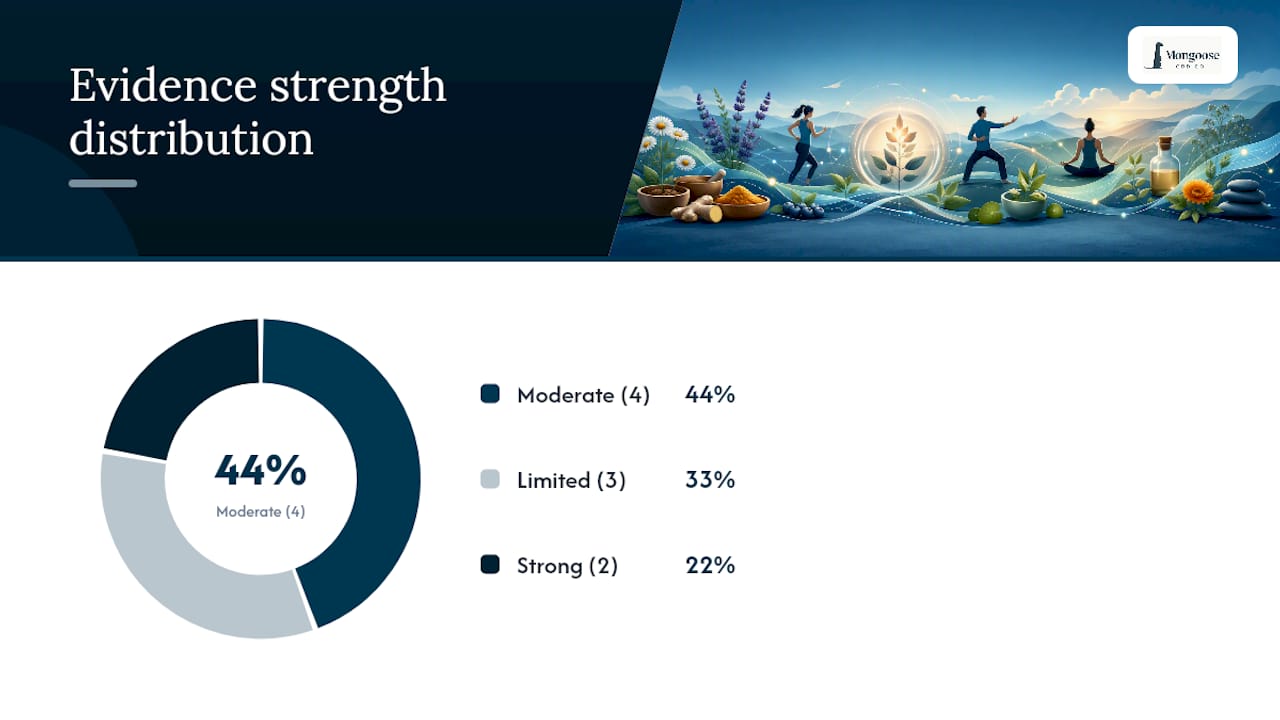
Evidence strength summary:
- Strong (multiple RCTs/meta-analyses): Curcumin for knee OA; topical capsaicin for localized pain
- Moderate (small-to-moderate RCTs, expert consensus): Omega-3 for inflammatory joint pain; boswellia for OA; magnesium and CoQ10 for migraine prevention
- Limited (small trials, traditional use): Ginger for OA/muscle soreness; willow bark for low-back pain; devil's claw for low-back pain
The main research gap across all agents is the absence of large, long-duration RCTs using standardized formulations. Most trials run 4–12 weeks, which is too short to assess long-term safety or cumulative benefit.
A practical approach to integrating natural alternatives
Start with non-drug therapies first, add a topical for any localized pain, consider curcumin or omega-3 for persistent inflammatory joint pain, and consult a clinician before combining any of these with prescription medications.
My approach when piloting a natural alternative is to pick one agent, use a standardized formulation at the studied dose, and track outcomes over 4–8 weeks with a simple daily pain log (0–10 scale, morning and evening). If there is no measurable improvement by week 6, I stop that agent rather than adding more. Stacking multiple supplements without a clear rationale makes it impossible to know what is helping and what is not.
The combination I find most defensible for chronic inflammatory joint pain is a bioavailable curcumin formulation plus a topical balm applied directly to the affected joint, alongside a consistent low-impact exercise routine. That covers systemic, local, and mechanical contributors simultaneously without the GI risk of daily ibuprofen. If pain escalates, becomes acute, or is accompanied by swelling, fever, or neurological symptoms, that is the signal to stop self-managing and see a clinician.
Mongoosecbd topical balms: targeted relief without the systemic exposure
Topical CBD balms offer a practical, low-systemic option for localized muscle and joint pain, and they fit naturally into the kind of layered pain plan this article describes.
Mongoosecbd's Seriously Soothing Pain Balm delivers 1,000 mg of CBD per ounce alongside menthol, arnica, turmeric, and warming botanicals like cinnamon, clove, ginger, and cayenne. That ingredient stack is not accidental: each component targets a different part of the local pain response, from counter-irritant cooling (menthol) to anti-inflammatory modulation (turmeric/curcumin) to circulation support (cayenne). The formulas are vegan, non-GMO, paraben-free, and THC-free.
Use it the way topicals work best: apply directly to the sore area, massage in for 30–60 seconds to improve absorption, and combine with heat or gentle movement for faster relief. For muscle recovery after training, the Rikki Tikki Recovery balm is formulated specifically for post-exercise soreness and inflammation. Mongoosecbd backs every purchase with a 30-day full refund policy. If you want to reduce how often you reach for ibuprofen for localized soreness, this is a concrete, low-risk place to start. As always, consult your clinician if you are on medications or managing a chronic condition.
Further reading and primary sources
Efficacy and safety of Curcuma domestica extracts compared with ibuprofen in patients with knee osteoarthritis — The 2014 multicenter RCT that established curcumin's noninferiority to ibuprofen for knee OA; the primary source for curcumin dosing and GI comparison data.
2025 randomized double-blind study of a herbal topical analgesic versus paracetamol for minor soft tissue injuries — The most recent RCT comparing a topical herbal product to an oral analgesic; key evidence for the topical-first approach in soft-tissue injuries.
Evidence-Based Opinions from Multidisciplinary Experts on Use of Naturopathic Herbal Remedies in Pain Management (PMC) — Expert consensus review covering curcumin, fish oil, magnesium, and CoQ10; useful for understanding where clinical preference aligns with trial data.
Herbal Medicine for Pain Management: Efficacy and Drug Interactions (PMC) — Systematic review covering safety, herb–drug interactions, and evidence quality across multiple herbal agents; the primary source for contraindication guidance.
Natural anti-inflammatory agents for pain relief (PMC) — Mechanistic and clinical review of omega-3 EPA/DHA and other natural anti-inflammatory compounds; covers prostaglandin and leukotriene pathways in detail.
Chronic Pain: Natural Remedies and Prevention Strategies (AANMC) — Practice-oriented naturopathic guidance on integrating exercise, diet, supplements, and stress management to reduce analgesic dependence.
Sources
- Efficacy and safety of Curcuma domestica extracts compared with ibuprofen in patients with knee osteoarthritis: a multicenter study
- 2025 randomized double-blind study of a herbal topical analgesic versus paracetamol for minor soft tissue injuries
- Evidence-Based Opinions from Multidisciplinary Experts on Use of Naturopathic Herbal Remedies in Pain Management
- Herbal Medicine for Pain Management: Efficacy and Drug Interactions
- Chronic Pain: Natural Remedies & Prevention Strategies
- Best and Safest Strategies for Pain Relief - Consumer Reports