
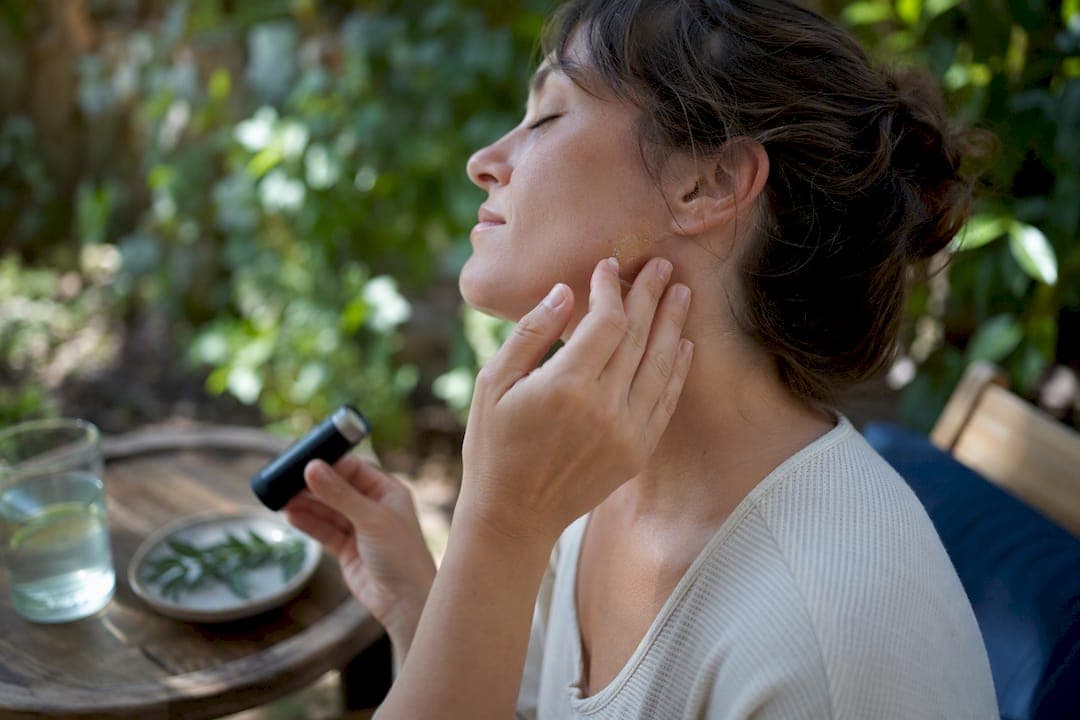
Yes, topical and intraoral CBD show real, measurable benefit for TMJ-related muscle pain in recent clinical trials, though it works best as a targeted add-on rather than a cure. A randomized trial found intraoral 10% CBD gel cut self-reported pain by 57.4% and dropped masseter muscle activity by 42.1% after 30 days of consistent use. That's not a rumor from a wellness blog. It's a measured outcome from a double-blind study on people with sleep bruxism and muscle-related TMD, the same jaw-clenching, tension-driven pain that sends most TMJ sufferers looking for relief.
Here's what to do with that information right now:
- Start with a topical or intraoral product, not an oral tincture, since local application targets the masseter directly.
- Check the certificate of analysis (COA) before buying anything, confirming CBD concentration and a THC-free claim.
- Set a 14 to 30 day tracking window, rating your pain and jaw stiffness every few days so you can judge whether it's actually working instead of guessing.
One safety note before you start: CBD is not FDA-approved for TMJ or any pain condition, only for a handful of pediatric epilepsy syndromes. If you're on blood thinners, pregnant, or nursing, talk to a clinician before adding CBD to your routine.
Key Takeaways
Topical and intraoral CBD applied directly over the masseter muscle reduces TMJ-related pain and muscle activity within 14 to 30 days in multiple randomized trials, making it a reasonable first-line option for muscle-driven jaw pain.
| Point | Details |
|---|---|
| Trial results are strong for localized delivery | Intraoral 10% CBD gel cut pain by 57.4% and muscle activity by 42.1% after 30 days. |
| Route determines effectiveness | Topical and intraoral application targets the masseter directly and avoids first-pass liver metabolism. |
| Give it two to four weeks | Meaningful pain and muscle-activity changes showed up at day 14 and strengthened by day 30 in trials. |
| Check the label before buying | Confirm a current COA, stated CBD concentration, and a THC-free claim before choosing a product. |
| Mongoosecbd offers a trial-aligned option | The Seriously Soothing Pain Balm and Rikki Tikki Recovery balm use 1,000mg CBD per ounce with muscle-focused ingredients like arnica and menthol. |
Table of Contents
- What the Clinical Research Says About CBD for TMJ Pain
- Topical, Intraoral, or Oral: Which CBD Route Actually Reaches Your Jaw?
- How to Apply Topical CBD for Jaw Pain, Step by Step
- Is CBD Safe to Use With Other Medications for TMJ?
- When Jaw Pain Needs a Dentist, Not Just a Balm
- What to Look for When Choosing a CBD Product for TMJ
- How Long Before You Notice a Difference?
- Why We're Upfront About What CBD Can and Can't Do for Your Jaw
- Try a Targeted Topical Balm Before Anything Systemic
- Frequently Asked Questions About CBD and TMJ Pain
- Sources
What the Clinical Research Says About CBD for TMJ Pain
The evidence for CBD for TMJ pain is stronger than most people expect, but it's also narrower than marketing copy suggests. The strongest data comes from two well-designed randomized trials, both focused on localized application rather than oral capsules or gummies.
The first, a double-blind trial testing intraoral CBD gel, found that 10% CBD gel produced a 57.4% reduction in self-reported pain alongside a 42.1% drop in masseter sEMG readings, a surface electromyography measurement that tracks muscle electrical activity. The 5% gel worked too, just less dramatically, with a 40.8% pain reduction. The same trial reported a 51% reduction in bruxism index at the 10% strength. These aren't marginal numbers. They're the kind of effect size that gets researchers excited about a treatment category.
The second major trial looked at transdermal application directly over the masseter muscles. Patients using the CBD formulation saw a roughly 70.2% reduction in VAS pain scores at 14 days, compared to about 9.8% in the placebo group. VAS, or visual analog scale, is the standard 0 to 10 pain-rating tool used across most orofacial pain research. The same trial recorded an 11 to 12.6% drop in masseter sEMG activity, evidence that the muscle itself was relaxing, not just that patients felt better psychologically.
Two separate randomized trials, using different formulations and different measurement tools, both landed on the same conclusion: CBD applied directly to the jaw muscles reduces both reported pain and measurable muscle tension within two to four weeks.
That consistency across independent trials matters more than either result alone.
Now the caveat, because the caveat matters. A systematic review of topical interventions for TMD that pooled nine randomized trials covering 355 patients, found only one study reporting significant CBD benefit over placebo, and the review rated overall evidence quality as low due to small sample sizes and risk-of-bias concerns. This isn't the review contradicting the trials above. It's the review pointing out that we still need more of them, with larger cohorts and standardized formulations, before anyone calls this settled science.
A broader living systematic review of cannabis-based treatments for chronic pain reinforces that caution. It found that low-THC or CBD-only products show inconsistent results across chronic pain conditions generally, even while isolated topical trials, like the two above, post strong numbers. Mechanistically, this tracks with what researchers know about CBD's action on TRPV1 receptors and the endocannabinoid system in trigeminal and masseter tissue, which explains why localized application seems to outperform systemic dosing for this specific kind of muscle pain.
So where does that leave you? The trial data on topical and intraoral CBD for TMJ-specific muscle pain is genuinely promising, with two independent studies posting pain reductions above 50%. The systematic-review level evidence is still catching up, mostly because TMJ is a niche enough condition that large trials are hard to fund. Treat CBD as a well-supported experiment worth running on yourself, not a guaranteed fix.
Topical, Intraoral, or Oral: Which CBD Route Actually Reaches Your Jaw?
Route matters more than most sellers admit. Swallowing CBD oil sends it through your liver before a fraction ever reaches your bloodstream, a process called first-pass metabolism that can waste much of the dose before it does anything for your masseter. Applying CBD directly to the skin over the jaw, or into the mouth against the gum and cheek tissue near the joint, skips that detour entirely.
That's likely why the two strongest trials on TMJ pain both used local delivery instead of oral capsules. Route of administration changes how much active compound actually reaches the target tissue, and for a joint and muscle group as close to the skin as the jaw, topical and intraoral routes have a shorter, more direct path.
Topical balms and creams. Trial concentrations for topical products ranged from around 1.5% up to 20% CBD, usually applied once or twice daily directly over the masseter and temporalis muscles. Onset tends to build over days rather than minutes. Side effects in trials were minimal and local, mostly mild skin sensitivity from the carrier ingredients rather than the CBD itself.
Intraoral gels. These sit closer to the joint capsule itself, applied to the inner cheek or gum line near the TMJ. Trials commonly used 5% to 10% concentrations, and the 10% strength consistently outperformed 5% for both pain and bruxism reduction. Expect a similar multi-day onset window, with the tradeoff being some patients find oral mucosa more sensitive than skin.
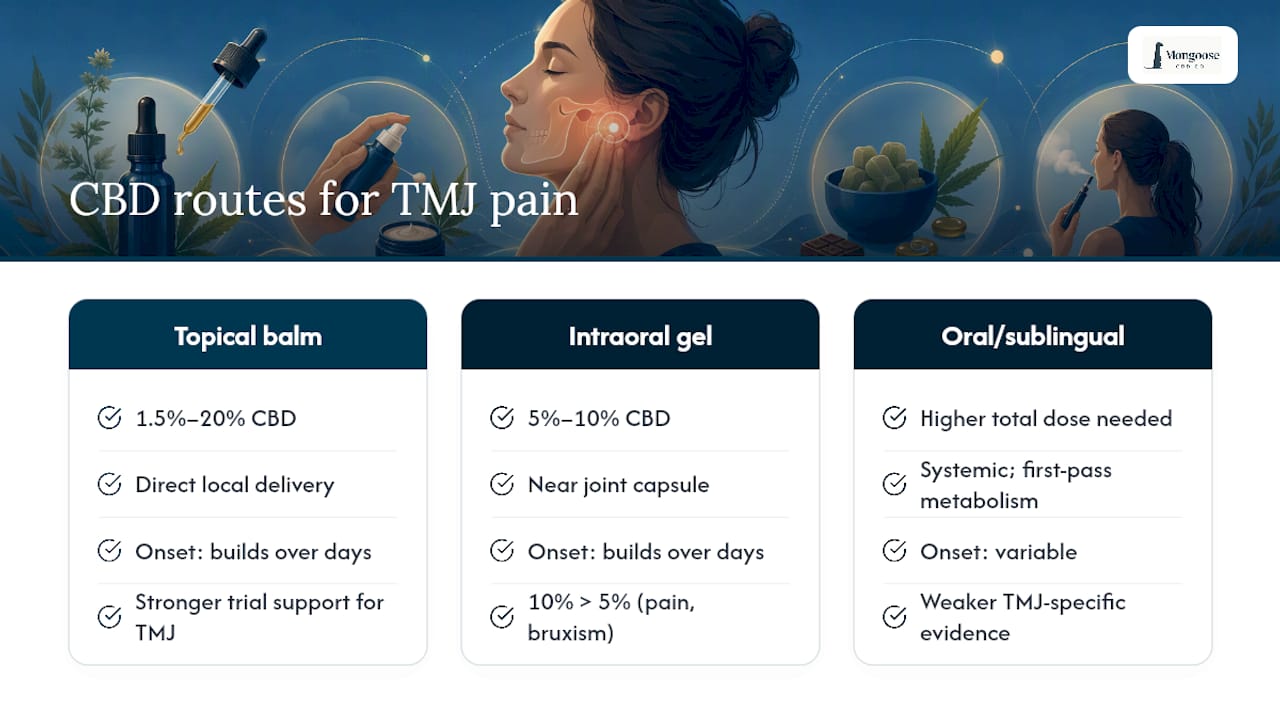
Oral or sublingual CBD. This route sends CBD through the whole body rather than concentrating it at the jaw. It may help broader inflammation or stress-related clenching, but the evidence specifically for TMJ muscle pain is thinner, and first-pass metabolism means you generally need a higher total dose to get comparable local effect.
Pro Tip: If you're new to CBD and specifically targeting jaw and masseter pain, start with a topical balm applied directly over the muscle rather than jumping to an oral tincture. The trial data backing localized relief is stronger, the systemic exposure is lower, and you'll know within two weeks whether it's worth continuing.
How to Apply Topical CBD for Jaw Pain, Step by Step
Consistency drives results here more than any single application technique. Skipping days is the single biggest reason people conclude "CBD didn't work" when the real issue was irregular use.
- Clean the area first. Wash and dry the skin over your masseter (the muscle that bulges when you clench your back teeth) before applying anything.
- Apply a dime-sized amount of balm directly over the masseter and, if tender, the temple area above your ear.
- Massage it in for 30 to 60 seconds using small circular motions, which helps both absorption and directly loosens tight muscle fibers.
- Repeat two to three times daily, including one application shortly before bed, since nighttime clenching and bruxism are when most TMJ damage accumulates.
- For intraoral gel, place a small amount along the inner cheek near the jaw joint rather than swallowing it, following the product's specific application instructions.
- Track your results daily for 14 to 30 days, rating morning jaw stiffness and pain on a simple 0 to 10 scale, plus noting whether you catch yourself clenching during the day.
- Stop and reassess if irritation develops at the application site, or if pain worsens rather than improves after two weeks of consistent use.
Pro Tip: Pair your CBD application with a warm compress for five minutes beforehand. Heat increases local blood flow and skin permeability, which can improve how well the balm's active ingredients penetrate the masseter.
Your tracking template doesn't need to be complicated. A simple notes app entry with the date, a pain number, and a one-line comment ("still clicking on left side, less morning tightness") gives you enough data after two weeks to make an informed decision about whether to continue, switch products, or bring the results to a dentist.
Is CBD Safe to Use With Other Medications for TMJ?
CBD interacts with the same liver enzyme system, CYP450, that metabolizes a long list of common medications, including blood thinners like warfarin, some seizure medications, and certain antidepressants. This interaction matters more for oral and sublingual CBD, where blood levels rise significantly, than for topical application, where systemic absorption is much lower. Still, if you're on a blood thinner or any medication with a narrow safety margin, check with your doctor or pharmacist before adding any CBD product, topical or otherwise.
Trial safety data on topical and intraoral CBD is reassuring: most reported adverse events were mild and local, like minor skin sensitivity, with systemic side effects far less common than with high-THC or oral cannabis products.
The randomized trial on intraoral CBD gel reported no serious adverse events across its study population, and Harvard Health's review of CBD for pain notes the same general pattern: CBD's anti-inflammatory and endocannabinoid-modulating effects show promise, but researchers still consider the evidence base young, and Harvard Health specifically flags that the FDA has not approved CBD for pain conditions of any kind.
That regulatory point deserves its own sentence, because it gets glossed over constantly: the FDA's only CBD approval is Epidiolex, prescribed for two rare pediatric epilepsy syndromes. Every topical balm, tincture, or gummy marketed for pain, arthritis, or TMJ sits outside FDA-approved use. That doesn't mean these products don't work, the trial data above suggests otherwise for topical and intraoral application, but it does mean you're relying on clinical research and third-party lab testing rather than a regulatory stamp of approval.
A few practical safety checkpoints:
- Avoid CBD, or check with a doctor first, if you're pregnant or breastfeeding, since safety data in these groups is limited.
- If you're giving anything to a child for jaw pain, involve a pediatric dentist rather than self-treating.
- Always confirm a product's COA lists actual CBD content and confirms THC levels below 0.3%, or zero for THC-free formulas.
- Watch for skin irritation in the first few uses, especially with formulas containing menthol, clove, or cinnamon, which can sting on broken or irritated skin.
When Jaw Pain Needs a Dentist, Not Just a Balm
CBD, or any at-home remedy, isn't the right first move if you're dealing with certain warning signs. Get evaluated promptly if you notice:
- Sudden jaw locking that won't release, or a jaw that shifts noticeably out of alignment.
- Pain that's rapidly worsening over days rather than staying stable or slowly improving.
- Fever, facial swelling that's asymmetric, or any sign suggesting infection rather than muscle tension.
- Numbness, tingling, or other neurologic symptoms spreading beyond the jaw itself.
- Uncontrolled bleeding from the gums or inside the mouth.
A dentist, oral surgeon, or TMJ specialist should see you for these symptoms, not a pharmacy shelf. If your case is milder, a persistent ache, morning stiffness, clicking without locking, CBD can reasonably run alongside professional care rather than instead of it. Combining topical CBD with physical therapy, an occlusal splint, or stress-reduction techniques tends to outperform any single approach on its own, according to clinical commentary in this space. Tell your dentist or doctor you're using CBD, especially if you're also taking prescription medication, so they have the full picture when recommending next steps.
What to Look for When Choosing a CBD Product for TMJ
Not every jar labeled "CBD balm" reflects what's actually inside it. A 2023 FDA warning letter campaign found a significant share of CBD products mislabeled their actual cannabinoid content, which is exactly why the checklist below isn't optional.
Before buying anything, confirm:
- A current third-party COA is available, showing actual CBD milligrams per ounce and confirming THC content.
- The concentration is stated clearly, ideally in a range similar to what trials used (roughly 1.5% to 20% for topical products).
- A THC-free claim is backed by lab testing, not just a marketing label.
- Carrier and supporting ingredients are listed, since components like menthol, arnica, clove, and turmeric have their own pain-relieving properties that can compound the CBD's effect.
- You patch-test on a small area first, especially with warming or cooling ingredients like cinnamon or eucalyptus, before applying broadly to sensitive facial skin.
When you're weighing formulation against trial data, three dimensions matter most: the delivery route (topical versus intraoral versus oral), the concentration relative to what studies actually tested, and whether the product targets muscle tension specifically versus general joint inflammation. Formulas built around arnica, menthol, and clove lean toward muscle and tension relief, closer to what the masseter-focused trials tested, while joint-focused blends often add turmeric or ginger for their anti-inflammatory properties.
Mongoosecbd's Seriously Soothing Pain Balm fits several of these boxes directly: it's a topical formulation at 1,000mg CBD per ounce, paired with arnica, menthol, and clove, which lines up with the tension-and-muscle-focused profile the strongest TMJ trials targeted. The Rikki Tikki Recovery balm leans harder into muscle recovery, useful if your jaw tension shows up alongside broader neck or shoulder clenching, a common pattern for people who grind their teeth at night. Both are THC-free, vegan, and formulated without parabens, and both come with lab documentation available on request, aligning with the COA checklist above.

How Long Before You Notice a Difference?
Don't expect an instant fix. Every trial showing meaningful results measured outcomes at 14 days at the earliest, with the clearest improvements showing up by 30 days of consistent application. That timeline matches how CBD's anti-inflammatory and muscle-relaxant effects appear to build cumulatively rather than acting like an instant painkiller.
Here's a realistic checkpoint schedule:
- Days 1 to 7: Expect minimal change, maybe slightly less morning stiffness if you're consistent with application.
- Day 14: This is your first real checkpoint. Trial data showed measurable VAS pain drops by this point, sometimes as high as 70.2% in the transdermal trial.
- Day 30: The clearest results in trial data appeared here, with pain reductions above 50% and reduced muscle sEMG activity at the 10% concentration level.
If you see no change at all by day 14, it's reasonable to try a higher concentration or switch delivery route before giving up. If you see zero improvement by day 30 despite consistent use, that's your signal to loop in a dentist or TMJ specialist rather than continuing indefinitely on your own.
Why We're Upfront About What CBD Can and Can't Do for Your Jaw
Mongoosecbd sells topical CBD balms, so take that into account as you read our recommendation here: we have a direct financial interest in you trying a topical product. That said, the trial data on localized CBD application for TMJ muscle pain is genuinely solid, stronger than the evidence behind a lot of things marketed for jaw pain, and that's what shapes our actual advice rather than just our catalog.
If you're dealing with tension-driven jaw pain, clenching, or mild bruxism, a topical balm applied consistently for two to four weeks is a reasonable, low-risk place to start. It's not a guaranteed fix, and it's not a substitute for a dentist if your symptoms are severe or worsening. But the downside risk is low, especially with a THC-free, third-party tested product, and the upside, based on the trials above, is meaningful for a lot of people. Check the COA before you buy, and know that a 30-day refund window exists if it doesn't work for you.
Try a Targeted Topical Balm Before Anything Systemic
If you're weighing options for jaw pain, a topical balm is the lowest-friction, lowest-risk place to start, no prescriptions, no systemic side effects to monitor, and no waiting weeks for an appointment. Mongoosecbd's balms are built around that exact use case: targeted, localized relief you apply directly where the tension lives.
The Seriously Soothing Pain Balm combines 1,000mg of CBD per ounce with arnica, menthol, and clove, ingredients chosen for muscle tension and localized inflammation rather than general wellness. If your jaw tightness travels into your neck and shoulders, which is common with nighttime clenching, the Rikki Tikki Recovery balm is formulated for that broader muscle recovery pattern.
Every batch comes with lab documentation available on request, so you can confirm concentration and THC-free status before committing. And if it doesn't deliver results within your 30-day trial window, Mongoosecbd's refund policy means you're not stuck with a product that didn't work. If you'd rather test the waters first, the sample-size pain balm is a low-commitment way to start your two-week trial today.
Frequently Asked Questions About CBD and TMJ Pain
Does CBD actually help TMJ pain, or is it mostly placebo? Randomized trials suggest it's more than placebo for muscle-related TMJ pain specifically. One trial found a 70.2% VAS pain reduction versus roughly 9.8% for placebo after 14 days of transdermal application, a meaningful gap that placebo alone doesn't typically explain.
What CBD dosage or concentration works best for TMJ? Trials that showed the strongest results used 10% intraoral gel, which outperformed a 5% version, and topical products ranging from roughly 1.5% up to 20% CBD.
How long does it take for CBD to help jaw pain? Expect the first real signal by day 14, with clearer results by day 30 in trial data. CBD builds cumulative anti-inflammatory and muscle-relaxant effects rather than working like an instant painkiller.
Is CBD safe to use with blood thinners for TMJ? CBD can interact with the CYP450 liver enzyme system that also processes blood thinners like warfarin. This risk is lower with topical application than oral CBD, but check with your doctor first if you're on any anticoagulant medication.
Should I use topical CBD or take it orally for jaw pain? Topical and intraoral routes deliver CBD directly to the masseter muscle without the liver's first-pass metabolism, which likely explains why the strongest TMJ trial results used localized rather than oral application.
Is CBD FDA-approved for TMJ or jaw pain? No. The FDA's only CBD approval covers two specific pediatric epilepsy syndromes. CBD products marketed for TMJ, pain, or arthritis operate outside FDA-approved indications, which makes third-party lab testing and COAs especially important when choosing a product.
Sources
- Cannabidiol Intervention for Muscular Tension, Pain, and Sleep Bruxism Intensity—A Randomized, Double-Blind Clinical Trial
- Myorelaxant Effect of Transdermal Cannabidiol Application in Patients with TMD: A Randomized, Double-Blind Trial
- Can CBD oil help manage pain? - Harvard Health
- Living Systematic Review on Cannabis and Other Plant-Based Treatments for Chronic Pain: 2025 Update - Executive Summary