

If you want an Icy Hot alternative, match the ingredient to your pain: menthol for cooling relief, diclofenac for arthritis joints, lidocaine for surface numbing, capsaicin for long-term desensitization, or a CBD balm for inflammation and comfort. Clinical guidance confirms that topical analgesics are short-term symptom tools, not tissue healers, so the right pick depends on your pain type, skin tolerance, and how long you need coverage.
Quick picks by need:
- Acute muscle soreness: Biofreeze (menthol-only cooling) or Bengay (counterirritant dual-action)
- Chronic arthritis pain: Voltaren (topical diclofenac 1% gel, OTC)
- Surface numbing: Aspercreme with lidocaine
- Long-term desensitization: Zostrix (capsaicin cream)
- Sensitive skin or inflammation: Mongoosecbd Seriously Soothing Pain Balm (CBD plus botanicals)
- Long-duration, hands-free coverage: Salonpas medicated patches
Always check for skin irritation before full application, and confirm with a pharmacist if you take blood thinners or aspirin-based medications, since salicylate-containing topicals can interact.
Pro Tip: If you have never used a topical analgesic before, start with the smallest effective amount on a small area for 20 minutes before committing to a full application.
Table of Contents
- How do the top Icy Hot alternatives actually compare?
- How do you choose the right topical pain reliever?
- What does each active ingredient actually do?
- How do you apply topical pain relievers safely?
- Why Mongoosecbd balms stand out as a topical alternative
- Key Takeaways
- What most people get wrong about topical pain relief
- Try a Mongoosecbd pain balm with no risk
- Sources and further reading
How do the top Icy Hot alternatives actually compare?
The table below covers the seven major product categories. Forms, onset, and cautions vary enough that picking the wrong category can mean either no relief or a skin reaction.
| Category | Active ingredient / mechanism | Best for | Onset | Duration | Form | Typical price / availability | Key cautions |
|---|---|---|---|---|---|---|---|
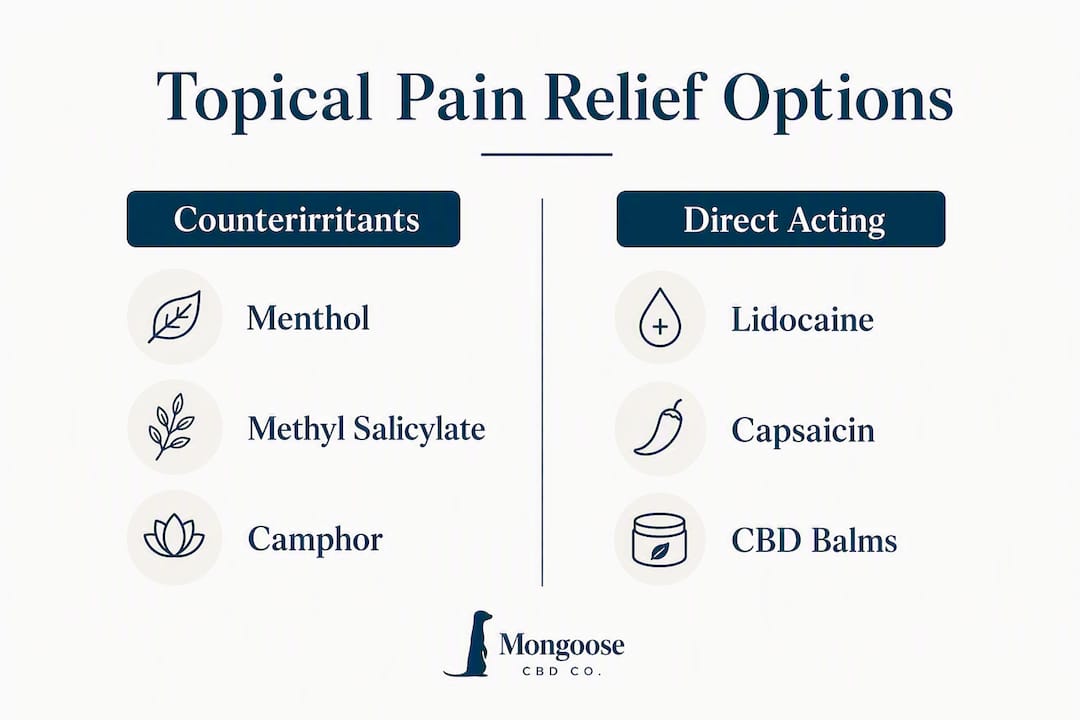
| Menthol-only cooling | Menthol (counterirritant) | Acute muscle soreness, post-workout | Fast (minutes) | Several hours | Gel, roll-on, spray | Drugstore pricing varies | Avoid broken skin; high concentrations can burn |
| Counterirritant dual-action | Menthol + methyl salicylate ± camphor | General muscle and joint soreness | Fast (minutes) | Several hours | Cream, stick, patch | Drugstore pricing varies | Salicylate caution with anticoagulants; avoid heat/occlusion |
| Topical NSAID (diclofenac) | Diclofenac 1% (OTC) / NSAID | Osteoarthritis (hand, knee) | Moderate onset | Several hours | Gel | Drugstore/online pricing varies | GI/skin interaction risk; not for systemic NSAID users |
| Lidocaine topical | Lidocaine (nerve-conduction blocker) | Surface numbing, minor nerve pain | Moderate onset | Several hours | Cream, patch | Drugstore pricing varies | Limit application area; avoid mucous membranes |
| Capsaicin | Capsaicin (TRPV1 desensitizer) | Chronic arthritis, neuropathic pain | Takes days to weeks | Long-term effect | Cream, patch | Pricing varies | Burning sensation initially; avoid eyes and face |
| CBD balm | CBD + botanicals (anti-inflammatory) | Inflammation, muscle soreness, arthritis discomfort, sensitive skin | Moderate onset | Several hours | Balm, salve | Online pricing varies | Patch-test first; check interactions if on systemic meds |
| Medicated patches | Menthol, methyl salicylate, or lidocaine | Long-duration, localized coverage | Moderate onset | Long duration | Patch | Drugstore pricing varies | Do not cut patches; remove before heat exposure |
A note on form: Patches deliver long, localized relief and are ideal when you need hands-free coverage during sleep or light activity. Gels absorb faster and are better for acute soreness right after exercise. Balms and sticks give you control over exactly where the product goes without mess or transfer to clothing.
Biofreeze focuses on menthol-led cooling, while Icy Hot's dual-action lines layer a warming phase on top. Neither is objectively stronger. The difference is sensory strategy, and your skin's tolerance to heat is what should guide the choice.
Pharmacists point out that "ultra strength" labels on counterirritant products usually mean higher concentrations of the same ingredients, not a different mechanism. Higher concentration means higher irritation risk, not necessarily better pain relief.
How do you choose the right topical pain reliever?
Start with your pain type. That single factor narrows the field faster than any other.
Decision factors to work through:
- Pain type: Muscle soreness responds well to counterirritants (menthol, methyl salicylate). Joint pain from osteoarthritis has better evidence behind topical diclofenac. Neuropathic or nerve-adjacent pain often responds to lidocaine or capsaicin.
- Skin sensitivity: If your skin reacts easily, menthol-only or CBD balm formats carry lower irritation risk than products combining methyl salicylate and camphor.
- Application area: Large muscle groups tolerate gels and creams well. Joints and bony areas often do better with a targeted balm or patch.
- Onset vs. duration: Need fast relief for 90 minutes? A menthol gel works. Need coverage through the night? A patch or long-acting balm fits better.
- Smell and sensation tolerance: Some people cannot tolerate the strong menthol or camphor scent in a workplace or shared space. CBD balms and lidocaine products tend to be lower-sensation and lower-odor.
- Medication interactions: Methyl salicylate is a salicylate. If you take warfarin or other anticoagulants, the FDA has flagged that high-concentration salicylate topicals can increase bleeding risk.
Red flags that should steer you away from certain products:
- Broken, sunburned, or irritated skin: avoid all counterirritants and high-menthol products
- Recent use of a heating pad on the same area: do not apply a topical analgesic on top
- Aspirin allergy: avoid methyl salicylate products entirely
- Taking systemic NSAIDs: consult a pharmacist before adding topical diclofenac
Questions to bring to your pharmacist:
- "Is topical diclofenac appropriate for my knee osteoarthritis given my current medications?"
- "Do I need to avoid salicylates because I take a blood thinner?"
- "Can I use a lidocaine patch and a menthol cream on different areas at the same time?"
- "Is a CBD balm safe to use alongside my prescription anti-inflammatory?"
Selection path:
- Identify your pain type (muscle, joint, nerve).
- Check your medication list for salicylate or NSAID conflicts.
- Choose a form that fits your activity level and application site.
- Start with the lowest effective concentration and patch-test on a small area.
- Reassess after one week. If there is no improvement, consult a clinician before escalating.
What does each active ingredient actually do?
Understanding the mechanism takes the guesswork out of label-reading.
Menthol activates cold-sensitive receptors (TRPM8) in the skin, creating a cooling sensation that temporarily overrides pain signals. It does not reduce inflammation. Onset is fast, duration is short, and it works best for acute soreness where you want immediate sensory relief.
Methyl salicylate produces warmth and has mild anti-inflammatory properties, but its primary role in OTC products is counterirritant, not NSAID-level inflammation reduction. Combined with menthol, it creates the classic cool-then-warm effect. The FDA has documented chemical burns from high-concentration methyl salicylate products used under occlusive wraps or with heating pads. That risk is real and avoidable.
Camphor adds a warming sensation and mild local anesthetic effect. At low concentrations it is well tolerated; at higher concentrations it can cause significant skin irritation, especially on sensitive skin.
Capsaicin works differently from every other ingredient on this list. It depletes substance P, a neuropeptide involved in pain signaling, through repeated activation of TRPV1 receptors. The result is desensitization over days to weeks. The initial burning sensation discourages many people, but for chronic arthritis and neuropathic pain, it is one of the few topical options with long-term evidence behind it.
Lidocaine blocks sodium channels in nerve fibers, stopping pain signals from reaching the brain. It does not reduce inflammation. Onset is fast (5–15 minutes), duration is moderate (2–4 hours), and it is the best choice when you need straightforward surface numbing rather than counterirritant sensation.
Diclofenac (topical, 1% OTC) is an NSAID that penetrates the skin to reduce prostaglandin production at the site of inflammation. Voltaren gel has guideline-level evidence for hand and knee osteoarthritis that counterirritants simply do not match. It is not a fast-acting product, and it should not be combined with oral NSAIDs without medical supervision.
CBD (cannabidiol) interacts with endocannabinoid receptors in skin and underlying tissue, with proposed anti-inflammatory and analgesic effects. Clinical evidence is still developing compared to diclofenac, but CBD balms formulated with supporting botanicals like arnica, turmeric, and capsaicin offer a multi-ingredient approach that suits people who want lower-sensation relief without the counterirritant burn.
"Topical analgesics are most valuable as part of a multimodal approach. Use them as adjuncts to mechanical and exercise-based therapy rather than as sole, long-term treatments." — PMC review on multimodal pain management
Product form affects how much active ingredient reaches the target tissue. Gels and creams absorb faster than balms or sticks. Patches maintain a steady concentration over hours. Balms tend to sit on the skin longer, which suits botanicals that benefit from extended contact time.
How do you apply topical pain relievers safely?
Application technique matters as much as product choice.
Step-by-step:
- Wash and dry the target area before applying.
- Apply a thin, even layer. More product does not mean more relief.
- Wash hands thoroughly after application unless the hands are the treatment site.
- For patches: apply to clean, dry, hair-free skin; leave on for the time stated on the label (typically 8–12 hours); remove before using a heating pad or entering a sauna.
- For capsaicin: wear gloves during application and wash hands immediately after.
Safety rules:
- Never apply to broken, blistered, or sunburned skin.
- Do not cover a counterirritant product with a bandage, plastic wrap, or heating pad. The FDA warns that occlusion significantly increases the risk of chemical burns.
- Avoid applying multiple topical analgesics to the same area simultaneously.
- Keep all topicals away from eyes, mouth, and mucous membranes.
- Do not apply to the face or neck without specific label guidance.
When to stop and call your clinician:
- Severe burning, blistering, or spreading rash
- Pain worsening or spreading after application
- Signs of systemic reaction: dizziness, rapid heartbeat, difficulty breathing
- No improvement after the recommended treatment window
Pro Tip: For sensitive skin, try a CBD balm or menthol-only gel on a quarter-sized patch of skin and wait 30 minutes before full application. This one step prevents most contact-irritation surprises.
Why Mongoosecbd balms stand out as a topical alternative
Mongoosecbd's Seriously Soothing Pain Balm delivers 1,000mg of CBD per ounce alongside a botanical stack that includes arnica, menthol, turmeric, eucalyptus, peppermint, cinnamon, clove, ginger, and cayenne pepper. That combination targets inflammation, muscle soreness, and arthritis discomfort through multiple pathways rather than a single counterirritant mechanism.
For readers who want to explore CBD for arthritis relief, the balm format offers a few practical advantages over standard drugstore counterirritants: lower sensation intensity, no strong menthol or camphor odor, and a botanical profile suited to people who prefer a more natural ingredient list.
Who tends to reach for a CBD balm first:
- People with sensitive skin who cannot tolerate high-menthol or salicylate products
- Athletes wanting post-workout recovery support without strong sensory distraction
- Anyone managing chronic arthritis discomfort who prefers a botanical approach alongside other treatments
- Those who have tried standard counterirritants and found the heat or cooling sensation too intense
Mongoosecbd offers the Seriously Soothing Pain Balm in Original, Cinnamon & Clove, and Eucalyptus Mint variants, plus the Rikki Tikki Recovery balm for post-workout muscle recovery. All products are vegan, non-GMO, paraben-free, THC-free, and cruelty-free. A 30-day full refund policy backs every purchase.
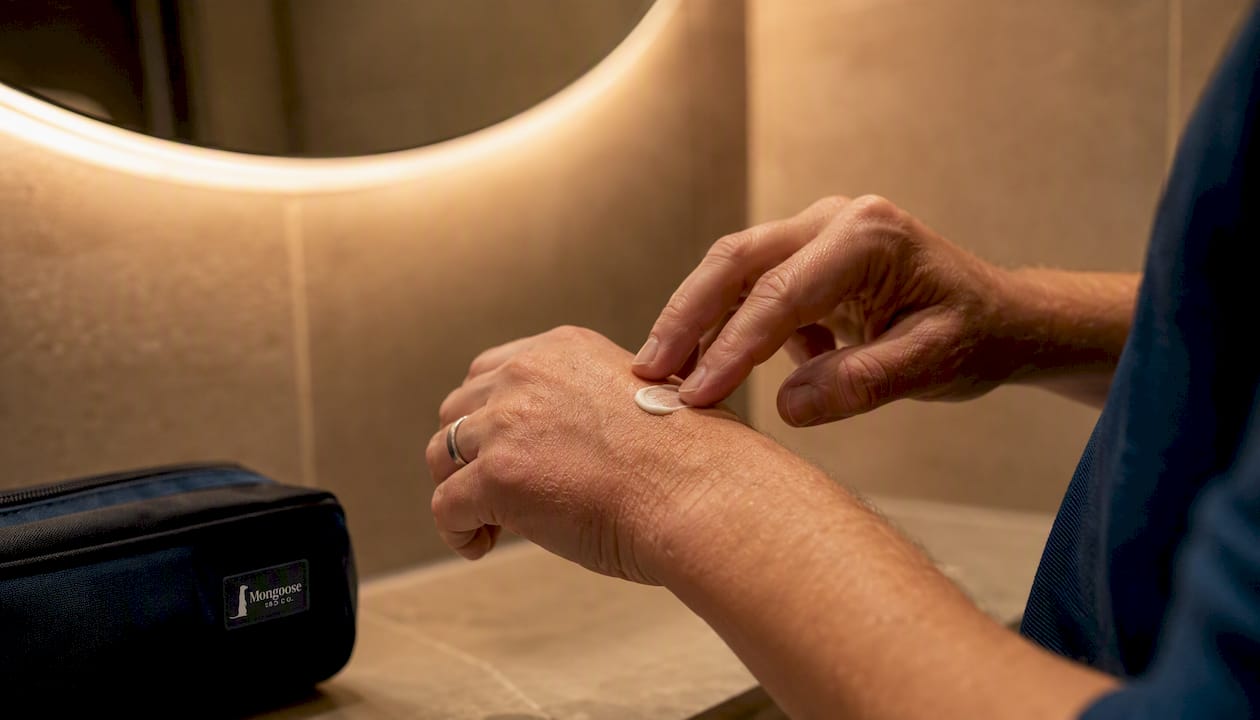
Patch-test before full use, and check with a pharmacist if you take systemic medications.
Key Takeaways
The most effective topical pain reliever is the one matched to your pain type: diclofenac for arthritis, menthol or counterirritants for acute muscle soreness, lidocaine for numbing, capsaicin for long-term desensitization, and CBD balm for inflammation or sensitive skin.
| Point | Details |
|---|---|
| Match ingredient to pain type | Diclofenac for arthritis, menthol for soreness, lidocaine for numbing, capsaicin for chronic/neuropathic pain. |
| Form affects experience | Patches give 8–12 hours of hands-free coverage; gels absorb fastest; balms suit extended botanical contact. |
| Safety rules are non-negotiable | Never use counterirritants under occlusion or with heat; check salicylate interactions if on anticoagulants. |
| Topicals are adjuncts, not cures | Clinical evidence supports pairing topicals with rest, movement, and mechanical therapy for better outcomes. |
| Mongoosecbd as a CBD option | The Seriously Soothing Pain Balm (1,000mg CBD/oz plus botanicals) suits sensitive skin, inflammation, and arthritis discomfort. |
What most people get wrong about topical pain relief
The conventional wisdom treats topical analgesics as interchangeable. Pick one off the shelf, rub it in, done. That approach works fine for a one-off sore muscle. For anyone managing chronic arthritis or recurring pain, it misses the point entirely.
The ingredient category matters more than the brand name. Bengay and Icy Hot are both counterirritants. Switching between them is not switching strategies. If counterirritants have not worked for your knee pain after a few weeks, the answer is not a different counterirritant brand. It is a different mechanism, likely topical diclofenac or a capsaicin product.
The other thing people underestimate is the role of form. A gel that absorbs in minutes is not the same tool as a patch that delivers steady concentration for eight hours. Using a fast-absorbing gel when you need overnight coverage, or a thick balm when you need rapid onset before a workout, is a mismatch that makes the product look ineffective when the real issue is timing and format.
CBD balms occupy a genuinely different space from counterirritants. They are not trying to override pain signals with heat or cold. They work through a botanical anti-inflammatory approach that suits people who need lower-sensation, longer-contact relief. For sensitive skin or anyone who finds the menthol-and-camphor combination too aggressive, that distinction matters in practice.
Try a Mongoosecbd pain balm with no risk
Biofreeze, Voltaren, Salonpas, and the other options in this article are solid choices for specific needs. If you want a topical that skips the sharp counterirritant sensation and delivers CBD plus arnica, turmeric, and peppermint in a single balm, Mongoosecbd is worth a direct comparison.
The Seriously Soothing Pain Balm is available in three scent profiles for different sensory preferences. Not sure which to start with? Mongoosecbd offers a free sample of the Miracle Pain Balm so you can test it on your skin before committing to a full size. Every full purchase is backed by a 30-day refund policy. Patch-test before full use, and consult a pharmacist if you take systemic medications.
This article provides general information about topical pain relief options and is not a substitute for professional medical advice. Confirm current product guidelines and any drug interactions with a pharmacist or clinician before use.
Sources and further reading
Clinical and regulatory sources used in this article:
- Understanding your options for topical pain relief — Mayo Clinic Press
- Topical pain relievers may cause burns — U.S. Food and Drug Administration (FDA safety communication)
- Topical analgesics and recovery: clinical review — PubMed/NCBI
- Multimodal pain management and topical agents — PMC/NCBI
- Best muscle pain relief creams, according to physical therapists — Men's Health
- Icy Hot vs Biofreeze comparison — VersusGuy
A note on anecdotal sources: Forum posts and user reviews can surface real-world patterns (which products cause skin reactions, which forms people prefer for sleep) but they are not clinical evidence. Use them to generate questions for your pharmacist, not to make treatment decisions.