
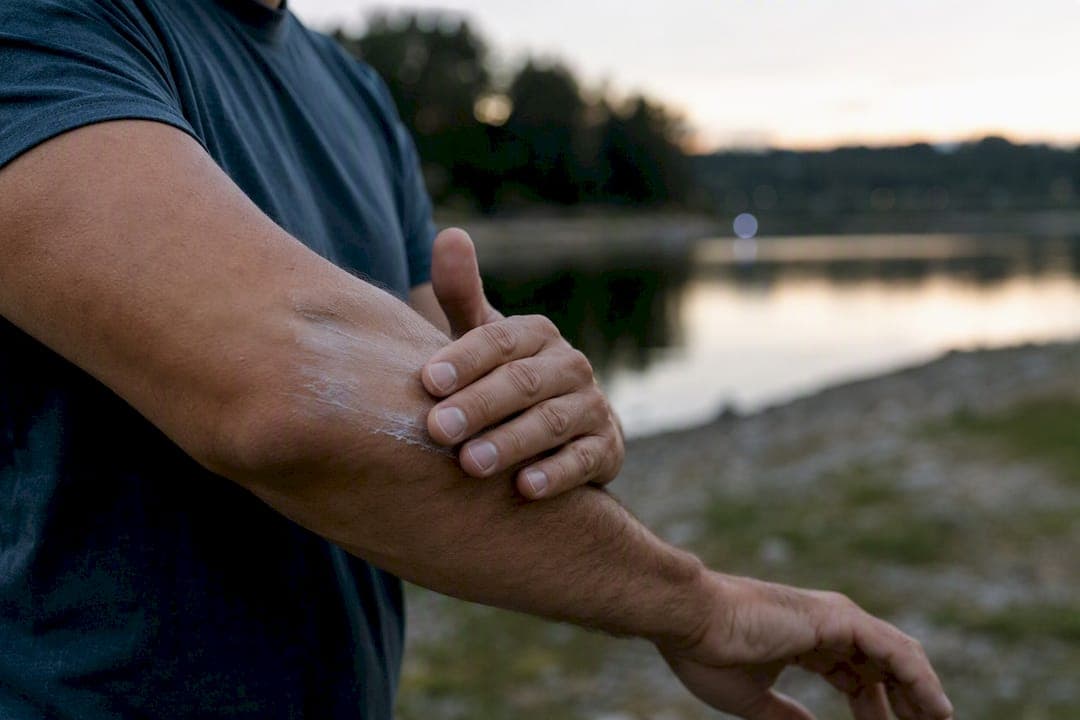
A CBD balm formulated with peppermint or menthol works on pain through two separate tracks at once: menthol delivers instant cooling that distracts the nervous system from discomfort, while topical CBD works underneath, targeting localized inflammation over time. Neither replaces the other. Together, they cover the gap between "feels better right now" and "actually calms down."
If you're shopping for one of these balms, three numbers and three checks matter more than marketing copy:
- CBD concentration: look for a clearly stated CBD amount per ounce, with higher concentrations generally considered more potent and effective.
- Certificate of Analysis (COA): the brand should publish batch-specific lab results, not just a generic claim.
- Patch test guidance and refund policy: a product page that tells you how to test for skin sensitivity and backs the purchase with a 30-day refund is telling you something about its confidence.
Mongoosecbd formulates its balms with a high CBD concentration baseline combined with peppermint, menthol, and other botanicals to achieve this dual effect, similar to typical CBD muscle balm formulations that blend peppermint and vitamin E for pain relief.
Key Takeaways
Peppermint or menthol in a CBD balm delivers fast sensory cooling through TRPM8 activation, while CBD works underneath on localized inflammation over repeated use.
| Point | Details |
|---|---|
| Two timelines, one balm | Menthol cools within seconds; CBD's anti-inflammatory benefit builds with consistent, repeated application. |
| Concentration is the real filter | Look for a clearly stated CBD amount per ounce, with higher concentrations generally considered more potent and effective. |
| Balms suit focal pain best | The anhydrous wax base keeps the product in contact with skin longer than a fast-absorbing cream. |
| Patch test before full use | Apply a small amount to your forearm and wait 24 hours before treating a larger area. |
| Mongoosecbd formulates to this standard | Its balms use a 1,000 mg-per-ounce CBD baseline with peppermint or menthol and a 30-day refund policy. |
Table of Contents
- How Peppermint Oil for Pain Works Alongside CBD
- What to Look for in a Peppermint CBD Balm
- How to Apply Peppermint CBD Balm Safely
- Why Formulation Choices in a Peppermint CBD Balm Actually Matter
- Mongoosecbd's Peppermint and Menthol Balm Lineup
- Sources
How Peppermint Oil for Pain Works Alongside CBD
Menthol, the active compound in peppermint oil, binds to a receptor called TRPM8 on your skin's nerve endings. That receptor normally responds to actual cold. Menthol tricks it into firing anyway, which is why a peppermint balm feels cool and slightly tingling within seconds of application. This is a real sensory event, not a placebo trick, and it happens fast enough that people mistake it for the balm "working" before any deeper process has started.
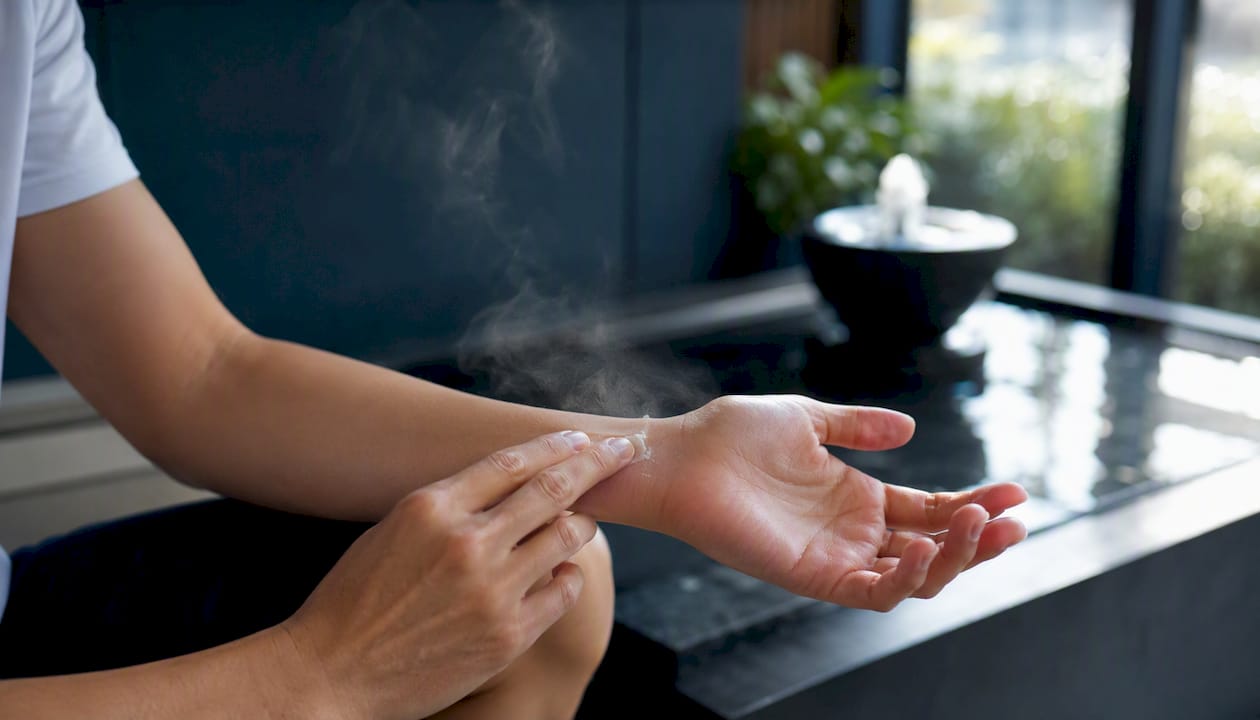
CBD doesn't work that way. Applied topically, it interacts with local receptors in skin and underlying tissue without significant absorption into the bloodstream, which means its effects stay confined to where you put it. That's a feature for pain management, not a limitation. The tradeoff is timing: CBD's anti-inflammatory action tends to build with repeated use rather than announce itself in the first sixty seconds, according to guidance on topical CBD mechanics.
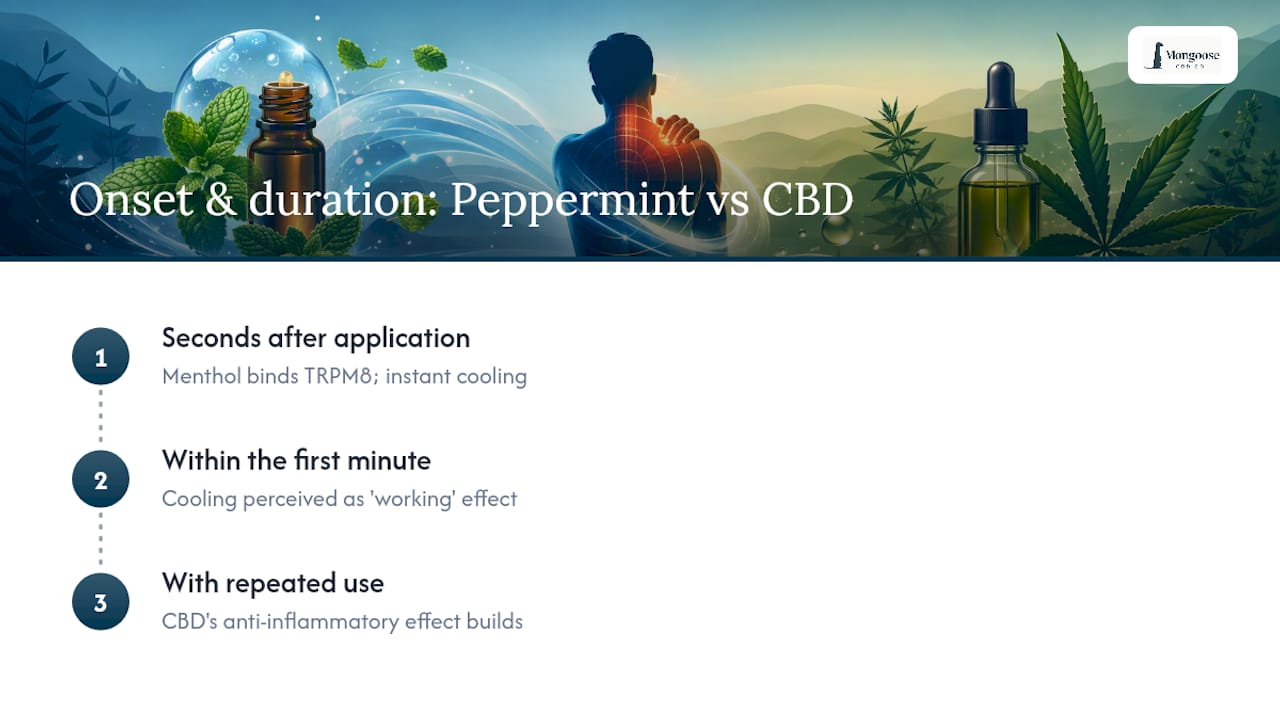
That mismatch in timelines is exactly why the combination works better than either ingredient alone. Menthol answers the immediate question ("does this feel like it's doing something?") while CBD works on the actual inflammatory process underneath.
Pro Tip: If a balm only produces the cooling sensation and nothing else, you're getting menthol's effect without CBD's. Check the label for an actual milligram count, not just "infused with hemp."
There's supporting evidence beyond the mechanism itself. A small randomized trial found that peppermint aromatherapy reduced perceived pain during IV catheter insertion compared to a control group, and the Arthritis Foundation notes peppermint's alertness effect works almost like a mild sensory jolt, similar to smelling salts, which some arthritis patients find useful for breaking through the dullness of chronic stiffness. None of this makes peppermint a cure. It makes it a legitimate short-term modifier of how pain is perceived, paired with an ingredient doing longer-term work.
What to Look for in a Peppermint CBD Balm
Concentration is the first filter, and it's where a lot of shoppers get misled by vague labeling. A balm advertising "full spectrum hemp extract" without a milligram-per-ounce figure could be anywhere from negligible to genuinely therapeutic. Industry guidance suggests that a certain minimum CBD concentration per ounce can be considered effective, with higher concentrations often preferred for more potent pain relief.
Format matters almost as much as concentration. Balms use an anhydrous wax and oil base, which makes them thicker and slower to absorb than a cream or gel. For a focal problem like a stiff knee or a knotted shoulder, that's an advantage: the balm sits on the skin longer, which extends contact time and improves perceived benefit compared to a lighter, fast-absorbing cream.
Beyond CBD and menthol, a handful of supporting ingredients show up repeatedly in well-formulated balms:
- Arnica for its traditional anti-inflammatory reputation
- Camphor for an added cooling and analgesic layer
- Carrier butters or oils (shea, coconut, jojoba) that keep the balm from feeling greasy or drying out skin
If you have sensitive skin, watch for high concentrations of essential oils layered on top of each other. A balm stacking peppermint, eucalyptus, and cinnamon at aggressive ratios can overwhelm skin that reacts fine to any one of them alone.
Before adding a balm to your cart, run through this checklist:
- Does the product page list a specific CBD mg-per-ounce figure?
- Is a batch-specific COA available, either linked directly or on request?
- Does the label disclose every ingredient, including carrier oils and essential oils?
- Is there language about third-party lab testing, not just in-house claims?
- Does the seller offer a refund window if the balm doesn't work for you?
Product-evaluation guidance from consumer health resources consistently flags ingredient transparency and independent testing as the dividing line between a trustworthy product and a marketing exercise. Mongoosecbd's Seriously Soothing Pain Balm in Eucalyptus Mint publishes exactly this kind of information on its product page, which is a reasonable benchmark for what any balm you're considering should offer.
How to Apply Peppermint CBD Balm Safely
Patch testing isn't optional with any product containing concentrated essential oils. Apply a small amount, about the size of a pea, to the inside of your forearm. Wait 24 hours. If you see redness, itching, or swelling, don't use the product on a larger area, and don't apply it to more sensitive skin like your neck or joints near broken skin.
Once you've cleared the patch test, application depends on what you're treating:
- Muscle soreness: apply within thirty minutes of finishing a workout, while blood flow to the area is still elevated.
- Localized joint pain: apply at the first sign of stiffness rather than waiting for pain to peak, since CBD's benefit tends to build with earlier, consistent use.
- Arthritis flare-ups: a nighttime application allows the balm to sit undisturbed for hours, giving CBD more contact time.
Layering matters too. Menthol's cooling sensation pairs naturally with ice for acute swelling, while heat therapy tends to work better once the acute phase has passed and you're focused on loosening stiff tissue. Massage the balm in rather than just resting it on the surface. That mechanical action helps distribute the product and can itself reduce muscle tension.
Pro Tip: Never apply undiluted peppermint essential oil directly to skin. Commercial balms already handle this dilution for you, which is one reason a pre-formulated product is safer than mixing your own from a bottle of pure essential oil. Mongoosecbd's blog covers dilution ratios for clove oil in a similar botanical pain balm, and the same caution applies to peppermint.
A few hard rules apply regardless of the condition you're treating:
- Avoid open wounds, broken skin, eyes, and mucous membranes entirely.
- Wash hands thoroughly after application to avoid transferring the balm to your eyes.
- If you're pregnant, nursing, or managing a serious skin or systemic condition, talk to a clinician before starting any new topical, botanical or otherwise.
Why Formulation Choices in a Peppermint CBD Balm Actually Matter
Getting a peppermint CBD balm right is a formulation problem, not a marketing one. The ratio of menthol to CBD, the carrier base, and the inclusion of supporting botanicals like arnica all change how the product feels and performs, and most brands don't disclose enough for you to judge that ratio.
Mongoosecbd builds its balms around a higher CBD concentration baseline, aiming to provide effective relief beyond mild discomfort. The Seriously Soothing Pain Balm in Lavender Lemongrass shows the same formulation discipline applied to a different scent profile, which tells you the concentration decision isn't scent-dependent. That consistency is also why the brand backs every purchase with a 30-day refund policy: a company confident in its formulation can afford to let customers test it risk-free.
— Cindy
Mongoosecbd's Peppermint and Menthol Balm Lineup
Mongoosecbd builds every balm around a 1,000 mg-per-ounce CBD baseline, then layers in the botanicals that give each formula its character. If you've read this far, you already know what to check on a product page. Here's where those checks lead.
The Seriously Soothing Pain Balm, Original pairs peppermint's cooling bite with a straightforward, no-frills base for anyone who wants the core formula without an added scent profile. The Seriously Soothing Pain Balm, Eucalyptus Mint variant stacks eucalyptus on top of that peppermint cooling for a stronger sensory hit, suited to deeper muscle knots. For post-workout recovery specifically, Rikki Tikki Recovery is built around faster turnaround between sessions rather than all-day relief. And the Miracle Pain Balm targets the kind of persistent, flare-prone discomfort that arthritis and chronic joint pain create.
Every one of these ships with batch-level COA access, full ingredient disclosure, and the same 30-day refund window. If you're unsure which scent or formula fits your skin, ordering a sample size is a reasonable first step before committing to a full tin. Check the product page for the batch report before you apply anything for the first time.
Sources
- Essential oils for pain relief — Healthline
- Aromatherapy for arthritis relief — Arthritis Foundation
- CBD topicals guide: creams, balms, and salves explained — WellnessWithCBD