

Topical ginger does produce measurable anti-inflammatory and analgesic effects, but the strength of that evidence depends heavily on whether you're looking at lab models or human trials. Preclinical research is genuinely compelling: ginger's active compounds inhibit COX and LOX enzymes, suppress NF-κB signaling, and interact with TRPV1 and TRPA1 ion channels in ways that reduce both inflammation and pain transmission. Human clinical trials, however, tell a more complicated story.
- A narrative review of clinical trials on ginger and pain found that human RCTs produce inconsistent results, with heterogeneous formulations, small sample sizes, and variable outcome measures making it difficult to draw firm conclusions.
- A mechanistic review confirms that ginger's dual action on inflammatory pathways (COX/LOX inhibition) and pain-sensing ion channels (TRPV1/TRPA1) explains why users often feel immediate warmth and relief followed by slower anti-inflammatory changes.
- Preclinical arthritis models show crude ginger extracts blocking joint swelling by a large margin in acute phases, though translating those effects to human skin and tissue is not straightforward.
The practical verdict: topical ginger is a legitimate adjunct for mild-to-moderate pain and inflammation, particularly when the product uses a well-formulated delivery system. Rubbing raw ginger root on your knee is unlikely to do much. A properly engineered balm with standardized gingerol content and a permeation-enhancing carrier is a different proposition entirely.
Key Takeaways
Topical ginger has strong preclinical support and plausible human benefit, but formulation quality determines whether any of that science translates to your skin.
| Point | Details |
|---|---|
| Preclinical evidence is strong | COX/LOX inhibition, NF-κB suppression, and TRPV1/TRPA1 modulation are well-documented mechanisms in animal and cell studies. |
| Human trial results are mixed | RCTs show inconsistent outcomes due to small samples, short follow-up, and variable formulations — modest benefit is plausible, not guaranteed. |
| Formulation is the deciding variable | Engineered carriers (lipid nanoparticles, transethosomes) dramatically improve skin permeation versus raw ginger application. |
| Expect a 4–8 week trial window | Immediate warmth comes from TRPV1 activation; meaningful anti-inflammatory change requires consistent use over weeks. |
| Mongoosecbd's multi-ingredient balms | Pair ginger with arnica, turmeric, menthol, and 1,000mg CBD per ounce for multi-pathway pain relief, backed by a 30-day refund policy. |
Table of Contents
- How does ginger reduce inflammation when applied to the skin?
- What do human clinical trials actually show?
- What preclinical research supports topical ginger's effects?
- Why does formulation determine whether topical ginger actually works?
- How to use topical ginger safely
- When might you notice results from topical ginger?
- How does topical ginger compare to other topical anti-inflammatories?
- How to choose a topical ginger product that's worth buying
- What's the overall evidence quality, and should you try it?
- The case for formulation-first thinking in topical botanicals
- Mongoosecbd's Seriously Soothing Pain Balm brings this formulation thinking to life
- Sources
How does ginger reduce inflammation when applied to the skin?
Ginger's anti-inflammatory activity is not a single mechanism. It works through at least three distinct pathways simultaneously, which is part of why it tends to outperform single-compound isolates in head-to-head comparisons.
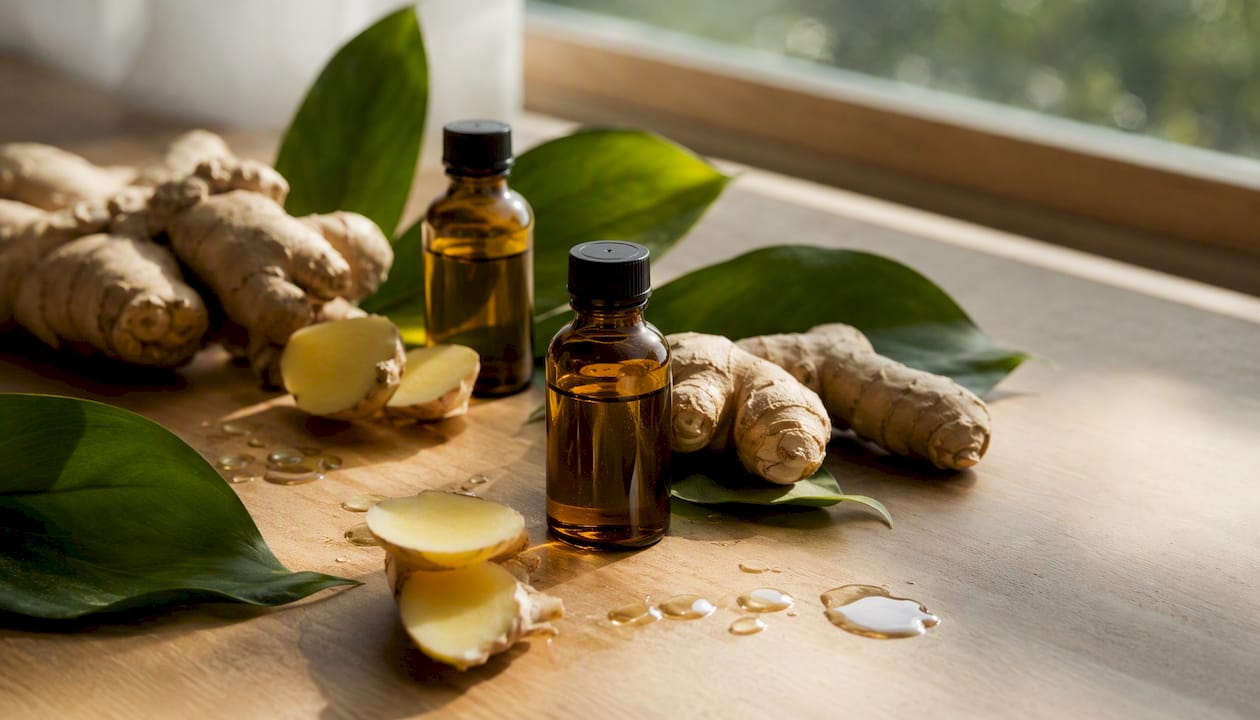
COX and LOX enzyme inhibition is the most studied pathway. Gingerols and shogaols block cyclooxygenase (COX-1 and COX-2) and lipoxygenase (LOX) enzymes, reducing the synthesis of prostaglandins and leukotrienes, the same inflammatory mediators targeted by ibuprofen and naproxen. The mechanism is pharmacologically similar to NSAIDs, though the potency at typical topical doses is lower.
NF-κB suppression adds another layer. NF-κB is a transcription factor that acts as a master switch for inflammatory gene expression. Ginger constituents, particularly 6-shogaol, downregulate NF-κB activity, which reduces the production of cytokines like TNF-α and interleukin-1β. This is a slower-acting pathway, which explains why repeated application over days tends to produce more noticeable anti-inflammatory effects than a single use.
TRPV1 and TRPA1 ion channel modulation is what you feel immediately. These transient receptor potential channels are expressed in sensory neurons and respond to heat, cold, and chemical irritants. Ginger compounds activate and then desensitize TRPV1 and TRPA1, producing the familiar warming sensation followed by a reduction in pain signal transmission. According to a mechanistic review of ginger's analgesic and anti-inflammatory pathways, this dual action on both inflammatory signaling and pain-transmitting ion channels explains why users often report immediate analgesia alongside delayed anti-inflammatory benefits.
The active constituents responsible for these effects include:
- Gingerols (primarily 6-gingerol): the dominant compounds in fresh ginger, potent COX/LOX inhibitors
- Shogaols (primarily 6-shogaol): formed when ginger is dried or heated, more lipophilic and potentially better at crossing skin barriers, with stronger NF-κB suppression
- Essential oils (zingiberene, β-bisabolene, camphene): contribute anti-inflammatory activity through separate pathways and appear to work synergistically with gingerols
Skin permeability is the variable that determines whether any of this matters topically. Gingerols have a molecular weight around 294 g/mol and a log P (lipophilicity) that sits in a range favorable for passive skin penetration, but the stratum corneum still presents a real barrier. Without a carrier system designed to enhance permeation, much of the active compound stays on the surface rather than reaching the inflamed tissue underneath.
What do human clinical trials actually show?
The honest answer is: mixed results, with a lean toward modest benefit in some conditions. Systematic reviews consistently flag heterogeneity as the central problem, meaning the trials are different enough in formulation, dosing, duration, and outcome measures that pooling their results is difficult.
| Condition | Design | Sample Size | Main Outcome | vs. Placebo |
|---|---|---|---|---|
| Knee osteoarthritis | RCT, topical ginger gel | most under 80 participants | Pain and stiffness scores | Modest improvement in some trials; no significant difference in others |
| Delayed-onset muscle soreness | RCT, oral and topical ginger | most under 80 participants | VAS pain score at 24 hours | Small reduction in pain scores |
| Chronic low back pain | Pilot RCT, ginger compress | ~30 participants | Pain intensity, disability | Trend toward improvement; underpowered |
| Rheumatoid arthritis (adjunct) | Observational/small RCT | Variable | Joint tenderness, swelling | Inconclusive |
A systematic review published on PubMed examining ginger and pain across trial designs found that formulation differences alone account for much of the variance in outcomes. A ginger compress, a standardized gel, and a crude extract ointment are not interchangeable, yet many reviews lump them together.
Common limitations across trials:
- Small sample sizes (most under 80 participants) reduce statistical power
- Short follow-up periods (often 4–8 weeks) miss longer-term anti-inflammatory effects
- Inconsistent formulations make cross-trial comparisons unreliable
- Blinding is difficult because ginger's warming sensation is detectable by participants
- Outcome measures vary widely (VAS, WOMAC, KOOS), complicating meta-analysis
For a consumer deciding whether to try a topical ginger product, this means: the evidence supports a reasonable trial, not a guarantee. Some people with osteoarthritis or muscle soreness will notice meaningful relief. Others won't, and that variability is real, not a sign the product is fraudulent.
What preclinical research supports topical ginger's effects?
Animal and in vitro studies provide the mechanistic foundation that human trials haven't yet fully confirmed. The preclinical evidence is where the science gets genuinely interesting.
In a streptococcal cell wall (SCW)-induced arthritis model, a study published in PMC found that crude ginger extract containing both gingerols and essential oils blocked joint swelling more completely than gingerol-only fractions. That gap matters because it suggests the essential oil components aren't just fragrance carriers; they contribute meaningfully to the anti-inflammatory effect.
A separate Planta Medica study using a medicated plaster format found approximately 66% edema inhibition in a croton-oil ear model, with an ID50 of 142 μg/cm² for the ginger extract versus 93 μg/cm² for topical indomethacin. The same study demonstrated measurable 6-gingerol permeation through human epidermis ex vivo, which is a meaningful finding because it shows the compound can actually cross human skin under the right conditions.
Research on ointment formulations found effective antinociceptive and anti-inflammatory activity in AITC-induced pain models at concentrations as low as 0.025%–0.05%, with rapid-onset analgesia in some dosing schemes. That rapid onset aligns with the TRPV1/TRPA1 mechanism described earlier.
Key limitations when reading preclinical data:
- Rodent skin is thinner and more permeable than human skin, so permeation rates don't translate directly
- Edema models use acute inflammation; chronic inflammatory conditions like osteoarthritis involve different cellular dynamics
- Effective concentrations in animal studies don't map cleanly to human dosing recommendations
- In vitro cell assays measure inhibition of isolated mediators, not the complex inflammatory cascade in living tissue
The preclinical picture is strong enough to justify clinical investigation. It doesn't, on its own, confirm that a topical ginger balm will reduce your knee pain by a specific percentage.
Why does formulation determine whether topical ginger actually works?
This is the part most buyers overlook. The ingredient list matters less than how those ingredients are delivered to the tissue that needs them.
Raw ginger rubbed directly on skin delivers some surface-level sensation through TRPV1 activation, but most of the active compounds don't penetrate deeply enough to reach inflamed joints or muscle tissue. The stratum corneum is an effective barrier, and without a carrier system designed to work around it, you're mostly getting a warming effect, not meaningful anti-inflammatory activity.
Engineered delivery systems change that equation substantially. Transethosome-loaded ginger extract showed significantly improved skin permeation and greater local anti-inflammatory activity in rat models compared with conventional free formulations. Transethosomes are flexible lipid vesicles that deform to squeeze through skin channels, increasing the amount of active compound that reaches deeper tissue layers.
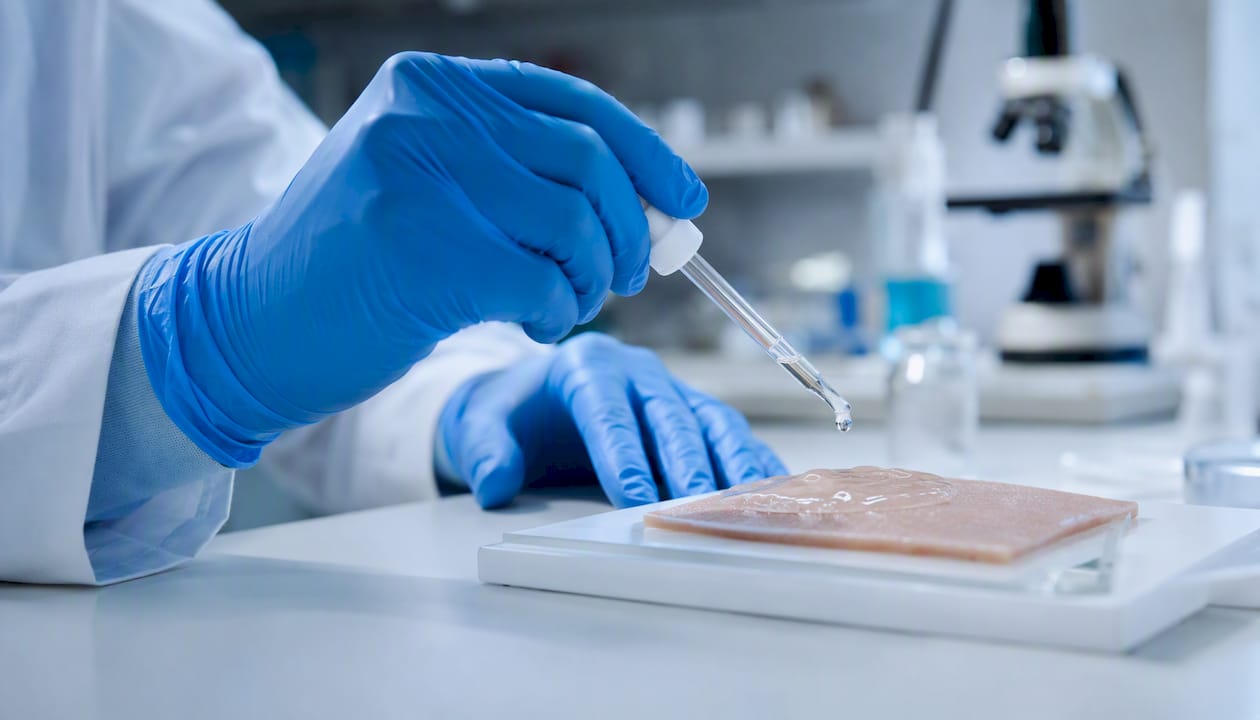
Lipid nanoparticle encapsulation of ginger extract combined with phlai oil showed even more striking results in cell assays: inhibition of nitric oxide (NO) by up to 76% and TNF-α by approximately 70% in macrophage assays, with improved 6-gingerol skin penetration versus conventional formulations. The combination with phlai oil appears to produce additive effects, meaning the two extracts together outperform either alone.
Full-spectrum extracts versus single-compound isolates follow the same logic. Because gingerols, shogaols, and essential oils work through different but complementary pathways, a product standardized only for 6-gingerol content misses the synergistic contribution of the other fractions.
Buyer checklist for formulation quality:
- Look for "full-spectrum ginger extract" or "standardized gingerol content" on the label
- Prefer products that mention encapsulation technology, lipid carriers, or permeation enhancers
- Check whether the product lists complementary actives (arnica, menthol, turmeric, capsaicin) that work through independent pathways
- Avoid products with vague "natural ginger" claims and no extraction or standardization information
- Verify the product lists actual usage instructions and a patch test recommendation
Pro Tip: Before applying any new topical ginger product to a large area, combine a patch test with a check of the ingredient list for permeation enhancers. A product that lists a carrier technology (lipid nanoparticles, ethosome base, or a penetrating oil like jojoba or DMSO) is more likely to deliver actives to deeper tissue than one that lists "ginger root powder" as the only ginger-related ingredient.
How to use topical ginger safely
Most adverse effects from topical ginger are local and mild, but a few interactions warrant real attention before you start.
Patch test protocol (do this first):
- Apply a small amount (about the size of a dime) to the inside of your forearm or behind your ear.
- Leave it on for 24 hours without washing.
- Check for redness, swelling, blistering, or intense burning beyond the expected mild warmth.
- If any of those signs appear, wash the area thoroughly and don't use the product on larger areas.
- If no reaction occurs after 24 hours, proceed with normal application to the target area.
Common adverse effects:
- Mild burning or warming sensation (expected, from TRPV1 activation)
- Contact dermatitis in sensitive individuals, presenting as redness, itching, or rash
- Photosensitivity in some formulations containing essential oils
Who should consult a clinician before use:
- People taking anticoagulants (warfarin, heparin, newer blood thinners): ginger has pharmacodynamic interactions that may theoretically increase bleeding risk, particularly with high-absorption formulations. Safety reviews flag this interaction, and while systemic absorption from topical use is generally low, high-permeation formulations change that calculus.
- Pregnant individuals: ginger's safety in pregnancy via topical routes is not well-studied; oral ginger at high doses raises concerns, and caution is reasonable.
- Anyone with open wounds, broken skin, or active dermatitis in the application area: do not apply to compromised skin.
- People with known allergies to Zingiberaceae family plants.
When to seek medical care: If burning or irritation persists beyond 30 minutes after washing off the product, or if you develop hives, facial swelling, or difficulty breathing, seek care immediately. These are signs of a systemic allergic reaction, which is rare but possible.
When might you notice results from topical ginger?
Timing expectations vary depending on which mechanism you're relying on, and conflating the two leads to disappointment or premature abandonment.
- Within minutes: TRPV1/TRPA1 activation produces warmth and a reduction in acute pain signal intensity. This is real analgesia, not just distraction, but it's also the shortest-lived effect.
- Within hours: The warming sensation fades, but some users report continued pain reduction as the initial analgesic effect sustains. This varies significantly by formulation and individual sensitivity.
- After 3–7 days of consistent use: COX/LOX inhibition and NF-κB suppression require repeated application to accumulate enough active compound in the tissue to produce measurable anti-inflammatory change. Most clinical trials that showed positive results ran for at least 4 weeks.
- At 4–8 weeks: This is the window where trials report the clearest between-group differences in pain and stiffness scores for conditions like knee osteoarthritis. If you've used a quality formulation consistently for 8 weeks and noticed no change, the product likely isn't working for your specific condition.
A useful way to measure benefit: track your pain score (a simple 0–10 scale) before application and 30 minutes after, then again at the same time each morning. If the morning scores trend downward over 2–3 weeks, that's a signal the anti-inflammatory pathway is contributing. If only the immediate post-application scores improve, you're primarily getting TRPV1-mediated analgesia.
If symptoms are severe, worsening, or accompanied by joint swelling, fever, or significant functional limitation, a topical ginger product is not the right first-line response. For nerve-related pain specifically, guidance on topical selection can help clarify which ingredients are better suited to that mechanism.
How does topical ginger compare to other topical anti-inflammatories?
| Agent | Primary mechanism | Onset | Best-use case | Irritation risk |
|---|---|---|---|---|
| Ginger extract | COX/LOX inhibition, TRPV1/TRPA1 modulation, NF-κB suppression | Minutes (analgesic); days–weeks (anti-inflammatory) | Mild joint pain, muscle soreness, arthritis adjunct | Low to moderate (contact dermatitis possible) |
| Capsaicin | TRPV1 desensitization (substance P depletion) | rapid onset; full effect at 2–4 weeks | Neuropathic pain, post-herpetic neuralgia, OA | Moderate to high (burning common, especially early) |
| Topical NSAIDs (diclofenac) | COX-2 inhibition at tissue level | rapid onset | Localized OA, acute musculoskeletal injury | Low (GI-sparing vs oral) |
| Turmeric (curcumin) | NF-κB suppression, COX-2 inhibition | Days–weeks | Chronic inflammation, adjunct use | Low (poor skin permeation limits both effect and irritation) |
A few practical distinctions worth knowing:
- Capsaicin's mechanism and side-effect profile differ meaningfully from ginger's. Capsaicin works by depleting substance P from nerve endings over repeated use, which means the burning sensation is worst in the first week and improves. Ginger's warmth is more consistent and generally milder.
- Topical diclofenac (Voltaren) has the strongest human clinical evidence of any topical anti-inflammatory for osteoarthritis, with multiple large RCTs supporting its use. Ginger is not a direct replacement, but it's a reasonable adjunct or alternative for those who can't tolerate NSAIDs.
- Turmeric's bioavailability problem topically mirrors its oral challenge: curcumin has poor solubility and permeation, and most topical turmeric products deliver very little active compound to target tissue without specialized formulation.
- Ginger's multi-pathway action makes it a particularly useful ingredient in combination balms, where it contributes both immediate analgesic sensation and slower anti-inflammatory activity alongside other actives.
How to choose a topical ginger product that's worth buying
The supplement and topical market is full of products that list ginger as an ingredient without delivering meaningful amounts of active compounds to target tissue. Here's what to look for.
Green flags on the label:
- "Full-spectrum ginger extract" or "standardized to X% gingerols" (6-gingerol is the key marker)
- Mention of a delivery technology: lipid nanoparticles, transethosomes, liposomes, or a named permeation enhancer
- Complementary actives that work through independent pathways (arnica for bruising/swelling, menthol for cooling analgesia, turmeric for NF-κB support, CBD for endocannabinoid modulation)
- Clear usage instructions, including recommended frequency and patch test guidance
- Transparent ingredient list with no proprietary blend hiding the ginger concentration
Red flags:
- "Ginger root powder" as the only ginger-related ingredient (powder has poor permeation)
- Vague "natural" or "herbal" claims with no extraction or standardization information
- Unrealistic claims ("eliminates arthritis pain," "clinically proven to cure inflammation")
- No safety or patch test guidance anywhere on the label or product page
- Missing contact information or return policy
For readers interested in how botanical actives like clove oil pair with ginger in multi-ingredient formulations, the synergy between these compounds is well-documented in preclinical combination studies. A balm that combines ginger with clove, arnica, and menthol is working through at least four distinct analgesic and anti-inflammatory pathways simultaneously.
What's the overall evidence quality, and should you try it?
Evidence rating: Preclinical evidence for topical ginger's anti-inflammatory and analgesic mechanisms is strong and mechanistically coherent. Human clinical evidence is mixed, with a lean toward modest benefit in osteoarthritis and muscle soreness, but no trial has produced results strong enough to support a definitive recommendation. The honest confidence level is: plausible benefit, not proven efficacy.
Key research gaps that matter to buyers:
- No large-scale RCT (500+ participants) has tested a standardized, well-formulated topical ginger product against placebo with adequate blinding
- Long-term follow-up data (beyond 12 weeks) is essentially absent
- Head-to-head comparisons between delivery systems (raw extract vs. nanovehicle) haven't been done in humans
- Most trials don't report gingerol content of the tested product, making replication impossible
Actionable recommendation: If you're considering a topical ginger product for mild-to-moderate joint pain or muscle soreness, the evidence supports a structured trial of 4–8 weeks with a quality formulation. Choose a product with standardized gingerol content and a permeation-enhancing carrier. Patch test first. Track your pain scores to measure actual benefit rather than relying on subjective impression. If you're on anticoagulants or pregnant, consult a clinician before starting.
Topical ginger is not a replacement for topical NSAIDs in acute injury or for prescription treatments in moderate-to-severe arthritis. It's a legitimate adjunct with a reasonable safety profile and a mechanistic rationale that preclinical science supports more convincingly than current human trials do.
This article is for general informational purposes only and is not a substitute for professional medical advice. Consult a qualified healthcare provider before starting any new treatment, particularly if you have a medical condition or take medications.
The case for formulation-first thinking in topical botanicals
There's a tendency in wellness coverage to treat "does ginger work?" as a binary question. The more useful question is "does this specific ginger product, in this formulation, at this concentration, deliver enough active compound to the right tissue to produce a measurable effect?" That reframe changes everything about how you evaluate the evidence.
Most of the negative or null results in human trials aren't evidence that ginger doesn't work. They're evidence that the tested product didn't deliver. A crude extract rubbed on skin, a compress soaked in ginger tea, and a lipid nanoparticle-encapsulated standardized extract are not the same intervention. Treating them as equivalent in a meta-analysis is like comparing an aspirin dissolved in water to an enteric-coated tablet and concluding aspirin has inconsistent effects.
What the preclinical data actually shows is a compound with multiple, well-characterized mechanisms that are active at relevant concentrations in tissue. The delivery problem is solvable, and the research on transethosomes and lipid nanoparticles shows it's being solved. The clinical trials that will eventually confirm topical ginger's efficacy in humans will almost certainly use engineered delivery systems, not raw extracts.
For now, the practical implication is straightforward: if you're going to try topical ginger, the formulation is the variable that matters most. A product that treats delivery as an afterthought is unlikely to produce the results the preclinical science suggests are possible.
Mongoosecbd's Seriously Soothing Pain Balm brings this formulation thinking to life
Ginger doesn't work in isolation, and neither does a good topical balm. Mongoosecbd's Seriously Soothing Pain Balm pairs ginger with arnica, menthol, turmeric, eucalyptus, peppermint, clove, and 1,000mg of CBD per ounce, hitting multiple anti-inflammatory and analgesic pathways at once. That's the multi-ingredient synergy the preclinical research points to as the more effective approach. The formula is vegan, non-GMO, paraben-free, and THC-free.
For athletes and chronic pain sufferers who want to try a formulated topical without long-term commitment, Mongoosecbd backs every purchase with a full 30-day refund policy. You can also start with the Rikki Tikki Recovery balm if muscle recovery is the primary goal. Browse the full range and place an order directly at mongoosecbd.com.
Sources
The following sources were used in preparing this article. Each is noted for what it contributes to the evidence picture.
- Clinical trials on pain lowering effect of ginger: A narrative review
- How Ginger Can Work to Fight Pain (mechanistic review)
- Ginger Extract-Loaded Transethosomes for Effective Transdermal Permeation and Anti-Inflammation in Rat Model
- Enhancing skin permeation of Phlai oil and ginger extracts through lipid nanoparticle encapsulation