
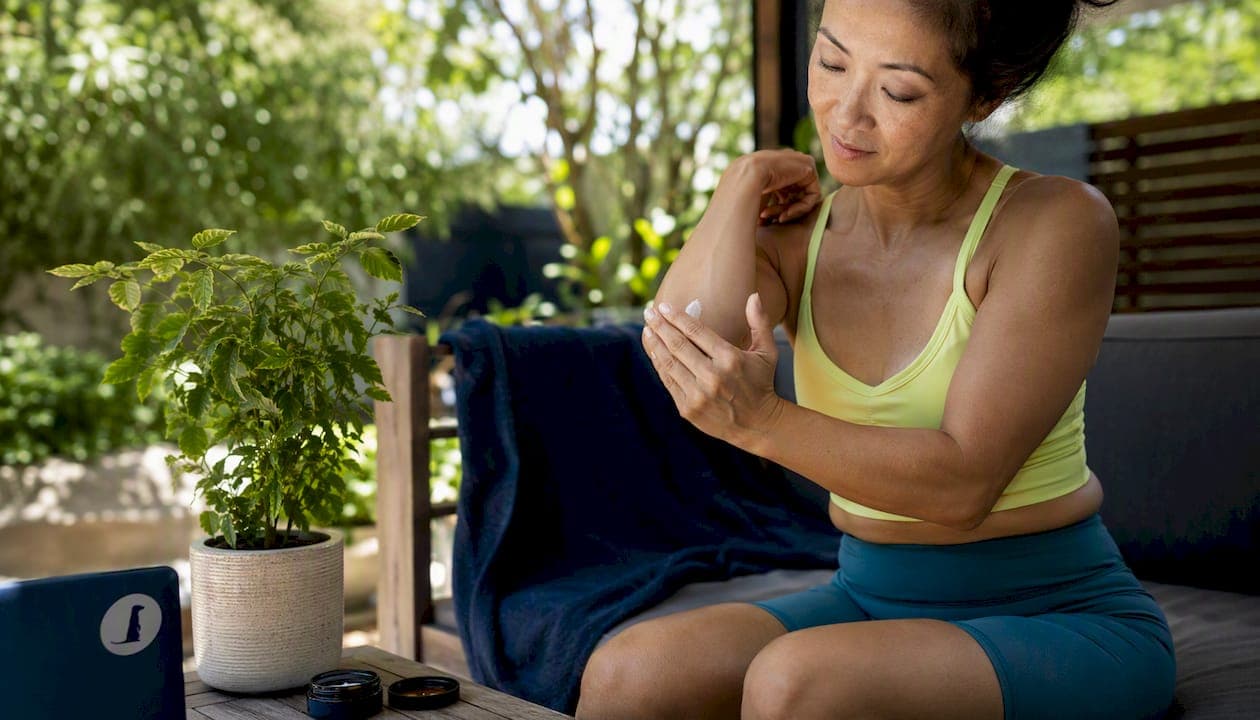
Mongoosecbd's Seriously Soothing Pain Balm is the top pick for most buyers: 1,000 mg of CBD per ounce, a botanical blend that includes arnica, turmeric, and peppermint, THC-free with COA available, and a 30-day full refund if it doesn't work. For athletes who want post-workout recovery in a portable tin, the Rikki Tikki Recovery is the next step up. If you want a warming sensory experience, the Cinnamon & Clove variant delivers the same 1,000 mg/oz potency with added heat. Beyond Mongoosecbd, Aspen Green Relief Cooling Cream leads for high-potency full-spectrum cooling relief, Soul CBD Rapid Relief Cream wins on fast absorption, Joy Organics Premium CBD Cream suits sensitive skin, and CBDistillery Oooh Distilled 500 mg CBD Balm is the budget pick.
| Product | Best For | CBD Potency | Type | Spectrum | Key Ingredient | COA |
|---|---|---|---|---|---|---|
| Mongoosecbd Seriously Soothing (Original) | Daily pain relief, athletes | 1,000 mg/oz | Balm | THC-free | Arnica, turmeric, peppermint | Available |
| Mongoosecbd Seriously Soothing (Cinnamon & Clove) | Warming sensation + CBD relief | 1,000 mg/oz | Balm | THC-free | Cinnamon, clove, arnica | Available |
| Mongoosecbd Rikki Tikki Recovery | Post-workout, deep-tissue | Not publicly listed per oz | Balm | THC-free | Recovery botanicals | Available |
| Aspen Green Relief Cooling Cream | Acute soreness, heavy-use athletes | Higher advertised potency | Cream | Full-spectrum | Menthol | Available |
| Soul CBD Rapid Relief Cream | Fast absorption, rapid relief | High advertised potency | Cream | Not listed | Menthol | Available |
| Joy Organics Premium CBD Cream | Sensitive skin, scent-free daily use | Not publicly listed per oz | Cream | Broad-spectrum | Gentle botanicals | Available |
| CBDistillery Oooh Distilled 500 mg CBD Balm | Budget, mild pain relief | 500 mg per unit | Balm | Not listed | Peppermint, menthol | Available |
Scroll for full specs, pros/cons, and lab results on each pick.
Table of Contents
- The best CBD creams and balms reviewed in detail
- How to choose the right CBD cream for your needs
- How these products were evaluated
- Safety, side effects, and what U.S. buyers need to know
- How CBD creams interact with other medications and skin products
- Key Takeaways
- What most CBD cream buyers get wrong
- Mongoosecbd's pain balms: what sets them apart
- Useful sources and further reading
The best CBD creams and balms reviewed in detail
Healthline testers narrowed their list to three top picks after working through more than 20 CBD creams, rating each on potency, texture, COA transparency, and sensory feedback. The picks below follow a similar framework, with Mongoosecbd products evaluated first.
1. Mongoosecbd Seriously Soothing Pain Balm (Original)
One-line verdict: The highest-potency THC-free balm on this list, built for people who need real relief and want to know exactly what's in it.
This is among the most concentrated topicals available without a prescription, featuring a high CBD concentration per ounce. The formula pairs CBD with arnica (a well-documented botanical for bruising and muscle soreness), turmeric, eucalyptus, peppermint, and cayenne pepper. That's not a random ingredient stack; each botanical targets a different aspect of localized discomfort. Vegan, non-GMO, paraben-free, and cruelty-free. COA is accessible through the shop page.
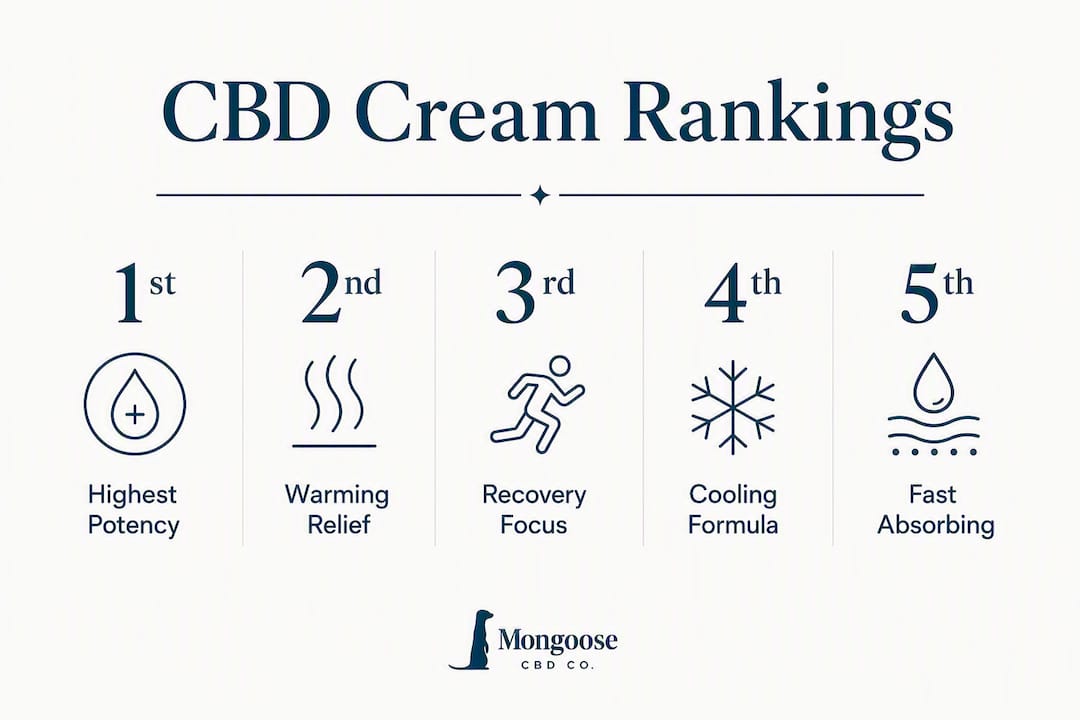
Pros: Exceptional potency per ounce; transparent ingredient list; THC-free with COA; 30-day full refund policy; ships direct from brand site.
Cons: Balm texture is thicker than a cream, which some users prefer for massage but others find heavier for quick daily application.
2. Mongoosecbd Seriously Soothing Pain Balm (Cinnamon & Clove)
One-line verdict: Same 1,000 mg/oz potency as the original, with a warming botanical profile that gives you sensory feedback alongside the CBD.
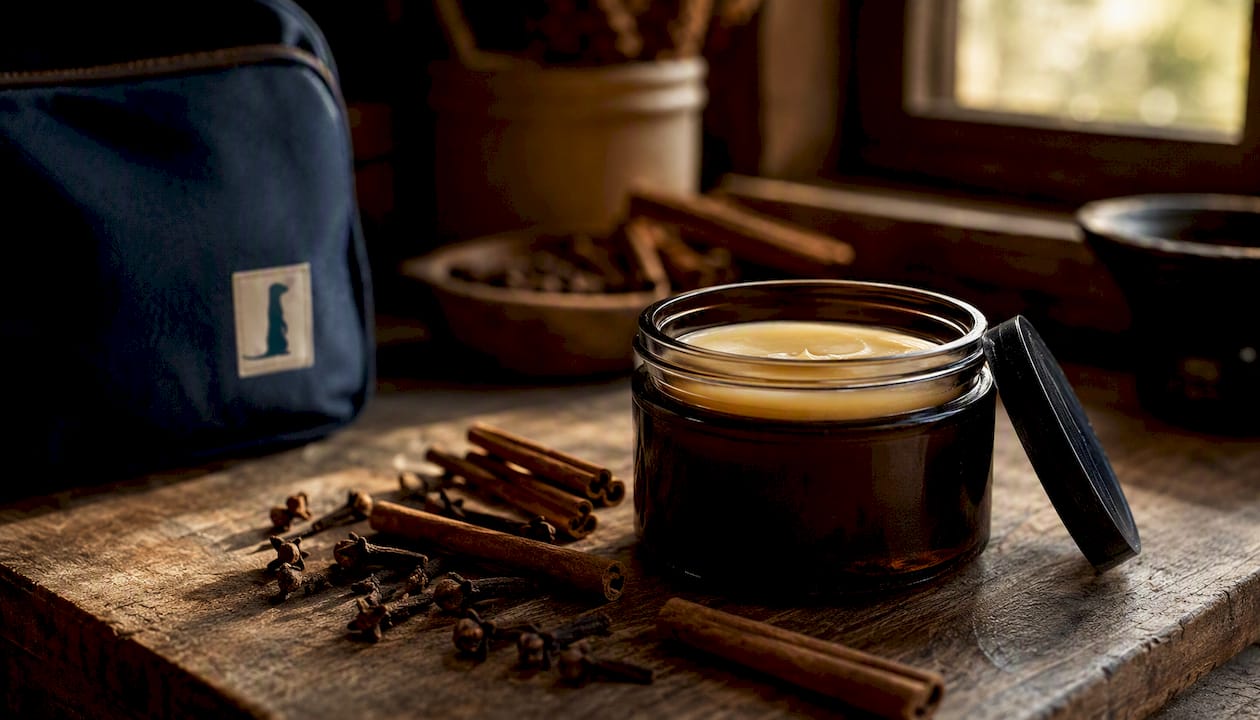
Cinnamon and clove add a mild heat sensation that many users find useful for stiff joints or cold-weather soreness. The scent is distinct and noticeable, so this isn't the pick for scent-sensitive users. Everything else carries over from the original: arnica, turmeric, THC-free status, and the same refund policy.
Pros: Warming sensory feedback; identical potency to the original; same COA availability and refund terms.
Cons: Strong scent rules it out for fragrance-sensitive users or shared spaces.
3. Mongoosecbd Rikki Tikki Recovery (2 oz Tin)
One-line verdict: A recovery-focused balm in a portable tin, designed specifically for post-workout use and deep-tissue relief.
The tin format makes it practical for gym bags and travel. The ingredient blend is oriented toward muscle recovery rather than general pain management, which makes it a different tool than the Seriously Soothing line. Athletes doing daily training will find the 2 oz size disappears quickly if they're applying it to multiple muscle groups, so factor that into the value calculation.
Pros: Recovery-specific formulation; portable and gym-friendly; THC-free; COA available.
Cons: Smaller size means higher per-use cost for heavy daily users.
4. Aspen Green Relief Cooling Cream
One-line verdict: A high-potency full-spectrum cooling cream that reviewers consistently recommend for acute, localized soreness.
Aspen Green uses a menthol-forward formula with a full-spectrum hemp extract, meaning trace cannabinoids beyond CBD are present. Review outlets note that full-spectrum products may feel more effective for some users, possibly due to the entourage effect, though clinical evidence for this remains limited. The cooling sensation is immediate and pronounced.
Pros: Full-spectrum formula; strong menthol cooling effect; high advertised potency.
Cons: Full-spectrum means trace THC is present; not suitable for anyone with workplace drug-testing concerns.
5. Soul CBD Rapid Relief Cream
One-line verdict: Testers favor this cream for its fast absorption and smooth texture, making it the go-to for users who want relief without a greasy residue.
The cream format absorbs faster than a wax-based balm, which suits users who apply before work or before a workout and don't want to wait. High advertised potency, though per-ounce figures are not prominently listed on the brand's public pages. Sensory feedback is mild compared to menthol-heavy competitors.
Pros: Fast-absorbing cream texture; high advertised potency; smooth, non-greasy finish.
Cons: Potency per ounce not prominently disclosed; spectrum not clearly listed on public pages.
6. Joy Organics Premium CBD Cream
One-line verdict: The most reliable scent-free option for sensitive skin, with a broad-spectrum formula and consistent reviewer scores.
Joy Organics uses a broad-spectrum extract, which removes THC while retaining other hemp-derived cannabinoids. That makes it a reasonable middle ground between full-spectrum and CBD isolate for users who want some entourage benefit without THC exposure risk. The unscented formula is genuinely gentle, and Healthline lists it among their top picks after hands-on testing.
Pros: Broad-spectrum; scent-free; gentle enough for sensitive skin; widely available.
Cons: Lower potency per ounce than Mongoosecbd's balms; cream texture may not suit users who prefer a thicker balm for massage.
7. CBDistillery Oooh Distilled 500 mg CBD Balm
At 500 mg per unit, this is the most accessible entry point on the list. Peppermint and menthol provide sensory feedback, and the product is widely available through major retailers. For mild, occasional discomfort or first-time CBD topical users who want to test the format before committing to a higher-potency product, it's a practical starting point. Don't expect the same depth of relief as a 1,000 mg/oz formulation.
Pros: Budget-friendly; widely available; peppermint/menthol sensory feedback.
Cons: Lower potency than most picks here; not the right choice for chronic or intense pain.
Product specs at a glance:
| Product | Type | Spectrum | Key Ingredients | Scent | COA |
|---|---|---|---|---|---|
| Mongoosecbd Seriously Soothing (Original) | Balm | THC-free | Arnica, turmeric, peppermint, cayenne | Botanical | Available |
| Mongoosecbd Seriously Soothing (Cinnamon & Clove) | Balm | THC-free | Cinnamon, clove, arnica, turmeric | Warming/spiced | Available |
| Mongoosecbd Rikki Tikki Recovery | Balm | THC-free | Recovery botanicals | Not listed | Available |
| Aspen Green Relief Cooling Cream | Cream | Full-spectrum | Menthol | Cooling/minty | Available |
| Soul CBD Rapid Relief Cream | Cream | Not listed | Menthol | Mild | Available |
| Joy Organics Premium CBD Cream | Cream | Broad-spectrum | Gentle botanicals | Unscented | Available |
| CBDistillery Oooh Distilled 500 mg Balm | Balm | Not listed | Peppermint, menthol | Minty | Available |
Pro Tip: Advertised potency ranges widely across the market, from a few hundred milligrams to 1,500 mg or more per jar. Always calculate price per milligram, not just price per jar. A $60 balm at 1,000 mg/oz will outperform a $30 cream at 250 mg total for targeted joint or muscle pain every time.
How to choose the right CBD cream for your needs
The single biggest mistake buyers make is choosing by price per jar rather than measuring potency carefully. A cheaper jar with lower CBD concentration costs more per milligram of active ingredient. Once you fix that calculation, the rest of the decision comes down to use case.
Core criteria to evaluate:
- Potency: For targeted muscle or joint pain, look for a high concentration per ounce; Mongoosecbd's formulations are among the strongest available.
- Spectrum: Full-spectrum retains trace THC and other cannabinoids; broad-spectrum removes THC but keeps other hemp compounds; CBD isolate is pure CBD only. Testers across multiple outlets report that full- and broad-spectrum products tend to feel more effective for some users, though clinical evidence is still building.
- Product type: Creams (water-based) absorb faster and suit daily use. Balms (oil/wax-based) create a thicker barrier, last longer on the skin, and work well for massage-style application.
- Active analgesic ingredients: Menthol, camphor, and eucalyptus provide immediate cooling or warming sensory feedback that many users find valuable for acute soreness. Arnica and turmeric target inflammation more directly.
- Scent: Strongly scented products (cinnamon, clove, peppermint) aren't suitable for scent-sensitive users or shared workplaces.
- COA availability: A current certificate of analysis from a third-party lab is non-negotiable. Forbes Health's methodology weights COA transparency and contaminant testing heavily in its scoring.
- Return policy: A brand that offers a full refund within 30 days is telling you something about its confidence in the product.
Questions to ask before buying:
- What is the CBD concentration in mg per ounce, not just per jar?
- Is there a current COA from a third-party lab, and does it test for heavy metals, pesticides, and solvents?
- Does the COA confirm THC content at or below 0.3%?
- What is the full ingredient list, and are there any known allergens?
- What is the return or refund policy?
- Is the spectrum clearly labeled (full, broad, or isolate)?
Red flags to avoid:
- No COA, or a COA that's more than 12 months old
- Potency listed only as total mg per jar with no per-oz breakdown
- THC content not disclosed or not tested
- Ingredient list that's vague or incomplete
- No return policy
Application guidance: Apply to clean, dry skin and massage in thoroughly. For muscle soreness or joint pain, consistent daily application tends to outperform occasional use. Most users apply once or twice daily, or directly after exercise for recovery. Topical CBD acts locally rather than systemically, so concentrate application on the specific area of discomfort.
How these products were evaluated
The criteria used here align with the weighted methodology Forbes Health applies to CBD cream rankings: potency per milligram, price per milligram, ingredient quality, COA transparency, third-party lab results including contaminant testing, texture and absorption, scent, and retail availability.
Products were assessed across several use cases: post-workout muscle soreness, joint stiffness, general topical application, and sensory feedback (cooling vs. warming). Texture and absorption were evaluated for both fast-application scenarios (pre-work, pre-workout) and longer massage-style use.
Two things this evaluation does not claim: long-term clinical efficacy data and medical outcome claims. CBD topicals are not FDA-approved treatments for any condition. COA availability and third-party lab results were used as proxy measures for product quality and transparency, alongside published reviewer testing from Healthline and Medical News Today. Products without publicly accessible COAs were not ranked in the top tier.
Safety, side effects, and what U.S. buyers need to know
Hemp-derived CBD products containing 0.3% THC or less are federally legal under the 2018 Farm Bill, but state regulations vary. Before purchasing, confirm your state's current rules, particularly for full-spectrum products that contain trace THC. Always check the COA for actual THC content, not just the label claim.
Common side effects and contraindications:
- Skin irritation or contact dermatitis, particularly with products containing menthol, camphor, or essential oils
- Allergic reactions to botanical ingredients (arnica, eucalyptus, cinnamon)
- Potential interaction with topical prescription medications applied to the same area
- Consult a clinician before use if you have a skin condition, are pregnant, or are using prescription topicals
Workplace drug testing: Full-spectrum products carry a real, if low, risk of triggering a positive drug test due to trace THC. Broad-spectrum and CBD isolate products reduce that risk, but no topical is entirely risk-free if the COA shows any detectable THC. The safest choice for anyone subject to drug testing is a product explicitly labeled THC-free with a recent COA confirming non-detect THC. Mongoosecbd's products are THC-free with COA documentation available.
Pro Tip: Before applying any new topical CBD product to a large area, do a patch test on a small section of skin and wait 24 hours. This is especially important with warming botanicals like cinnamon, clove, or cayenne, which can cause irritation on sensitive skin.
Storage and shelf life: Store CBD topicals in a cool, dry location away from direct sunlight. Heat and UV exposure degrade cannabinoids over time. Most products carry a 12–24 month shelf life from manufacture date; check the batch date on the COA against the product's expiration date.
How CBD creams interact with other medications and skin products
Topical CBD is absorbed locally through the skin rather than entering the bloodstream in meaningful amounts, which limits systemic drug interactions compared to oral CBD. That said, a few interaction scenarios are worth knowing.
Applying a CBD topical to the same area as a prescription transdermal patch or medicated cream (such as a topical NSAID, corticosteroid, or lidocaine patch) may alter absorption of either product. The mechanism isn't fully established, but clinicians generally recommend spacing application times or using different skin areas. If you're using a prescription topical for the same condition you're hoping CBD will address, talk to the prescribing clinician before layering products.
Essential oils and active botanicals in CBD balms, particularly menthol, camphor, eucalyptus, and cinnamon, can interact with other skincare products. Applying a CBD balm over a retinol serum or an acid-based exfoliant, for example, may cause irritation that neither product would cause alone. Keep CBD topicals separate from active skincare routines, or apply them to distinct body areas (joints and muscles vs. face and neck).
For people managing chronic pain with oral medications, topical CBD is unlikely to produce the same drug-drug interactions as oral CBD, which is metabolized by the liver's CYP450 enzyme system. Still, anyone on blood thinners, immunosuppressants, or seizure medications should confirm with a pharmacist before adding any CBD product to their routine. This is general information, not medical advice; confirm current guidance with a qualified clinician.
Key Takeaways
Mongoosecbd's Seriously Soothing Pain Balm at 1,000 mg/oz is the strongest THC-free topical on this list, and the 30-day refund policy makes it the lowest-risk first purchase for pain-focused buyers.
| Point | Details |
|---|---|
| Potency per oz matters most | Calculate mg per oz, not per jar; Mongoosecbd's balms deliver 1,000 mg/oz, among the highest available. |
| COA is non-negotiable | Only buy from brands with a current third-party COA confirming CBD potency and THC content. |
| Match type to use case | Fast-absorbing creams suit daily use; thick balms work better for massage and targeted muscle relief. |
| THC-free for drug testing | Full-spectrum products carry trace THC risk; choose a THC-free product with a confirmed COA if tested at work. |
| Mongoosecbd for pain relief | Mongoosecbd's Seriously Soothing Pain Balm and Rikki Tikki Recovery are the recommended picks for targeted pain and post-workout recovery. |
What most CBD cream buyers get wrong
The CBD topical market is full of products that look identical on the shelf but perform very differently once you do the math. A 1,000 mg jar sounds impressive until you realize it's a 4 oz container, which works out to 250 mg per ounce. That's a quarter of the potency of Mongoosecbd's formulation at the same jar size.
The other thing buyers consistently underestimate is the role of the supporting ingredients. CBD alone, applied topically, has a limited ability to penetrate the skin's barrier. Carrier ingredients and active botanicals like arnica, eucalyptus, and peppermint do real work: they enhance absorption, reduce localized inflammation, and provide the sensory feedback that tells your nervous system something is happening. A product with 1,000 mg/oz CBD and a well-chosen botanical stack is genuinely different from one that hits the same CBD number with a plain lotion base.
The COA question also gets glossed over more than it should. Plenty of brands publish a COA, but a COA that only tests for CBD potency and skips heavy metals, pesticides, and residual solvents is telling you half the story. Forbes Health's scoring methodology weights contaminant testing at 25% of the total score, which is higher than potency or price. That weighting reflects something real: a high-potency product grown in contaminated soil is worse than a mid-potency product with a clean test.
One more thing: the "entourage effect" argument for full-spectrum products is real but overstated in marketing copy. The clinical evidence is still limited. What the research does support is that full- and broad-spectrum products tend to outperform isolates in user testing, but the gap isn't dramatic enough to justify choosing a full-spectrum product if you have drug-testing concerns. A high-quality THC-free broad-spectrum or isolate product at sufficient potency will serve most buyers better than a lower-potency full-spectrum option.
Mongoosecbd's pain balms: what sets them apart
If you've read this far, you know what to look for. Mongoosecbd's formulations check every box that matters: 1,000 mg of CBD per ounce, a botanical blend built around arnica, turmeric, eucalyptus, peppermint, cinnamon, clove, ginger, and cayenne, THC-free status confirmed by COA, and a 30-day full refund policy that most competitors don't match.
The Seriously Soothing Pain Balm is the right starting point for most buyers: targeted relief for muscle soreness, joint pain, and arthritis, with a formula designed for daily use. Athletes and post-workout recovery users will get more from the Rikki Tikki Recovery tin; it is built specifically for deep-tissue recovery and travels easily. Both ship direct from the brand site. If the product doesn't work for you within 30 days, you get a full refund. Browse the full line and read the COAs at the Mongoosecbd shop.
Useful sources and further reading
The following sources informed the product evaluations, methodology, and safety guidance in this article:
- Best CBD Cream for Pain in 2026: Our 3 Top Picks — Healthline
- 5 Best CBD Creams for Skin Health and Pain Relief — Medical News Today
- Best CBD Cream for Pain in 2026: Our 4 Top Picks — Medical News Today
- 8 Best CBD Creams and Topicals of 2026 — Forbes Health
- Best CBD Products for Pain Management — Forbes Health
- CBD Topicals: A Buyer's Guide — cbdMD
- PMC research on CBD and pain — NIH
- PMC research on topical cannabinoids — NIH
How to read a COA: A certificate of analysis should come from an accredited third-party lab, not the brand's own facility. Look for a test date within the past 12 months, a batch number that matches your product, and results for CBD potency, THC content (confirmed at or below 0.3% for legal hemp), heavy metals, pesticides, and residual solvents. A COA that only tests CBD potency and skips contaminants is a partial document. If the batch number on the product doesn't match the COA on the website, contact the brand before using the product.